Summary
- The fastest wins sit at department handoffs, such as room turnover, check-in and maintenance requests.
- Every example here needs a named owner and a number to track, and almost none needs new software.
- Pricing, waste and reviews improve once someone looks at the same few figures every week.
- Start with one example, measure it for a month and then add the next.
Hospitality managers rarely lack ideas. They lack time to try them in a building that never closes. The examples below come from projects I have seen at hotels of 38 to 120 rooms, plus a few public cases. Good hospitality management consulting starts from this kind of small, measurable change.
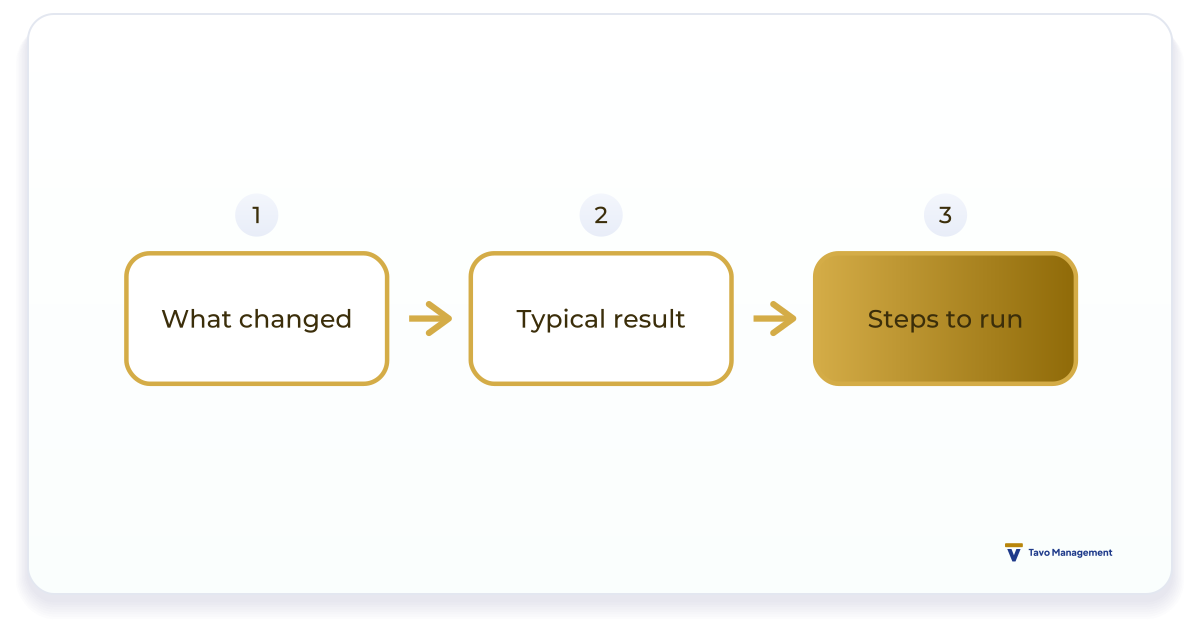
Each example shows what changed, the result I typically see and the steps to run it. Property details are anonymized, and all results are approximate, so check them against your own numbers.
What Makes a Hospitality Management Change Work?
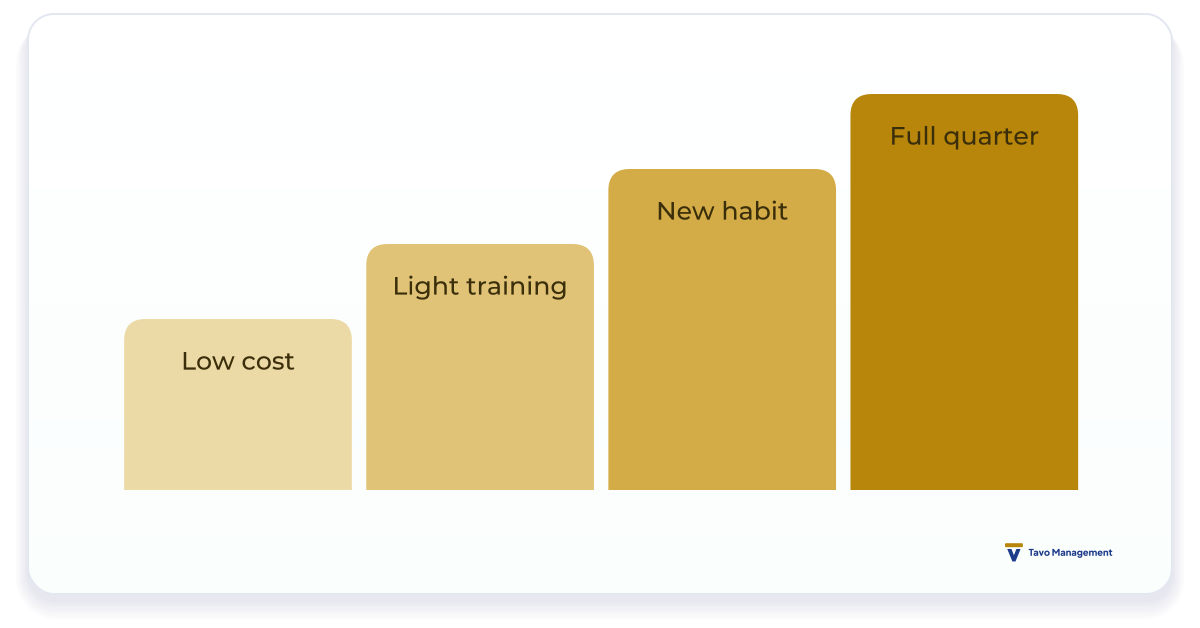
Before the examples, it helps to know why some changes stick and others fade after a month. In the projects I follow, the changes that last share three traits, and the table shows how I judge each one.
| Trait | How it looks in practice | Warning sign |
|---|---|---|
| One owner | A named person reports on the change at the monthly meeting | Everyone agrees, nobody acts |
| One number | Minutes per room, check-in time, waste weight or direct share | Success is described as "feels better" |
| One page | The routine fits on a single sheet a new hire can follow | A binder that nobody opens |
Hospitality also carries a staffing problem that makes simple routines more valuable. BCG cites AHLA data showing that 65 percent of North American hotels reported staffing shortages in 2025, and labor costs there rose 11.2 percent. When people are scarce, every unclear handoff costs more.
8 Hospitality Management Examples You Can Use Today
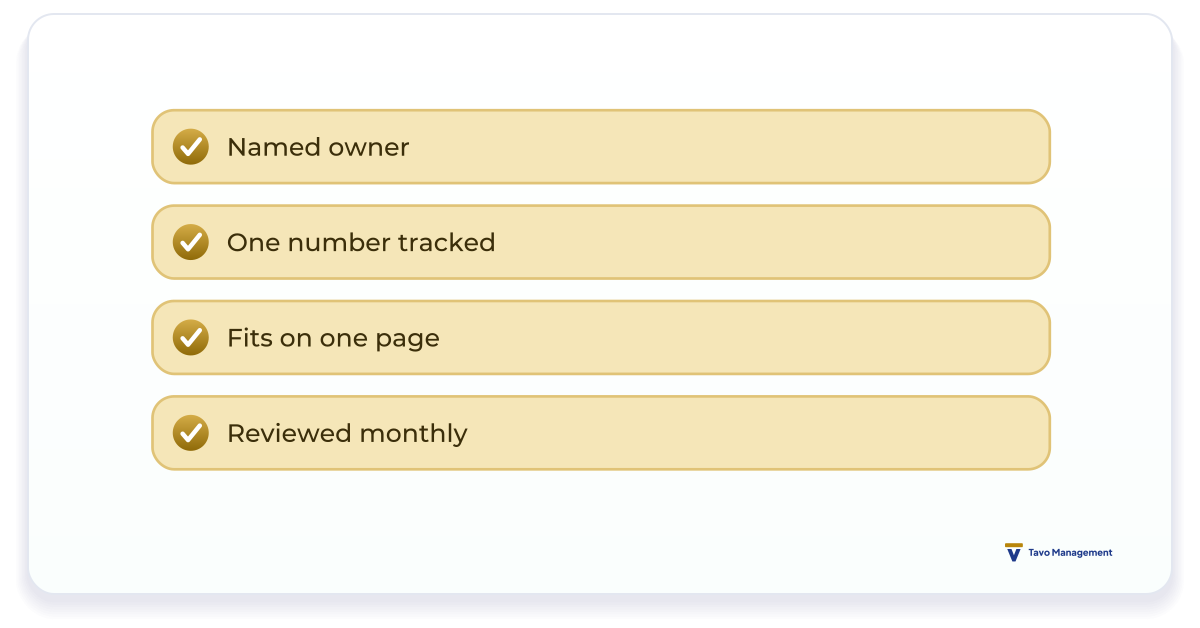
I start with the examples that need the least money and finish with the ones that need a full quarter to judge. If you are choosing systems to support them, my guide to hospitality management software sets the main options side by side.
| Example | Department | Typical result |
|---|---|---|
| 1. Room Turnover Board | Housekeeping | About 40 minutes saved per room on peak days |
| 2. One-Page Check-In Standard | Front desk | Under 3 minutes average check-in at a 120-room hotel |
| 3. Weekly Pricing Meeting | Revenue | 3 to 6% higher average daily rate in the periods reviewed |
| 4. Shared Maintenance Request Queue | Maintenance | Days to hours from request to fix for guest-facing issues |
| 5. Daily Waste Log in the Kitchen | Food and beverage | Around 20% less food waste after eight weeks |
| 6. Seven-Day Onboarding Path | People | Faster ramp-up and fewer early exits in high season |
| 7. Review Theme Owner | Guest experience | Fewer repeat complaints within one quarter |
| 8. Direct Booking Push at a Small Group | Direct bookings | Higher direct share and lower commission costs |
Room Turnover Board
A 64-room city hotel I worked with had a familiar problem: guests arrived at 1 pm and the rooms were ready at 3 pm. Housekeeping blamed the front desk for late checkout calls, and the front desk blamed housekeeping for slow cleaning. Neither was wrong. The two teams simply worked from different lists, and nobody saw the whole picture.
The fix was a single room status board, shared by both teams, with four states: departed, cleaning, inspected and ready. The front desk sets rooms to departed the moment a guest leaves, and supervisors move rooms to ready after inspection. In my client work, the average turnaround on busy days fell by roughly 40 minutes within three weeks, and early arrivals stopped waiting in the lobby.
How the Board Works
- Agree on four room states that every department uses.
- Put the status in the PMS or on a shared screen, never in two places.
- Set a priority rule: early arrivals first, then checkouts by floor.
- Give the supervisor sole authority to mark a room ready.
- Review the slowest five rooms at the next morning huddle.
- Track turnaround time weekly, not daily, to avoid noise.
Prerequisites to Run It
Most property management systems have a housekeeping status screen, and a tablet for each supervisor is enough. If your system lacks it, a simple shared spreadsheet works for a month while you decide on a tool; my ranking of hospitality management software compares the options.
One-Page Check-In Standard
Check-in is where guests form their first opinion, and it is also where long lines build up. At a 120-room resort hotel, agents each checked guests in their own way: one asked for a card first, another explained the breakfast hours first, a third walked guests through the whole property. Times ranged from two minutes to nine.
We wrote one page: greeting, identity and payment, three key facts, then a handover to the bell team. Agents practiced it in a ten-minute session before the shift, and the manager timed a sample week. Average check-in came down to under three minutes, and the long queue at 4 pm shrank on weekends. The page also made it easy to train seasonal staff in their first week.
From First Greeting to Key Handover
- Time ten check-ins to get your real starting point.
- Decide the three facts every guest must hear.
- Write the standard on one page with the order of steps.
- Practice it in a short session before a busy shift.
- Pre-register arriving guests for any known groups.
- Re-time a week of check-ins after one month.
Tools Worth Using at the Desk
Online pre-check-in links and digital registration cards remove paperwork from the desk. Check whether your PMS already includes them before you buy anything new.
Weekly Pricing Meeting
Small hotels often set rates by feel. The owner looks at the calendar when time allows, drops a price when a weekend looks slow and forgets to raise it when events are announced. A 38-room inn I worked with moved to a 30-minute pricing meeting every Monday, with the same four numbers on the table each time.
Those numbers were pace against last year, the competitor range for the next 30 days, local events and the number of rooms left. Rates changed by rule, not by mood. Over the first quarter, the average daily rate in the reviewed periods rose by roughly 4 percent, mostly because the team stopped discounting dates that were already filling.
How the Meeting Runs
- Pick a fixed weekday and time, and keep it.
- Bring four numbers: pace, competitor range, events and rooms left.
- Review only the next 30 to 60 days.
- Change rates by agreed steps, for example 5 or 10 percent.
- Write down each change and the reason.
- Compare the result with last year after four weeks.
Data Sources for the Meeting
Your PMS reports give pace and rooms left, and a market data tool or a manual check of a few competitors covers the range. Some PMS platforms also suggest rates, though you should still agree on limits first.
Daily Waste Log in the Kitchen
Food cost drifts upward when nobody sees what gets thrown away. A resort kitchen I worked with did not track waste at all. Chefs knew it was high but could not say which dishes or which shifts caused it. A simple log changed that conversation.
Staff weighed discarded food at the end of each shift and tagged it by reason: overproduction, spoilage, plate waste or preparation error. After two weeks, the pattern was clear. Breakfast overproduction and one over-ordered produce item accounted for most of the loss. Adjusting prep quantities and orders cut waste by about a fifth in eight weeks. Larger operations use AI scales for this, and BCG reports that Four Seasons Peninsula Papagayo cut food waste by roughly 50 percent within eight months with AI tracking.
How to Run the Log
- Place a scale and a log at the waste station.
- Define four reasons for waste and tag each entry.
- Collect data for two weeks before changing anything.
- Find the top three items and the shift that causes them.
- Adjust prep quantities and supplier orders.
- Share the weekly result with the whole kitchen.
Tools for Tracking Waste
A kitchen scale and a spreadsheet are enough to start. Dedicated waste-tracking systems add cameras and automatic tagging once you have proven the habit.
Seven-Day Onboarding Path
Seasonal hiring is a constant in hospitality. In the BLS data for August 2026, the quits rate in accommodation and food services was 3.5 percent, against 1.9 percent for all industries. Every exit costs recruiting time and every new hire is a risk to guest experience in the first weeks.
A 52-room boutique hotel built a seven-day onboarding path: a day-one walk-through, role checklists, a buddy for each new hire and a Friday check-in with the manager. New hires worked alone on day four instead of day ten, and early exits in the first month dropped noticeably over the season. The cost was a few hours of manager time per hire.
What the First Week Looks Like
- List the ten tasks a new hire must perform alone.
- Write one-page checklists for each role.
- Assign a buddy, with time in the schedule to help.
- Plan a short manager check-in at day seven.
- Ask each new hire what was unclear.
- Update the checklists after every intake.
Prerequisites
Printed checklists and a shared folder are enough. A learning platform helps once you have several properties and want to track completion.
Review Theme Owner
Most hotels read their reviews. Fewer decide who acts on them. At a 75-room hotel, the same three complaints kept returning: slow breakfast service, noise from the corridor and a weak air-conditioning unit on one floor.
The general manager gave each theme an owner and a deadline. The restaurant manager changed the breakfast staffing, the engineer fixed the units and housekeeping added door-closer checks. Each owner reported at the monthly meeting. Within a quarter, mentions of those three themes had nearly disappeared from new reviews. The lesson is simple: a complaint without a named owner never gets fixed.
From Review to Fix
- Export the last 90 days of reviews.
- Group comments into five to eight themes.
- Pick the three most frequent negative themes.
- Name one owner and a deadline per theme.
- Report progress at the monthly management meeting.
- Check new reviews for the same themes after 60 days.
Tools for Review Analysis
A spreadsheet works for 90 days of reviews. Reputation tools save time once volume grows, and many include sentiment tags by theme.
Direct Booking Push at a Small Group
Online travel agencies charge commissions, and BCG puts those at 15 to 30 percent. A three-property group I advised wanted to shift part of that volume to its own website without a large marketing budget.
The plan was modest: a working booking engine on the mobile site, a clear best-rate promise, a small perk for direct guests and a reminder email after every OTA stay. Within two quarters, the direct share of bookings rose by several points. The savings paid for the engine upgrade in the first season. The perks mattered less than the fact that booking directly became as easy as booking through a platform.
How the Push Works
- Test your own booking flow on a phone, start to finish.
- Fix the slowest step before any marketing.
- Offer one clear reason to book direct.
- Add a post-stay email that invites a return booking.
- Track the direct share every month.
- Review commission costs per channel each quarter.
Tools for Direct Booking
Most booking engines are part of your PMS or channel manager. Compare what each includes in my hospitality management software comparison before you add a separate tool.
Estimate Your Own Time Savings
Pick one routine from the examples that your team repeats every week, such as manual room status calls or end-of-day reconciliation. The calculator shows roughly how much time and money fixing it could free up. For a view of where operations are heading next, see my overview of hospitality management trends.
How Much Time Could You Save?
Move the sliders to match one repetitive task in your business.
How to Choose Your First Hospitality Change
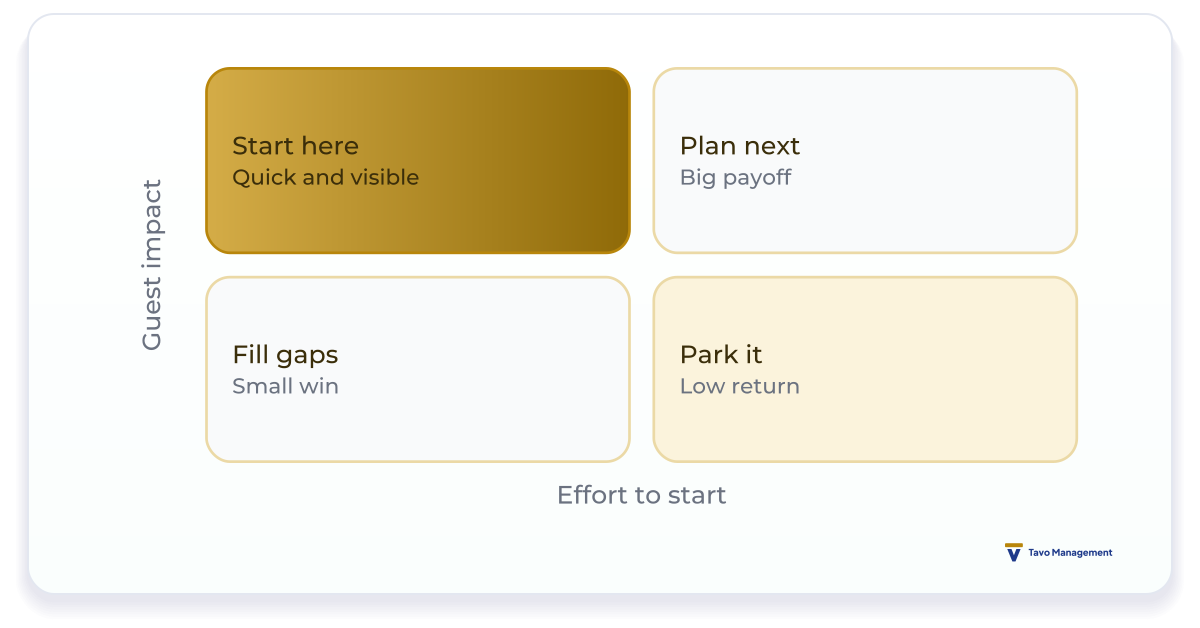
The examples that deliver the fastest return share four traits. Check your shortlist against them before you commit time:
- It affects guests in the first hour or the last hour of their stay.
- It crosses two departments, because handoffs are where time disappears.
- You can measure it with a number you already collect.
- One manager can own it without needing new budget.
If you want a second pair of eyes on your shortlist, the consultants I work with offer a free review of your operations.
Questions About Hospitality Management Examples
What Is the Most Useful Hospitality Management Example to Start With?
Start with the room turnover board. It touches housekeeping, front desk and maintenance, it needs almost no budget and the result is easy to measure in minutes per room. Once that works, the other examples build on the same habits.
How Do I Measure Whether a Change Worked?
Record a baseline before you change anything: turnaround minutes, check-in time, labor hours per occupied room or complaint count. Measure again after four weeks and compare. Use weekly averages, because single days vary too much to trust.
Do These Examples Work for Small Independent Hotels?
Yes. Most of them cost time rather than money, and a 38-room inn can use a weekly pricing meeting or a review owner as easily as a large hotel. Scale the number of meetings and checklists to your team size.
When Will We See Results?
The simpler changes, such as a shared status board or a check-in standard, show results within two to four weeks. Pricing and direct booking changes need a full quarter, because you need enough bookings to compare.
Who Should Own These Changes?
Give each change one named owner, usually a department head, and one sponsor, usually the general manager. Shared ownership means nobody feels responsible. Put the owner and the review date in writing.
Do I Need New Software to Apply These Examples?
Not always. Many of these examples run on your existing PMS, a shared spreadsheet and a printed checklist. Software helps when volume grows, and my <a href="/hospitality-management-software/">ranking of hospitality management software</a> shows what is available.
What If My Team Resists the New Routine?
Involve the people who do the work in drafting it, and test the routine on a few shifts before making it standard. Resistance usually fades when staff see that the change removes a daily annoyance instead of adding a rule.
Sources
- BCG, AI-First Hotels: Faster to Build, Leaner to Operate
- U.S. Bureau of Labor Statistics, quits rate in accommodation and food services, August 2026
General information only: this is not legal, financial or tax advice. Examples and numbers reflect typical projects; check the specifics with your advisers before deciding.
Did you find this helpful?
Thank you for your feedback.
Delaney Brisco
Delaney leads the Tavo editorial team and works with our consultants to turn real client projects into practical guides on project delivery, process design and organizational change. Before joining Tavo, she spent 12 years in operations and program management roles. She has since edited more than 300 articles on management practice and reviewed PMO setups and process redesigns from over 100 client projects. She is based in Minneapolis, Minnesota.