Summary
- Labor pressure drives most of the other trends: 65 percent of North American hotels reported staffing shortages in 2025, according to BCG citing AHLA.
- AI is moving into scheduling, pricing and waste tracking, and the biggest gains come where a number already exists to check.
- Fragmented systems and manual reporting remain common, so a clear definition of key figures beats another dashboard.
- Direct bookings are catching up with online travel agencies, which makes your own booking flow a management topic.
Trend lists often read like a wish list. This one is meant to help you decide. Each of the 12 shifts below comes with a source you can check and my view on what it means for a manager running a real property. If you want help turning the ones that matter into a plan, hospitality management consulting is built for exactly that.
I have grouped them loosely: people first, then technology, then guests and revenue. A few figures come from vendor surveys, and I say so where that is the case.
The 12 Shifts at a Glance
1. Labor Shortages Keep Shaping Every Staffing Plan
The pressure on staffing has not eased. BCG cites AHLA data showing that 65 percent of North American hotels reported staffing shortages in 2025, and says labor costs rose 11.2 percent year over year. Labor already makes up about half of gross operating margin, so even small changes in hours move profit.
In my client work, the properties that cope best stop treating shortages as a hiring problem. They redesign the work so that fewer handoffs are needed: one room status list, a shorter check-in, fewer meetings. If you want to see what that looks like in practice, I describe eight routines in my hospitality management examples.
2. Turnover Stays High Even as It Cools
The U.S. Bureau of Labor Statistics reports a quits rate of 3.5 percent in accommodation and food services for August 2026, against 1.9 percent across all industries. That is down from 3.9 percent a year earlier, so the trend is moving in the right direction, but the sector still loses people at nearly twice the overall rate.
For a manager, the practical point is onboarding. A hire who leaves in the first month has cost you recruiting, training and guest goodwill. A one-page checklist per role and a named buddy for the first week are cheap, and they are the first things I put in place when a property tells me its turnover is a problem.
3. AI Scheduling and Room Assignment Move From Pilots to Daily Use
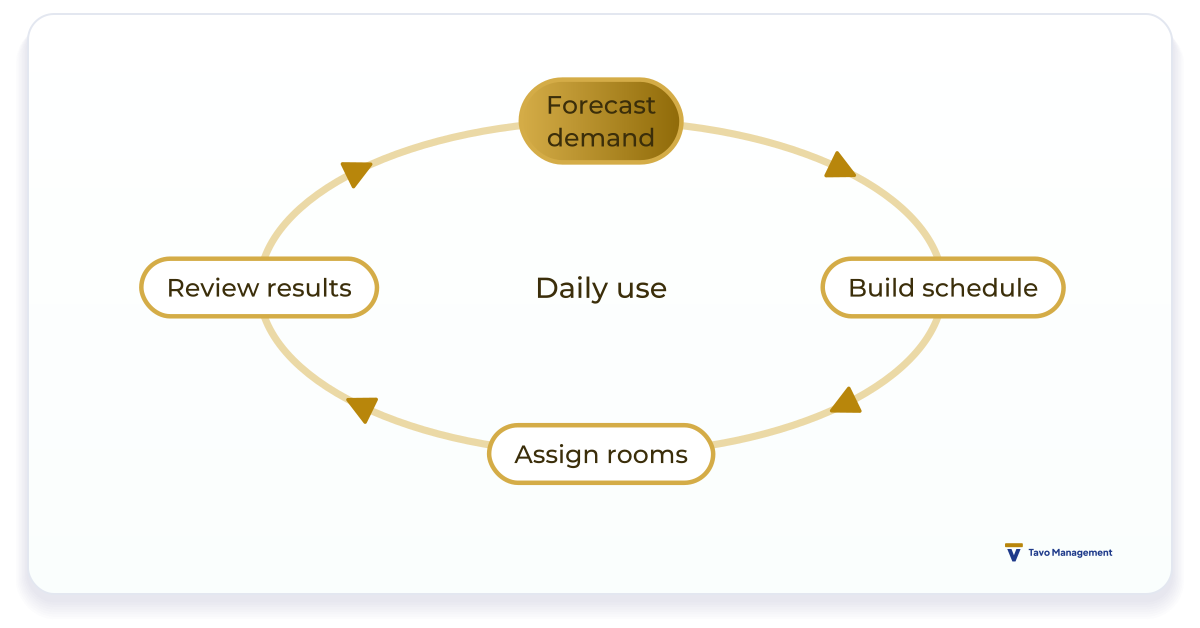
BCG reports that the Ritz-Carlton San Francisco used AI cleaning schedules to cut the time needed to clean and prepare rooms by 20 percent, and that Marriott's AI room-assignment engine handles more than 1.2 million assignments across its chain in seconds. Those are chain-scale results, but the logic works on a smaller scale too.
A 60-room hotel does not need a custom model. It needs a scheduling tool that reads arrivals and departures, then orders rooms by priority. Before you buy, write down your own rules, because the tool will only apply what you tell it. A system that sequences rooms badly is worse than a supervisor with a clipboard.
4. Dynamic Pricing Gets Smarter, but Needs Guardrails
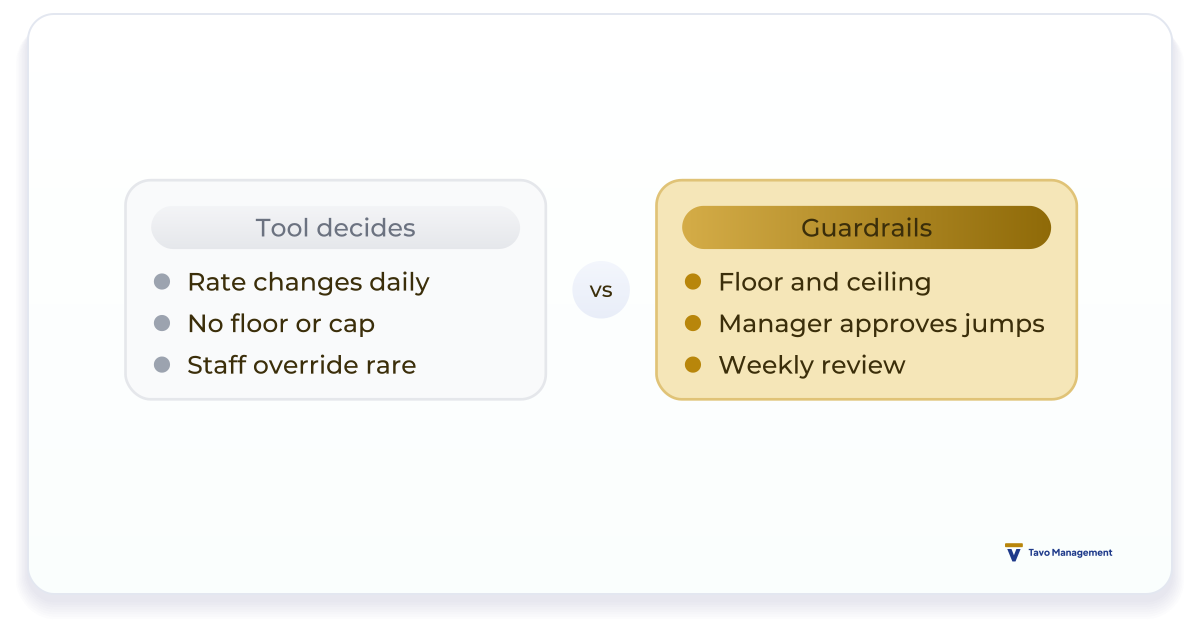
According to STR figures cited by BCG, AI pricing optimizers have generated revenue per available room growth of up to 15 percent at some hotels. The phrase to notice is "up to" and "some": results depend on the starting point and on how well the property sets its limits.
My view is that pricing tools help most where you currently price by feel. Agree on a floor, a ceiling and an approval routine, and review changes weekly for the first two months. Properties that switch it on and walk away tend to find a strange rate on a Tuesday in August.
5. Guests Start Their Trips With AI Assistants
NYU and BCG research puts the share of travelers who use AI for trip planning at 37 percent. If a guest asks an assistant for a quiet hotel near the station with a good breakfast, the answer depends on what your website, your reviews and your listings say.
That shifts the work toward clear, accurate content: room descriptions, policies, photos and a consistent story across channels. It also rewards operations. Reviews that praise breakfast and check-in feed the same assistants, so a better morning routine becomes a marketing asset.
6. Technology Stacks Stay Fragmented
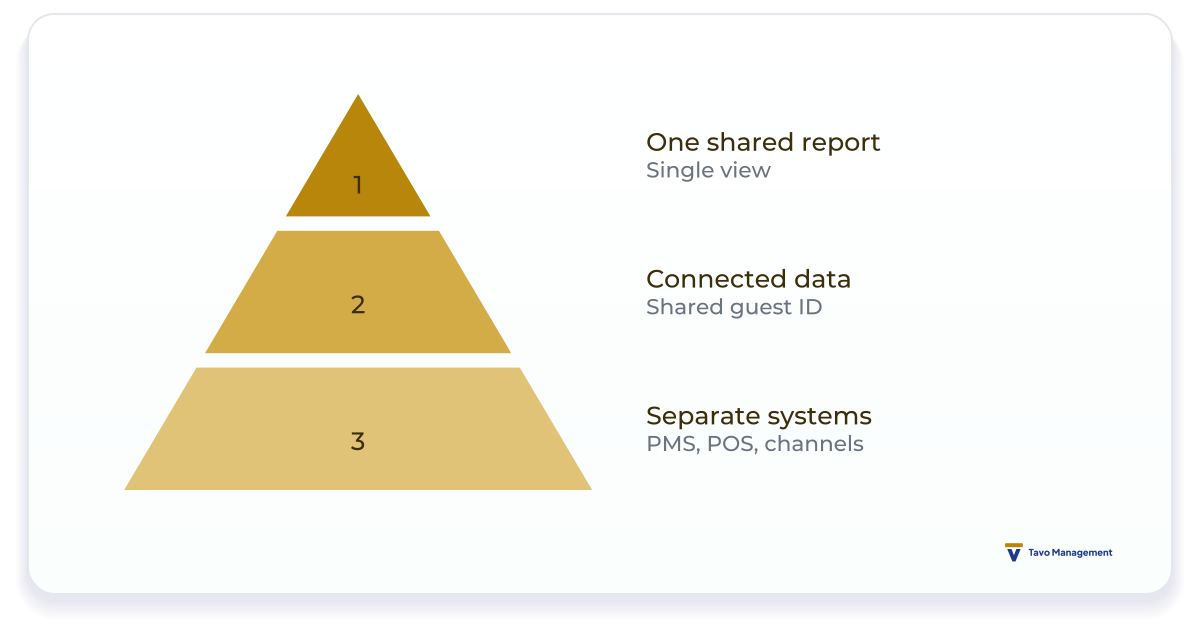
The 2026 Hotel Operations Index, a survey published by the hospitality data platform Otelier, found that only 11 percent of respondents have a fully integrated technology stack, 27 percent use more than seven platforms and 27 percent spend over 11 hours a week consolidating or reconciling data. Because the survey comes from a vendor, read it as a signal, not a census.
The pattern matches what I see: a PMS, a channel manager, a POS, a housekeeping app and three spreadsheets that all disagree. Before adding a tool, list what each system is the source of truth for. Many properties find that a clearer rule about where data lives removes more work than another integration. If you are comparing options, my ranking of hospitality management software shows where integrations are strongest.
7. Manual Reporting Refuses to Disappear
The same 2026 Hotel Operations Index reports that 91 percent of respondents still rely on some manual reporting, and only 15 percent are very confident in the accuracy and timeliness of their operational data. The finding is less about technology and more about trust: managers who do not trust the report keep building their own.
A useful test is to ask three department heads for last week's labor cost per occupied room. If you get three different answers, the problem is a shared definition, not a missing dashboard. Agree on five figures, define each one in writing and publish them in one place.
8. Direct Bookings Close In on Third-Party Platforms
BCG reports that digital direct bookings reached $262 billion in 2024, close to the $266 billion booked through online travel agencies, and that agency commissions run 15 to 30 percent. For an independent hotel, every shifted booking changes margin.
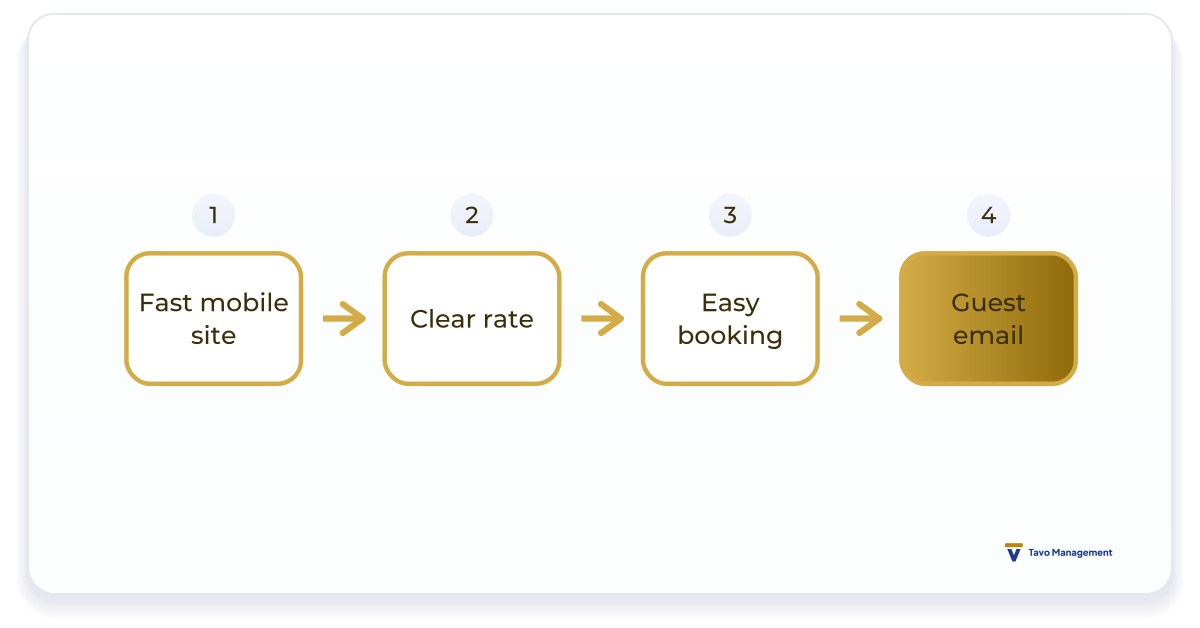
The route to a higher direct share is rarely a big campaign. It is a booking engine that works on a phone, a clear rate promise and an email after every stay. The tools matter, and so does the choice of system; the PMS options differ a lot in how well they support direct booking.
9. AI Skills Are Scarce in the Workforce
BCG cites data showing that only 2.9 percent of full-time travel and tourism employees have AI skills, compared with 21 percent in tech and media, though the number is growing at close to 5 percent a year. Hotels will buy tools faster than they can train people to use them.
I would not try to turn housekeepers into data analysts. Pick two or three people per property, such as a front office manager and a revenue lead, and give them real time to learn the tools you buy. A tool with no owner is the most common reason I see software features go unused.
10. Readiness for AI Lags Behind the Interest
In the 2026 Hotel Operations Index, 25 percent of respondents say they are ready to adopt AI and 40 percent say they are not ready at all. The respondents named predictive demand modeling and cross-department data collaboration as the most valuable uses, ahead of guest-facing chatbots.
That ranking fits my experience. The back-of-house uses are less visible but easier to measure. Forecasting arrivals and staffing needs gives you a number to check against reality, while a chatbot gives you a sentiment you can argue about for months.
11. Waste Tracking Becomes a Standard Kitchen Habit
BCG reports that AI waste tracking at the Four Seasons Peninsula Papagayo cut food waste by roughly 50 percent within eight months. Most properties will not install camera systems, but the habit behind the result is available to everyone: weigh it, tag the reason, review it weekly.
A resort kitchen I worked with started with a scale and a clipboard, and found that two items caused most of the loss. The saving came from changing prep quantities, not from the technology.
12. Copilots Promise a Shorter Training Ramp
BCG suggests that frontline AI copilots could shrink the typical four-month training ramp for new hires, although it gives no exact figure. I treat this as a possibility, not a result. Today the biggest gain in training still comes from clear checklists and a good buddy.
If you plan to test a copilot, start with a narrow use such as answering policy questions for new staff, and measure the days until a new hire works unsupervised. Compare it with your current baseline before you widen the trial.
How to Decide Which Trends to Act On
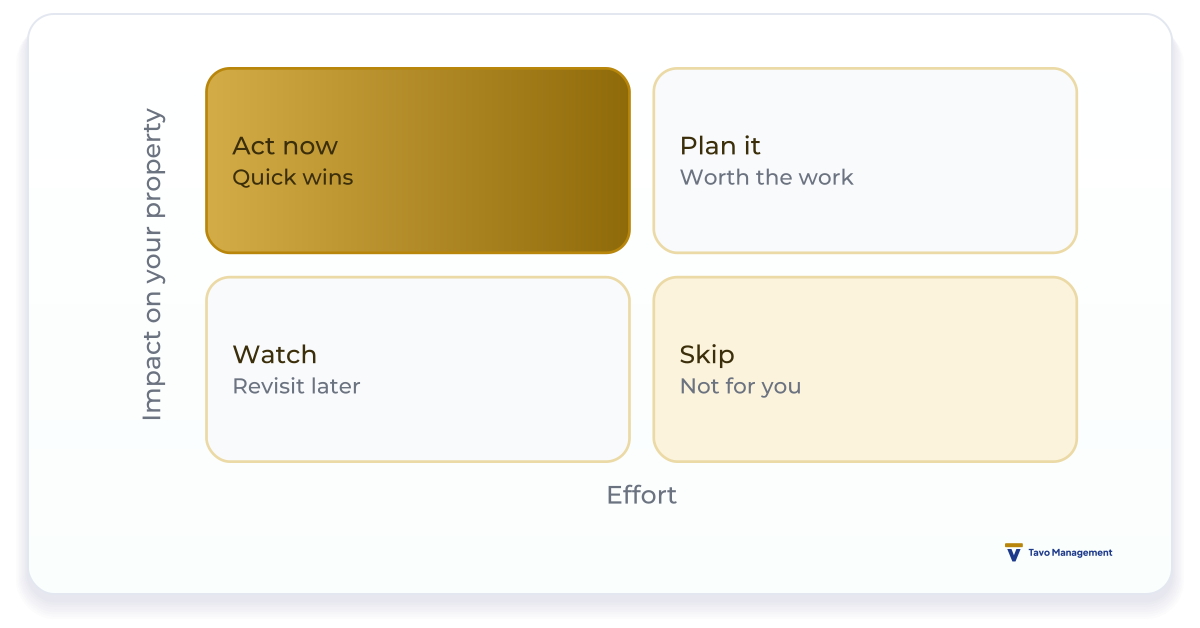
Twelve shifts are too many to act on at once. I use three filters with clients. First, does the trend touch a number you already track? Second, can one manager test it within a month? Third, does it fix a problem your guests or staff already mention? A trend that passes all three is worth a pilot.
- Pick one trend from the people group and one from the technology group.
- Name an owner and a baseline number for each.
- Set a review date four to six weeks away.
- Stop anything that shows no movement at that date.
For concrete routines to start with, see my collection of hospitality management examples, and if software is part of your plan, compare the options in the hospitality management software ranking.
Questions About Hospitality Management Trends
What Is the Biggest Trend in Hospitality Management Right Now?
Labor is the one that touches everything else. Staffing shortages and high turnover push hotels to simplify handoffs, speed up onboarding and use scheduling tools. Most of the other trends in this article, from AI to reporting, are responses to that pressure.
Is AI Replacing Hotel Staff?
In the examples I see, AI takes over scheduling, matching and reporting tasks, and the roles stay. Guests still value people at check-in and in the restaurant. The more realistic change is that staff spend less time on lists and more time with guests.
Should a Small Independent Hotel Invest in AI Tools?
Only where you have a clear, measurable problem, such as pricing by feel or slow room turnover. Start with the tools already in your PMS, set limits and review results weekly. A big platform purchase rarely makes sense before you have fixed basic routines.
How Can I Reduce OTA Commissions?
Make direct booking as easy as the platforms: a fast mobile booking engine, a clear rate promise and a reason to return, such as a small perk. BCG puts commissions at 15 to 30 percent, so even a few points of shifted volume matter.
What Data Should a Hotel Manager Track Every Week?
I suggest five figures: room turnaround time, labor cost per occupied room, average daily rate against last year, complaint count by theme and direct booking share. Define each one in writing so every department reports the same number.
How Do I Know If a Trend Applies to My Property?
Ask whether it touches a number you already track and whether one manager could test it for a month. If yes, run a small trial. If it needs new budget before you see any result, wait and watch how others fare.
Where Can I Find Reliable Hospitality Data?
Use primary sources such as the U.S. Bureau of Labor Statistics for employment, and read vendor surveys with care, since they reflect the vendor's audience. When a figure matters for a decision, check who ran the survey and how many people answered.
Sources
- BCG, AI-First Hotels: Faster to Build, Leaner to Operate
- Hospitality Net, 37% of Travelers Now Use AI, Hotels Face 65% Staffing Crisis
- U.S. Bureau of Labor Statistics, quits rate in accommodation and food services, August 2026
- Hospitality Net, The 2026 Hotel Operations Index (contributed by Otelier)
General information only: this is not legal, financial or tax advice. Examples and numbers reflect typical projects; check the specifics with your advisers before deciding.
Did you find this helpful?
Thank you for your feedback.
Delaney Brisco
Delaney leads the Tavo editorial team and works with our consultants to turn real client projects into practical guides on project delivery, process design and organizational change. Before joining Tavo, she spent 12 years in operations and program management roles. She has since edited more than 300 articles on management practice and reviewed PMO setups and process redesigns from over 100 client projects. She is based in Minneapolis, Minnesota.