Summary
- Give every process one named owner, and quality stops being everyone's job and nobody's.
- Fix causes, not symptoms: a corrective action without a root cause usually comes back.
- Short procedures that your team helped write beat long ones written for the auditor.
- Track a few numbers that you review monthly, rather than many you never read.
Most quality problems I meet are old problems that nobody owned. A defect appears, someone fixes it, and three months later the same defect appears again. Good quality management consulting mostly means replacing that loop with a few reliable habits.
Below are nine practices I use with clients, each with a short explanation, what to do and what to avoid. They apply to a ten-person workshop as much as to a multi-site plant, and you can adopt them in any order.
The Nine Practices at a Glance
Use the table to spot where your own system is weakest, then jump to that practice.
| Practice | What it prevents | First step |
|---|---|---|
| 1. Define quality from the customer's view | Building to a spec nobody asked for | List your top five complaint types |
| 2. Name an owner for every process | Problems that fall between teams | Write one name beside each process |
| 3. Keep procedures short | Documents nobody reads | Cut your longest procedure in half |
| 4. Fix root causes | Repeat defects | Ask why five times on your last defect |
| 5. Audit your own work | Surprises in external audits | Audit one process this month |
| 6. Control your suppliers | Defects that arrive with the delivery | Rank suppliers by risk |
| 7. Train before you blame | Errors from unclear expectations | Check training records for one role |
| 8. Measure a few things well | Decisions made on gut feeling | Pick three metrics and review them monthly |
| 9. Hold a real management review | A system that drifts unseen | Book a quarterly 60-minute slot |
Nine Quality Management Practices and How to Apply Them
Define Quality From the Customer's View
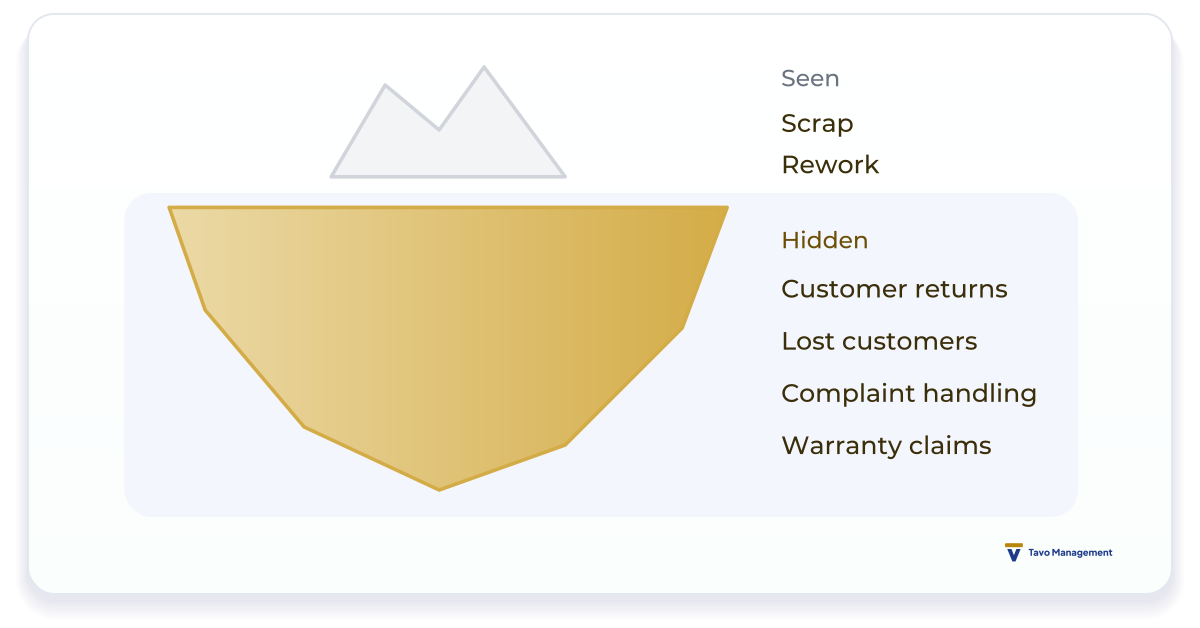
Quality is whatever your customer will pay for and come back for. ISO 9001 puts customer focus first among its principles for the same reason. If your standards come from internal habit, you can score well on every inspection and still lose accounts.
In my client work, the quickest way to find the real standard is to read the last twenty complaints and returns. The patterns rarely match what the team thinks matters. A manufacturing client found that late delivery caused more lost orders than defects, which changed where they put their effort.
Do This
- Sort complaints and returns by cause every month
- Write acceptance criteria in your customer's words
- Ask three customers what a bad delivery looks like
Avoid This
- Treating the internal spec as the customer's need
- Counting only defects and ignoring lateness or poor communication
Name an Owner for Every Process
A process without an owner has no one who can change it. Problems drop into the gaps between departments: sales promises something, production builds it and nobody checks that the two match. One name per process fixes most of that.
The owner does not do all the work. They own the result, review the numbers, approve changes and answer when something goes wrong. Pick someone with enough authority to change the process, even if that person is not the most senior one.
Do This
- List every core process and put one name beside it
- Give owners time in their calendar for process reviews
- Name a deputy for holidays and absences
Avoid This
- Naming a committee as the owner
- Making quality the sole job of one quality manager
Keep Procedures Short and Close to the Work
A procedure exists to help someone do a task correctly. When it grows to twenty pages, people stop opening it, and your system exists on paper only. I usually find that half the text in an old quality manual describes things nobody does.
Write what actually happens, in the order it happens, with a photo or screenshot where it helps. Let the people who do the job review the draft. If they say "that is not how we do it", you have either found a better method or a gap to close, and both are useful.
Do This
- Limit most procedures to one or two pages
- Use checklists at the point of work
- Retire documents nobody has opened in a year
Avoid This
- Copying a template that describes someone else's company
- Writing procedures only for the auditor
Fix Root Causes, Not Symptoms
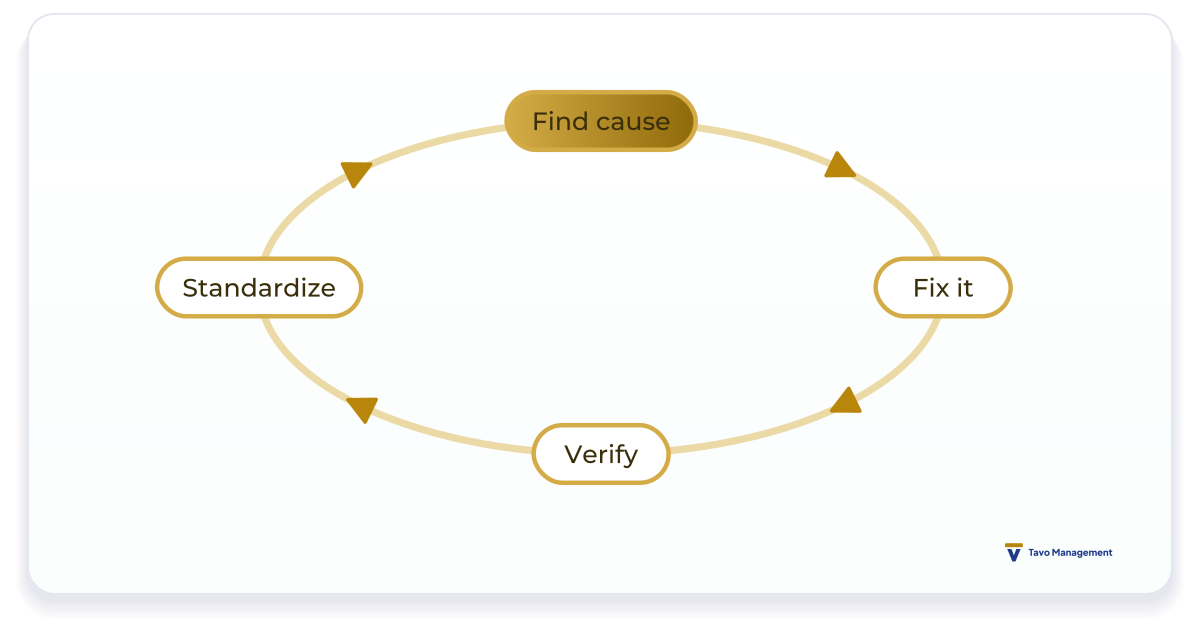
Reworking a faulty batch is a correction. Changing the step that caused the fault is a corrective action. Teams that only correct keep paying for the same problem. A simple method such as asking "why" five times, or drawing a fishbone diagram, is usually enough for everyday defects.
Close the loop afterwards. Check three to six weeks later that the cause is gone and the defect has not returned. The quality management framework I describe separately builds this check into every cycle, and it is the step teams skip most often.
Do This
- Record the root cause, not only the fix
- Give each action an owner and a due date
- Verify effectiveness after a few weeks
Avoid This
- Closing an action because the task was done, not because the problem stopped
- Blaming "operator error" as the final answer
Audit Your Own Work Before Others Do
Internal audits are your cheapest early warning. A short, friendly audit once a month, on one process at a time, finds gaps while they are still small. External auditors then confirm what you already know.
Choose auditors who do not own the process they check, and ask them to look at evidence, not opinions. Follow every finding with the same corrective action routine you use for customer problems, so audits feed improvement instead of paperwork.
Do This
- Plan a year of audits by risk
- Train auditors to ask open questions
- Share findings with the team the same week
Avoid This
- Auditing only when certification is near
- Using audits to assign blame
Control Your Suppliers by Risk
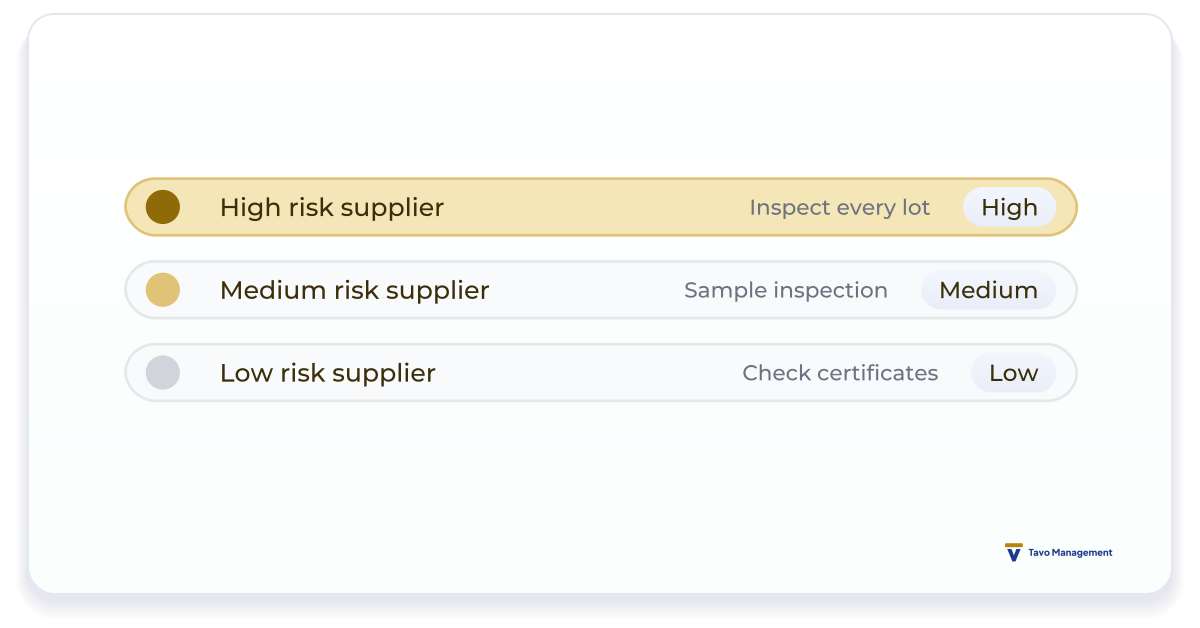
A defect that arrives in a delivery becomes your defect the moment it reaches your customer. You cannot audit every supplier, so rank them by what a failure would cost you and spend your attention on the top few.
Agree what you expect in writing, inspect incoming goods in proportion to risk and track each supplier's results over time. When a supplier slips, ask for a corrective action from them as well, with the same discipline you apply to yourself.
Do This
- Keep an approved supplier list with a risk rating
- Track on-time and defect rates per supplier
- Require corrective actions from suppliers for repeat issues
Avoid This
- Choosing suppliers on price alone
- Inspecting everything equally, which wastes effort on low-risk items
Train Before You Blame
Many errors labeled as carelessness start with a gap in training or an unclear instruction. When a mistake appears, check first whether the person was ever shown the right way and whether the instruction was clear.
Keep training records short and current: who was trained, on which procedure version, and how you checked that it worked. Observing someone do the task once tells you more than a signed attendance sheet.
Do This
- Train again whenever a procedure changes
- Check understanding by observation
- Keep a skills matrix per team
Avoid This
- Treating a signature as proof of competence
- Disciplining before you look at the process
Measure a Few Things and Review Them
Three numbers you review every month beat thirty you never open. Pick measures tied to your customer's experience and your cost of failure, such as first-pass yield, complaints per thousand units and on-time corrective actions. My list of quality management metrics explains each one.
Put the numbers on one page and look at the trend, not a single month. A sudden jump deserves a question, while a slow drift usually points to a process that has changed without anyone noticing.
Do This
- Set a baseline before you improve anything
- Show trends on a simple chart
- Retire metrics nobody acts on
Avoid This
- Tracking numbers because the software offers them
- Rewarding the metric in a way that people can game
Hold a Management Review That Decides Things
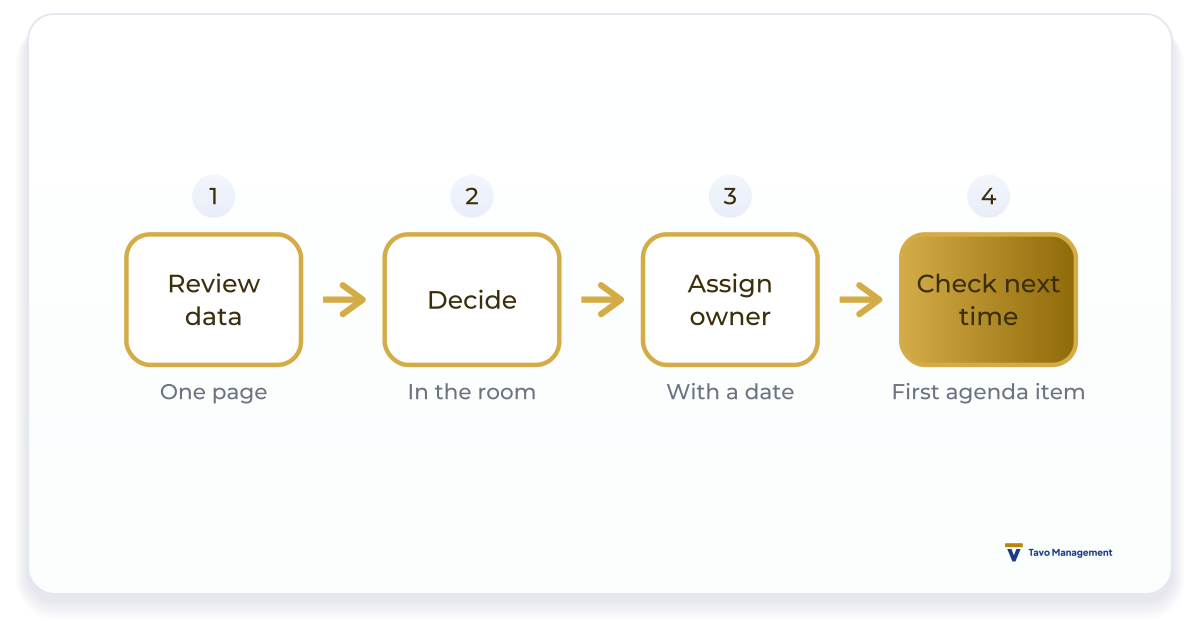
Once a quarter, the people who control budget and priorities should look at the numbers, the open corrective actions, audit results and customer feedback, then decide. A review that ends without a decision is a status meeting.
Keep it to an hour with a fixed agenda, and record each decision with an owner and a date. Over a year, the minutes become the story of how your system improved, which is exactly what an auditor wants to see.
Do This
- Send the numbers a few days ahead
- Decide on resources, not only on actions
- Follow up on last quarter's decisions first
Avoid This
- Delegating the review to junior staff
- Reading slides aloud for an hour
Which Practice to Adopt First
The right order depends on what hurts. Use the table as a quick triage, and see my guide to the typical quality management challenges if you expect resistance along the way.
| If this is your problem | Start with | Expect to see |
|---|---|---|
| The same defect keeps returning | Practice 4, root causes | Fewer repeat complaints within a quarter |
| Audits are stressful | Practice 5, internal audits | Fewer surprises and smaller findings |
| Nobody follows the procedures | Practice 3, short procedures | More use of documents at the point of work |
| Defects come in with deliveries | Practice 6, supplier control | Lower incoming defect rate |
| Leadership has no view of quality | Practices 8 and 9 | Decisions made on data |
Deciding Where to Begin
Look for the practice that is cheap to start and addresses a problem your customers already notice. Then check your shortlist against these points:
- The problem costs you money or customers today.
- One person can own the change and has time for it.
- You can measure the result within one quarter.
- The people doing the work help design the new routine.
If your records live in spreadsheets and that slows you down, compare the best quality management software options before buying anything. Software helps once the practice already works on paper.
Questions About Quality Management Best Practices
What Are the Most Important Quality Management Best Practices?
If I had to pick three, I would pick clear ownership of every process, root-cause corrective actions and regular internal audits. They cost little compared with the failures they prevent, and most of the other practices in this list build on them. Start there, then add measurement and supplier controls.
How Many Procedures Does a Small Business Really Need?
Fewer than you think. A small company can run well on a handful of short procedures for document control, corrective action, internal audits, training and supplier approval, plus work instructions where a mistake is expensive. If a procedure is longer than two pages, I would ask whether it describes real work.
Do I Need ISO 9001 to Follow These Practices?
No. The practices here apply to any business. ISO 9001 gives you a recognized structure and a certificate that some customers require, but you can adopt the same habits without certifying. Decide on certification when a customer, tender or insurer asks for it.
How Often Should I Run Internal Audits?
Cover every process at least once a year, and look at the high-risk ones more often. Most small teams do well with a short audit each month, each on a different process, rather than one large audit that everyone dreads. Increase the frequency for any process with repeat findings.
How Do I Get Employees to Follow the Quality System?
Involve them when you write the procedures, keep the steps short and put the records where the work happens. People ignore rules they did not help shape or that slow them down. Show them what a defect costs and what changed after their last suggestion, and ownership follows.
What Is the Difference Between a Correction and a Corrective Action?
A correction fixes the single problem in front of you, such as reworking a faulty batch. A corrective action removes the cause so the problem does not come back, such as changing the setup step that caused the fault. Good systems record both and check later that the cause stayed fixed.
Where Should I Start If My Quality System Is a Mess?
Start with the problems customers notice, usually complaints and late deliveries. Map the process behind the worst one, find the root cause and fix it with a named owner and a date. One closed problem builds more support than a full system redesign, and it shows you which practices you need first.
Sources
General information only: this is not legal, financial or tax advice. Examples and numbers reflect typical projects; check the specifics with your advisers before deciding.
Did you find this helpful?
Thank you for your feedback.
Delaney Brisco
Delaney leads the Tavo editorial team and works with our consultants to turn real client projects into practical guides on project delivery, process design and organizational change. Before joining Tavo, she spent 12 years in operations and program management roles. She has since edited more than 300 articles on management practice and reviewed PMO setups and process redesigns from over 100 client projects. She is based in Minneapolis, Minnesota.