Summary
- Unclear ownership and weak leadership support cause more quality failures than any technical gap.
- Procedures people did not help write are the ones they will not follow.
- A backlog of open corrective actions tells auditors the system finds problems and then ignores them.
- Tackle one challenge at a time, starting with the one that costs you the most today.
Quality systems rarely fail on the first day. They wear down: a procedure drifts from practice, actions pile up, and a metric stops being read. Teams that bring in quality management consulting often describe the same ten symptoms, whatever their industry.
Below I describe each challenge as it looks from the inside and what has worked for my clients. Pick the two or three that sound like you, and ignore the rest until they matter.
The Ten Challenges Side by Side
| Challenge | Typical sign |
|---|---|
| 1. Quality Has No Clear Owner | Everyone agrees quality matters and nobody is responsible for it. |
| 2. Leadership Treats Quality as a Cost | Quality competes with output for time and budget. |
| 3. Procedures Nobody Follows | The documented process says one thing and the shop floor does another. |
| 4. Corrective Actions That Never Close | The action list grows. |
| 5. Treating Symptoms Instead of Root Causes | A defect appears, someone reworks it and production moves on. |
| 6. Too Many Metrics, Too Little Insight | Dashboards fill with numbers because the software offers them. |
| 7. Supplier Quality You Cannot Control | Defects arrive with the delivery, and your team finds them late or not at all. |
| 8. Training and Competence Gaps | New hires learn on the job, procedures change without retraining and records show signatures but not skill. |
| 9. Documentation Overload and Version Chaos | The same procedure exists in four versions across shared drives and email attachments. |
| 10. Culture That Hides Problems | People report fewer problems when they fear blame. |
Ten Quality Management Challenges and Ways Through Them
Quality Has No Clear Owner
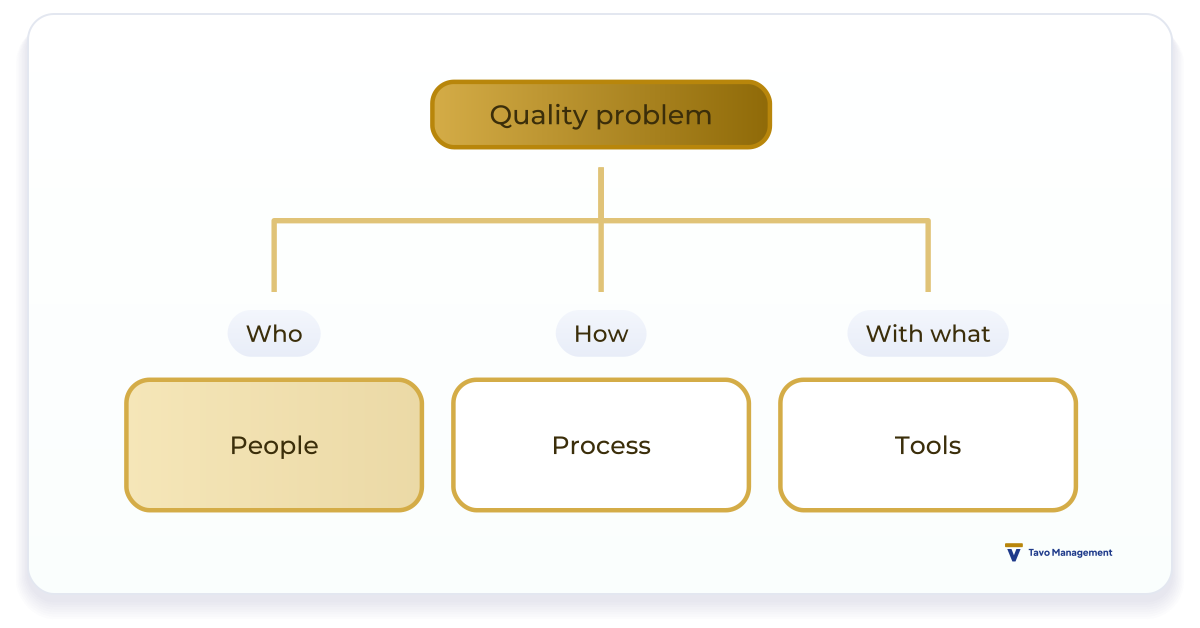
Everyone agrees quality matters and nobody is responsible for it. A defect crosses three departments, each of which assumes another one will deal with it. The quality manager ends up chasing people who report elsewhere.
The fix is to name one owner per process, with authority to change it, and to let the quality function support rather than own the work. Owners review their own numbers every month. When something fails, you know who to ask, and the answer is not 'quality'.
How to start
- List your core processes and name one owner for each
- Agree what the owner can decide without escalation
- Add a process review to the owner's monthly calendar
- Name a deputy so absence does not create a gap
Leadership Treats Quality as a Cost
Quality competes with output for time and budget. When deadlines tighten, audits and training are the first things postponed, and the cost shows up later as rework and complaints that nobody links back to the decision.
Make the cost of failure visible in money. Even a rough figure for scrap, rework, returns and complaint handling changes the conversation. ASQ's four categories of cost of quality (prevention, appraisal, internal failure and external failure) give you a structure for the estimate.
A first week plan
- Estimate your monthly cost of poor quality from finance data
- Show one recent failure and what it cost at each stage
- Bring a prevention proposal with its expected saving
- Add the figure to the quarterly management review
Procedures Nobody Follows
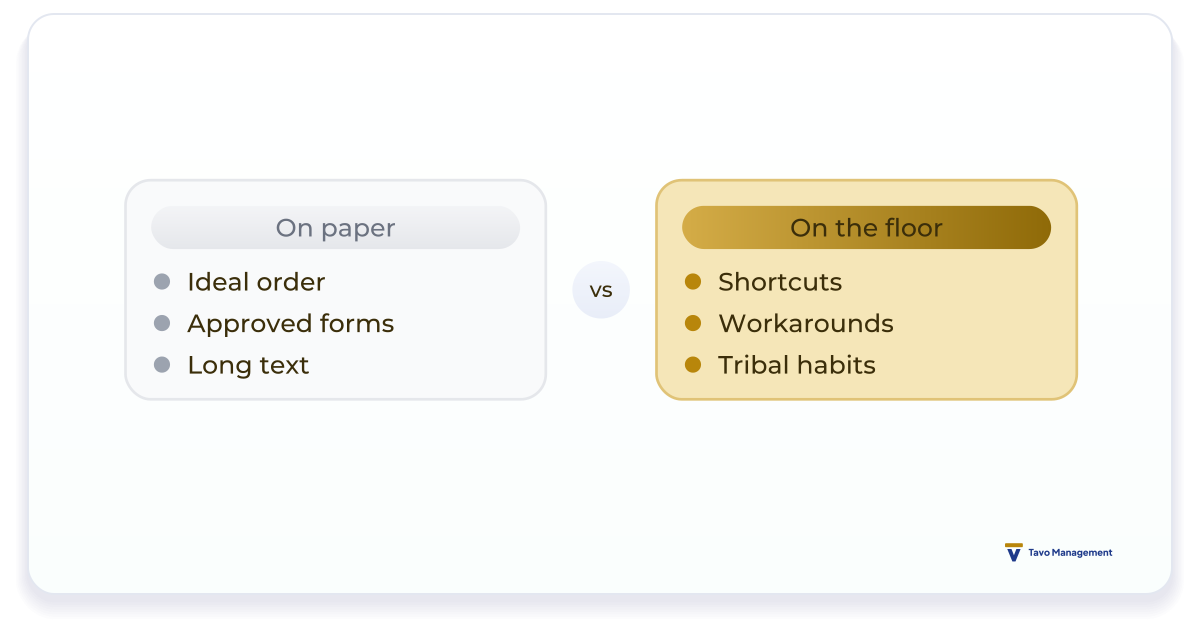
The documented process says one thing and the shop floor does another. Procedures written for an audit sit in a folder, and new colleagues learn from whoever sits next to them. The first time an auditor asks to see the process in action, the gap appears. My quality management best practices cover the same ground from the other side.
Rewrite procedures with the people who do the work, in plain language, and keep them short. If practice is better than the document, change the document. If the document is right, find out why people deviate, because there is usually a reason such as missing tools or time pressure.
Moves that work
- Observe the work as it really happens
- Ask the team where the procedure is wrong or slow
- Cut anything that adds no control
- Reissue it and train people on the new version
Corrective Actions That Never Close
The action list grows. Items are overdue, owners have changed roles and nobody is sure which ones still matter. A backlog like this tells auditors that the system detects problems and then does nothing about them.
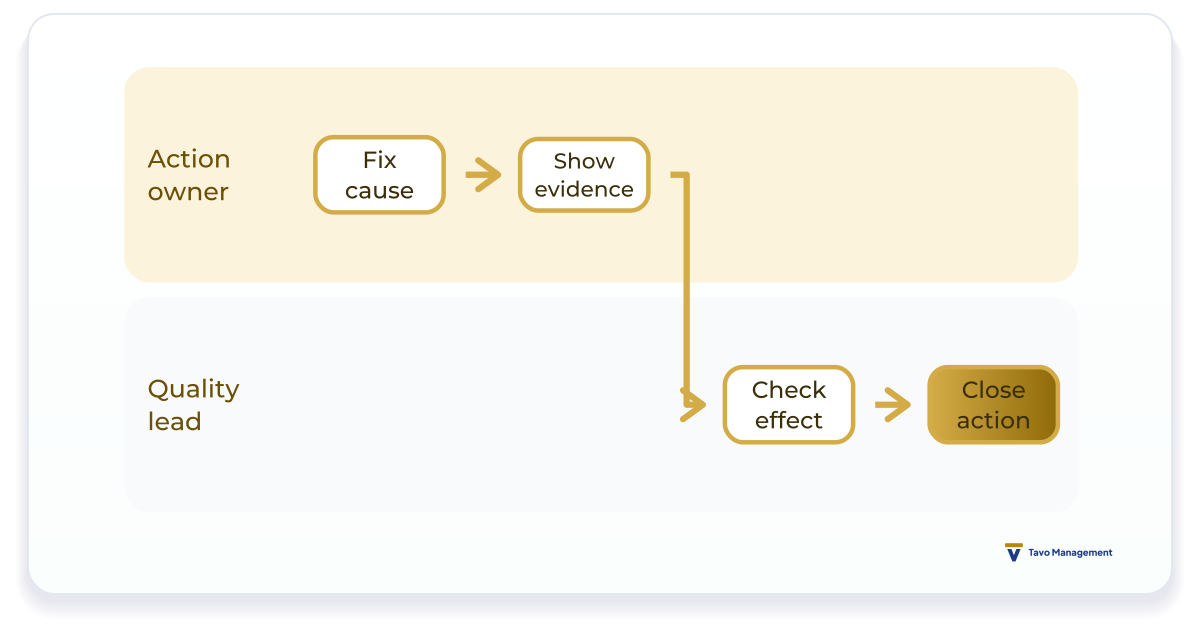
Limit the number of open actions to what a team can really handle, and rank by risk. Each action needs an owner, a due date and a check for effectiveness. Close an action only when the problem has stopped, not when the task has been done.
Steps that help
- Review every open action and close or cancel the dead ones
- Rank the rest by customer or safety risk
- Cap open actions per owner
- Check effectiveness weeks after closure
Treating Symptoms Instead of Root Causes
A defect appears, someone reworks it and production moves on. The defect returns next month in a slightly different form. Teams under pressure rarely have time to ask why, so the same fault gets fixed over and over.
Use a simple, repeatable method such as five whys for everyday problems and a fishbone diagram for complex ones. Reserve deeper analysis for failures that are costly or repeated. The aim is a cause you can remove, not a name to blame. The quality management framework in my other guide builds this check into every cycle.
How to break the cycle
- Define the problem with data, not opinion
- Ask why until you reach something you can change
- Test the cause with evidence
- Fix the cause and watch the trend for several weeks
Too Many Metrics, Too Little Insight
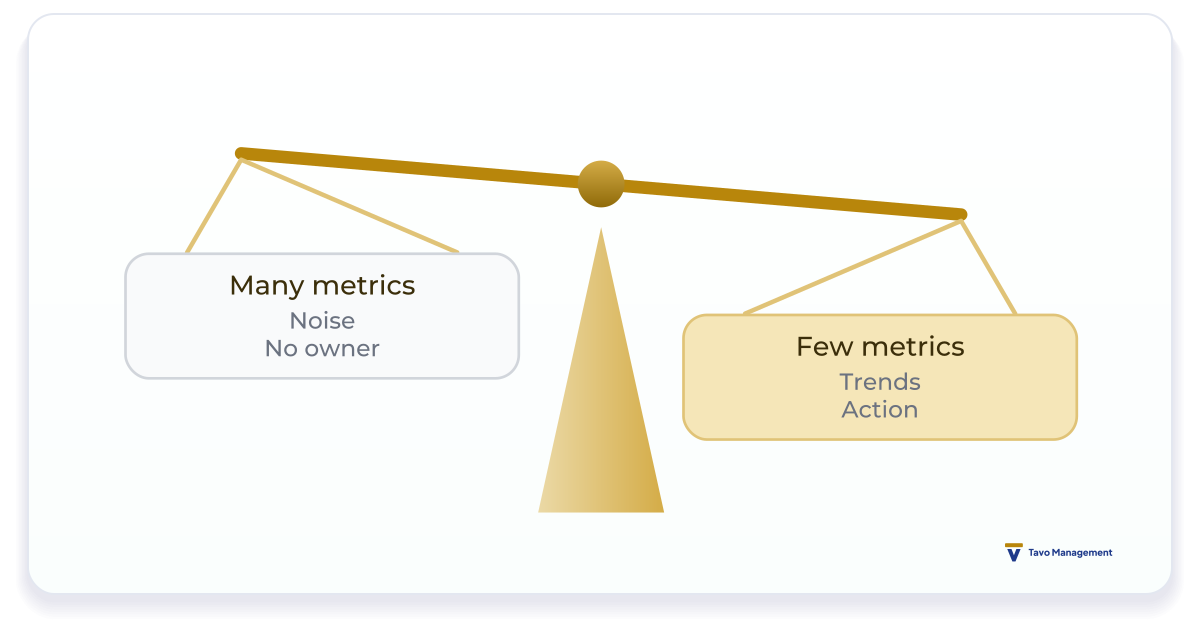
Dashboards fill with numbers because the software offers them. Meetings drift into debating the figures, and nobody can say which ones matter. When everything is measured, nothing gets acted on.
Cut the list to three to seven metrics that tie to customers, cost and the health of the system. Each one needs an owner, a target and an agreed response. My guide to quality management metrics covers the choices in more detail.
What to cut
- Mark metrics no one acted on in a year
- Keep one or two per area: customer, process, cost, system
- Write definitions down
- Review the set once a year
Supplier Quality You Cannot Control
Defects arrive with the delivery, and your team finds them late or not at all. Switching supplier is slow and expensive, and your customer blames you, not the source.
Rank suppliers by risk and spend your attention on the few that can hurt you most. Agree requirements in writing, inspect in proportion to risk and track acceptance rates. Ask for corrective actions from suppliers just as you would from your own team.
Controls to add
- Score each supplier by impact and past performance
- Set clear requirements in purchase agreements
- Inspect incoming goods by risk level
- Review results with the key suppliers every quarter
Training and Competence Gaps
New hires learn on the job, procedures change without retraining and records show signatures but not skill. When a mistake happens, the person gets blamed although nobody showed them the correct method.
Treat training as part of the process change itself: when a procedure is updated, train and check competence before it goes live. A skills matrix per team shows who can do what and where cover is thin.
How to close the gap
- Keep a skills matrix for each team
- Train on every procedure change
- Check competence by observing the task
- Keep records of who was trained on which version
Documentation Overload and Version Chaos
The same procedure exists in four versions across shared drives and email attachments. People use whichever copy they find first. Audits turn into hunts for the current document.
Control documents in one place with clear owners, version numbers and approval records. Remove old copies from circulation. A shared drive with strict rules can work for small teams, and a QMS becomes useful when volume and approvals grow, as covered in my ranking of quality management software.
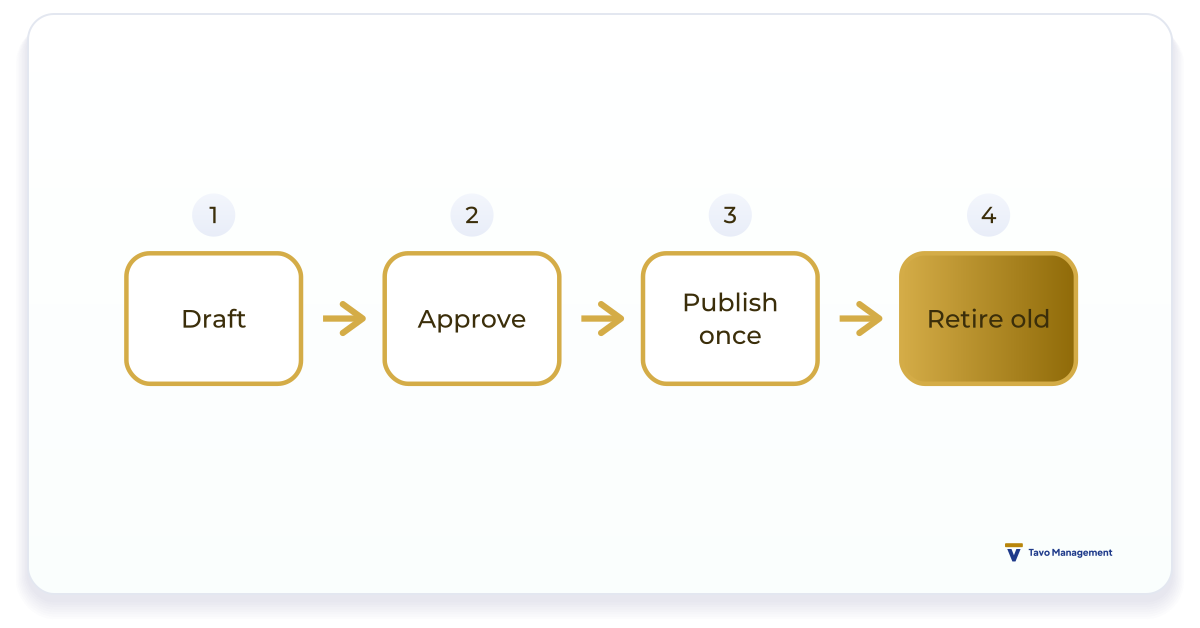
Housekeeping steps
- Pick one location as the single source of truth
- Give each document an owner and a review date
- Archive superseded versions out of sight
- Audit the folder for stray copies twice a year
Culture That Hides Problems
People report fewer problems when they fear blame. Near misses go unlogged, defects get quietly reworked and leadership only hears good news until a customer complains. This is the hardest challenge on the list and the one that makes the others worse.
Respond to bad news by asking what the process allowed, not who failed. Thank people who raise issues, and show what changed because of them. A culture shift is slow, and every honest response counts toward it.
Moves that change habits
- Respond to reports with questions, not blame
- Make logging a problem quick and simple
- Share what changed after each report
- Recognize teams that find and fix problems early
Which Challenge to Tackle First
You cannot fix all ten at once, and you should not try. Rank them by what they cost you and how fast you can act. People problems pay back slowly but last. Process fixes show up within weeks.
| Situation | Start with |
|---|---|
| Audit findings keep repeating | Challenges 4 and 5: corrective actions and root causes |
| Customers complain about late or faulty deliveries | Challenge 7: supplier quality |
| Nobody reads the quality documents | Challenges 3 and 9: procedures and version control |
| Budget for quality keeps getting cut | Challenge 2: show the cost of failure |
| People hide mistakes | Challenge 10: culture, plus challenge 1: ownership |
How to Choose Your Next Move
Before you commit time, run your shortlist through four questions:
- Does this challenge cost you money or customers right now?
- Can one person own the fix and see it through?
- Will you be able to measure improvement within a quarter?
- Will the people affected help design the solution?
If the answer is yes to all four, start there. If you do not know where to begin, the outside view from an experienced consultant often saves months.
Questions About Quality Management Challenges
What Is the Biggest Challenge in Quality Management?
In my experience it is ownership. When nobody owns a process, problems fall between teams and corrective actions stall. Naming one owner per process, with time and authority to change it, solves more than any tool or procedure rewrite.
Why Do Quality Improvement Projects Fail?
Usually for ordinary reasons: no clear sponsor, a goal nobody measured, too many changes at once or people who were never asked. Starting small, measuring a baseline and involving the people who do the work avoids most of these.
How Do I Get Management to Take Quality Seriously?
Show cost. A simple estimate of scrap, rework, returns and complaint handling in money gets attention that a defect count does not. Bring one example from your own business and the cost of fixing it at each stage.
How Do I Deal with Resistance from Employees?
Ask for their input before you write anything, remove steps that add no control and show what changed after earlier suggestions. People resist rules that appear without explanation or that slow them down. When they see their own ideas in the procedure, resistance drops.
Is ISO 9001 Certification Too Much for a Small Company?
It can be, if you copy a large company's approach. The standard asks for a system fitted to your size and risks, and small firms can meet it with short procedures. If no customer demands certification, you can still use its structure and decide on the certificate later.
How Long Does It Take to See Results from Quality Improvements?
Quick fixes to a known defect can show results within weeks. Cultural changes, such as consistent root-cause analysis and honest audits, take a few quarters. Set a baseline early so you can show progress while the deeper changes settle in.
Should I Buy Quality Software to Solve These Challenges?
Software solves the challenge of records and visibility, not the challenges of ownership, culture or unclear processes. Fix the routine first on paper, then automate it. If you do buy, the ranking in my guide to quality management software can shorten your shortlist.
Sources
General information only: this is not legal, financial or tax advice. Examples and numbers reflect typical projects; check the specifics with your advisers before deciding.
Did you find this helpful?
Thank you for your feedback.
Delaney Brisco
Delaney leads the Tavo editorial team and works with our consultants to turn real client projects into practical guides on project delivery, process design and organizational change. Before joining Tavo, she spent 12 years in operations and program management roles. She has since edited more than 300 articles on management practice and reviewed PMO setups and process redesigns from over 100 client projects. She is based in Minneapolis, Minnesota.