Summary
- A framework works as a sequence of seven phases, and each phase should produce something your team uses.
- Leadership and ownership come before documents. A system without a sponsor turns into paperwork.
- The plan, do, check, act cycle runs through every phase and keeps improvement continuous.
- Start with the processes that carry the most risk, and expand once those run well.
The word framework suggests something large. In practice, a good one fits on a single page: what you promise customers, who owns what, how the work is controlled, how you check it and how you improve. Quality management consulting mostly means helping you build that page and make it real.
The model below has seven phases. It follows the logic of ISO 9001, which rests on customer focus, leadership, a process approach and continual improvement, and it works for businesses that never plan to certify. I have used the same order for workshops, clinics and plants, and adjusted only the depth.
The Seven Phases at a Glance
| Phase | Main question | Output | PDCA step |
|---|---|---|---|
| 1. Scope and context | What do customers need and what can go wrong? | Scope, risks, customer requirements | Plan |
| 2. Leadership and policy | Who commits to quality and how? | Policy, sponsor, owners | Plan |
| 3. Process map | How does the work really flow? | Process map with owners | Plan |
| 4. Controls and objectives | Which checks protect the customer? | Procedures, checks, objectives | Plan |
| 5. Run and train | Can people follow it in daily work? | Trained team, working records | Do |
| 6. Audit and measure | Is it working as intended? | Audit results, metric trends | Check |
| 7. Review and improve | What should change next? | Decisions, actions, updated system | Act |
The Seven Phases of the Framework
Phase 1: Define Scope and Customer Requirements
Decide which products, services, sites and processes the framework covers. Then write down what your customers expect and which risks could break that promise. A list of the last twenty complaints is a good start, because it shows requirements you may have missed.
Keep scope small enough to finish. A first framework that covers your core process well beats one that covers everything poorly, and you can widen it later. Note any rules that apply to you, and tell your team to check current regulatory requirements with the regulator or an accredited body rather than relying on summaries.
Phase 2: Secure Leadership and Set a Policy
Frameworks fail without a sponsor. Pick a senior person who will attend reviews, remove obstacles and approve resources. Write a one-paragraph quality policy in plain words that says what you promise customers and how you will improve.
Name process owners at the same time. This is the step where I most often meet resistance, because naming an owner means someone accepts responsibility for results. The conversation is uncomfortable once, and it saves many later.
Phase 3: Map the Processes as They Really Run
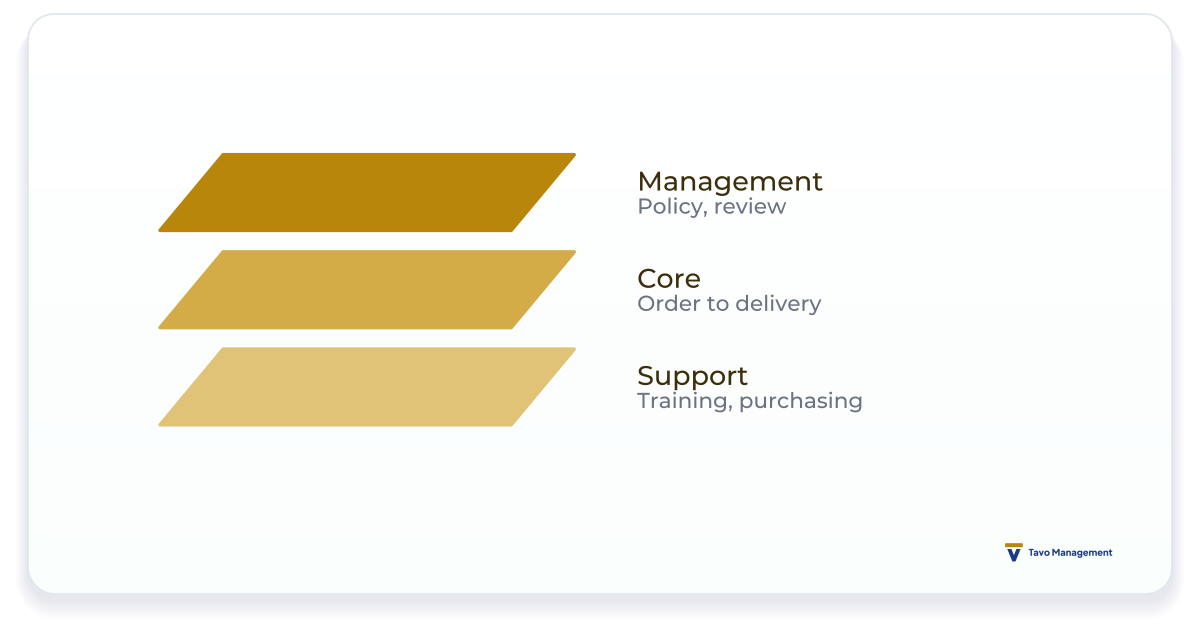
Sketch the main flow from customer request to delivery and after-sales, then break it into core, support and management processes. Walk through each one with the people who do it, and mark where handoffs happen, where records are made and where problems usually appear.
Resist the urge to draw how things should work. The map of what really happens shows you where the risk sits, and that is what you are controlling. Two or three hours per process with the right people is usually enough for a first version.
Phase 4: Design Controls, Procedures and Objectives
For each process, decide what must be true for the output to be right, and add the lightest check that guarantees it. That may be a checklist, an approval, an inspection or a record. Write short procedures for the steps where a mistake is expensive, and leave the rest to training.
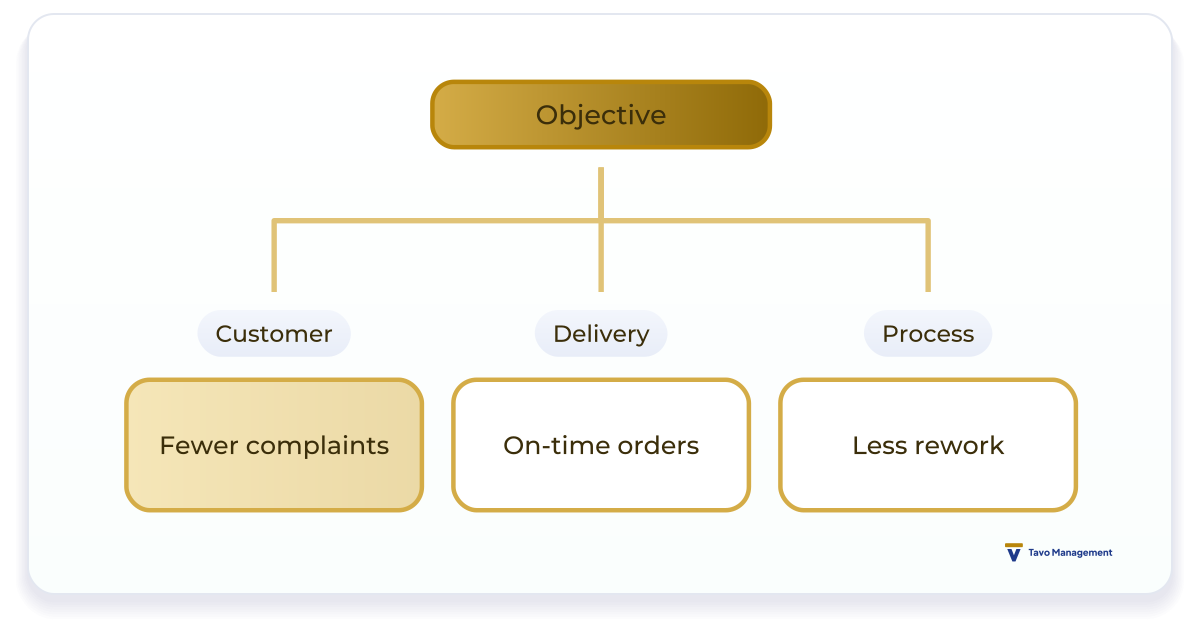
Set two or three objectives that link to customer outcomes, such as complaints per thousand units or on-time delivery. My list of quality management metrics explains how to define and review them. Set a baseline now, because you cannot prove improvement without one.
Phase 5: Train People and Run the System
Roll out in a single area first. Train the team on the new procedures, run the work with the new records for four to six weeks and collect feedback every week. Fix what is clumsy before it spreads to other areas.
Expect friction. Teams often feel the new checks slow them down at first, and the honest answer is that sometimes they do. Remove any check that adds no control, and keep the ones that catch real problems. The quality management best practices I describe elsewhere help here, particularly short procedures and clear ownership.
Phase 6: Audit, Measure and Listen
After the first run, audit it. Use a short internal audit on each process, check records against procedures and talk with the people doing the work. Compare your metrics with the baseline, and read customer feedback alongside them.
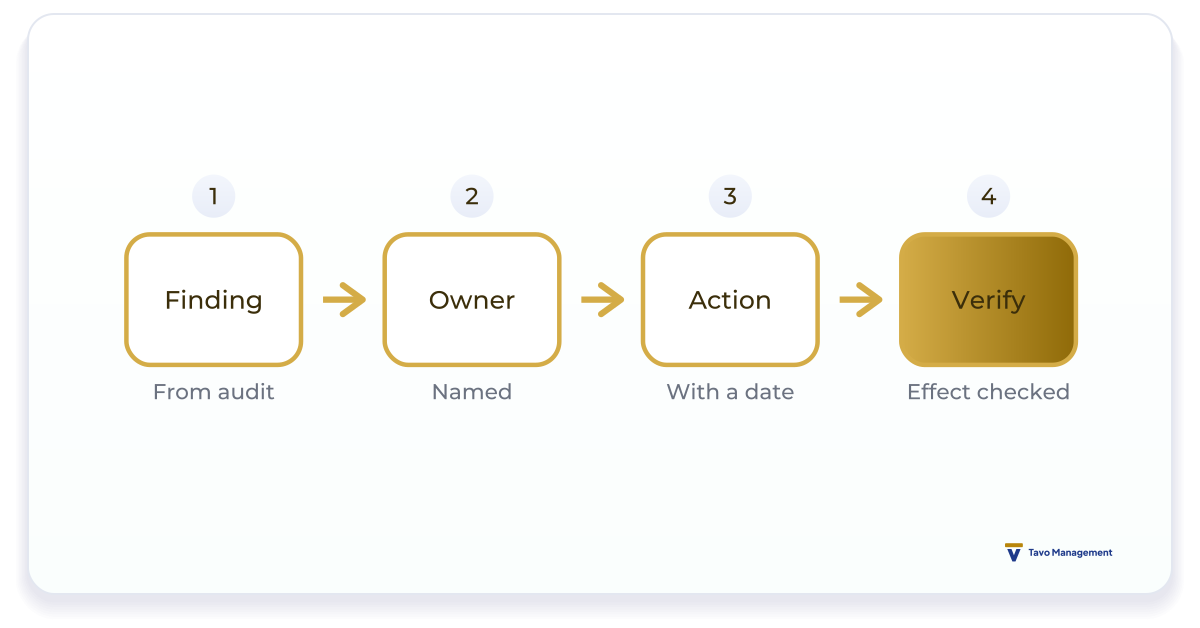
Every finding becomes a corrective action with an owner and a date. Check weeks later that the cause stayed fixed. Audits that produce no actions usually mean the audit was too gentle, and a framework that never checks its own work has stopped learning.
Phase 7: Review and Refine
Hold a management review at least once a year, and quarterly if you can. Look at audit results, metrics, complaints, supplier performance and open actions, then decide what to change. Record each decision with an owner and a date.
This phase closes the loop and starts the next one. Each cycle should leave the framework simpler or sharper, not heavier. When a review adds a new document, ask which old one it can replace.
How the Phases Map to Plan, Do, Check, Act
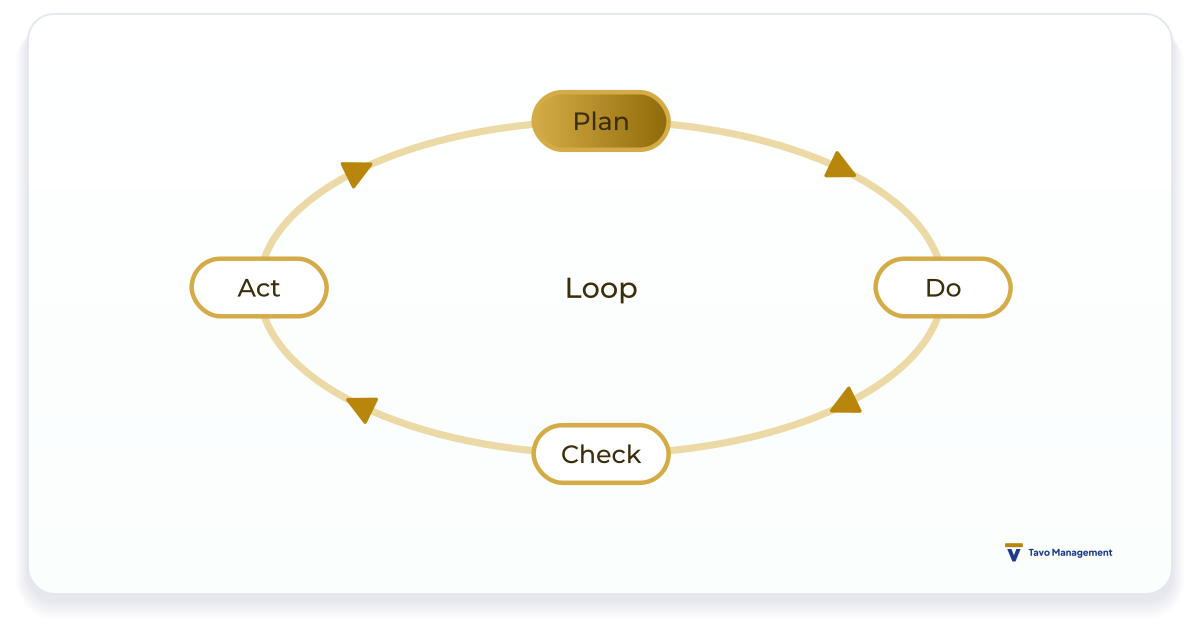
ASQ describes PDCA as a four-step model for carrying out change: plan the change, test it on a small scale, check the results and act by widening what worked or trying again. The seven phases above fit inside that loop. Phases 1 to 4 plan, phase 5 does, phase 6 checks and phase 7 acts.
Seeing the framework as a loop helps in one specific way: it makes the end of a project feel like the start of the next. Teams that treat the first rollout as finished stop improving, and the framework slowly turns into a binder.
What the ISO 9001 Principles Mean for Your Framework
ISO states that its standard rests on a strong customer focus, active leadership from top management, a process approach and continual improvement. You do not need a certificate to borrow the thinking. Each principle maps to a phase, and each one has a practical test you can run today.
Customer focus shows up in phase 1. The test: can anyone on your team name the three things customers care about most, without looking them up? Leadership is phase 2. The test: when did your sponsor last ask a process owner for numbers? A process approach runs through phases 3 and 4. The test: can you point to the owner of each core process on a wall chart? Continual improvement lives in phases 6 and 7. The test: what did you change last quarter because of an audit or a metric?
If you answer all four easily, your framework is already working in spirit. If one answer takes more than a minute, that is where I would start.
A Small-Company Example of the First Ninety Days
To make the sequence concrete, here is how I would plan the first quarter for a company of about forty people that makes and installs products for business customers. The numbers are an illustration, not a client result.
In month one, you cover phases 1 and 2. The owner reads the last twenty complaints with the team, agrees the three requirements customers care about most and names owners for four core processes: quoting, production, installation and complaints. A one-paragraph policy goes on the wall.
In month two, you cover phases 3 and 4. Each owner spends a few hours mapping their process with the people who run it, marks the two steps where mistakes cost most and adds one check at each. Installation gets a handover checklist, and production gets a first-piece inspection. The team picks three metrics: complaints per hundred jobs, first-time fix rate and on-time installation.
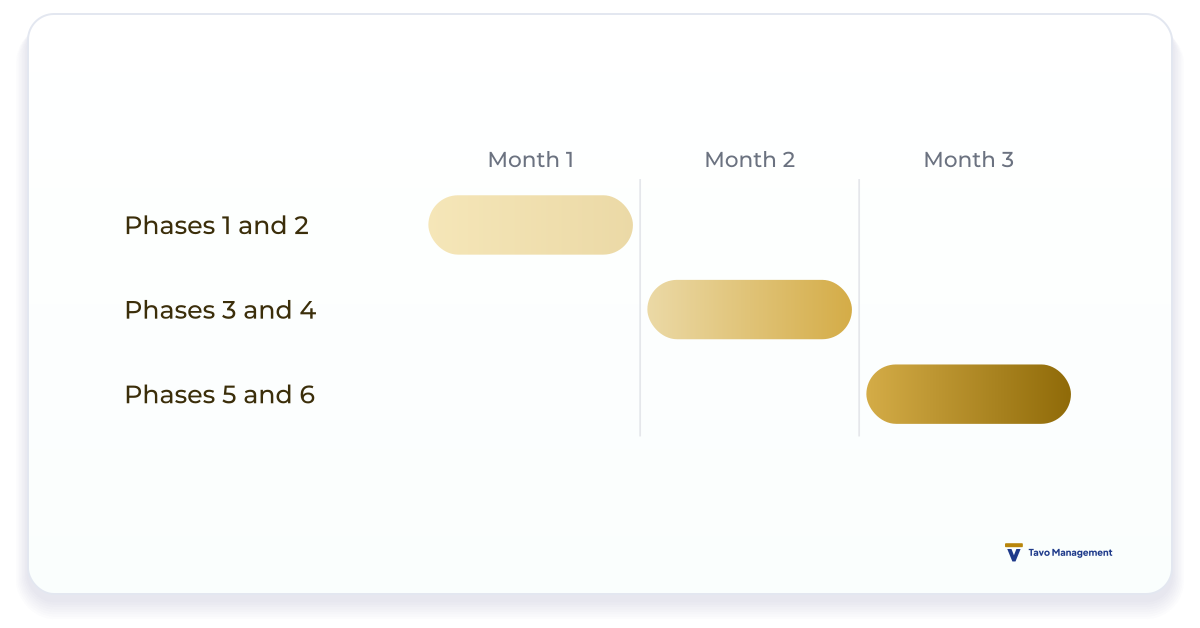
In month three, you pilot phases 5 and 6. One installation crew uses the new checklist for four weeks, a colleague from another team audits the process and the three metrics get a baseline. The result is a short list of findings, each with an owner and a date, and a decision on whether to roll the checklist out to the other crews. The quarterly review in phase 7 then sets the plan for the next ninety days.
Nothing here needs special software. A shared folder, a spreadsheet and a monthly meeting are enough to begin, and you add tools when the volume demands them.
Where Frameworks Go Wrong
The same few patterns come up in my review work. They are listed below with the phase where they begin.
| Pattern | Begins in | Better move |
|---|---|---|
| Copying a template from another company | Phase 3 | Map your own processes first |
| Documenting everything | Phase 4 | Write procedures only where a mistake is costly |
| Rolling out everywhere at once | Phase 5 | Pilot in one area, then expand |
| Audits that find nothing | Phase 6 | Audit evidence, not intentions |
| Reviews without decisions | Phase 7 | End each review with owners and dates |
Many of these show up as the recurring quality management challenges I cover in a separate article, so use it as a companion when you plan your rollout.
Choosing Your Starting Point
If you already have a working system, start at the phase that hurts. If you are starting from nothing, begin at phase 1. Before you commit, check these points:
- A named sponsor will attend the reviews.
- You know which processes carry the most risk to customers.
- The people who do the work are involved in the design.
- You have a baseline for at least three metrics.
Records get heavy fast, so decide early whether a spreadsheet will do or whether you need a system. My ranking of quality management software compares the main options once you reach that point.
Questions About the Quality Management Framework
What Is a Quality Management Framework?
It is the structure that tells your organization how to plan, run, check and improve quality. It names the processes, owners, records, audits and reviews that keep results consistent. ISO 9001 is the best-known example, and you can adapt the same idea to your own size and industry.
What Is the Difference Between a Framework and a Quality Management System?
I use framework for the model and the sequence of steps, and system for the working result: your documents, records, tools and routines. The framework tells you what to build and in which order. The system is what your team uses every day.
How Long Does It Take to Put a Framework in Place?
A small business with clear processes can have a working core in three to six months. Regulated or multi-site organizations usually need longer. I plan in stages, so each phase delivers something your team uses before the next one starts.
Do I Need to Follow ISO 9001 Exactly?
Only if you want certification. The standard is based on customer focus, leadership engagement, a process approach and continual improvement, and you can use that thinking without certifying. If a customer or tender asks for the certificate, work with the current text of the standard and an accredited certification body.
What Is PDCA and How Does It Relate to a Framework?
PDCA stands for plan, do, check, act. ASQ describes it as a four-step model for carrying out change that repeats for continuous improvement. A quality framework wraps this cycle around your whole organization, so every process gets planned, run, checked and improved.
Who Should Lead the Framework Rollout?
A senior sponsor who can make decisions, plus a project lead who knows the processes. Quality managers can lead the day-to-day work, but without visible backing from leadership, other teams treat the project as extra paperwork.
How Can I Tell the Framework Works?
Look at the trend in defects, rework, complaints, audit findings and on-time corrective actions against your baseline. If these improve and people use the procedures without being chased, the framework works. If scores are flat after two or three quarters, review ownership and how you handle root causes.
Sources
General information only: this is not legal, financial or tax advice. Examples and numbers reflect typical projects; check the specifics with your advisers before deciding.
Did you find this helpful?
Thank you for your feedback.
Delaney Brisco
Delaney leads the Tavo editorial team and works with our consultants to turn real client projects into practical guides on project delivery, process design and organizational change. Before joining Tavo, she spent 12 years in operations and program management roles. She has since edited more than 300 articles on management practice and reviewed PMO setups and process redesigns from over 100 client projects. She is based in Minneapolis, Minnesota.