Summary
- Dedicated platforms such as Resilinc and Interos map suppliers and watch them for events, which a procurement suite usually does less deeply.
- Most vendors do not publish prices, so ask for a quote at your real supplier count.
- Public review counts are low for this category, so run a pilot on your most critical parts instead of trusting ratings alone.
- Software finds risks. Your process, owners and response plan decide whether they get fixed.
The Best Supply Chain Risk Management Software at a Glance
| Tool | Type | Best for |
|---|---|---|
| 1. Resilinc | Multi-tier mapping and event monitoring | Manufacturers with complex bills of materials |
| 2. Interos | Outside-in risk scoring | Very large supplier lists |
| 3. Everstream Analytics | Predictive risk insight | Teams without a risk analyst |
| 4. Prewave | Multi-language monitoring and ESG | Responsible sourcing programs |
| 5. Sphera Supply Chain Risk Management | Risk module in a wider risk suite | Existing Sphera users |
| 6. Exiger | Deep sub-tier visibility and screening | Regulated and government-linked supply chains |
| 7. SAP Ariba | Risk inside procurement | Companies already on SAP Ariba |
The 7 Best Supply Chain Risk Management Software Tools, Ranked
I start with the dedicated platforms that suit the widest range of manufacturers and distributors and move toward specialist and suite-based options. Keep in mind that the tool is only part of the result. In the supply chain risk management consulting projects I review, a clear risk process matters more than the platform, and the supply chain risk management assessment is where you learn which risks deserve software at all.
Resilinc
The Most Complete Choice When You Need Deep Supplier Mapping and Fast Event Alerts
Resilinc maps suppliers down through the sub-tiers and links them to a live feed of disruption events, so you can see which parts and products an event touches.
Resilinc is the platform I mention first when a manufacturer tells me, “we have no idea who our suppliers’ suppliers are.” It builds a map from your bill of materials and supplier data, then connects that map to an event monitoring service that watches for fires, floods, strikes, financial trouble and similar news. When something happens near a factory on the map, you see which of your parts and products are exposed.
What I value is the link between the alert and the affected product. A generic news feed tells you a port is closed. Resilinc tells you which of your open orders were routed through it. The price of that depth is effort at the start: mapping takes supplier cooperation, and a program without an owner on your side goes stale within a year. I would pick it for a company with many plants and complex bills of materials, and skip it for a firm with fifty suppliers.
What Resilinc Does Well
- Event alerts are tied to your own parts and products
- Multi-tier mapping goes well beyond first-tier suppliers
- Strong fit for manufacturers with complex bills of materials
What Resilinc Could Do Better
- Mapping needs supplier cooperation and a named owner on your side
- Likely more platform than a small supplier base needs
Resilinc Pricing
Resilinc does not publish a standard price list. G2 shows a Basic plan at $1,400 per feature per month, with the price provided by Resilinc, so treat it as a starting point and ask for a quote for your supplier count.
Resilinc Reviews
- G2: No reviews yet (G2 listing)
Interos
A Strong Pick for Large Organizations That Need Continuous Risk Scores Across Thousands of Suppliers
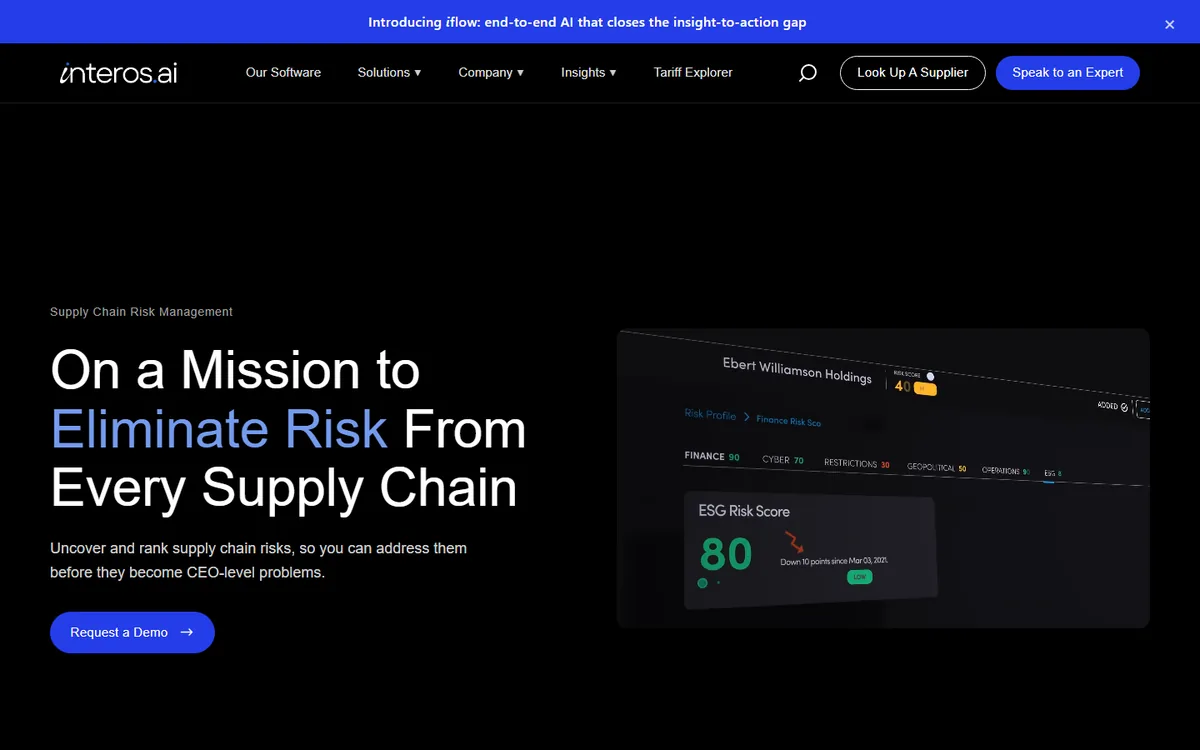
Interos builds a model of your supplier network and scores each supplier on financial, geographic, cyber, governance and other risk factors.
Interos takes a data-first approach. It builds a map of your supplier network from public and commercial data, then keeps scoring each company across several risk types, such as financial health, location, cyber exposure and compliance. You can start from a list of supplier names and get a view of risk without waiting for every supplier to fill in a questionnaire.
That speed is the reason I look at Interos for organizations with thousands of suppliers, where a manual survey would never finish. The trade-off is that outside-in data cannot see everything. A score tells you where to look, and someone still has to call the supplier. It also has a strong following among government and defense buyers, so check that the features you need are not built mainly for that audience.
What Interos Does Well
- Outside-in scoring gives you a first view without supplier surveys
- Several risk types sit in one view, from financial to cyber
- Suits very large supplier lists
What Interos Could Do Better
- Scores need human follow-up with the supplier
- Pricing is quote-only, and the depth may be too much for a small program
Interos Pricing
Interos does not publish prices, and its Capterra page lists the starting price as contact the vendor. Expect a quote based on the number of suppliers and the modules you pick.
Interos Reviews
- G2: No reviews yet (G2 listing)
Everstream Analytics
A Good Fit When You Want Predictive Risk Insight and Analyst Support Rather Than Just Alerts
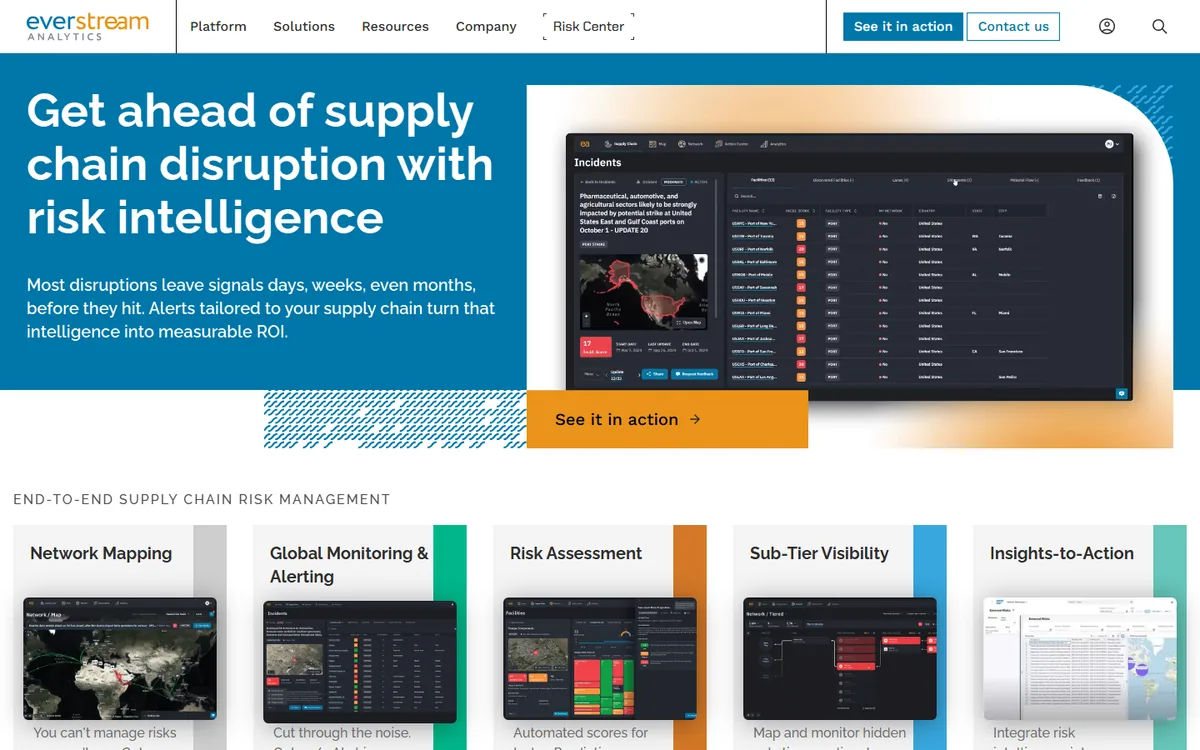
Everstream combines supplier data, risk models and analyst input to forecast disruptions at the sites, ports and routes your products depend on.
Everstream sells prediction more than reaction. Its platform scores the risk at the sites and routes you rely on, and its analysts add context to the warnings, so you get a view of what may happen next and not only what has already happened. If your team does not have a risk analyst, that human layer is useful.
In my experience, predictive tools are only worth the money if someone acts on the output. I would pair Everstream with a clear escalation path: who reads the weekly report, who decides to move stock and who calls the supplier. Without that, you pay for insight you never use. It suits mid-sized and large companies with global routes.
What Everstream Analytics Does Well
- Forecasts focus on sites and routes, not only on news
- Analyst commentary adds context to the alerts
- Works across several risk types in one platform
What Everstream Analytics Could Do Better
- Value depends on your team acting on the insights
- Prices on request, so budgeting takes a sales call
Everstream Analytics Pricing
Everstream does not publish pricing on G2 or on its website. You get a quote based on the scope of suppliers, sites and modules you choose.
Everstream Analytics Reviews
- G2: score of 3.5 out of 5 (from 1 user review, too few to judge) (G2 listing)
Prewave
A Smart Option If Supplier Sustainability and Human Rights Risks Matter as Much as Delivery Risks
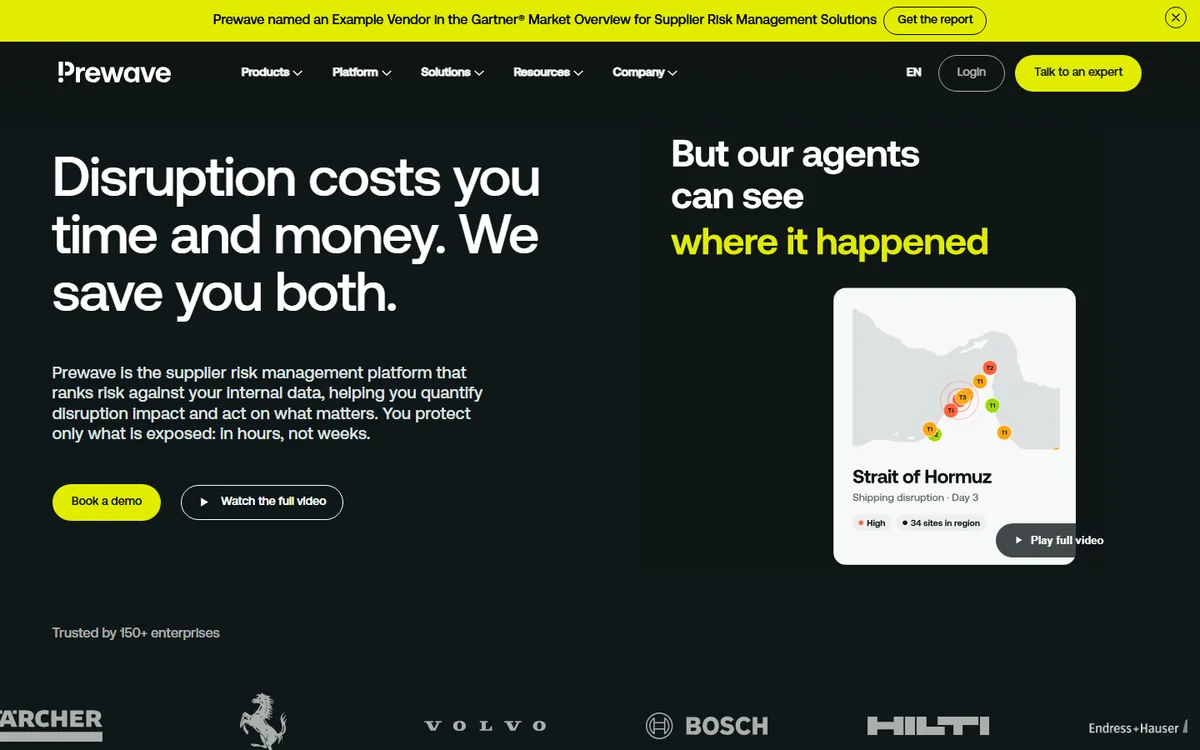
Prewave monitors news and public sources in many languages and flags supplier events, with a strong focus on ESG and responsible sourcing.
Prewave is a European platform that watches public sources, including local-language news, for events linked to your suppliers. It covers delivery risks such as strikes and plant incidents, and also sustainability topics such as labor conditions and environmental violations.
I recommend it to companies that must show their customers or auditors how they watch their suppliers, since the monitoring leaves a clear record. If your biggest worry is a single factory in a single region, a more mapping-heavy tool may serve you better. Prewave works best as a monitoring layer on top of a supplier list you already trust.
What Prewave Does Well
- Monitoring covers many languages and local sources
- Good fit for responsible sourcing and due diligence work
- Clear records of what was flagged and when
What Prewave Could Do Better
- Less focused on deep multi-tier mapping than some rivals
- Quote-only pricing and very few public reviews
Prewave Pricing
Prewave does not publish prices. G2 says pricing details are not available, so ask the vendor for a quote based on the number of suppliers you want to monitor.
Prewave Reviews
- G2: score of 3.5 out of 5 (from 1 user review, too few to judge) (G2 listing)
Sphera Supply Chain Risk Management
Best for Teams That Want Risk Monitoring Connected to Sustainability and Operational Risk Data
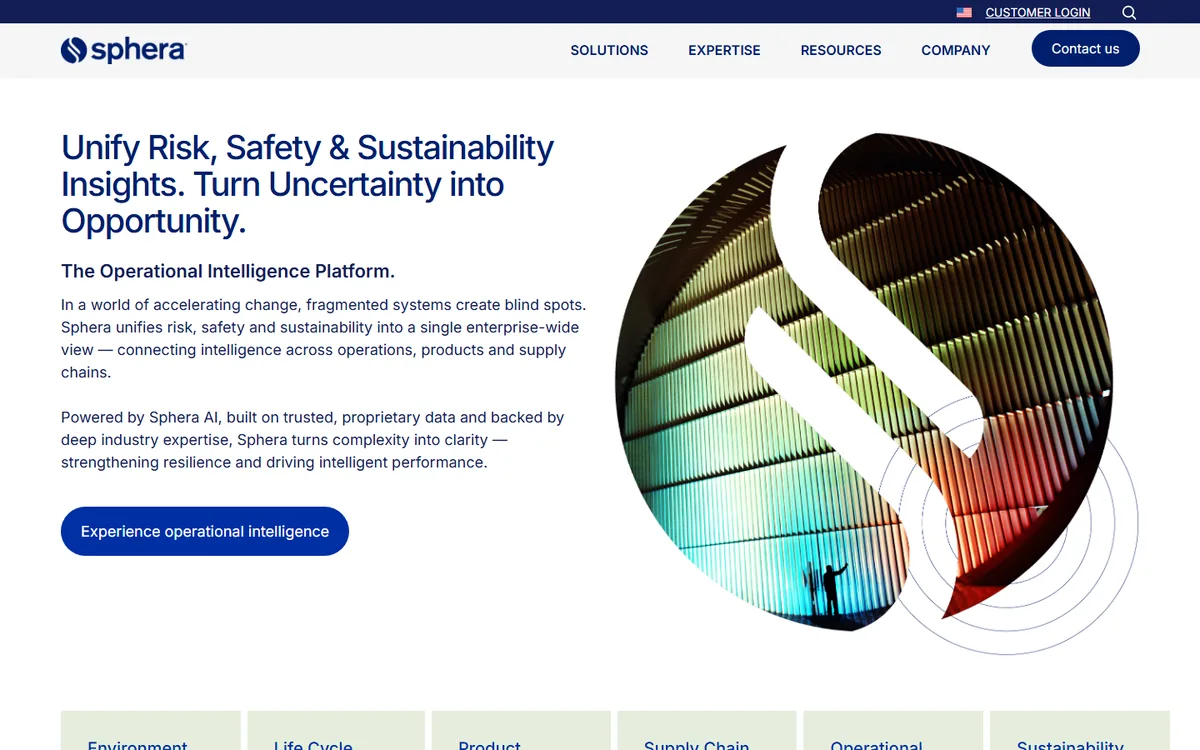
Sphera’s supply chain risk module, built on the riskmethods technology, adds supplier monitoring and risk assessment to a wider set of operational and sustainability tools.
Sphera Supply Chain Risk Management grew out of riskmethods and now sits next to Sphera’s tools for operational risk, product stewardship and sustainability. You get supplier monitoring, event alerts and risk assessments in a system your environmental, health and safety colleagues may already know.
That overlap is the main reason to consider it. If your company already uses Sphera elsewhere, one vendor and one data model make risk conversations simpler. If not, you take on a larger platform than you may need for supply risk alone, and I would compare it with a focused tool before deciding.
What Sphera Supply Chain Risk Management Does Well
- Connects with other operational and sustainability risk tools
- Event alerts and assessments sit in one workflow
- Familiar choice if you already use Sphera
What Sphera Supply Chain Risk Management Could Do Better
- Broader than you need if supply risk is your only goal
- Pricing is not public and G2 shows no reviews yet
Sphera Supply Chain Risk Management Pricing
Sphera does not publish prices for this product, and G2 states pricing details are not currently available. A quote depends on your supplier count and modules.
Sphera Supply Chain Risk Management Reviews
- G2: No reviews yet (G2 listing)
Exiger
A Heavyweight for Organizations with Government, Defense or Strict Due Diligence Requirements
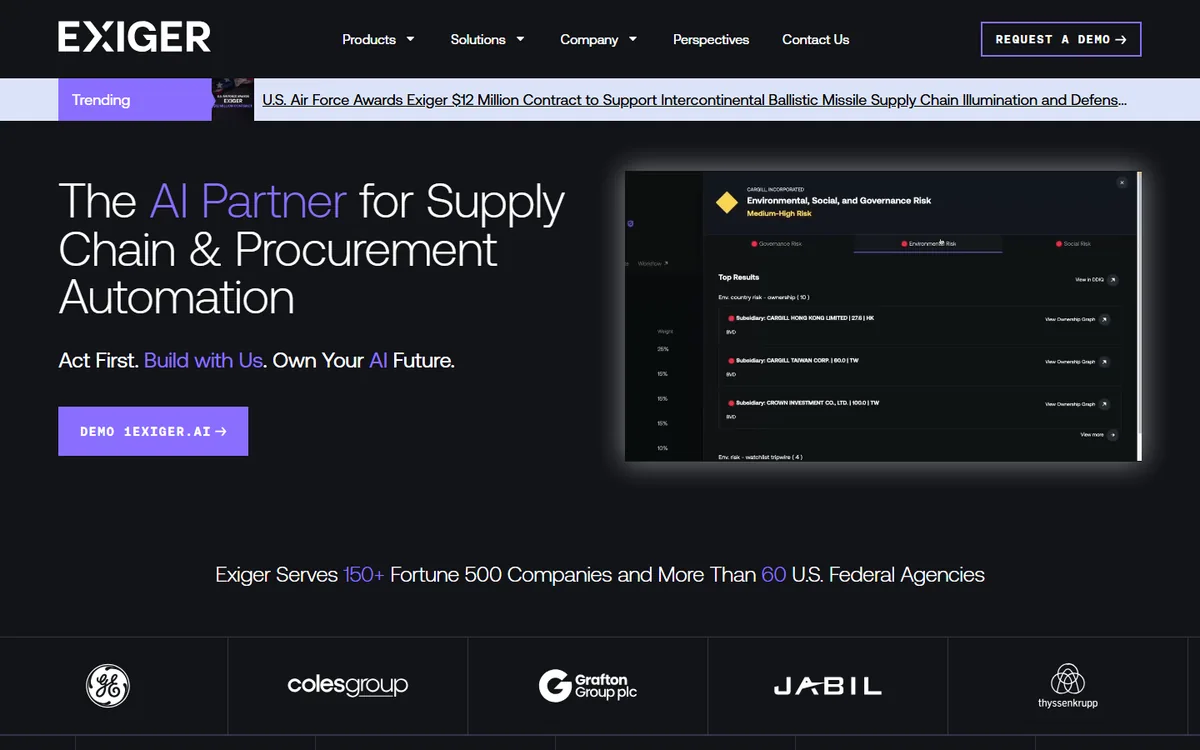
Exiger uses AI and a large body of data to map supply chains, screen suppliers and show where ownership, country and sub-tier links create risk.
Exiger is known for supply chain visibility work in regulated settings, including defense and other government-related industries. Its tools map suppliers deep into the chain, screen them for ownership and compliance issues and show where a single dependency sits behind several vendors.
I see it as a specialist choice. If you must prove to a government customer where your parts come from, the depth is exactly what you need. If you run a regional food producer, it will feel heavy. Check carefully that the modules you pay for match your use case, because the platform covers a lot of ground.
What Exiger Does Well
- Deep sub-tier visibility and ownership screening
- Built for strict due diligence and compliance needs
- Useful when customers ask you to prove where parts come from
What Exiger Could Do Better
- Likely more than a typical mid-sized company needs
- Quote-only pricing and a long onboarding
Exiger Pricing
Exiger does not publish prices. You get a quote shaped by the number of suppliers, the data depth and the modules you choose.
Exiger Reviews
- G2 and Capterra: No current rating confirmed. I could not find a published score for Exiger, so check both sites yourself.
SAP Ariba
The Natural Choice If Your Procurement Already Runs on SAP and You Want Risk Inside the Same Workflow
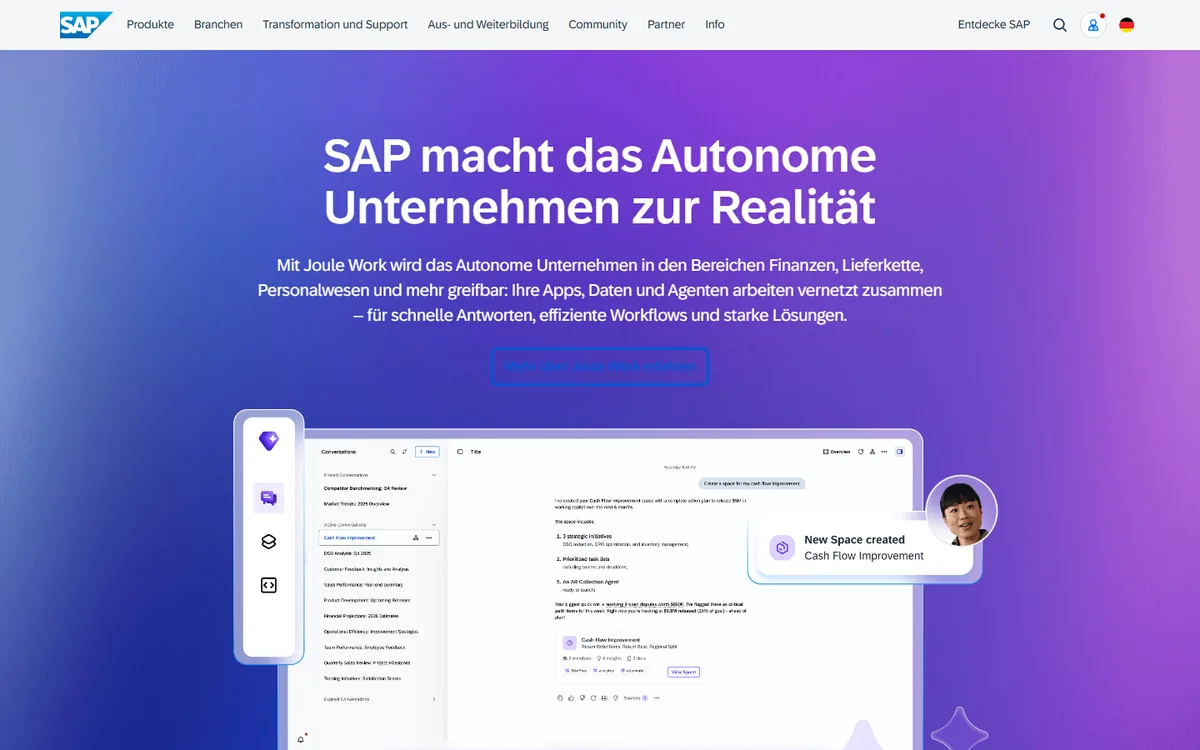
SAP Ariba adds supplier risk information to the sourcing, contract and supplier management work your buyers already do in the platform.
SAP Ariba is first a procurement suite, and its supplier risk features sit inside that workflow. Buyers see risk indicators for a supplier at the moment they qualify it, compare it or renew a contract, which is where many decisions actually get made.
I recommend it only if you already use Ariba. Adding a suite only for risk is a big commitment, and dedicated risk tools go deeper on mapping and event monitoring. Within an Ariba environment, though, the ease of adoption is real: your buyers do not have to open another system.
What SAP Ariba Does Well
- Risk sits inside the buying workflow your team already uses
- One supplier record for sourcing, contracts and risk
- Large global user base and partner network
What SAP Ariba Could Do Better
- Mapping and event monitoring are lighter than in dedicated tools
- Makes little sense as a stand-alone purchase for risk alone
SAP Ariba Pricing
SAP does not publish a standard price for Ariba. Pricing depends on the modules and the number of users or suppliers, so request a quote from SAP or a partner.
SAP Ariba Reviews
- G2: score of 4.1 out of 5 (from +750 customer reviews) (G2 listing)
Estimate the Return on a Supply Chain Risk Tool
Before you ask for quotes, check whether the numbers can work. Enter the manual hours your team spends each month on supplier checks and news monitoring, plus the monthly price you are considering, and you will see what it could return in a year. It covers time savings only, so avoided disruptions come on top.
Will It Pay for Itself?
Adjust the sliders to your workload and the plan you are looking at.
How to Choose the Right Supply Chain Risk Management Software
In my experience, a pilot on real parts tells you more than any feature list. Before you compare vendors, I suggest you answer four questions:
- Which ten products or parts would hurt most if they stopped, and do you know their sources?
- Do you need mapping below the first tier, or is event monitoring enough for now?
- Who will read the alerts and who can decide to act on them?
- Which systems must the tool connect to, such as your ERP or procurement suite?
If you run SAP Ariba, test its risk features first. If you have complex bills of materials and many plants, shortlist Resilinc and Interos. If sustainability due diligence is part of the job, add Prewave. Whichever you pick, the strategy behind your supply chain risk program should come first, so the tool serves a plan and not the other way around.
Questions About Supply Chain Risk Management Software
What Is Supply Chain Risk Management Software?
It is software that helps you find, score and monitor risks in your supplier base, such as financial trouble, plant incidents, weather, strikes and ownership problems. Most tools combine a supplier map with an event feed, so you see which of your parts and products are exposed when something happens.
How Much Does Supply Chain Risk Management Software Cost?
Most vendors in this category do not publish prices. Costs usually depend on the number of suppliers, the data depth and the modules you choose, so you get a quote after a demo. Ask each vendor for a price at your actual supplier count and for what renewal looks like in year two.
Do I Need Software or Is a Spreadsheet Enough?
A spreadsheet works for a small supplier base and a simple process. I suggest you move to software when you have hundreds of suppliers, several tiers that matter or too many alerts for one person to read. The process you build first decides how well any tool works.
What Is the Difference Between Supplier Risk Monitoring and Supplier Mapping?
Mapping shows who supplies what, down through the tiers. Monitoring watches those suppliers and sites for events. You need both: an alert about a flooded factory helps only if you know which of your products depend on it.
How Long Does It Take to Implement a Supply Chain Risk Tool?
A monitoring tool on a clean supplier list can start giving alerts in weeks. Multi-tier mapping takes longer because suppliers have to share data. Plan for a pilot on your most critical products first, then widen the scope.
Which Tool Is Best for a Mid-Sized Manufacturer?
For most mid-sized manufacturers, I would start by comparing Resilinc, Everstream Analytics and Interos in a pilot on the same set of critical parts. If you already run SAP Ariba, test its risk features before buying anything new.
Can These Tools Replace a Risk Management Process?
No. Software finds and scores risks, but people decide what to do about them. You still need owners, thresholds for action and a response routine. Without those, an alert is just another email.
Note: Prices, plans and ratings change frequently. We checked them at the last update, so confirm them with each vendor before buying. This is not legal or financial advice.
Did you find this helpful?
Thank you for your feedback.
Delaney Brisco
Delaney leads the Tavo editorial team and works with our consultants to turn real client projects into practical guides on project delivery, process design and organizational change. Before joining Tavo, she spent 12 years in operations and program management roles. She has since edited more than 300 articles on management practice and reviewed PMO setups and process redesigns from over 100 client projects. She is based in Minneapolis, Minnesota.