Summary
- Start with the ten to twenty parts and suppliers that would hurt most if they stopped, not with the whole supplier base.
- Each top risk gets one of four responses: avoid, reduce, transfer or accept, and a named owner.
- Backup sourcing and safety stock cost money, so size them to the cost of a stoppage.
- Review the register every quarter. A strategy that is never updated stops protecting you.
Most supply chain risk strategies fail in the same way: they list every risk a team can imagine, assign none of them to a person and end up in a shared folder. The ones that work are short and specific. They say which suppliers matter most, what you will do about each exposure and who decides when an alert arrives.
This guide walks through the five phases I use with clients. If you want help running them, the supply chain risk management consulting team at Tavo does this work end to end. The phases build on each other, so the table below shows what each one produces before you read the details.
The Five Phases at a Glance
| Phase | What it tells you | What you have at the end | Typical time |
|---|---|---|---|
| 1. Scope | What are we protecting? | A list of critical products and the parts behind them | 1 to 2 weeks |
| 2. Map | Who and where are the suppliers? | A supplier register with sites, routes and tiers | 2 to 4 weeks |
| 3. Rank | Which risks matter most? | A scored risk list with owners | 1 to 2 weeks |
| 4. Respond | What will we do about each one? | Chosen controls, budgets and playbooks | 3 to 6 weeks |
| 5. Monitor | How will we notice change? | Alerts, a review calendar and monthly metrics | Ongoing |
The times are what I see for a focused scope of around fifty suppliers. Larger programs take longer, mainly because suppliers are slow to share data.
Phase 1: Decide What You Are Protecting
Do not start with suppliers. Start with the products and customers you cannot afford to disappoint. List the products that carry the most revenue or margin, the customers with penalty clauses and the lines where a stoppage would take longest to recover from. Then trace each one back to its critical parts.
This narrows the work a great deal. A manufacturer with three thousand active suppliers often finds that a few dozen parts carry most of the real exposure. In one project, the list that mattered came down to twenty-six parts, and nine of them came from a single region.
Phase 2: Map Suppliers, Sites and Routes
A contract tells you who invoices you. It does not tell you where the part is made, which port it leaves through or who supplies your supplier. Mapping fills that gap. For each critical part, record the supplier, the production site, the country, the transport route and the sub-supplier for the key input.
Go to the second tier only for critical parts. That is where hidden dependencies live. Two suppliers that look independent often buy the same raw material from the same mill. When that mill stops, your backup fails together with your main source.
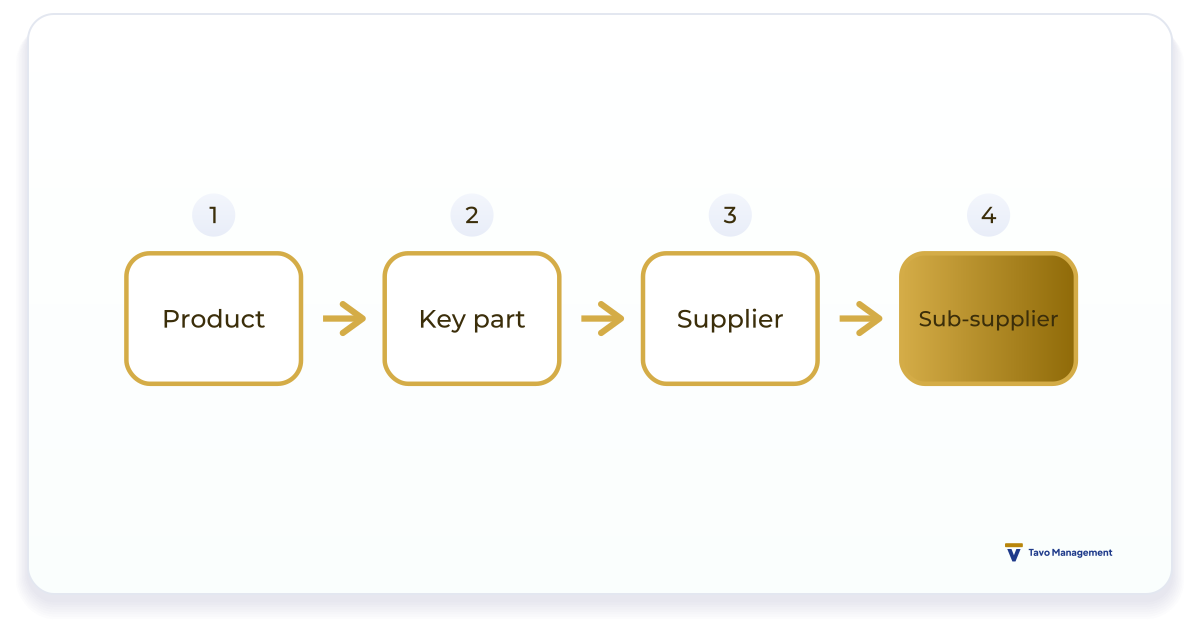
Ask suppliers directly, and expect partial answers. Some will not share sub-tier names. Note the gap in the register instead of leaving it blank, because an unknown is a risk by itself. If you need more reach, outside-in data tools can fill in blanks, and my comparison of supply chain risk management software shows what each one covers.
Phase 3: Rank Risks by Likelihood and Cost
Score every mapped dependency on two scales. Likelihood asks how probable a failure is in the next twelve months. Impact asks how much a failure would cost you in lost sales, penalties and recovery. Keep each scale to three levels so that people actually agree on the scores.
Add a third factor that most scorecards miss: recovery time. A supplier you can replace in two weeks is a smaller risk than one that needs six months of tooling and qualification, even if both fail equally often. If you want the method for gathering the data first, my guide to the supply chain risk management assessment covers scoring in detail.
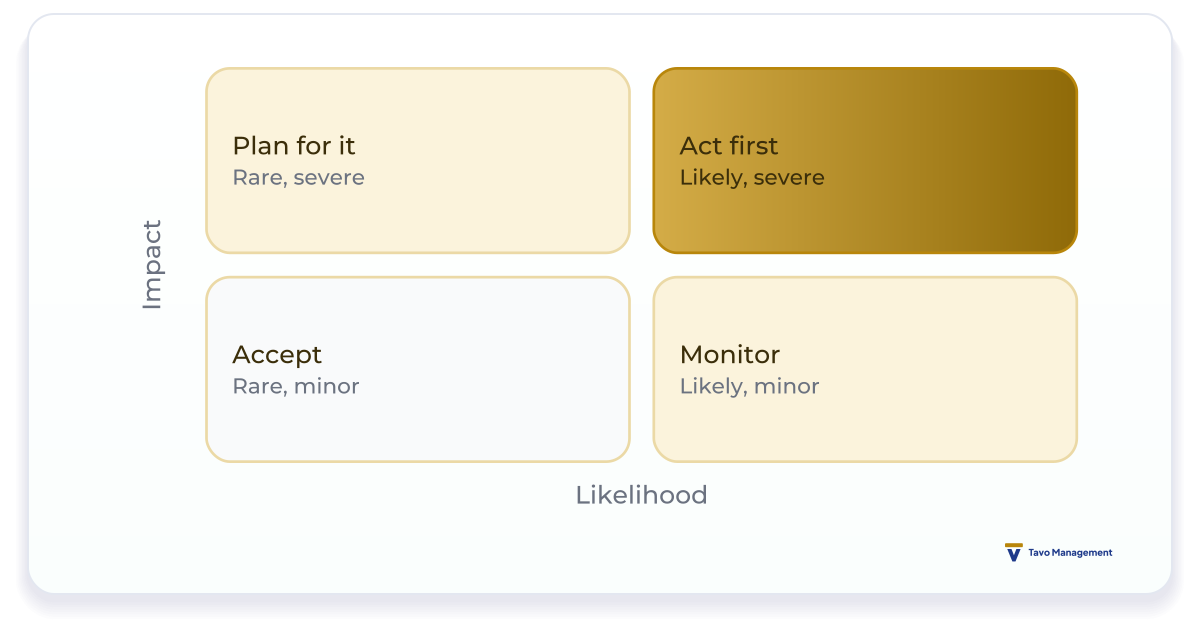
Give every top risk a named owner before you leave the room. A risk owned by a team is owned by nobody.
Phase 4: Choose a Response for Each Top Risk
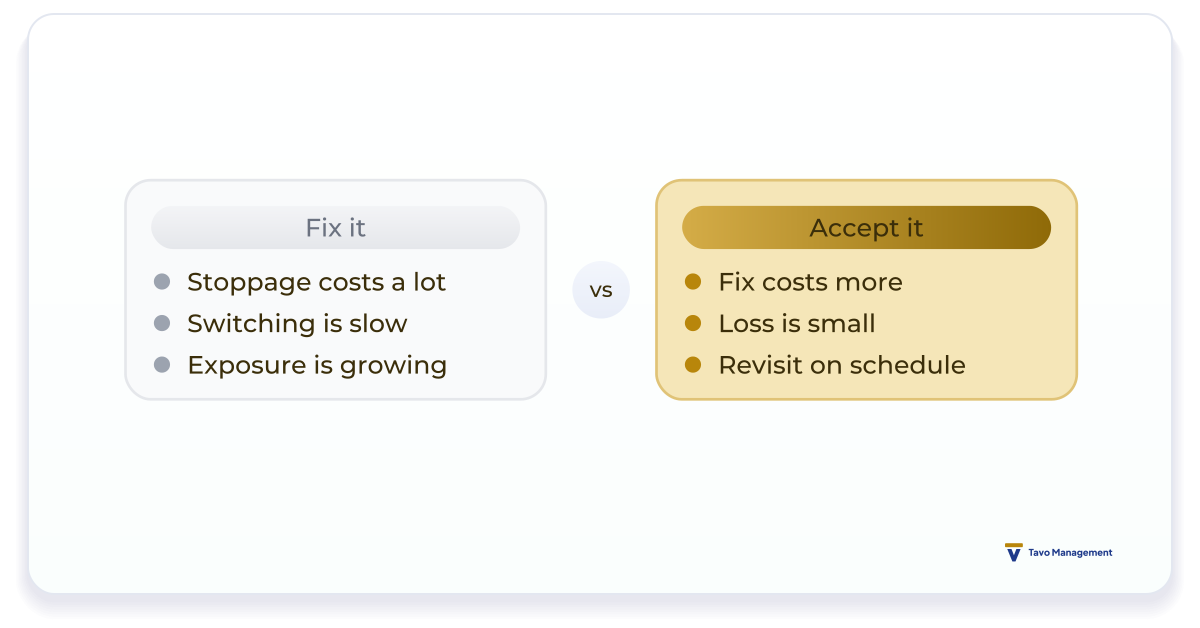
There are four honest responses to any risk. You can avoid it by dropping the supplier or the part, reduce it with a second source or buffer, transfer it through insurance or contract terms, or accept it and write down why. The mistake I see most often is treating reduction as the only option.
| Response | Use it when | Typical cost | Keep an eye on |
|---|---|---|---|
| Second source | A stoppage is expensive and switching is slow | Qualification, tooling, lower volume discounts | Two sources that share one sub-supplier |
| Safety stock | The part is cheap, small and has long lead times | Cash tied up, storage, obsolescence | Stock of a part that is about to be redesigned |
| Contract terms | You have leverage with the supplier | Negotiation time, sometimes a price premium | Terms nobody enforces |
| Redesign or substitute | One component creates the single point of failure | Engineering time and testing | Long approval cycles in regulated products |
| Insurance | The loss is large but rare | Premiums | Exclusions, waiting periods and caps |
| Accept and watch | Cost of the fix exceeds the exposure | Monitoring time | Forgetting to revisit the decision |
Size each response to the cost of one day without the part. If a stoppage costs you a few thousand dollars a day and recovery takes a week, a second source with a six-figure setup cost may not pay back. If it costs you six figures a day, it almost certainly does.
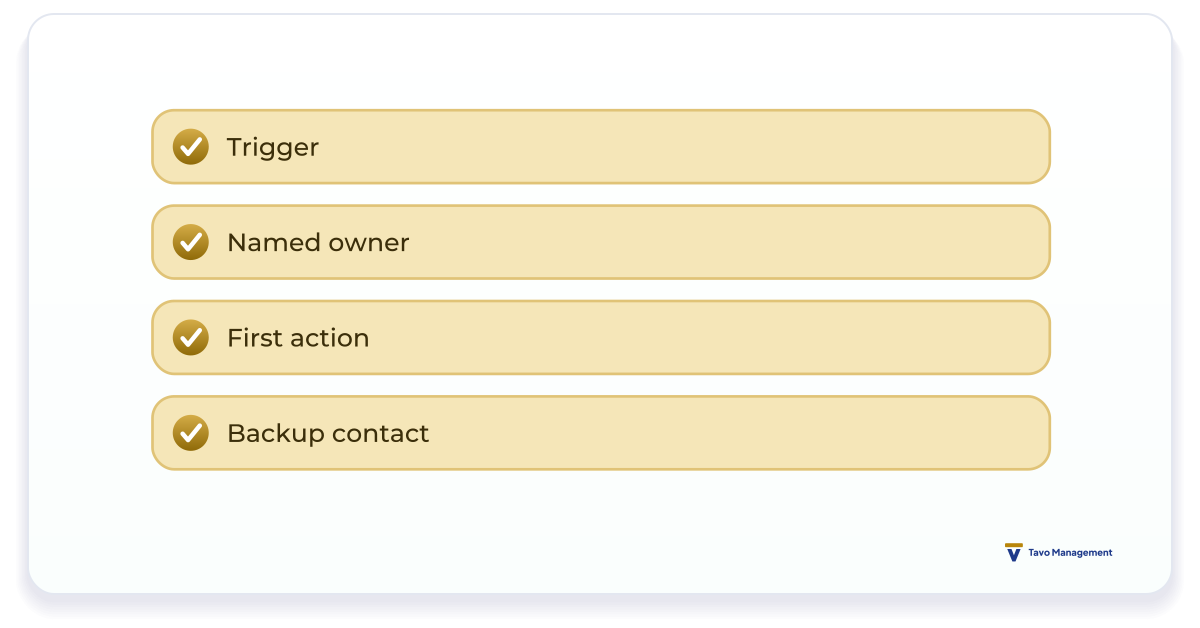
Write a one-page playbook for each top risk with a trigger, an owner and the first three actions. When the call comes, nobody should be inventing the process.
Phase 5: Monitor, Review and Rehearse
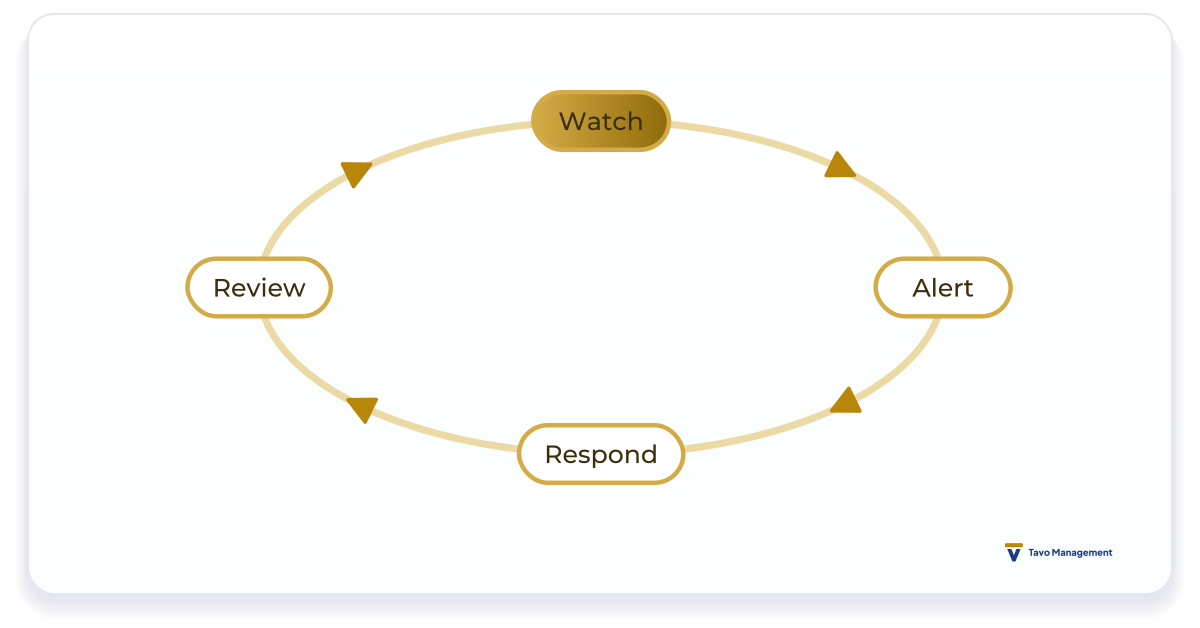
Monitoring has three layers. The first is a quarterly review of the register by the working group. The second is a set of alerts for your critical suppliers, such as financial warnings, plant incidents, weather and port delays. The third is a short drill once or twice a year, where the team walks through a made-up disruption.
Track a small set of measures: the share of critical parts with a backup, the days it takes to learn about a supplier problem and the number of single points of failure still open. Three numbers on one page get read. Fifteen do not.
Remember that strategy and tools are separate decisions. Pick the process first, then check whether software helps you run it. The best program I have seen ran for a year on one shared spreadsheet before the team bought anything.
Paying for the Strategy
Risk work competes with every other budget request, and “something bad might happen” rarely wins. Frame it as cost avoided. For each top risk, write down the cost of one day without the part, the likely recovery time and the one-time or yearly cost of the response. A response that costs less than a few days of the loss usually gets approved without much argument.
Be honest about what you cannot justify. Some risks are cheaper to accept than to fix, and saying so builds trust with finance. It also keeps your plan focused on the handful of exposures where money spent really lowers the loss. Review the numbers once a year, since volumes, prices and lead times all move.
Who Decides When an Alert Arrives
Most plans describe the response and forget the decision. Before a disruption, agree who can approve emergency buying, who can release safety stock and who talks to the customer. Put the names and the spending limits on the playbook. When a supplier calls on a Friday afternoon, nobody should spend the first two hours working out who is allowed to say yes.
Where Strategies Go Wrong
Three failure patterns show up again and again. The first is scope creep: a team tries to map every supplier and burns its energy before it reaches the critical ones. The second is a risk register owned by one analyst who then leaves. The third is a plan that depends on suppliers answering questionnaires, which most of them do slowly or not at all.
The fix for all three is the same. Keep the scope narrow, spread ownership across purchasing and operations and give yourself outside data to cover supplier silence. Pairing this with the wider view in a company-wide risk program also helps your supply risks compete fairly for budget.
One last point on timing. Do not wait for a perfect register before you act on the obvious. If phase two already shows that three critical parts come from one site, start the backup conversation that week. The register improves as you go, and early wins make it easier to keep the working group engaged through the slower mapping work.
How to Pick Your First Moves
You do not need to finish all five phases to get value. Check your list against these points before you commit budget:
- You can name your ten most critical parts and their cost per day of shortage.
- Every critical part has a known production site and transport route.
- Every top risk has one owner and one chosen response.
- A quarterly review is on the calendar with a named chair.
- Someone can explain, in two minutes, what happens when your top supplier stops shipping.
If you can tick fewer than three, start at phase one this month. If you tick all five, spend your time on drills and on the sub-tiers.
Questions About a Supply Chain Risk Strategy
What Is a Supply Chain Risk Management Strategy?
It is a written plan that says which supply risks you will reduce, which you will accept and how you will respond when one hits. It names owners, thresholds and budgets. A good one fits on a few pages and changes when your suppliers or products change.
How Is a Strategy Different from a Risk Assessment?
The assessment finds and scores the risks. The strategy decides what you do about them. You need the assessment first, because a strategy built on guesses tends to protect the suppliers you worry about instead of the ones that carry the exposure.
How Long Does It Take to Build a Supply Chain Risk Strategy?
For a focused scope, such as your top fifty suppliers, I usually see a first working version in six to ten weeks. Mapping the sub-tiers and signing contract changes take longer, so plan the strategy in phases and start protecting the biggest risks early.
Who Should Be Responsible for the Strategy?
One named executive should own it, usually in operations or procurement, with a working group from planning, quality, finance and logistics. If ownership sits only in a risk or compliance team, purchasing decisions rarely change.
Should We Dual-Source Every Critical Part?
No. A second source costs money in qualification, tooling and lower volume discounts. I suggest you dual-source parts where a stoppage is expensive and a switch is slow, and use safety stock or contract terms for the rest.
Do We Need Risk Software to Execute the Strategy?
Not at first. A shared register and a clear routine do most of the work. Software becomes useful when you have too many suppliers or alerts to track by hand. Compare options in my overview of supply chain risk management software before you buy.
How Often Should We Update the Strategy?
Review the register every quarter and the strategy itself once a year, or after any major change such as a new plant, a merger or a supplier failure. A strategy that never changes usually means no one is using it.
General information only: this is not legal, financial or tax advice. Examples and numbers reflect typical projects; check the specifics with your advisers before deciding.
Did you find this helpful?
Thank you for your feedback.
Delaney Brisco
Delaney leads the Tavo editorial team and works with our consultants to turn real client projects into practical guides on project delivery, process design and organizational change. Before joining Tavo, she spent 12 years in operations and program management roles. She has since edited more than 300 articles on management practice and reviewed PMO setups and process redesigns from over 100 client projects. She is based in Minneapolis, Minnesota.