Summary
- Strategy is a ranking exercise: you decide which obligations get strong controls first and which wait.
- Score each obligation on impact, likelihood and how often outsiders check it, then fund from the top of the list.
- A hybrid model, with a small central team and local owners, fits most mid-sized organizations.
- Report exposure to leadership on one page every quarter, and revisit the ranking after every major trigger.
A compliance program never has enough time or budget to cover every duty equally. The strategy is what you do about that. When I join a project through compliance management consulting, the first question is rarely about policies. It is about ranking: if a hard month hits, which five duties do you protect?
This playbook walks through five strategic moves in the order I run them, then shows how the plan changes when a specific trigger arrives, such as a customer audit or an acquisition.
The Five Moves at a Glance
| Move | Decision you make | Output | Typical time |
|---|---|---|---|
| 1. Set scope and appetite | What is in, and how much risk will you accept? | One-page scope statement | 1 to 2 weeks |
| 2. Rank by exposure | Which duties come first? | Ranked register | 2 to 3 weeks |
| 3. Choose the operating model | Central, local or hybrid? | Roles and decision rights | 1 to 2 weeks |
| 4. Fund and sequence | What do you build in which order? | Waves with owners and budget | 1 to 2 weeks |
| 5. Report and revisit | How will leaders see progress? | Quarterly exposure page | Ongoing |
The timings come from my own projects for mid-sized organizations and stretch when legal review or leadership availability slows things down.
Move One: Set the Scope and Say How Much Risk You Accept
Start by deciding what the program covers. Regulations are the obvious part. Customer contracts, insurance conditions, licenses, internal policies and voluntary standards belong in the scope too, since a miss on any of them can cost you money.
Then write down your appetite in plain words: which misses are unacceptable, which are costly but survivable and which you will tolerate. Leadership signs this page. It settles arguments later, because when two requests compete for budget, the appetite statement decides.
Move Two: Rank Every Obligation by Exposure
The ranking is the center of the strategy. Give each obligation a score from 1 to 3 on three questions: how bad is a miss, how likely is it given current practice and how often does an outsider check. Multiply or add the scores, and sort the register.
| Factor | 1 (low) | 2 (medium) | 3 (high) |
|---|---|---|---|
| Impact of a miss | Minor rework | Fine, lost customer or paused operations | Safety harm, license loss or major contract at risk |
| Likelihood today | Routine is stable and tested | Works with effort, some gaps | Relies on one person or on memory |
| Outside scrutiny | Rarely checked | Checked on request | Audited regularly or customer-facing |
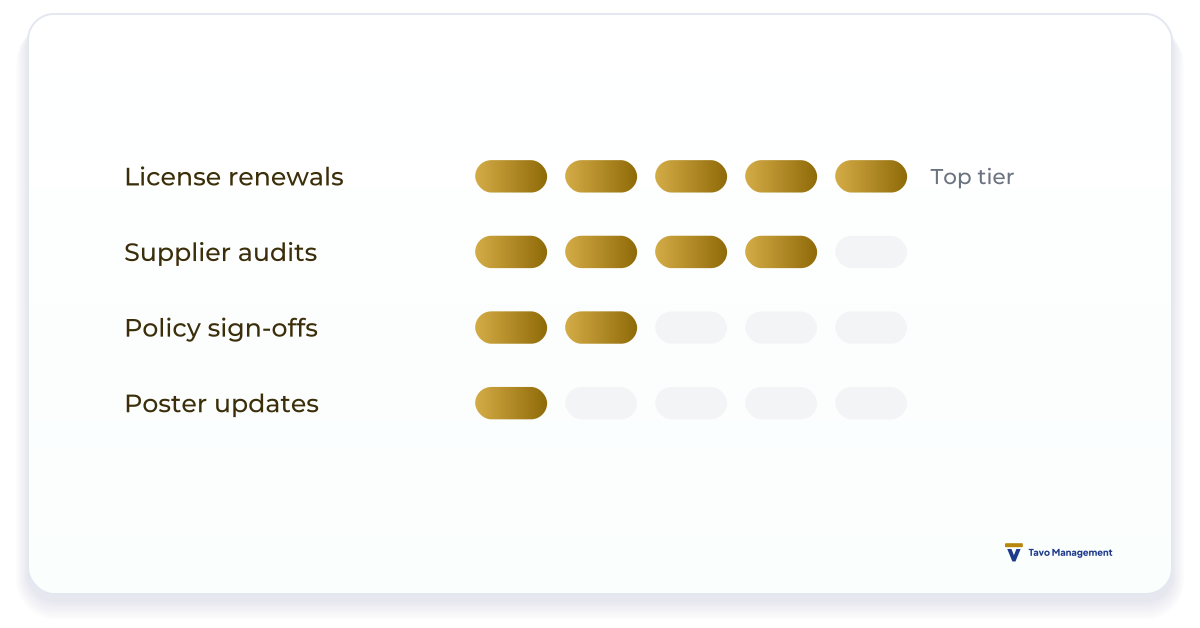
The top 10 to 15 percent of the list is your first wave. I have seen this surprise leadership, because the duties that scored highest were often unglamorous: a lapsing registration, a supplier requirement buried in a master agreement or a retention rule for patient records.
Move Three: Choose Who Does What
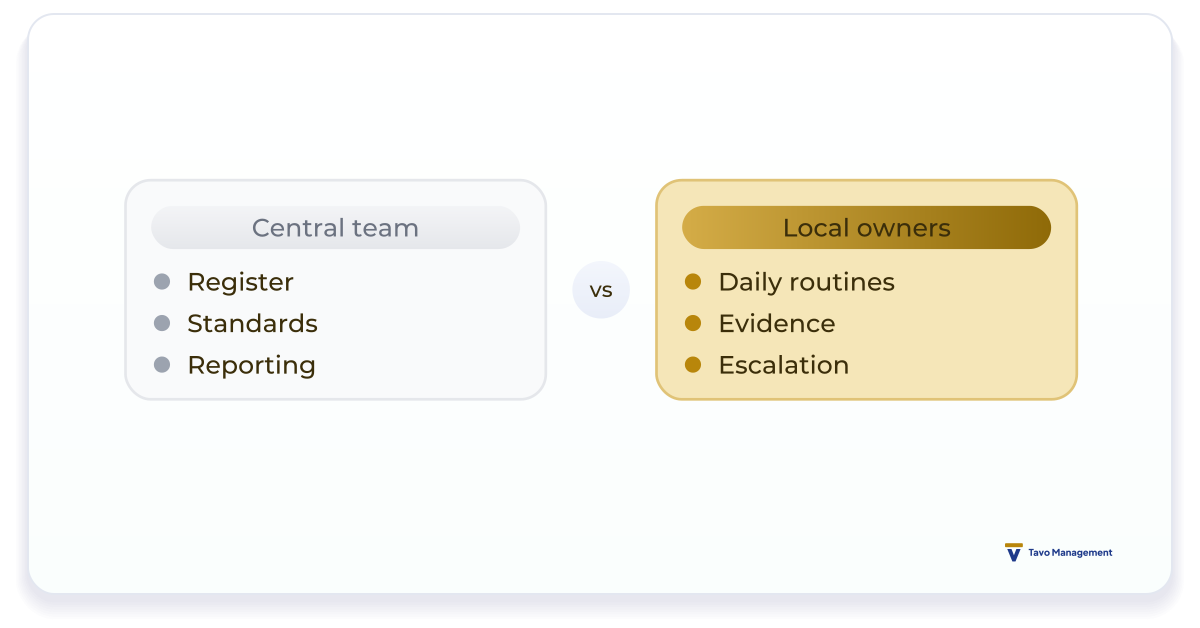
You can run compliance from a central team, from the departments or from a mix. A central team gives consistency and a clear voice with leadership, but it becomes a bottleneck when it tries to own every control. Departments know their work and move fast, but they interpret rules differently and rarely look across the business.
The hybrid works in most mid-sized companies: the center owns the register, the standards, the training calendar and the reporting, and departments own the daily controls for their duties. Write down decision rights, such as who accepts a risk, who approves a procedure and who can pause a process. Where legal interpretation is needed, name your counsel.
Move Four: Fund the First Wave and Sequence the Rest
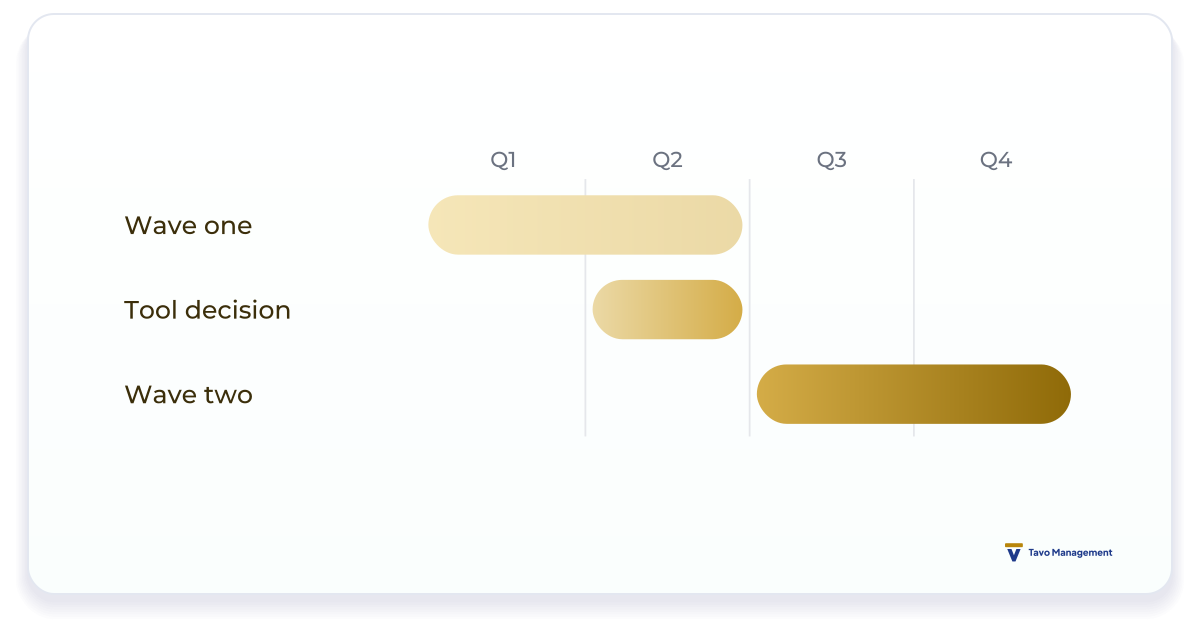
Estimate each wave in hours and money, and match it to the ranking. Wave one covers the highest-scoring duties, with procedures, owners, training and a first test. Wave two takes the next band, and wave three brings in the rest at a lighter touch. Resist the temptation to run all three in parallel, because your owners cannot absorb more than a few new routines per quarter.
Decide early whether software belongs in the plan. A tracker is enough for many programs. Dedicated platforms pay off when evidence collection repeats often, and my compliance management software comparison shows which category fits which need. The rollout itself, with week-by-week steps, is the subject of my compliance management implementation guide.
Move Five: Report Exposure, Then Revisit the Ranking
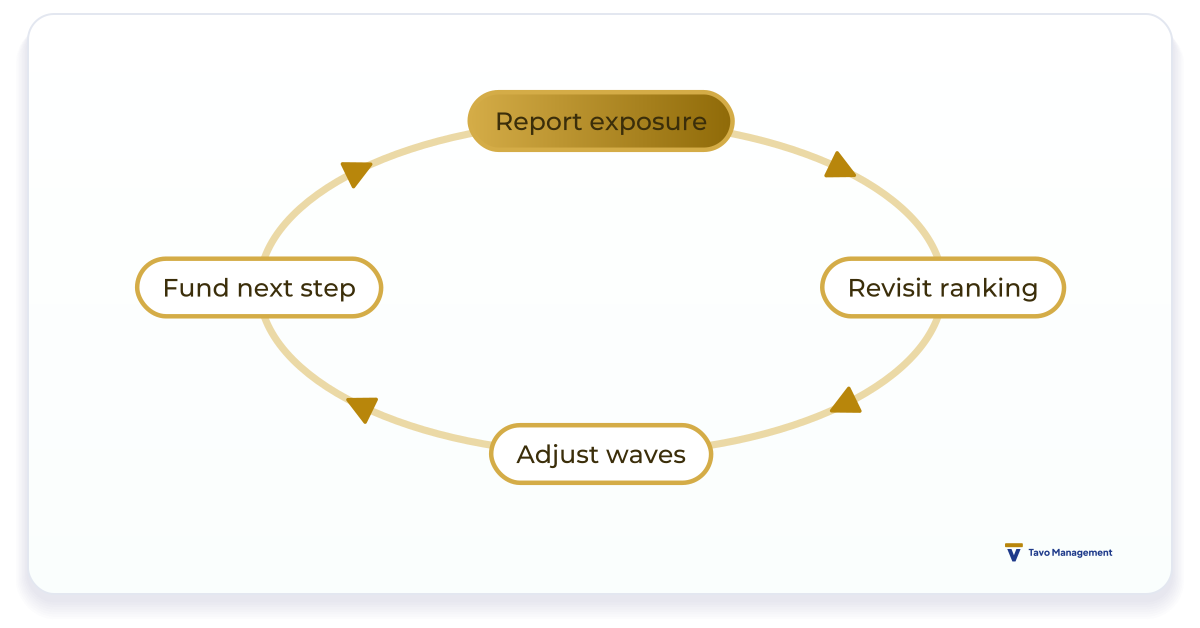
Leaders do not need a list of policies. They need a single page each quarter: the top exposures, what changed, which items are overdue, what was found in checks and what you need from them. Use the same layout every time, so trends become visible and questions get sharper.
Revisit the ranking once a year and after every trigger. The same ranking that justified spending on a license renewal may look different after you open a second site.
Plays for Common Triggers
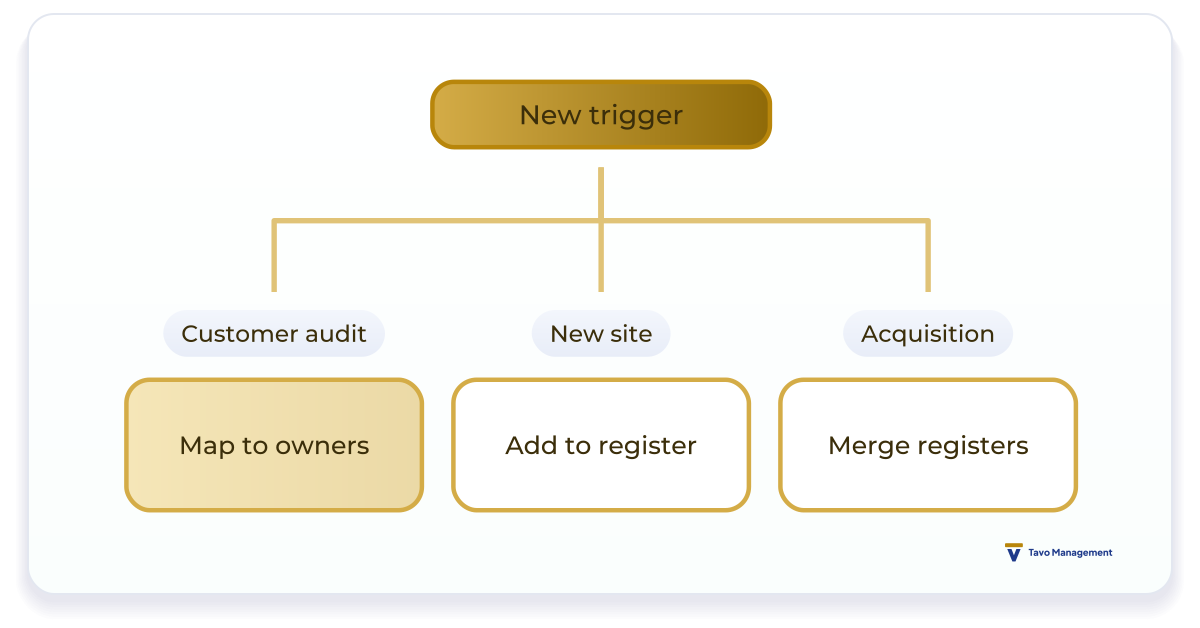
Strategy shows its value when something unexpected arrives. These are the four triggers I see most often, with the first move for each.
| Trigger | First move | Watch for |
|---|---|---|
| A large customer sends an audit request | Map each question to an owner and existing evidence, then fill gaps by risk | Answers that promise controls you do not yet run |
| You enter a new market or open a site | Add the new obligations to the register and rank them with counsel’s input | Local rules that differ from your home practice |
| You acquire a business | Merge registers, find overlaps and rank the combined list | Duplicate owners and conflicting procedures |
| An internal check finds a serious gap | Contain it, name an owner, then ask what else shares the root cause | Fixing the case and leaving the cause |
The same pattern works every time: bring the new item into the register, rank it against everything else and let the ranking decide how much of your capacity it receives. Without that step, the loudest request wins, and the quiet high-risk duty slips.
Checking Whether the Strategy Is Working
A strategy needs a few numbers, or it turns into a feeling. I use four. The first is the share of top-ranked obligations with a named owner, a backup and current evidence, which should reach 100 percent in wave one. The second is overdue tasks as a share of all scheduled tasks, which tells you whether owners have capacity. The third is the age of open findings, because old findings point to a decision nobody wants to make. The fourth is the time it takes to answer a customer or auditor request from existing records.
Keep the numbers few and boring. Review them in the same meeting every quarter, and ask one question about each: what would we change if this number doubled? When the answer is nothing, drop the number.
A short example shows how this plays out. A multi-site services client I worked with had 140 obligations and one part-time coordinator. We ranked the register, and 17 duties made the first wave. Within a quarter those had owners, one-page procedures and test records. The remaining 120 got a yearly review. The coordinator stopped chasing everything and started chasing the 17, and the first customer audit afterward took days of preparation instead of weeks.
Strategic Traps I See Again and Again
A few patterns recur across projects. Spreading effort evenly gives every duty a thin control and no duty a strong one. Buying a platform before the register exists means configuring software around guesses. Treating a clean audit as proof of health ignores that audits sample, and a sampled control can fail the week after the auditor leaves.
The quieter trap is ownership by title. Naming the head of operations as owner of forty duties looks tidy and means nobody owns any of them. Spread owners across the people who touch the work, and give the central team the job of chasing.
For a picture of how strategy becomes concrete routines, my compliance management framework guide explains the six blocks, and the compliance management examples show ten routines that other businesses run.
How to Choose Your First Strategic Bet
If you can only do one thing this quarter, rank your obligations and publish the top ten with owners. That single step creates focus, gives leadership something to react to and shows where the real gaps are. If you have a ranking already, test whether the owners of the top ten can show evidence without asking around.
Where the answer is unclear, a short outside review often saves weeks, because someone without your assumptions finds the gaps quickly.
Questions About Compliance Management Strategy
What Is a Compliance Management Strategy?
It is the set of choices that decides where your compliance effort goes: which obligations get the most attention, who owns them, how much you spend and how you report progress. A framework describes the structure. A strategy picks the order of work and the trade-offs, so limited time and budget go to the exposures that matter most.
How Is Strategy Different from a Framework?
The framework lists the building blocks, such as a register, owners, controls and monitoring. The strategy decides which blocks to strengthen first, how much to centralize and what to defer. Two companies can share the same framework and follow very different strategies because their risks, size and customers differ.
How Much Should a Business Spend on Compliance?
There is no honest percentage that fits everyone. Spend follows exposure: the number of obligations, how severe a miss would be and how often outsiders check you. I suggest you price the program in hours first, then add tools and outside help for the pieces your team cannot cover. Ask for a fixed quote on the first project.
Should Compliance Sit in One Central Team or in Each Department?
Most mid-sized organizations do best with a hybrid. A small central team owns the register, the standards and the reporting, while each department owns the daily controls for its own duties. Fully central teams become bottlenecks, and fully local ones drift apart. Choose the split by how specialized the duties are.
How Do I Get Leadership to Take Compliance Seriously?
Bring a one-page view of exposure in business terms: the three duties with the largest cost of a miss, who owns them and what you need. Leaders respond to deals at risk, audit weeks lost and fines avoided far more than to counts of policies. Report the same page every quarter so the numbers become familiar.
When Should I Revisit the Strategy?
Review it once a year, and again after a trigger such as a new product, market, acquisition, major customer demand or audit finding. Each trigger can change which obligations apply and how risky they are. A short review of the ranking table usually takes a morning and keeps the plan honest.
What Is the Biggest Strategic Mistake You See?
Trying to cover everything at once. Programs that spread effort evenly across hundreds of duties end up with thin controls everywhere and no strong ones on the duties that can hurt. Rank first, fix the top of the list properly and move down the list in waves.
General information only: this is not legal, financial or tax advice. Examples and numbers reflect typical projects; check the specifics with your advisers before deciding.
Did you find this helpful?
Thank you for your feedback.
Delaney Brisco
Delaney leads the Tavo editorial team and works with our consultants to turn real client projects into practical guides on project delivery, process design and organizational change. Before joining Tavo, she spent 12 years in operations and program management roles. She has since edited more than 300 articles on management practice and reviewed PMO setups and process redesigns from over 100 client projects. She is based in Minneapolis, Minnesota.