Summary
- Dental practice management is the business system around the clinical work: schedule, billing, team, software and numbers.
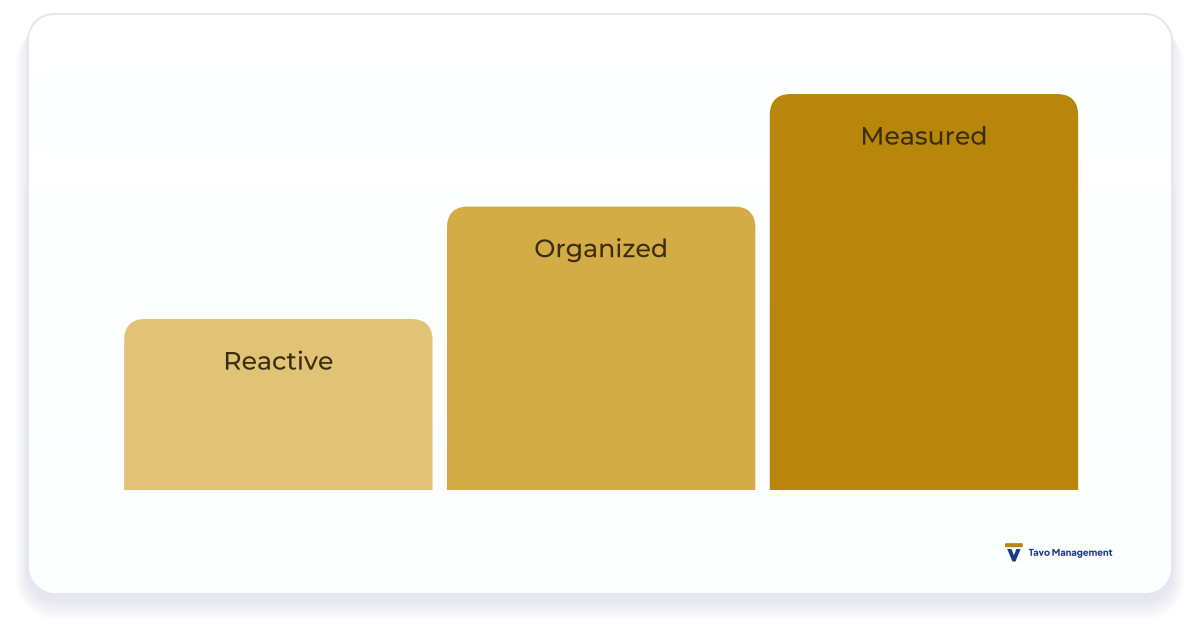
- Most practices grow through three stages: reactive, organized and measured.
- The owner sets goals and culture, and a manager owns daily routines.
- Start with a weekly scorecard and a daily huddle, then add one routine at a time.
You trained for years to treat patients, and almost nobody taught you how to run the practice that pays for it. That is normal, and it is also why so many good clinicians feel like they work hard and earn less than they should. A guide to dental practice management has one job: explain how the business side fits together, so you can decide what to fix first. It is the same ground I cover in dental practice management consulting projects, written for someone who wants to start on their own.
I will walk through what the work covers, how a practice moves from chaos to control, who does what, how technology fits and when outside help is worth it.
What Dental Practice Management Covers
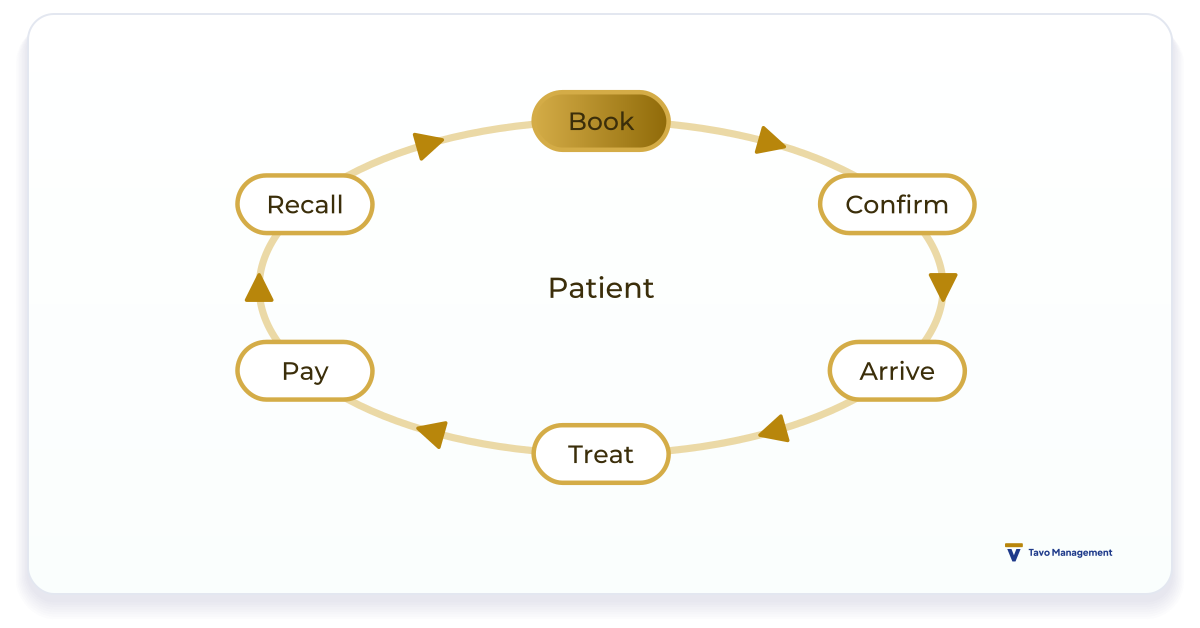
Think of the practice as a chain. A patient calls, books, arrives, receives treatment, pays and returns. Every link has an owner, a routine and a number. Management is the work of keeping the chain unbroken.
| Area | What it includes | Number to watch |
|---|---|---|
| Scheduling and flow | Provider blocks, confirmations, cancellations, the morning huddle | Schedule utilization |
| Patient communication | Phone, text, online booking, reviews, recall | New patients and reappointment rate |
| Treatment and acceptance | Presentation, estimates, financing, follow-up | Treatment acceptance |
| Billing and collections | Claims, denials, patient payments, aging | Collection rate |
| Team | Roles, hiring, training, pay, culture | Turnover and time to train |
| Systems | Practice software, imaging, backups, reports | Reports available in a few clicks |
| Compliance and safety | Infection control, patient data, records | Open items on your review list |
| Finance | Fees, overhead, contracts, goals | Overhead share of collections |
The Three Stages Every Practice Moves Through
In my client work, practices tend to sit in one of three stages. Knowing which one you are in tells you what to do next, and what to ignore.
Stage One: Reactive
Everything depends on people's memory. The owner answers most questions, the schedule is built by habit and claims go out when someone has time. The practice can still be busy and profitable, which is what makes the stage hard to leave. A single resignation or a bad week can shake everything.
The move out is small: a daily huddle, a weekly look at five numbers and one written routine for the task that hurts most when it is missed. Do not buy new software yet. You will not know what to ask it to do.
Stage Two: Organized
Routines are written down, roles are clear and the team knows what happens each morning. Claims go out the same day and recall is booked at checkout. Problems still appear, but the team knows where to look. The owner begins to step out of daily decisions.
The move out is measurement. You need a scorecard that the team reads without help, goals that have dates, and a monthly meeting that looks at trends instead of events. My list of dental practice management metrics shows which numbers to start with.
Stage Three: Measured
Decisions come from numbers. The practice knows its production per chair hour, its collection rate and which insurance plans pay best. New hires learn the routines in days. The owner can take a week off. A second location becomes thinkable, because the first one runs on documented routines.
Few practices need to go further than this stage. Beyond it, the work is maintenance: reviewing the routines, retraining and keeping the numbers honest.
Who Does What in a Dental Practice
Role confusion costs more than most owners realize. The simplest fix is to decide who owns each area, then write it down.
- Owner dentist: goals, culture, hiring decisions, clinical standards and the monthly review.
- Office manager: daily operations, schedule rules, team coordination, reports and vendors.
- Treatment coordinator: presentation of plans, estimates, financing and follow-up of unscheduled treatment.
- Front desk: phones, check-in and check-out, confirmations and rebooking.
- Billing lead: claims, denials, aging and patient balances.
- Clinical lead: sterilization, supplies, equipment and safety routines.
In a small practice, one person may hold several of these roles. That is fine as long as you can say who is responsible for each task, and who covers when that person is away. A backup for every critical task is one of the cheapest forms of insurance a practice can buy.
What a Well-Run Day Looks Like
A good day starts before the first patient. The team meets for ten minutes and reviews the schedule, the gaps, the balances due and any patient who needs special attention. During the day, the front desk confirms the next day's appointments, collects payments at checkout and books the next visit before the patient leaves. At close, claims are sent, the schedule for tomorrow is checked and one person owns the final lock-up.
None of this is complicated. It works because it happens every day, and because someone notices when it does not. If you want a simple way to turn the routine into habits, my article on dental practice management tips gives eleven of them with a do and an avoid for each.
Where Technology Fits
Practice management software holds the schedule, the charts, the claims and the reports. It is the backbone, and its quality affects daily life. Still, I would not start with a software purchase. Start with the routine, then ask which system supports it.
When you do shop, compare cloud and server-based systems, check how reports work and ask for a trial with real data. I compare the main platforms in my ranking of dental practice management software, with pricing and review scores. Plan any switch carefully: data migration and team training take longer than vendors suggest, so schedule the change for a quiet period.
A short example shows how it fits together. Picture a three-provider practice where the owner answers every question and the schedule has two empty hygiene hours most afternoons. After a month with a huddle, a cancellation list and rebooking at checkout, the empty hours shrink, and the owner gets through lunch without being interrupted. Nothing about the clinical work changed. The routine around it did.
Where Owners Usually Go Wrong
Three patterns show up again and again. The first is buying marketing before fixing the schedule. A new patient who cannot get a convenient appointment, or who is treated by a front desk that sounds rushed, does not stay. Fill the leaks first, then pour more in.
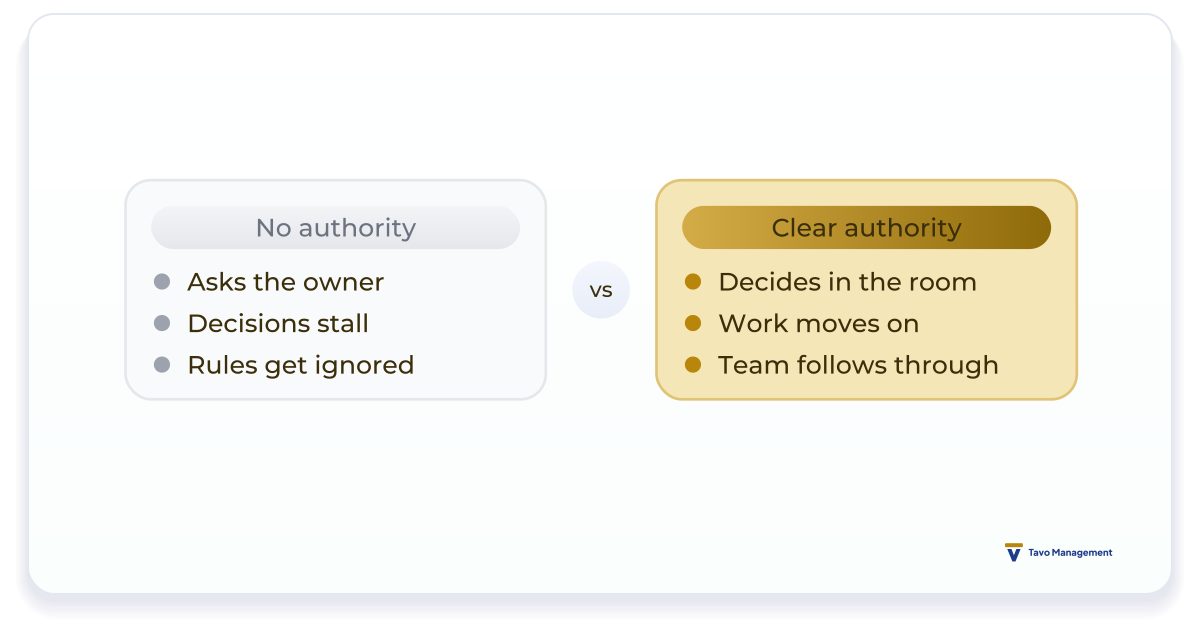
The second is delegating without authority. An office manager who must ask the owner before any decision is a messenger, not a manager. Agree on which decisions the manager can make alone, such as schedule changes or small adjustments to a payment plan, and which still need you.
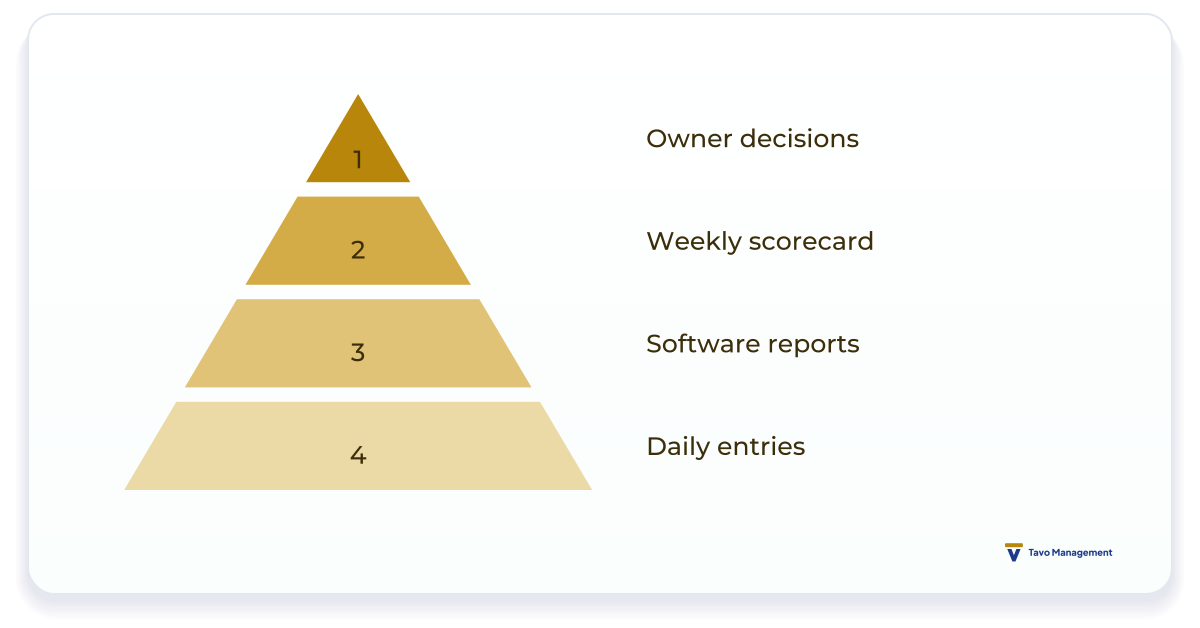
The third is ignoring the numbers until something breaks. By the time the bank balance shows a problem, the cause is two or three months old. A weekly look at five numbers costs fifteen minutes and gives you that time back.
Compliance deserves a mention too. Patient data, infection control and records all carry rules that depend on where you practice. Put them on the checklist, assign an owner and ask your own adviser what applies to you. Do not rely on a generic article, including this one, for legal requirements.
In-House, Consultant or Both
You can improve a practice on your own, and many owners do. Outside help is worth considering in three situations: when you have tried and the same problems return, when you are about to change something big, such as a second location or a new system, or when you need an unbiased view of your numbers and team.
| Option | Best when | Keep an eye on |
|---|---|---|
| Do it yourself | The practice is small and the problems are clear | Owner time and blind spots |
| Office manager | You need someone to run daily routines | A manager without authority or backup |
| Consultant | You need an assessment, a redesign and coaching | Advice with no follow-through |
| Consultant plus manager | The practice is growing or adding locations | Unclear who owns what after the project |
Whichever you choose, make sure the knowledge stays with you at the end. Written procedures, a scorecard your team understands and trained people are what remain when the project finishes.
Your First Ninety Days
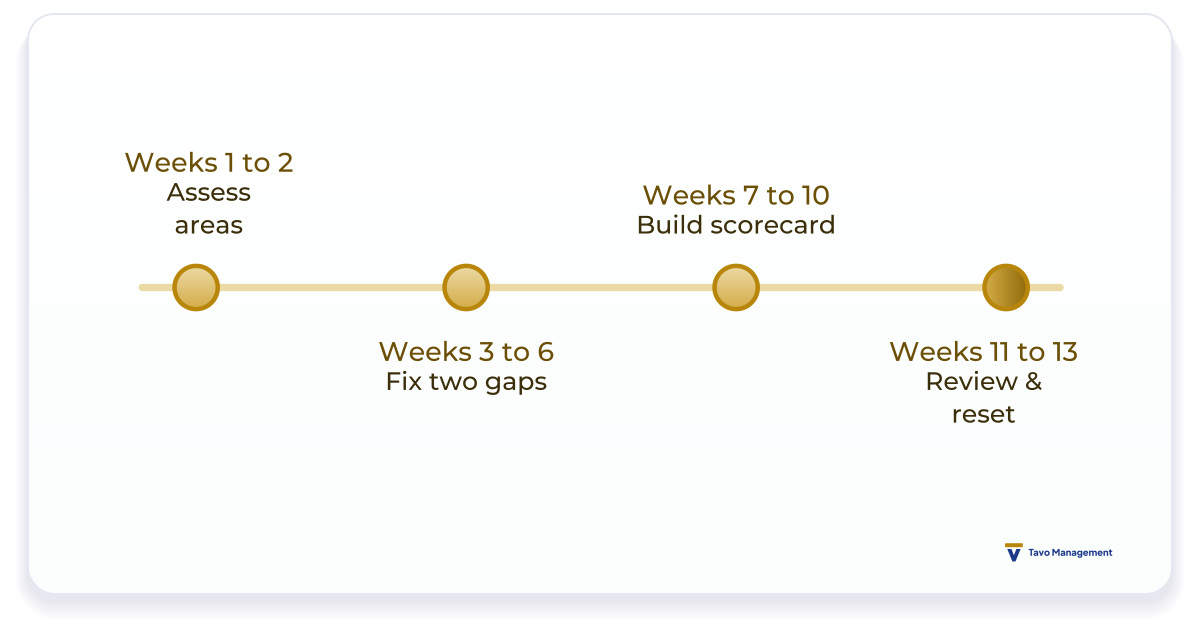
I suggest you plan the first three months in small steps, with one change at a time.
- Weeks 1 to 2: start the morning huddle and set up a one-page scorecard.
- Weeks 3 to 4: review the aging report and assign every old claim to a name.
- Weeks 5 to 8: write down the five most important daily tasks and name a backup for each.
- Weeks 9 to 12: standardize treatment presentation and book recall at checkout.
When the ninety days are done, run my dental practice management checklist to see which areas are in place and which still need work. Expect to find gaps. Finding them is the point.
Questions About Running a Dental Practice
What Does Dental Practice Management Include?
It covers everything around the clinical work: scheduling, patient communication, billing and collections, insurance, team roles and hiring, software, compliance and finances. The dentist treats patients, and management makes sure the practice can pay for that work and repeat it every day without drama.
Should the Dentist or an Office Manager Run the Practice?
In a very small practice, the dentist often does both, but it rarely stays that way. As soon as you have several team members, an office manager who owns daily operations frees you to focus on patients. You stay in charge of goals, culture and big decisions, and the manager owns the routines.
How Much Should a Dental Practice Spend on Management?
There is no single figure. Management costs show up as the office manager's pay, software, training and any outside help. A useful test is whether the money improves production, collections or team stability. Ask your accountant for overhead figures for practices similar to yours.
What Is the Difference Between a Practice Manager and a Consultant?
A manager works inside the practice every day and runs the routines. A consultant comes in for a defined period, reviews the whole practice, redesigns what is not working and coaches your team. Many practices use both: the manager owns the day and the consultant sets up the system.
How Long Does It Take to Improve a Struggling Practice?
You can see early effects within a month or two on claims and the schedule. Culture changes, such as a team that follows written routines without reminders, take closer to six months. Be wary of anyone who promises a complete turnaround in a few weeks.
Which Software Is Best for Dental Practice Management?
It depends on your size, your budget and whether you prefer cloud or server-based systems. I rank the main options in a separate article. In every case, a system your team uses fully beats a better one they use halfway.
Where Should a New Practice Owner Start?
Start with the numbers and the daily rhythm. Set up a simple weekly scorecard, hold a short morning huddle and write down the five tasks that must happen every day. After that, work through claims, recall and treatment presentation, one at a time.
General information only: this is not legal, financial or tax advice. Examples and numbers reflect typical projects; check the specifics with your advisers before deciding.
Did you find this helpful?
Thank you for your feedback.
Delaney Brisco
Delaney leads the Tavo editorial team and works with our consultants to turn real client projects into practical guides on project delivery, process design and organizational change. Before joining Tavo, she spent 12 years in operations and program management roles. She has since edited more than 300 articles on management practice and reviewed PMO setups and process redesigns from over 100 client projects. She is based in Minneapolis, Minnesota.