Summary
- Schedule, claims and recall decide most of a practice's income, so fix them before you spend more on marketing.
- A ten-minute daily huddle and a five-number weekly review cost nothing and change behavior quickly.
- Every tip works better when it has one named owner on your team.
- Write routines down, so the practice does not depend on one person's memory.
A full schedule does not always mean a healthy practice. I see dental owners work hard all day and still wonder why profit stays flat. The reason is rarely the clinical work. It is usually a handful of small habits that leak money or energy every week, and fixing them is the core of good dental practice management consulting.
Below are eleven tips I would act on first, in roughly the order I would do them. Each one comes with a do this and an avoid this, so you can start on Monday without a project plan.
The 11 Tips at a Glance
| Tip | Area | Best first step |
|---|---|---|
| 1. Daily huddle | Team | Pick a time and hold it for four weeks |
| 2. Production-based schedule | Scheduling | Set a daily goal for each provider |
| 3. Cancellation list | Scheduling | Name one owner |
| 4. Same-day claims | Billing | Add it to the closing checklist |
| 5. Checkout collection | Billing | Write a short money script |
| 6. Consistent presentation | Patients | Agree on a five-part structure |
| 7. Rebook at checkout | Recall | Offer two specific dates |
| 8. Written tasks | Team | Document the top three |
| 9. Five weekly numbers | Reporting | Build a one-page view |
| 10. Cross-training | Team | Name a backup for each role |
| 11. Yearly fee review | Finance | Calculate revenue per chair hour |
Start Every Day With a Ten-Minute Huddle
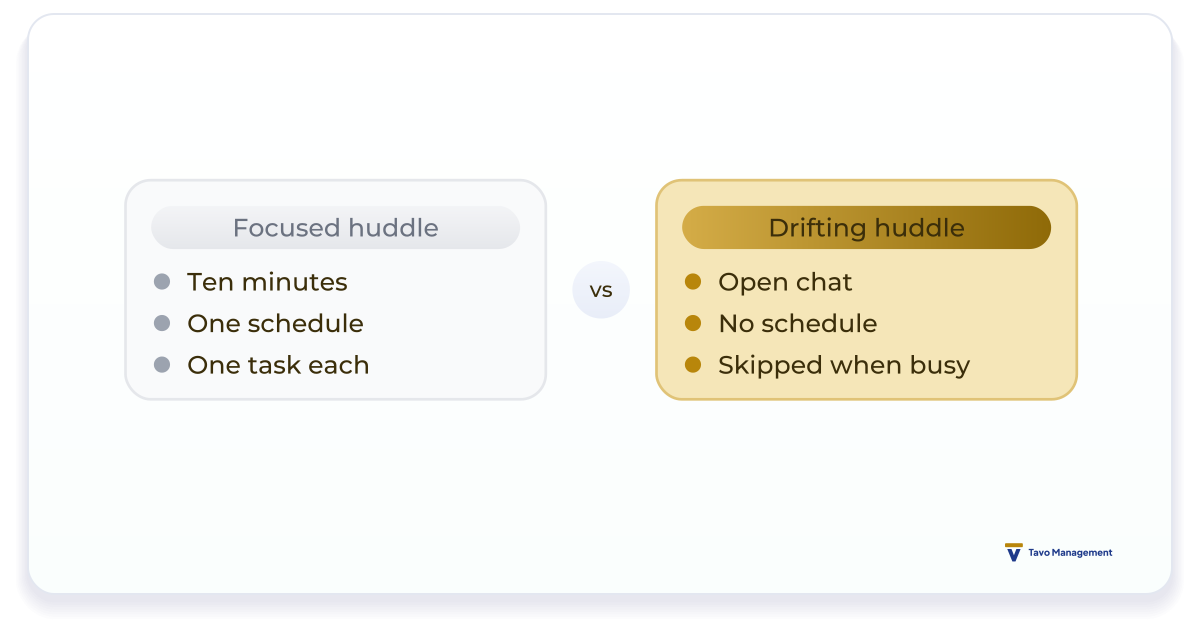
The huddle is the cheapest management tool a dental practice has. Gather everyone at the same time each morning and walk through the day: who is coming, what treatment is scheduled, where the gaps are and which patients owe a balance. Ten minutes is enough. In my client work, practices that keep this habit for a quarter stop hearing "nobody told me" from the team.
Do this: Use one printed or on-screen schedule, and give each person one thing to own for the day.
Avoid this: Letting the huddle drift into a general chat, or skipping it on busy days, which are exactly the days it matters.
That covers how the day starts.
Build the Schedule From a Production Goal
Most schedules grow by habit: whoever calls first gets the next open slot. Work backwards instead. Pick a daily production goal for each provider, then block time for the procedures that reach it, such as crown preps, new patient exams and hygiene. Short appointments fill the rest. When high-value procedures have protected blocks, they stop getting pushed to "next month" by a filling that could have gone anywhere.
Do this: Review the blocks every quarter against what the provider really did.
Avoid this: Copying a schedule template from a conference without checking your own procedure mix.
Keep a Cancellation List That Gets Used
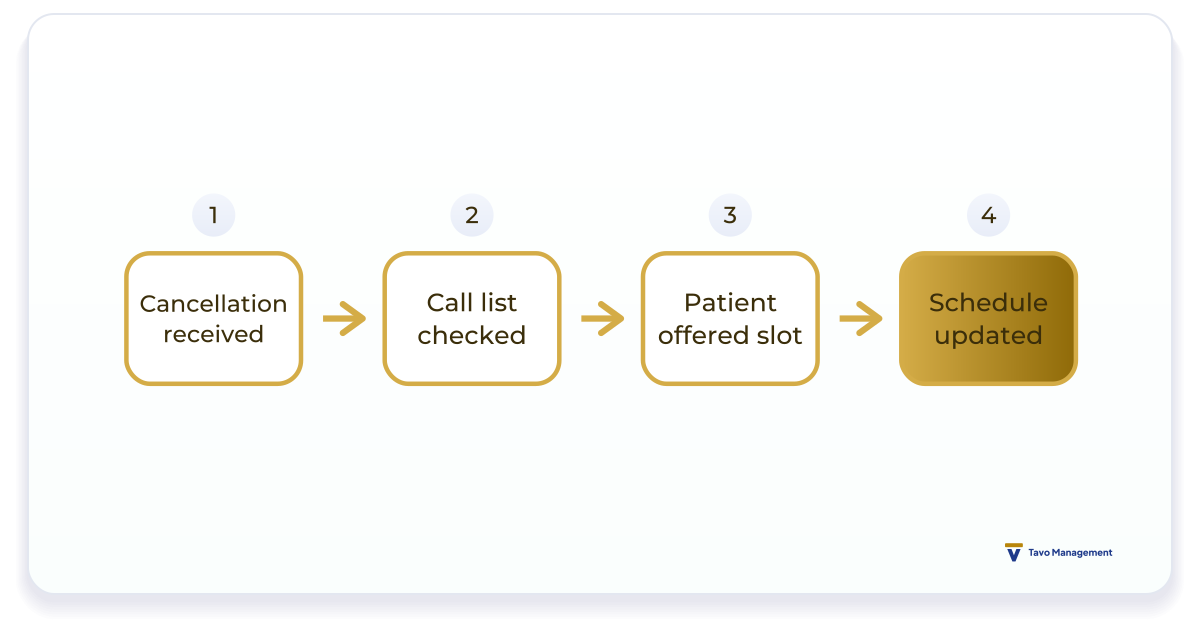
Every practice has patients who would happily come in sooner. Keep a short, ranked list of them, with the appointment length each needs, and call it the moment a slot opens. A list nobody opens is worse than none, because the team believes the problem is handled. Assign one person to own it and check it at the huddle.
Do this: Ask patients at checkout if they would like to be called for earlier openings.
Avoid this: Texting the whole patient base for one open slot, which trains people to ignore you.
Those first three tips decide how full the schedule stays.
Send Every Claim the Same Day
A claim that goes out on the day of treatment gets paid sooner and rejects less often, because the details are still fresh. Claims sitting for a week collect missing attachments, wrong codes and forgotten pre-authorizations. Make same-day submission a closing task for the front desk, not something done when time allows. A short Friday review of every claim older than 30 days catches the rest.
Do this: Run an aging report every week and assign each old claim to a named person.
Avoid this: Writing off small balances just to clear the report.
Collect the Patient Portion at Checkout
Money is easiest to collect while the patient is standing at your desk. Once they leave, every statement costs postage, staff time and goodwill. Estimate the patient portion before treatment, explain it in plain words and collect it at the visit. Offer a clear payment option for larger cases, so a no is not the only alternative to paying in full.
Do this: Give the front desk a short script for the money conversation and practice it together.
Avoid this: Apologizing for the price. Confidence from the desk makes patients calmer.
Present Treatment the Same Way Every Time
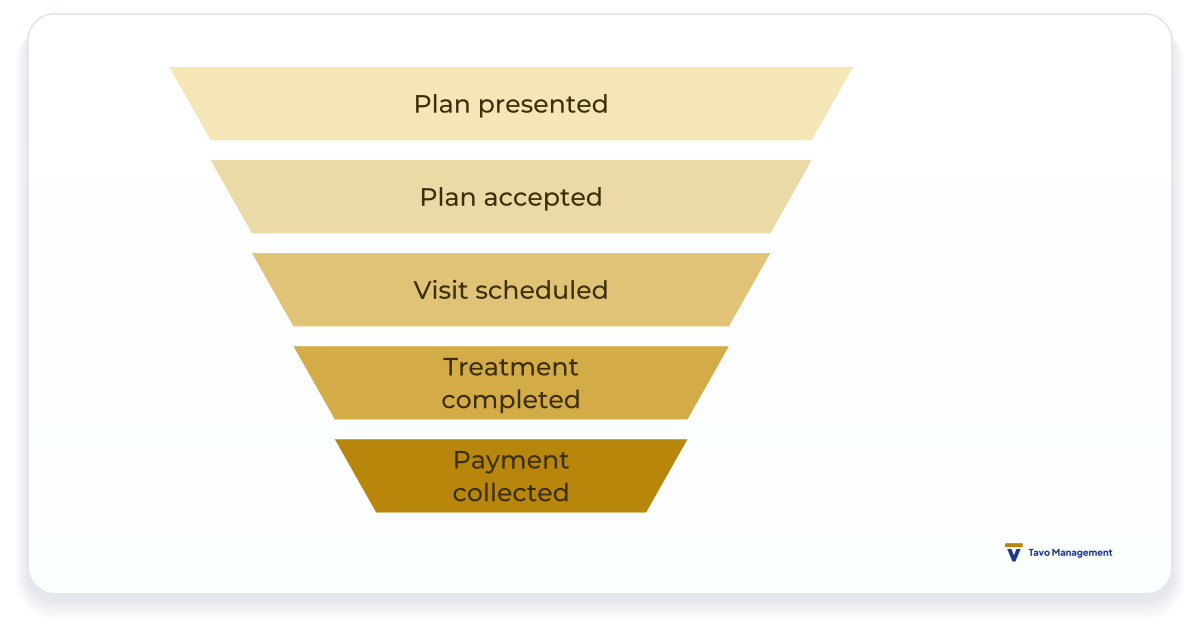
When each provider explains treatment differently, patients hear different stories, and acceptance rates swing from week to week. Agree on a simple structure: what I found, why it matters, what I recommend, what it costs and when we can start. Then everyone follows it. Presentation is also where the front desk and the clinical team need to agree on what the patient has been told.
Do this: Record who presented each plan and whether it was accepted, so you can see patterns.
Avoid this: Handing over a printed estimate with no conversation attached.
Together, these three tips cover how money and treatment plans move through the front desk.
Book the Next Visit Before the Patient Leaves
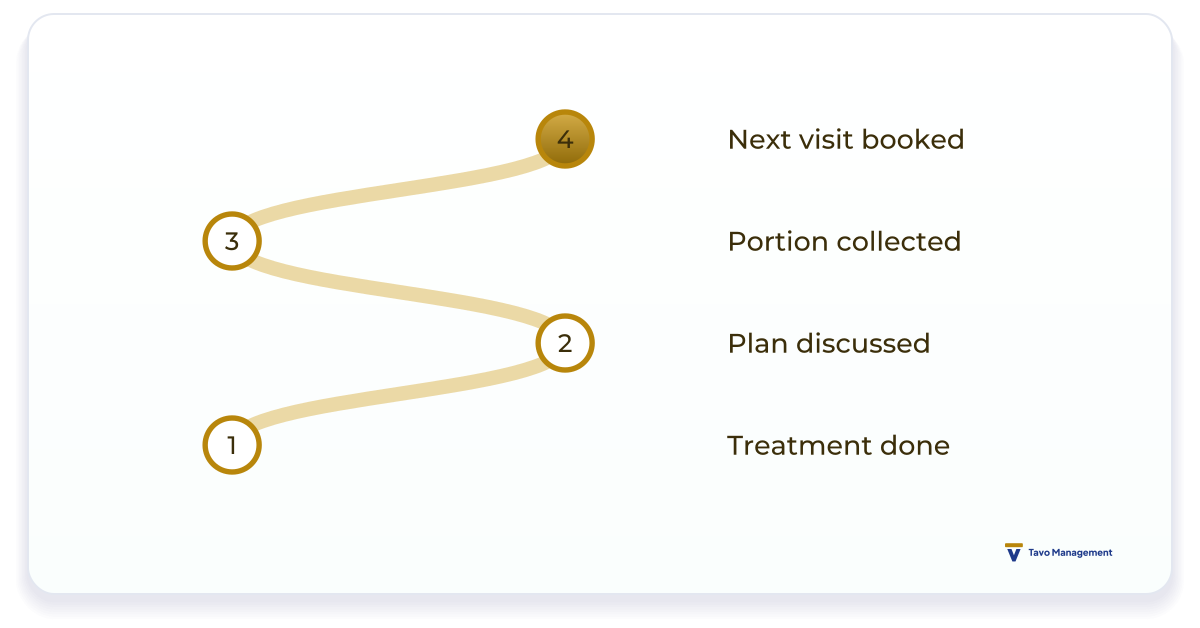
Hygiene recall does not fix itself. If the next visit is booked at checkout, the patient is far more likely to return than if they are asked to call later. Curve Dental, for example, cites a reappointment rate above 85 percent at checkout as a healthy benchmark. Make this part of the departure routine and track it per hygienist.
Do this: Offer two specific dates and times rather than asking when they want to return.
Avoid this: Relying on a postcard six months later as your only recall.
A booked next visit is the cheapest recall you will ever run.
Write Down Every Recurring Task
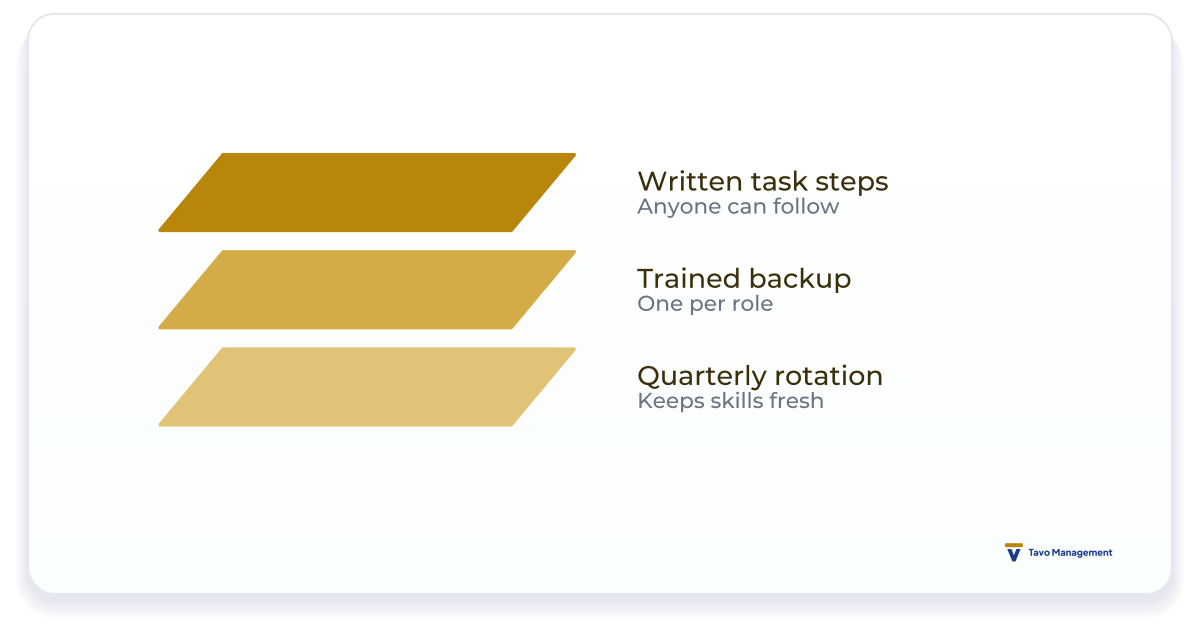
Ask each team member to list what they do daily, weekly and monthly. You will find tasks nobody knew about and tasks two people both do. Turn each list into a short checklist stored where everyone can find it. This is dull work and it is also what lets you take a vacation. Practices that skip it depend on one person's memory.
Do this: Start with the three tasks that would hurt most if the owner left tomorrow.
Avoid this: Writing a manual so long that nobody opens it.
Review Five Numbers Every Week
You do not need a forty-metric dashboard. Pick five: production, collections, new patients, no-shows and schedule utilization. Look at them at the same time each week and compare with your own rolling average. A sudden drop in any of them tells you where to look. My separate guide to dental practice management metrics covers how to calculate and read each one.
Do this: Put the five numbers on one page and share them with the team.
Avoid this: Comparing yourself with national averages before you know your own trend.
Train a Backup for Every Front-Desk Role
Practices tend to have one person who knows insurance, one who knows the schedule and one who knows the software. When one of them is sick, the day falls apart. Cross-train each role so someone else can cover for at least a week. It also gives your team a path to grow, which helps when you are trying to keep good people.
Do this: Rotate tasks quarterly so knowledge is shared before it is needed.
Avoid this: Making one person the only keeper of a critical process because they are "so good at it".
Those last tips keep the practice running when one person is away.
Review Fee Schedules and Insurance Contracts Every Year
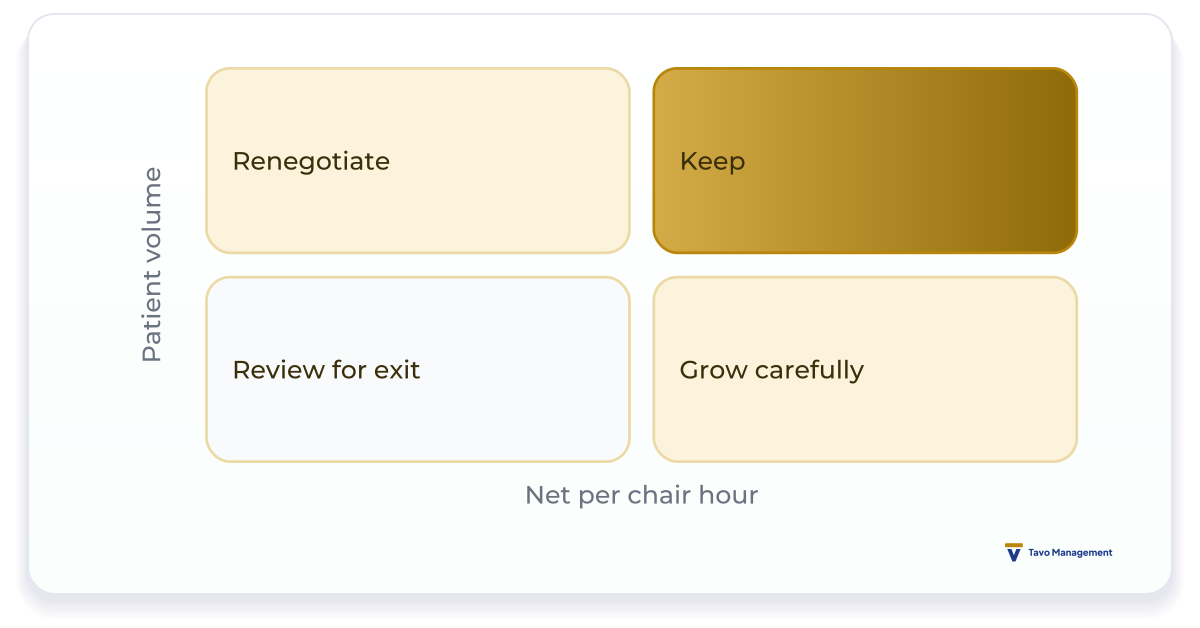
Fees set five years ago may no longer cover your costs, and some insurance contracts pay less than the effort to collect them. Once a year, compare your fees with your costs and look at what each plan actually pays per hour of chair time. Then decide which plans stay, which get renegotiated and which you drop. Do this with your accountant and expect some discomfort.
Do this: Calculate net revenue per chair hour by plan, using real payments.
Avoid this: Dropping plans without telling patients early and offering a transition.
That is the full list.
Which Tips to Do First
Do not try all eleven at once. In my experience, a practice absorbs about two new habits per month before the team starts to push back. Pick the ones that match your biggest leak.
- If the schedule has gaps by 2 pm, start with tips 2, 3 and 7.
- If money arrives late, start with tips 4 and 5.
- If you feel like the only one who knows how things work, start with tips 1, 8 and 10.
- If you have no idea where you stand, start with tip 9, then choose the next one from what it shows.
A checklist helps you track what is done, and my dental practice management checklist turns these habits into eight points you can tick off. If you want the bigger picture behind them, read the dental practice management guide.
Software can make several of these tips easier, from claim scrubbing to recall lists. Before you buy anything new, see how the main options compare in my ranking of dental practice management software, and check whether your current system already has the feature.
Questions About Running a Dental Practice Day to Day
What Is the Most Important Dental Practice Management Tip?
If I had to pick one, it is knowing your numbers. Production, collections, new patients, no-shows and schedule utilization show you where the practice leaks. Everything else on this list, from the huddle to claims, becomes easier once you can see the effect on those five figures.
How Often Should a Dental Practice Review Its Performance?
Weekly for the five core numbers, monthly for a deeper look at claims aging, treatment acceptance and recall, and once a year for fee schedules, insurance contracts and staffing. The rhythm matters more than the tool, so pick times you will actually keep.
Do I Need an Office Manager to Manage a Dental Practice?
Most practices above a single dentist and one hygienist benefit from one. The role frees you from daily firefighting and owns the routines, but it only works if you give the person real authority and clear goals. A good manager also needs backup, so the practice does not depend on one person.
How Do I Reduce No-Shows in My Dental Practice?
Confirm appointments by text or call, explain your policy when the patient books, and keep a cancellation list so a gap gets refilled quickly. Booking the next visit before the patient leaves also helps, because they commit to a real date. Track the rate monthly and look for patterns by day and provider.
Should I Outsource Dental Billing?
It can work if your in-house team is overloaded and your claims age past 60 days regularly. Compare the fee with what you recover, and keep visibility through weekly reports. Outsourcing a broken process does not fix it, so tidy your intake and coding habits first.
When Should I Hire a Dental Practice Management Consultant?
When your schedule is full but profit is flat, when collections lag production, or before a big change such as a second location or a new associate. An outside view is useful because owners are too close to the daily routine. A free discovery call is a low-risk way to find out whether it applies to you.
What Software Features Matter Most for Practice Management?
Look for flexible scheduling, clean claims handling, aging reports, recall tools and reporting you can actually read. I compare the main platforms in my software ranking. Features matter less than whether your team will use them.
General information only: this is not legal, financial or tax advice. Examples and numbers reflect typical projects; check the specifics with your advisers before deciding.
Did you find this helpful?
Thank you for your feedback.
Delaney Brisco
Delaney leads the Tavo editorial team and works with our consultants to turn real client projects into practical guides on project delivery, process design and organizational change. Before joining Tavo, she spent 12 years in operations and program management roles. She has since edited more than 300 articles on management practice and reviewed PMO setups and process redesigns from over 100 client projects. She is based in Minneapolis, Minnesota.