Summary
- The habits that matter most are a clean separation of accounts, a fixed monthly close and a weekly cash forecast.
- Budgets work when they are built on five to eight drivers and reviewed every month with a written reason for each gap.
- Approval rules and a clear split between approving and paying prevent most costly mistakes.
- Review your whole finance process twice a year and drop what nobody uses.
Most finance problems I see in growing businesses trace back to the same gaps: unclear ownership, late numbers and cash that nobody watches. If you want outside help setting this up, financial management consulting is the quickest route, but you can start on your own with the habits below.
I have ranked eight practices by how early they pay back. Each has a short explanation of why it works, what to do and what to avoid. You do not need all eight at once. Pick the first two or three that your business lacks and add the rest over a few months.
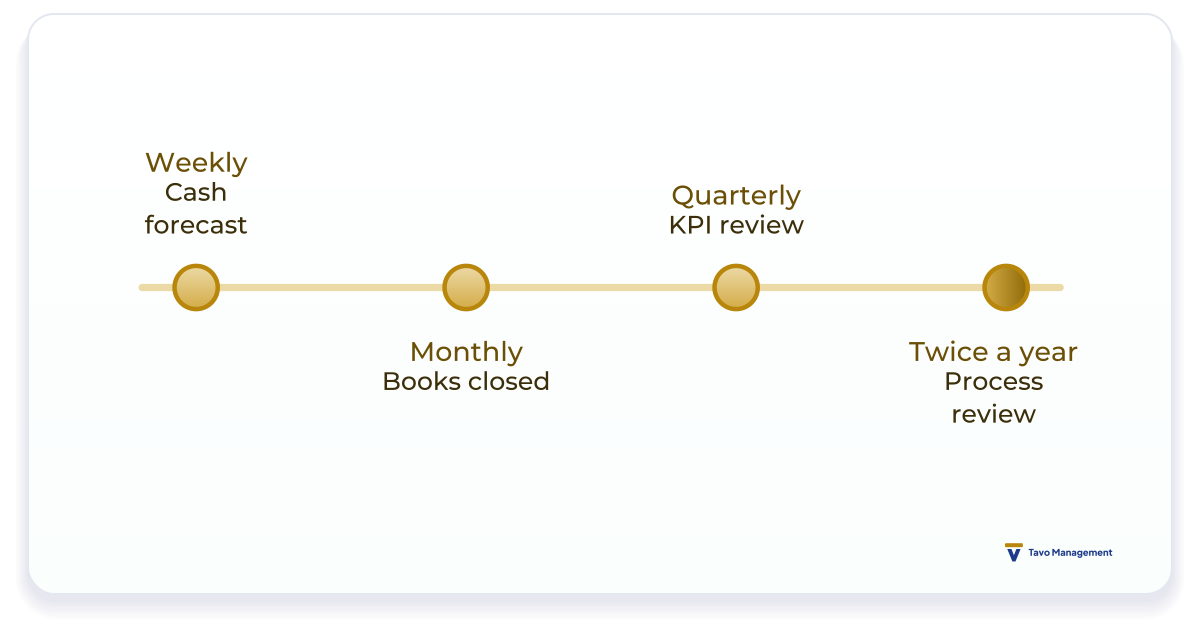
The Eight Practices at a Glance
| Practice | How often | Effort to start |
|---|---|---|
| 1. Separate Business and Personal Money Completely | Day one, and again at every audit of your books | Low |
| 2. Close Your Books on a Fixed Calendar Every Month | By the tenth business day for most small teams | Low |
| 3. Build a Budget Around the Few Numbers That Drive Results | Once a year, reviewed every month | Medium |
| 4. Forecast Cash for 13 Weeks and Update It Weekly | Every week, in about 30 minutes | Medium |
| 5. Set Approval Rules Before Money Leaves the Account | Before your first hire in finance, or when payments pass a set size | Low |
| 6. Track a Handful of KPIs and Define Each One in Writing | Monthly, with the same definitions every time | Medium |
| 7. Collect Faster by Fixing Terms, Invoices and Follow-Up | As soon as invoices are late more than occasionally | Low |
| 8. Review Your Finance Process Twice a Year and Retire What Does Not Work | Every six months, in a two-hour session | Low |
Eight Financial Management Habits and How to Apply Them
Separate Business and Personal Money Completely
The first thing I check when a new client calls is whether a personal card has paid for business costs, or the other way round. Mixed accounts make every number suspect. Your bookkeeper has to guess what each transaction was, your accountant charges more to untangle it, and a lender sees an unclear picture of the business.
Open a business checking account and a business card, and route every business payment through them. If you have mixed money in the past, fix it with a clean cut-off date and a short written note of what was reimbursed. From that date on, an owner's draw or a documented reimbursement is the only way money moves between the two.
Do This
- Use one business account and one card for all business spending
- Pay yourself through a regular owner's draw or payroll
- Record reimbursements with a receipt and a date
Avoid This
- Paying a supplier from a personal card because it is quicker
- Moving money back and forth without a note
- Keeping a second business account that nobody reconciles
Close Your Books on a Fixed Calendar Every Month
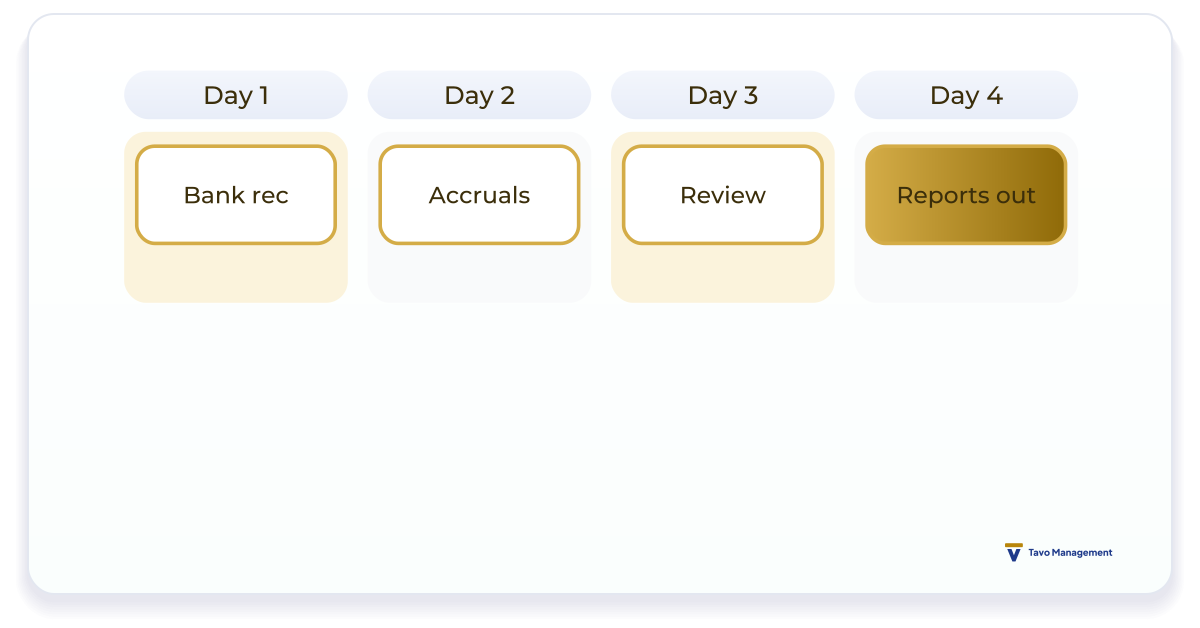
A month-end close that finishes at a different time each month is a sign that nobody owns it. I like a simple calendar: bank reconciliations on day three, accruals and adjustments on day five, review on day seven, reports out on day ten. The exact days matter less than the habit and a named owner for each step.
Once the close is predictable, everything downstream gets easier. Budget reviews happen on time, your accountant sees clean books, and you stop making decisions on numbers that are six weeks old. The financial management checklist lists the steps I put on a close calendar.
Do This
- Write the close steps down with an owner and a due day
- Reconcile bank and card accounts before anything else
- Lock the period once the review is done
Avoid This
- Closing whenever someone has time
- Posting adjustments after reports have gone out
- Letting one person hold all the knowledge
The picture below shows a close calendar laid out day by day.
Build a Budget Around the Few Numbers That Drive Results
Most budgets fail because they have too many lines. A budget with 200 rows cannot be reviewed in an hour, so it never is. I ask clients to find the five to eight drivers that explain most of their results, such as customers won, average price, headcount, material cost and payment terms, and to build the budget from those.
Review actual against budget every month and write one sentence about each significant gap. The sentence is the point, because it forces you to say whether the gap is timing, a price change or a mistake in the plan. Budgets that nobody revisits turn into a snapshot of last January.
Do This
- Start from drivers, then calculate the lines
- Review variances monthly with a written reason
- Update the forecast when a major assumption changes
Avoid This
- Copying last year's actuals and adding 5%
- Setting a budget once and filing it away
- Reviewing only total revenue and total cost
Forecast Cash for 13 Weeks and Update It Weekly
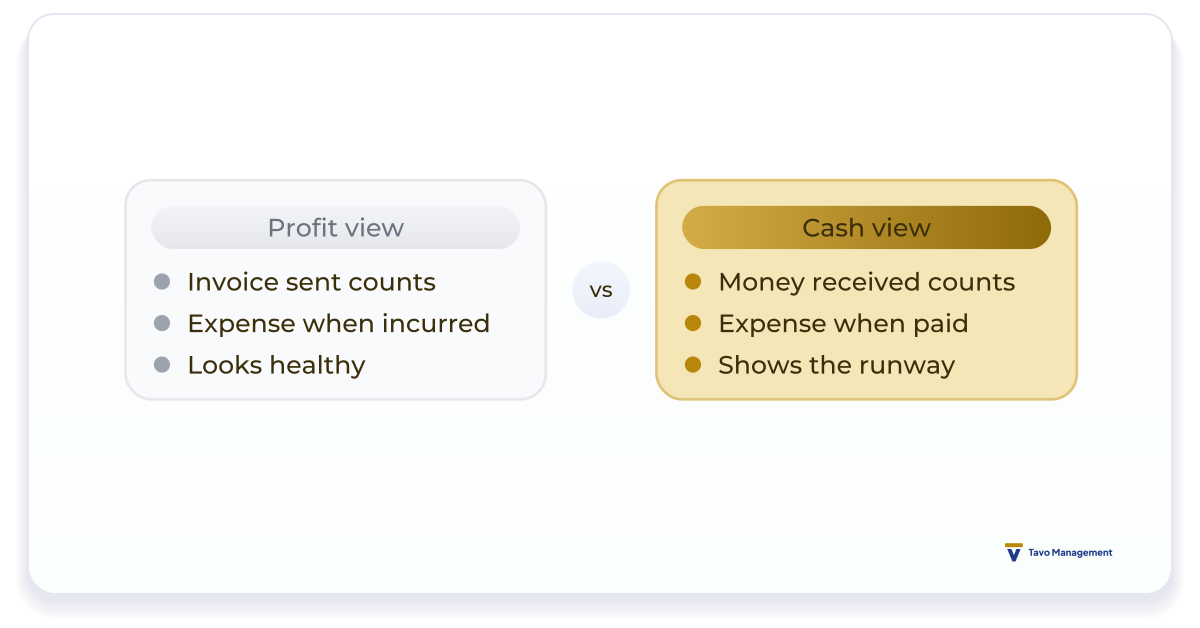
Profit and cash are different things, and many healthy businesses run short of cash. A 13-week cash forecast lists expected receipts and payments by week: customer payments, payroll, rent, taxes, loan payments and supplier bills. It looks a quarter ahead, which is long enough to act and short enough to stay realistic.
Start from your real receivables and payables lists, not from averages. Update it every week with what actually happened, and note where your guess was wrong. After two months you will know which customers pay late and which bills always arrive in the same week as payroll.
Do This
- Build the forecast from open invoices and bills
- Update actuals every week and track forecast error
- Decide the minimum cash balance that triggers action
Avoid This
- Using the bank balance as your only signal
- Assuming every invoice is paid on its due date
- Updating the forecast only when cash is tight
A sale and the cash it brings can land in different months.
Set Approval Rules Before Money Leaves the Account
Controls are cheap when the business is small and expensive to add after a problem. You do not need a long policy. You need a few clear rules: who can approve a new vendor, who approves bills above a set amount, who can release a payment and who reviews bank changes.
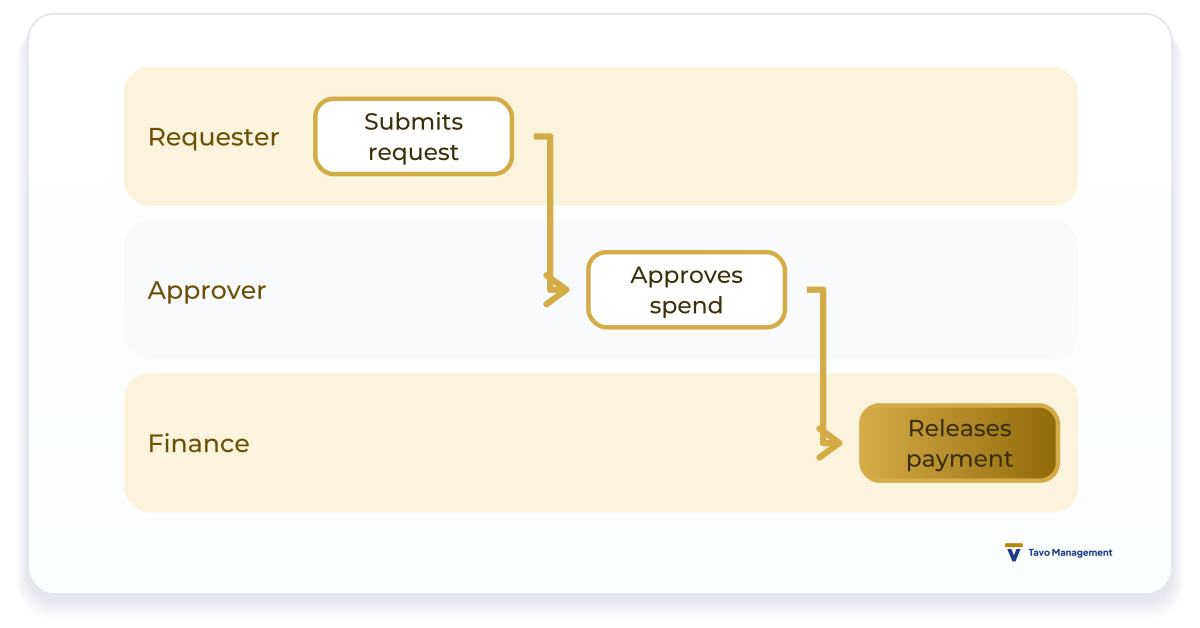
The key principle is that nobody both approves and pays the same item. In a team of three that can mean the owner approves and the office manager pays. In a team of one, it means you use a bank feature that needs a second confirmation. The financial management consulting work I do often starts with exactly this fix.
Do This
- Separate approving from paying
- Set dollar thresholds for second approval
- Review new vendors and bank detail changes by phone
Avoid This
- One person with full access to everything
- Approving invoices from email without a matching order
- Sharing a single login between staff
Approvals work best when each step has a single owner.
Track a Handful of KPIs and Define Each One in Writing
More metrics do not make better decisions. I usually recommend between five and eight: revenue, gross margin, operating cash flow, days sales outstanding, cash runway and one or two operational numbers that matter in your trade. Each gets a written definition, so people do not argue about what counts as an overdue invoice.
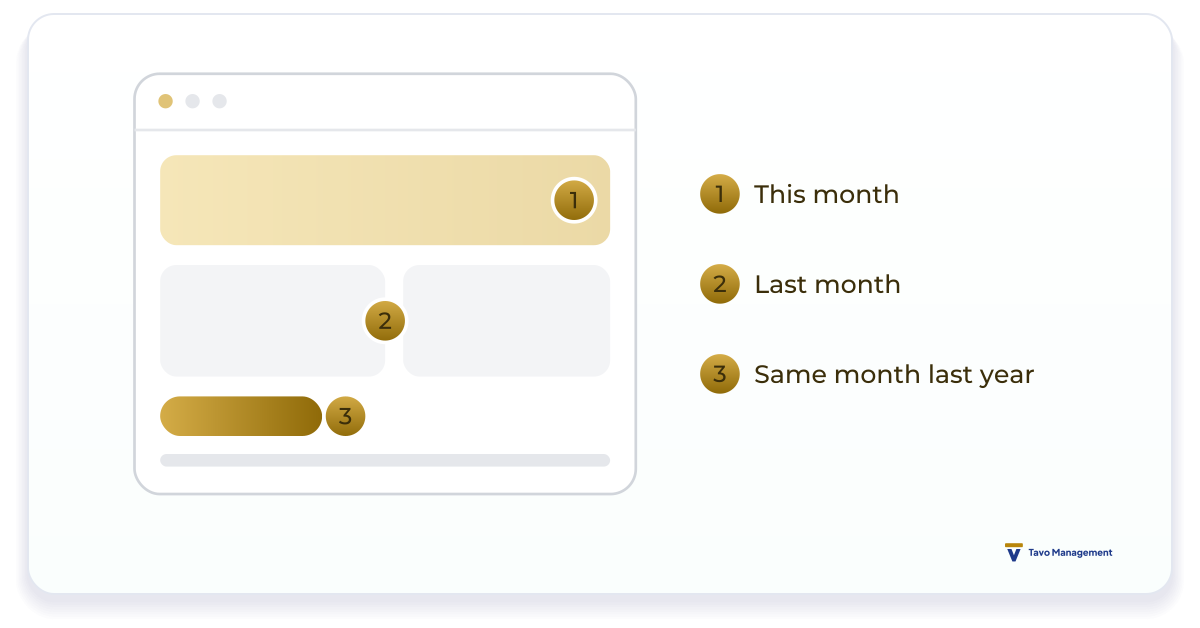
Put the numbers on one page with last month and the same month last year. If a number moves, add a sentence on why. A short, stable report beats a long dashboard that changes every quarter.
Do This
- Write the formula for each KPI once
- Show trend and a comparison on one page
- Assign an owner to each number
Avoid This
- Changing definitions without telling anyone
- Tracking twenty metrics nobody acts on
- Reporting revenue without margin or cash
A one-page report keeps the numbers easy to compare.
Collect Faster by Fixing Terms, Invoices and Follow-Up
Late payment usually starts before the invoice. Unclear terms, a missing purchase order number or an invoice sent to the wrong person each add days. Send invoices on the day the work is delivered, state the due date clearly and send them to the person who pays, not only the person who ordered.
Then set a simple reminder routine: a friendly note before the due date, one on the day and a call a week later. I track days sales outstanding monthly, and clients who add this routine often see it fall within a quarter. Offer easy payment methods, and consider deposits for larger jobs.
Do This
- Invoice on delivery with clear terms
- Send reminders on a fixed schedule
- Offer card, ACH and a payment link
Avoid This
- Waiting until month-end to invoice
- Chasing only the customers you feel comfortable calling
- Starting work for a new customer without agreed terms
Review Your Finance Process Twice a Year and Retire What Does Not Work
Routines age. A report that mattered two years ago may now be ignored, and a manual step you added during a rush may still be running. Twice a year, sit down with your bookkeeper or accountant and ask four questions: which reports did we use, which step took longest, where did errors appear and what changed in the business?
Use the answers to drop, simplify or automate. If a tool is the bottleneck, check the financial management software options with a clear list of needs, and read the financial management framework if you want a model for how the pieces connect.
Do This
- Hold a short review on the calendar twice a year
- Ask what each report is used for
- Remove steps that nobody can explain
Avoid This
- Adding tools without retiring old ones
- Letting a temporary workaround become permanent
- Skipping the review when things seem fine
Which Practice to Start With
Your starting point depends on what hurts today. The table shows the symptom I hear most often and the practice that usually fixes it first.
| What you notice | Start with | Typical first result |
|---|---|---|
| Your accountant asks many questions about transactions | Separate business and personal money | Cleaner books within one month |
| Reports arrive late or differ between people | A fixed close calendar and KPI definitions | Reports out by a set day |
| You are surprised by cash shortages | A 13-week cash forecast | Gaps visible weeks ahead |
| Customers pay later than you expect | Invoice terms and a reminder routine | Lower days sales outstanding |
| One person controls all payments | Approval rules and split duties | Lower fraud and error risk |
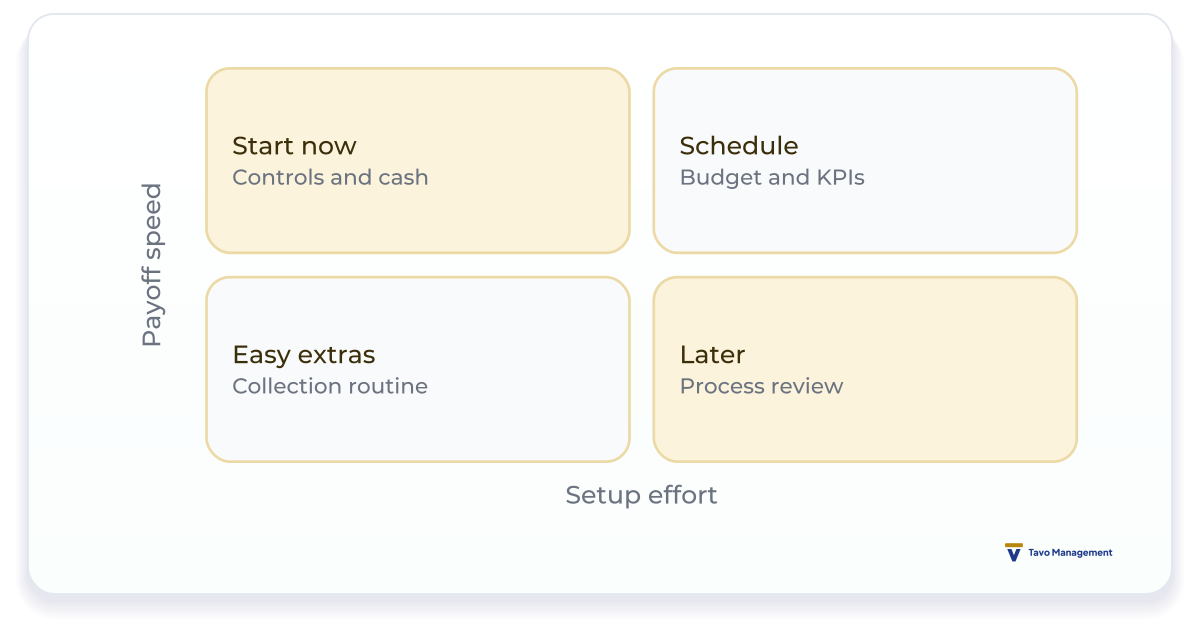
When several symptoms show up together, I fix controls and cash first, because they carry the biggest downside. Software choices come later. If you reach that stage, my ranking of financial management software compares the main options by business size.
How to Choose Which Habits to Build First
I suggest you score each practice on three questions before you commit time:
- Does a gap here create real risk to cash or accuracy right now?
- Can one person own the habit and finish it in a few hours a month?
- Will the result be visible within a quarter?
Anything that scores yes on all three goes first. Write the owner and the first due date next to each, and review the list at your next monthly close. If you need help prioritizing, the free call below covers exactly that.
Questions About Financial Management Best Practices
What Are the Most Important Financial Management Best Practices for a Small Business?
Start with the basics: separate business and personal money, close your books on a fixed calendar and forecast cash weekly. Those three give you reliable numbers and an early warning on cash. Budgets, approval rules and KPIs build on them.
How Often Should I Review My Business Finances?
Review cash weekly, close the books and look at the budget monthly, and review your whole finance process twice a year. Weekly cash checks take about half an hour once the forecast exists, and they prevent most surprises.
Do I Need an Accountant If I Have Bookkeeping Software?
Software records transactions, but an accountant reviews them, files taxes and advises on structure. Most small businesses use both: a bookkeeper or the owner for daily entries, and an accountant for review and year-end work. Ask your accountant which format of records they prefer.
How Much Cash Should My Business Keep in Reserve?
There is no single number. Many owners aim for enough to cover several months of fixed costs, and the right amount depends on how predictable your income is. A 13-week forecast shows how much buffer your own business needs.
What Is the Fastest Way to Improve Cash Flow?
Invoice sooner, make terms clear and follow up on a schedule. Those steps cost almost nothing and often shorten the time to payment. After that, review payment terms with suppliers and check for slow-moving inventory or unused subscriptions.
When Should I Invest in New Finance Software?
When your process is clear and the tool is the bottleneck. If the close is slow because approvals are unclear, software will not fix it. Define the steps first, then compare options and test two or three with your own data.
Can I Apply These Practices If I Run the Finances Myself?
Yes. A solo owner can still separate accounts, keep a close calendar, forecast cash and require a second confirmation for large payments. Keep the routine small and write it down, so a bookkeeper or successor can pick it up.
General information only: this is not legal, financial or tax advice. Examples and numbers reflect typical projects; check the specifics with your advisers before deciding.
Did you find this helpful?
Thank you for your feedback.
Delaney Brisco
Delaney leads the Tavo editorial team and works with our consultants to turn real client projects into practical guides on project delivery, process design and organizational change. Before joining Tavo, she spent 12 years in operations and program management roles. She has since edited more than 300 articles on management practice and reviewed PMO setups and process redesigns from over 100 client projects. She is based in Minneapolis, Minnesota.