Summary
- Twelve checks cover the legal, financial and operational basics of a rental portfolio.
- Sample 5% to 10% of units, not everything, and look for patterns.
- Fix agreements, insurance, trust accounts and leases before maintenance and reporting.
- Give every red item one owner and a date, then recheck in 30 days.
Property management failures rarely come from one big mistake. They come from small gaps that sit unseen for months: an expired agreement, an unreconciled account, a repair ticket nobody owns. A checklist finds them early, and that is all this one is for.
Use the twelve points below as a quarterly review of your portfolio or as an entry check when you take over a property. If you want someone to run the review with you, a property management consulting assessment covers the same ground against your own data. For the bigger picture of how these points fit together, read my property management guide.
The 12 Points and Where to Check Them
| Checkpoint | Where to check |
|---|---|
| 1. Ownership and Management Agreement Are Signed and Current | Management files |
| 2. Insurance Certificates Are on File | Insurance files |
| 3. Trust and Operating Accounts Are Separated and Reconciled | Bank reconciliations |
| 4. Leases Are Complete, Signed and Stored in One Place | Lease folder |
| 5. Rent Roll Matches the Ledger | Rent roll and ledger |
| 6. Security Deposits Are Held and Tracked Correctly | Deposit ledger |
| 7. Move-In and Move-Out Inspections Are Documented | Inspection files |
| 8. Preventive Maintenance Is Scheduled | Maintenance calendar |
| 9. Open Work Orders Have Owners and Due Dates | Work order report |
| 10. Vendors Are Vetted and Paid on Terms | Vendor files |
| 11. Owner Statements Go Out on a Fixed Schedule | Owner portal |
| 12. Compliance, Notices and Records Are Up to Date | Compliance calendar |
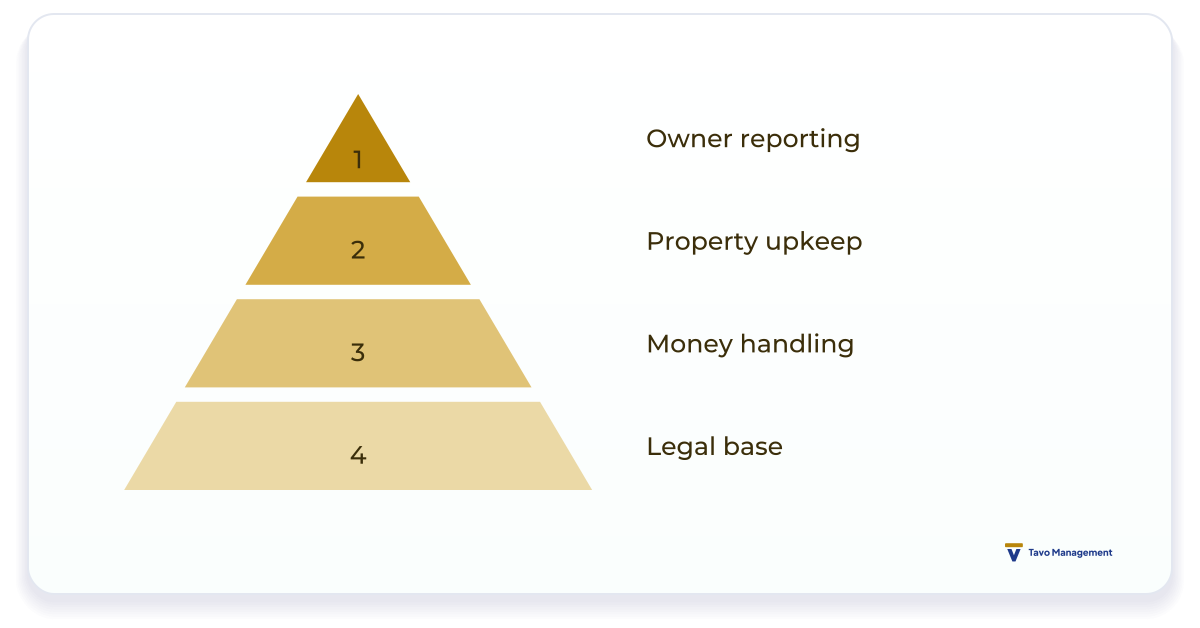
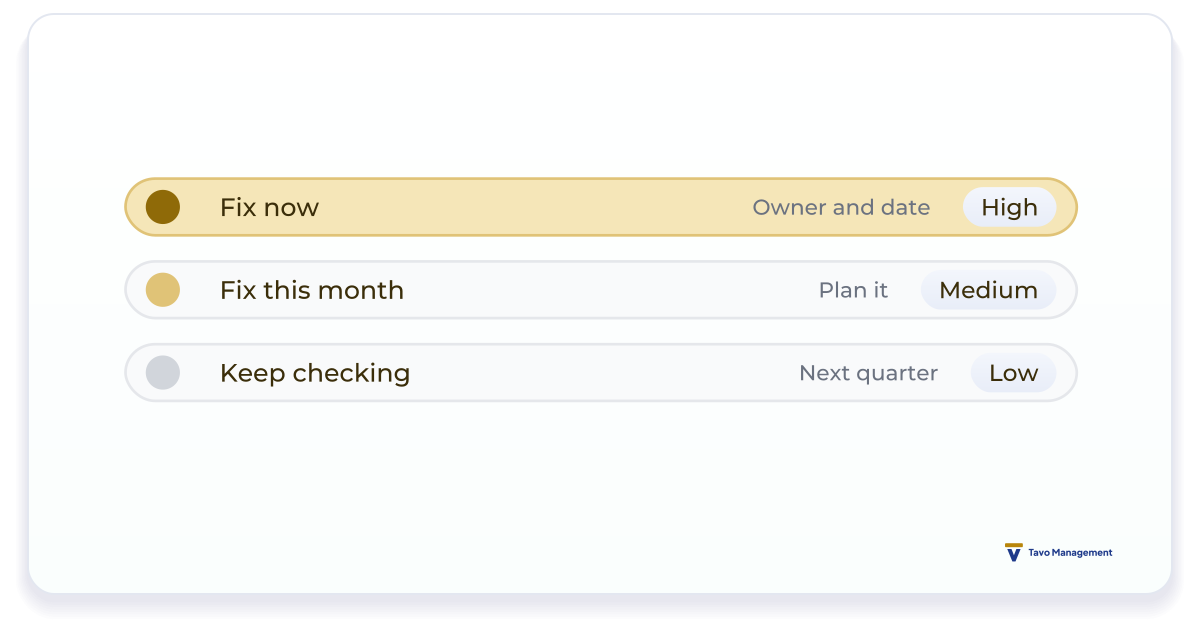
Run the list in this order. The first four points protect you legally and financially, so a failure there outranks everything below. The rest protect revenue and reputation. Do not try to fix all twelve in one week; mark each point green, amber or red and start with the reds.
How to Run the Checklist Without Losing a Week
Pick a sample, not the whole portfolio. For a portfolio of 300 units, I check about 15 leases, three months of reconciliations and the 20 oldest work orders. Patterns show up quickly, and you can widen the sample where you find problems. Keep the review short: about two hours per fifty units is realistic once the files are organized, and the first round is always slower because you are also finding where things are stored. Record the date, the person who checked and the result for each point, in the same sheet, so the next review compares with the last.
Assign each red item an owner and a date. A list of problems without owners becomes a list of excuses. The metrics from my guide to property management KPIs help you turn a one-time review into ongoing monitoring.
The 12 Points in Detail
1. Ownership and Management Agreement Are Signed and Current
Every property needs a signed management agreement that names the owner, the fee, the services, the spending limit for repairs and the termination terms. Pull the agreement for each property and check the dates. Confirm that the owner's legal name matches the deed and the bank account on file.
What to verify: In client reviews I often find agreements that expired quietly and a manager working on a handshake. Renew them in writing.
2. Insurance Certificates Are on File
Owners, vendors and your own firm each carry coverage, and a gap shows up at the worst moment, after a claim. Collect the owner's policy, your liability and professional coverage and vendor certificates. Set a reminder 60 days before each expiry.
What to verify: Check that your firm and the owner are named correctly on the policy. Coverage rules vary by state and carrier, so confirm details with your insurance adviser.
3. Trust and Operating Accounts Are Separated and Reconciled
Owner funds and security deposits belong in the accounts your state requires, and the bank balance has to match the ledger every month. Reconcile each account monthly, review outstanding items and keep a record of who reviewed it. Trust accounting rules differ by state, so ask your accountant what applies to you.
What to verify: A month that is skipped turns into three months of cleanup. Make the reconciliation date a fixed task with a named owner.
4. Leases Are Complete, Signed and Stored in One Place
A lease that cannot be found cannot be enforced, and a lease with a missing addendum creates arguments. Spot check a sample of units: signed lease, move-in date, rent amount, deposit, pet terms and required local disclosures. Store scans in your platform, not in email.
What to verify: Use one template per property type and have a local attorney review it. Check lease rules for each jurisdiction, and note when the template was last updated.
5. Rent Roll Matches the Ledger
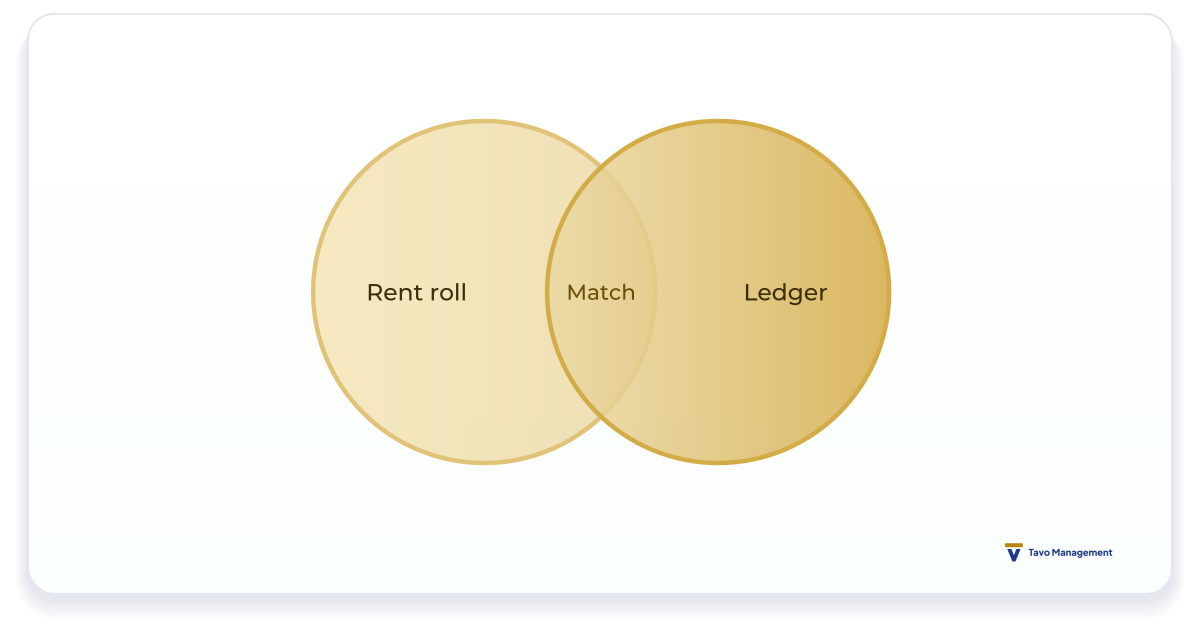
Your rent roll lists who owes what. If it does not match the accounting ledger, charges, credits or payments are off somewhere. Run the rent roll and the receivables report on the same date and compare totals. Investigate every difference above a small threshold you set.
What to verify: Mismatches often come from manual charges and old credits. Fix them at the source and write down the cause.
6. Security Deposits Are Held and Tracked Correctly
Deposits are a frequent source of disputes and penalties, and the handling rules vary by place. List every deposit with the unit, amount and date received. Confirm each sits in the right account and that return deadlines are on a calendar.
What to verify: Ask your legal adviser for the current deadlines and itemization rules, rather than relying on memory.
7. Move-In and Move-Out Inspections Are Documented
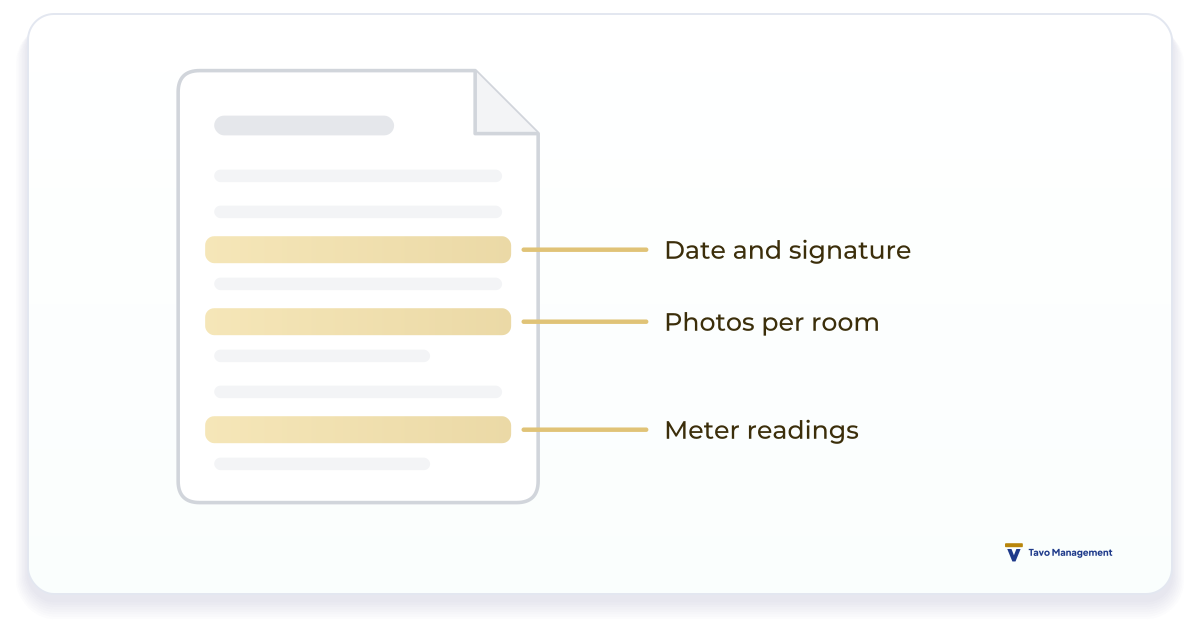
Photos and dated checklists are your evidence when a damage claim comes up. Check that each recent move-in and move-out has a signed condition report and time-stamped photos in the file.
What to verify: The fastest fix is a mobile checklist that forces photos before the form can be submitted.
8. Preventive Maintenance Is Scheduled
Furnace filters, smoke detectors, gutters and water heaters fail in predictable ways, and a planned visit costs less than an emergency. List recurring tasks for each property, assign a vendor and a month, and verify the last completion date.
What to verify: Add a seasonal pass for roofs, drains and heating before the cold or hot months hit.
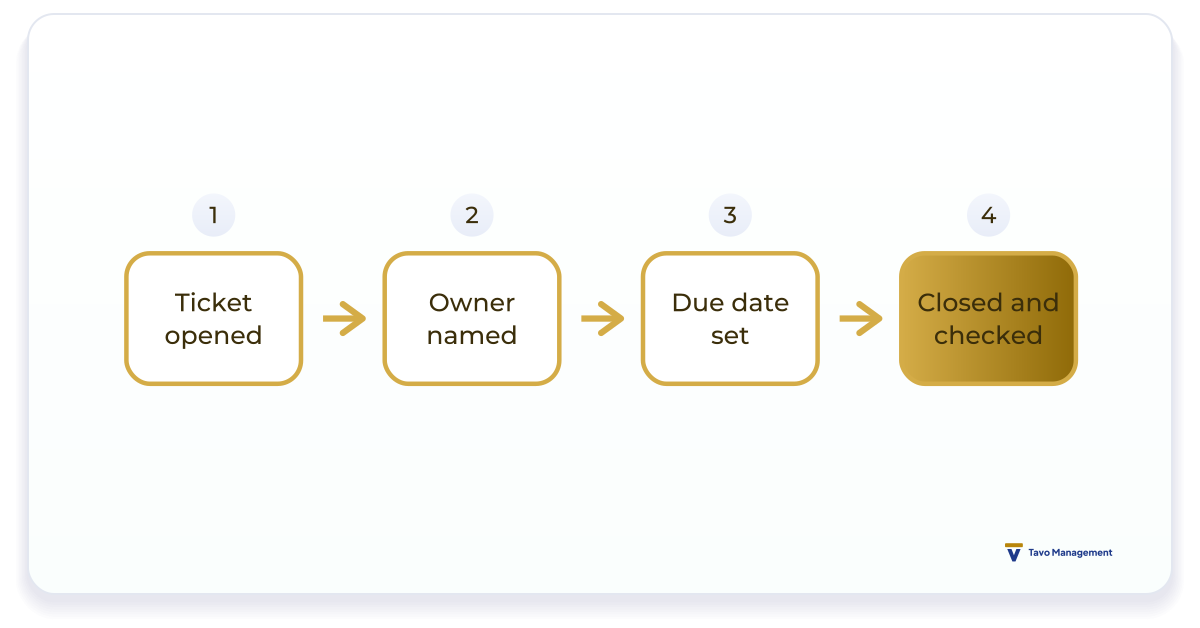
9. Open Work Orders Have Owners and Due Dates
A repair without an owner stays open, and residents notice. Export all open work orders and sort by age. Anything older than your standard needs a note and a next step.
What to verify: Set a standard response time and check the oldest five tickets every week.
10. Vendors Are Vetted and Paid on Terms
A vendor without a license check, insurance or a W-9 puts you and the owner at risk. Confirm the license, insurance certificate, tax form and agreed rates for each active vendor. Review who approved the last five invoices.
What to verify: Keep a short list of preferred vendors per trade, so emergencies do not depend on one person's phone.
11. Owner Statements Go Out on a Fixed Schedule
Owners judge you on the report they get, and a predictable date builds trust. Check that the last three months of statements went out on the same day, with bank balances that match, and with notes on large expenses.
What to verify: Add a one-page summary: income, expenses, open items and the next planned work.
12. Compliance, Notices and Records Are Up to Date
Habitability rules, required notices, licensing and record retention differ by location and change over time. Keep a calendar of required notices and renewals, document who watches local rule changes and store records for the period your jurisdiction requires.
What to verify: This is an area for a local attorney. Use this item to confirm that you have a process, and check the current rules with a professional.
Mistakes That Make Checklists Useless
The most common failure is ticking boxes from memory. If you did not open the file, the point is not verified. The second is checking only the easy items, such as vendors you know, and skipping the ones you suspect are weak. The third is writing findings in an email that nobody reads again. Keep the sheet in one shared place, add the date and the reviewer's name and review the previous results before the new round.
Turning Results Into Action
Count your reds first. Three or more in the first four points mean you should pause growth and fix the foundations. Reds in the maintenance and vendor points usually point to a workflow problem, which a clean process fixes faster than extra staff. If your findings concentrate in one area, take a closer look at the property management best practices for that area. Software can also close gaps, and my comparison of property management software lists which platforms handle deposits, inspections and owner reports natively.
Repeat the review every quarter. If you see the same red three times, the cause lies in the process or the staffing, not in the item. Looking at the wider environment helps too, and the shifts in property management trends show which checks will matter more next year.
How to Choose Who Runs the Review
A manager can review their own portfolio, but self-checks miss blind spots. A colleague from another office, your accountant for the financial points or an outside consultant for the full list gives you a fresh view. I suggest outside help when you find reds in more than three points, when you take over a large portfolio or when you plan to switch software, because the review exposes data that needs cleaning first.
Questions About Your Property Management Checklist
How Often Should I Run a Property Management Checklist?
Quarterly works for most portfolios, with a lighter monthly pass on reconciliations and open work orders. Run the full list whenever you take over a property, change software or lose a key team member.
Which Checkpoint Matters Most?
Separating and reconciling trust and operating accounts matters most, because errors there can harm owners and create legal problems. Ask your accountant which rules apply in your state.
How Many Properties Should I Sample?
A sample of 5% to 10% of units, plus a look at the 20 oldest work orders and three months of reconciliations, is usually enough to find patterns. Widen the sample where you find problems.
Do I Need Property Management Software to Use This Checklist?
No. A spreadsheet works for a small portfolio. Software helps once you manage enough doors that leases, ledgers and work orders cannot be tracked by hand.
Who Should Own Each Checkpoint?
Give every point one named person: the accountant for reconciliations, the leasing lead for leases, the maintenance coordinator for work orders and the manager for compliance. Shared ownership usually means nobody checks.
What If My Checklist Shows Many Red Items?
Fix the legal and financial points first, then maintenance and vendor gaps. Assign an owner and a date to each red item and recheck in 30 days. A consultant can help if the same items stay red.
Is This Checklist Legal Advice?
No. Rules on deposits, notices, licensing and accounting vary by location and change. Use the list to confirm that you have a process, and check current requirements with a local attorney or accountant.
General information only: this is not legal, financial or tax advice. Examples and numbers reflect typical projects; check the specifics with your advisers before deciding.
Did you find this helpful?
Thank you for your feedback.
Delaney Brisco
Delaney leads the Tavo editorial team and works with our consultants to turn real client projects into practical guides on project delivery, process design and organizational change. Before joining Tavo, she spent 12 years in operations and program management roles. She has since edited more than 300 articles on management practice and reviewed PMO setups and process redesigns from over 100 client projects. She is based in Minneapolis, Minnesota.