Summary
- Weekly prime cost, forecast-based schedules and costed recipes carry most of the profit impact.
- Written procedures and a daily pre-shift meeting keep quality steady across shifts.
- Each practice works only if one person owns it and a number shows whether it works.
- Start with one practice, run it for a month, then add the next.
Restaurant management advice often reads like a long wish list. The restaurants I see doing well repeat a short list of habits, week after week. That is the core of most restaurant management consulting work: finding the few routines that matter and making them stick.
Here are the eight I recommend most. Each has a short explanation, a do list and an avoid list. Where a figure comes from outside, I link the source at the end.
These habits are not new, and none of them requires special software. They work because they turn a busy operation into a series of small checks that a tired manager can still complete at the end of a long Friday.
The 8 Practices in One Table
| Practice | How often | What it protects |
|---|---|---|
| 1. Pre-shift meeting | Every shift | Service quality |
| 2. Weekly prime cost | Weekly | Profit |
| 3. Forecast-based schedules | Weekly | Labor cost |
| 4. Costed recipes | Monthly | Gross margin |
| 5. Inventory counts | Weekly and monthly | Food cost |
| 6. Written procedures | Reviewed quarterly | Consistency |
| 7. Manager coaching | Weekly | Retention and control |
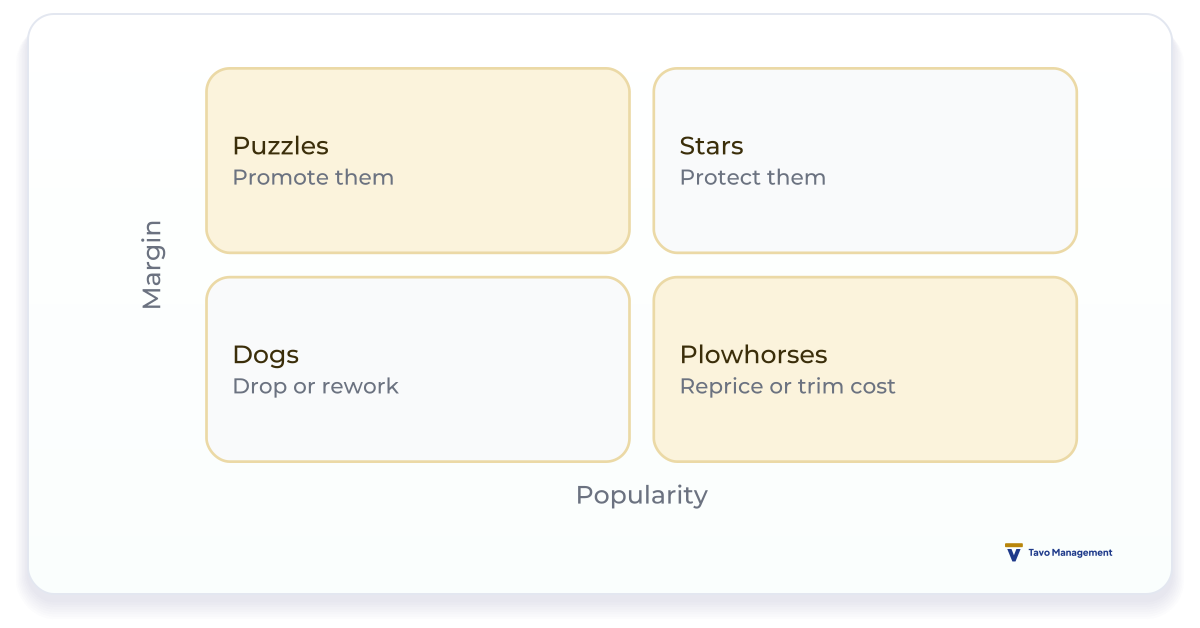
| 8. Menu review | Quarterly | Menu profit |
Many of these practices rely on a handful of numbers. I explain how to calculate them in my guide to restaurant management KPIs.
8 Restaurant Management Best Practices With Do's and Don'ts
Run a Ten-Minute Pre-Shift Meeting
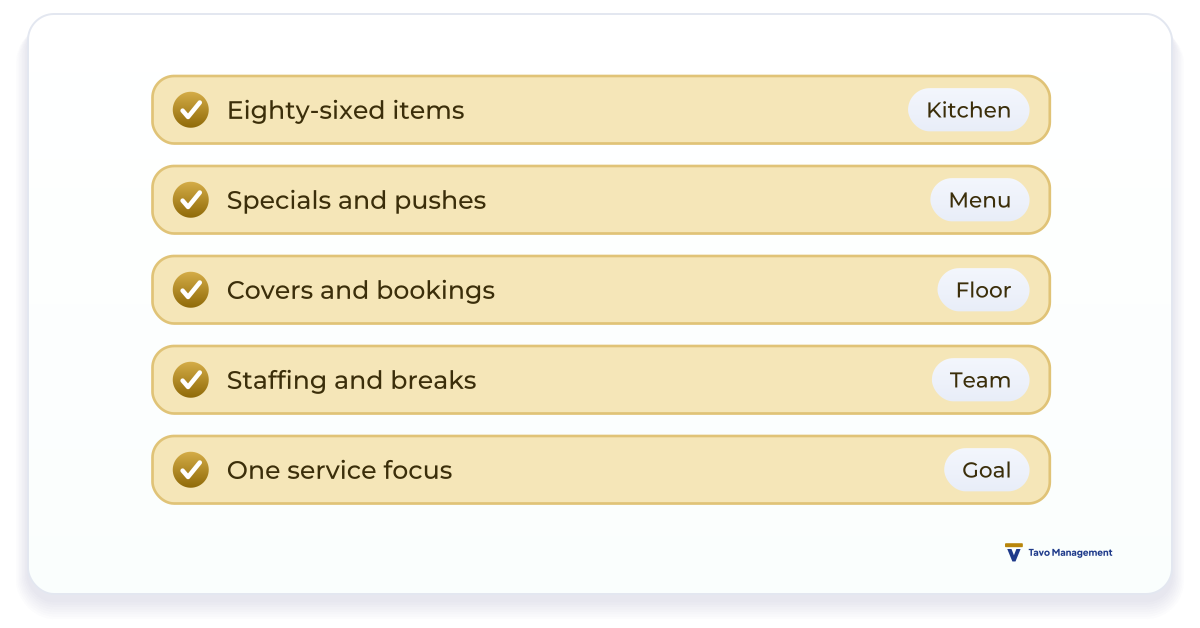
The pre-shift meeting is the cheapest tool you have. In ten minutes your team hears today's specials, sold-out items, large bookings and one standard to focus on. Without it, every server learns about the 86'd dish from a guest.
In the restaurants I review, the ones with a steady pre-shift routine see fewer order mistakes and calmer service, because everyone starts with the same information. Keep it short and the same every day.
Do This
- Cover specials, shortages, bookings and one service focus.
- Let a different team member share a tip each day.
- Start on time, even when someone is missing.
Avoid This
- Turning it into a long lecture or a complaint session.
- Skipping it on busy days, when it matters most.
- Running it differently for each manager.
Track Prime Cost Every Week
Prime cost is labor plus cost of goods sold as a share of sales. Benchmarks published by 7shifts put it at 55 to 65% of sales, with full service typically at 60 to 65%. Your own trend matters more than any benchmark.
Monthly statements arrive too late to change anything. A weekly check lets you spot a heavy schedule or a rising food cost while the week is still fresh, and it gives managers a number to own.
Do This
- Calculate prime cost every Monday from the last full week.
- Compare it with your own 12-week average.
- Discuss any swing of two points or more with your managers.
Avoid This
- Waiting for the monthly profit and loss.
- Copying a benchmark without adjusting for your concept.
- Tracking labor and food cost in separate places.
Build Schedules From Forecast Sales
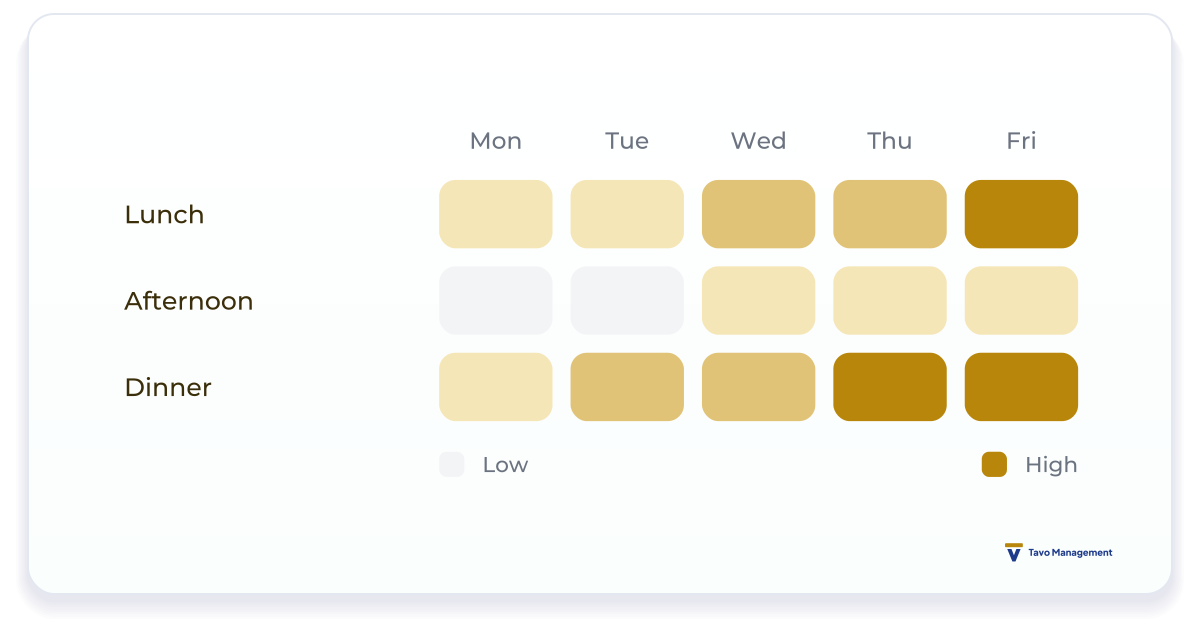
Schedules should follow expected covers, not last week's roster. Pull hourly sales for comparable weeks, set a labor target for each daypart and build the plan to fit. Adjust for events, weather and bookings.
The hardest part is discipline. When the forecast says Tuesday lunch needs two servers, you have to schedule two, even if three people ask for the shift. A shared rule makes that easier to defend.
Do This
- Use at least eight weeks of hourly sales as a base.
- Set a labor percentage target for each daypart.
- Publish the schedule a week ahead.
Avoid This
- Copying last week without checking sales.
- Cutting hours after the schedule is posted, except in an emergency.
- Letting the loudest request set the roster.
Cost Every Recipe and Update It
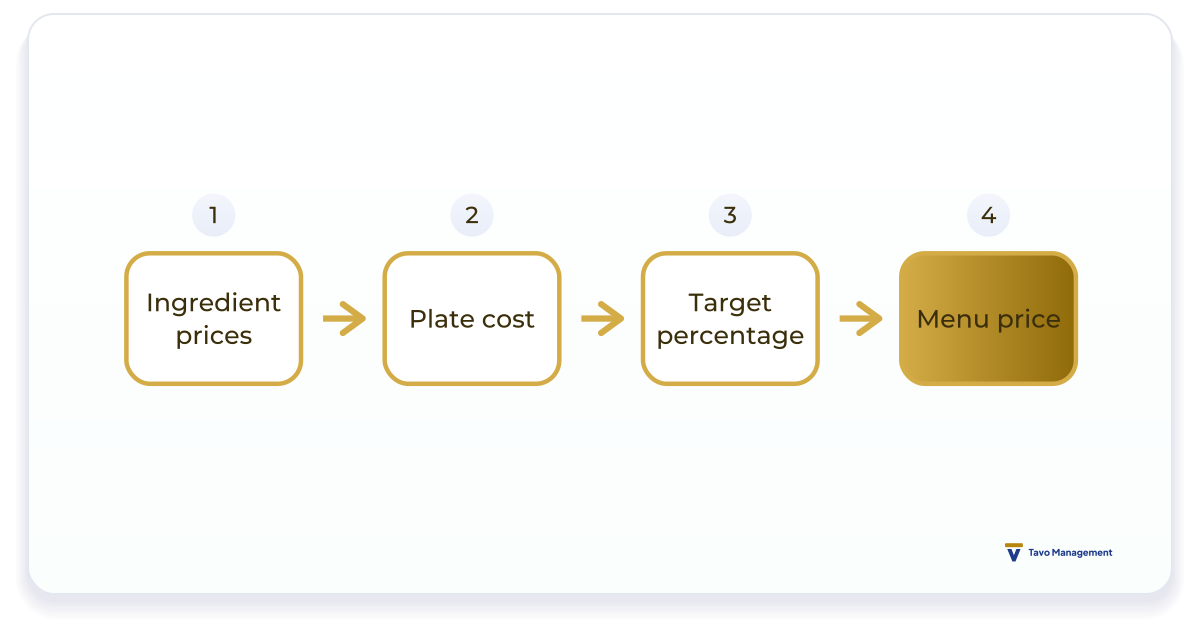
A recipe without a cost is a guess. Calculate the plate cost from current invoice prices, include trim and garnish and compare it with the menu price. A common target is a plate cost near 28 to 35% of the menu price, but your concept decides.
Prices change, so a cost sheet from last year is only a memory. Update the cost of your top ingredients monthly and reprice dishes that drift out of range before they hurt your margin.
Do This
- Cost your best sellers first.
- Update ingredient prices from the latest invoices.
- Reprice or resize any dish that drifts out of range.
Avoid This
- Using old purchase prices.
- Ignoring trim, waste and garnish.
- Pricing by what the competitor charges alone.
Count Inventory on a Fixed Rhythm
Counts turn a feeling about waste into a number. Count your top items weekly and everything monthly, on the same day and by the same person where possible. Compare actual use with what sales say you should have used.
The gap between theoretical and actual use tells you where to look. A small, steady gap is normal. A growing one points to waste, portioning or unrecorded stock.
Do This
- Count the same items in the same order every time.
- Record waste with a reason when it happens.
- Investigate the three biggest gaps each week.
Avoid This
- Counting only when something feels off.
- Letting the person who orders also do the only count.
- Ignoring small gaps that repeat.
Write Down Every Core Procedure
If a procedure lives in one person's head, it leaves when they do. Opening, closing, station setup, cash handling and ordering each need a one-page checklist. Add photos where they help.
Written procedures also shorten training. A new cook can follow a station card in the first week instead of asking five people. The cards need an owner who updates them when something changes.
Do This
- Keep each checklist to one page.
- Use photos for plating and station setups.
- Assign an owner who reviews each card every quarter.
Avoid This
- Writing a long binder nobody opens.
- Leaving procedures undated.
- Writing them without the people who do the work.
Coach Your Managers on the Numbers
Managers can only improve what they can see. Give each manager the weekly scorecard for their area and talk through it in a short one-to-one. Explain what each number means and what they can do about it.
I often find managers who are strong with guests and weak with data, simply because nobody showed them. Ten minutes a week of coaching changes that faster than any course.
Do This
- Share a one-page scorecard every week.
- Ask what the manager would change, then agree one action.
- Recognize improvements in front of the team.
Avoid This
- Sharing numbers only when something goes wrong.
- Giving a manager targets they cannot influence.
- Changing the scorecard every month.
Keep a Simple Weekly Management Rhythm
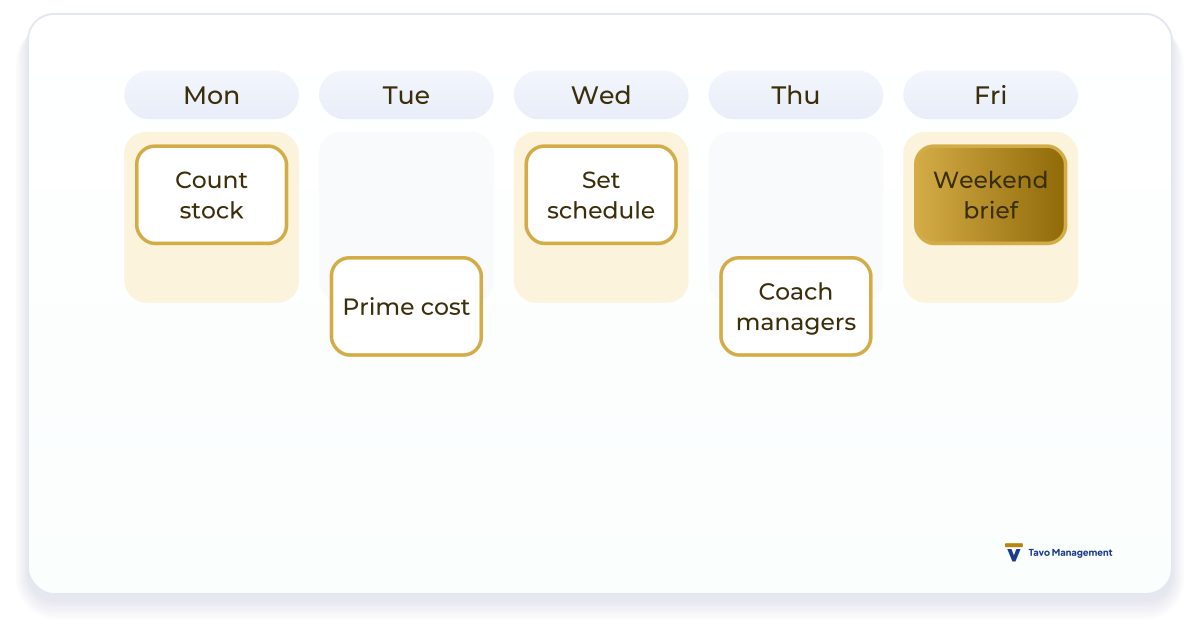
Good habits need a place in the calendar. A fixed weekly rhythm, such as prime cost on Monday, counts on Tuesday and schedule on Wednesday, keeps the routines from sliding when service gets busy.
The rhythm should be boring. When everyone knows when the numbers are reviewed, it becomes part of the job instead of an extra task.
Do This
- Fix a day and time for each review.
- Keep each review under thirty minutes.
- Write down one action and its owner.
Avoid This
- Moving reviews around when service is busy.
- Reviewing numbers without an action.
- Adding a new report before the old ones are used.
Estimate the Time You Could Win Back
Weekly counts, schedules and reports take manager time. Enter a task your team repeats every week, such as building the schedule or entering invoices, and the calculator shows what a simpler routine or tool could free up. If the numbers look promising, my ranking of the best restaurant management software shows which tools can take over the manual part.
How Much Time Could You Save?
Move the sliders to match one repetitive task in your business.
How to Choose Which Practice to Start With
You do not have to start with number one. I suggest you score each practice with three questions and begin with the highest:
- Does it protect a cost that hurts you today?
- Can you measure it with data you already have?
- Can one manager own it from next week?
Give each practice a start date, a named owner and a check after four weeks. If the number has not moved, change the routine, not the target. Most practices fail because they were too big at the start, so begin with a version that takes ten minutes and grow it from there.
For most restaurants that points to weekly prime cost or forecast-based scheduling. If the practices keep failing for the same reasons, my overview of restaurant management challenges helps you find the cause, and the restaurant management guide shows how the pieces fit together.
Questions About Restaurant Management Best Practices
What Are the Most Important Restaurant Management Best Practices?
Tracking prime cost weekly, scheduling from forecast sales and costing every recipe give the biggest return in the restaurants I review. A daily pre-shift meeting and written procedures keep those habits in place.
How Often Should I Track Restaurant KPIs?
Review prime cost, labor percentage and food cost variance weekly. Review the full profit and loss monthly. Weekly checks catch problems while you can still change the week.
What Is a Good Prime Cost for a Restaurant?
Benchmarks from 7shifts put prime cost at 55 to 65% of sales, with full-service restaurants often between 60 and 65%. Set your own target from your last 12 weeks, then work to improve it.
How Do I Reduce Food Waste?
Count your top items weekly, log waste with a reason code and compare actual use with theoretical use from sales. Fix the three biggest gaps first, and adjust prep quantities to match demand.
How Do I Keep Service Consistent Across Shifts?
Use the same pre-shift meeting, the same opening and closing checklists and the same service standards on every shift. Consistency comes from routines that do not depend on who is working.
How Often Should I Update My Menu Prices?
Review recipe costs monthly and reprice at least quarterly, or sooner when a key ingredient jumps. Small, regular changes are easier for guests to accept than a large increase once a year.
Can I Apply These Practices to a Small Restaurant?
Yes. A single-location restaurant can run all eight with a spreadsheet and a weekly hour of review. The software options in my ranking help once the manual work grows.
Sources
General information only: this is not legal, financial or tax advice. Examples and numbers reflect typical projects; check the specifics with your advisers before deciding.
Did you find this helpful?
Thank you for your feedback.
Delaney Brisco
Delaney leads the Tavo editorial team and works with our consultants to turn real client projects into practical guides on project delivery, process design and organizational change. Before joining Tavo, she spent 12 years in operations and program management roles. She has since edited more than 300 articles on management practice and reviewed PMO setups and process redesigns from over 100 client projects. She is based in Minneapolis, Minnesota.