Summary
- Restaurant management covers five areas: guests, kitchen, people, money and systems.
- Prime cost, the sum of labor and cost of goods sold, is the number that ties them together.
- A weekly routine of review, counts and scheduling matters more than any single tool.
- Beginners should fix the basics first, while experienced owners gain most from consistency across shifts and locations.
Restaurant management is the work of turning a menu, a team and a room into a business that earns money. It sounds simple. In practice, you balance guests who want quick service, a kitchen that needs steady supplies and a team that changes often, all on margins that leave little room for mistakes. A restaurant management consulting project usually starts by making that balance visible.
This guide explains how restaurant management works, who does what, which numbers matter and how a good week looks. I write it for newcomers, but owners with years behind them will find a few checks worth running too.
What Restaurant Management Actually Covers
Restaurant management is the day-to-day control of everything that decides whether guests are served well and the business makes money. It includes hiring and scheduling, ordering and inventory, menu and pricing, service standards, cash handling and reporting. In a small restaurant, one person may do all of it. In a group, the work is split between a general manager, a chef, a front-of-house lead and a finance or operations team.
I find it helps to sort the work into five areas. Each one has its own routines and its own number to watch.
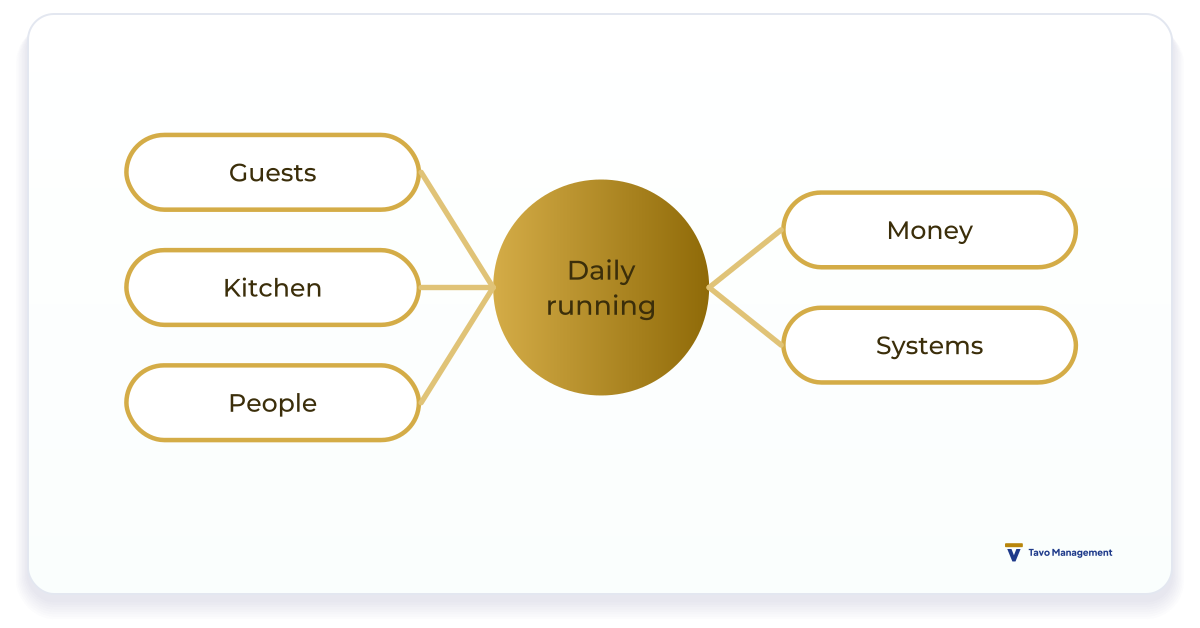
| Area | What it covers | Number to watch |
|---|---|---|
| Guests | Service standards, reservations, reviews, repeat visits | Average check, repeat visits, review score |
| Kitchen | Prep, stations, ticket flow, food safety | Ticket time, waste |
| People | Hiring, training, scheduling, retention | Labor percentage, turnover |
| Money | Costing, pricing, cash control, bookkeeping | Prime cost, food cost variance |
| Systems | POS, scheduling, inventory and accounting tools | Time spent on manual reports |
Who Does What in a Restaurant
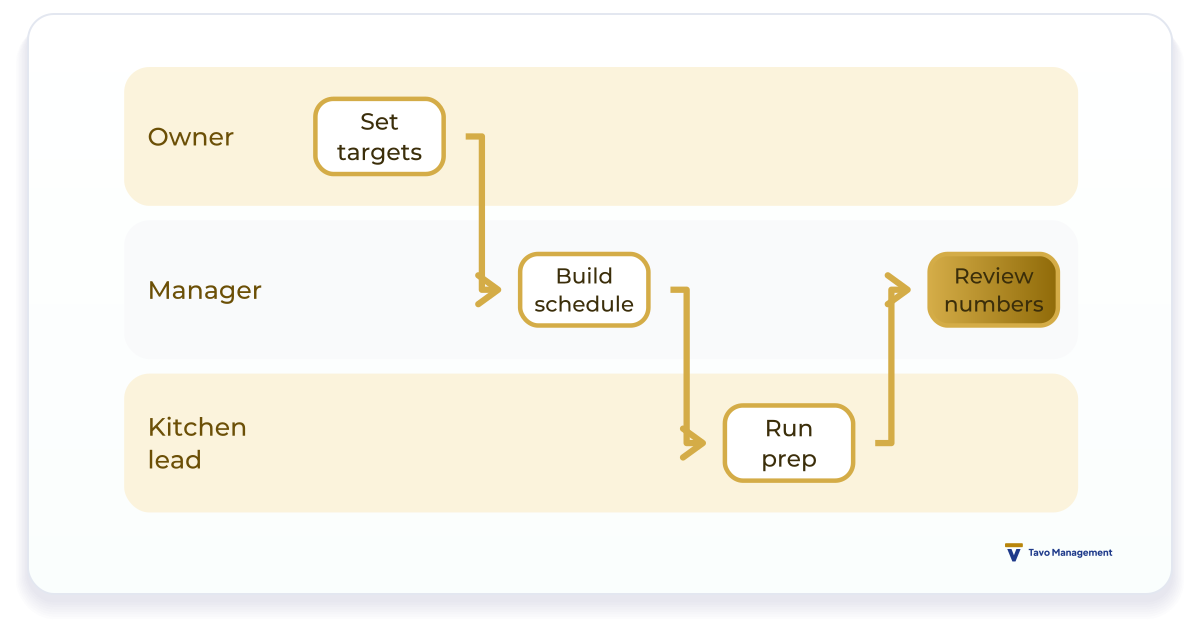
Roles overlap more than org charts suggest. The owner sets the concept, the budget and the standards. The general manager turns them into daily routines, hires and schedules the team and reads the numbers. The chef or kitchen manager controls recipes, ordering and quality. The front-of-house manager owns the guest experience and the floor.
In a one-location restaurant, the owner often fills two or three of these roles at once. That works until volume or a second location arrives. At that point, I suggest you write down who owns each area, because an area without an owner stays unmanaged. If you are an owner who still approves every order, the list of restaurant management challenges is a good way to see where that habit costs you.
The Money Side: How a Restaurant Makes Profit
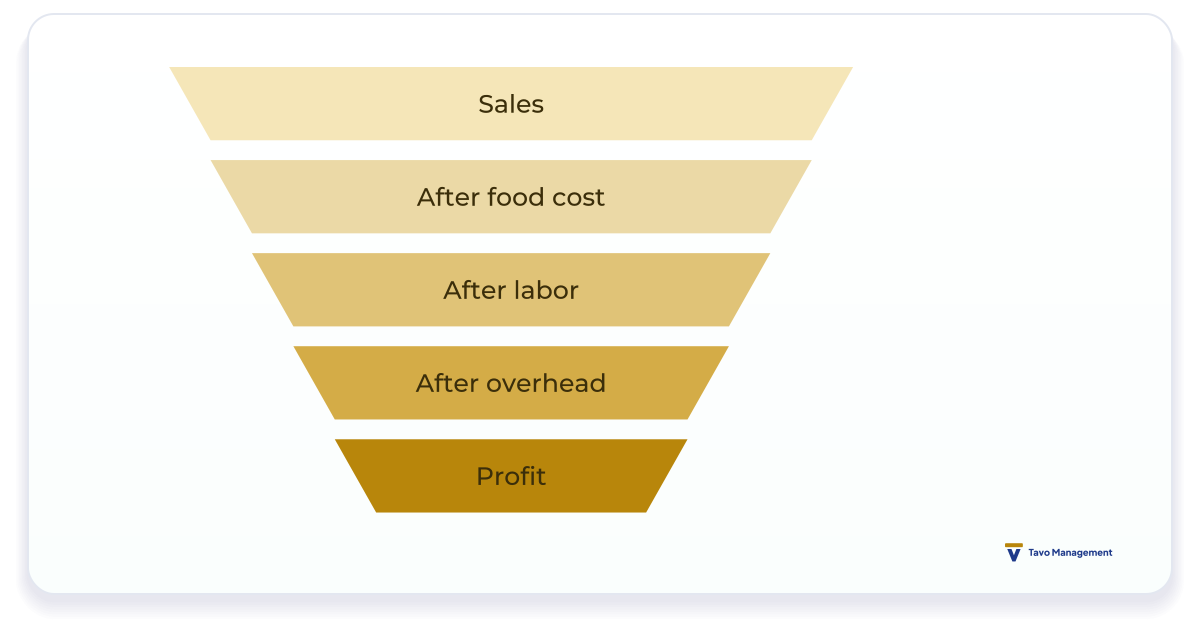
A restaurant earns money from the gap between sales and costs. The two largest controllable costs are labor and cost of goods sold, and together they make up prime cost. 7shifts puts prime cost at roughly 55 to 65% of sales, with full-service restaurants often at 60 to 65%. When it climbs above about 65%, little is left for rent, utilities and profit.
The National Restaurant Association reports that over 9 in 10 operators cite food, labor, insurance, energy and swipe fees as significant challenges, and 42% reported that their restaurant was not profitable last year. Those figures explain why newcomers should learn the numbers before they learn the fancy parts of the job. For formulas and ranges, my guide to restaurant management KPIs goes through each number in detail.
A Management Week That Works
Good restaurants run on routine. Here is the rhythm I see in well-managed places. It is plain, and that is the point.
- Every shift: a ten-minute pre-shift meeting, opening and closing checklists and a quick look at sales against forecast.
- Monday: calculate last week's prime cost and review it with your managers.
- Tuesday: count the top inventory items and compare use with sales.
- Wednesday: build and publish next week's schedule from forecast sales.
- Monthly: update recipe costs, review the profit and loss and check menu margins.
- Quarterly: review the menu, procedures and training plans.
The full set of habits is in my list of restaurant management best practices, with do and avoid lists for each.
Beginner, Growing and Pro: What Changes at Each Stage
What you need depends on where you are. A first-time owner needs the basics. A group needs consistency. This table shows how priorities shift.
| Stage | Main focus | Tools you need | Common mistake |
|---|---|---|---|
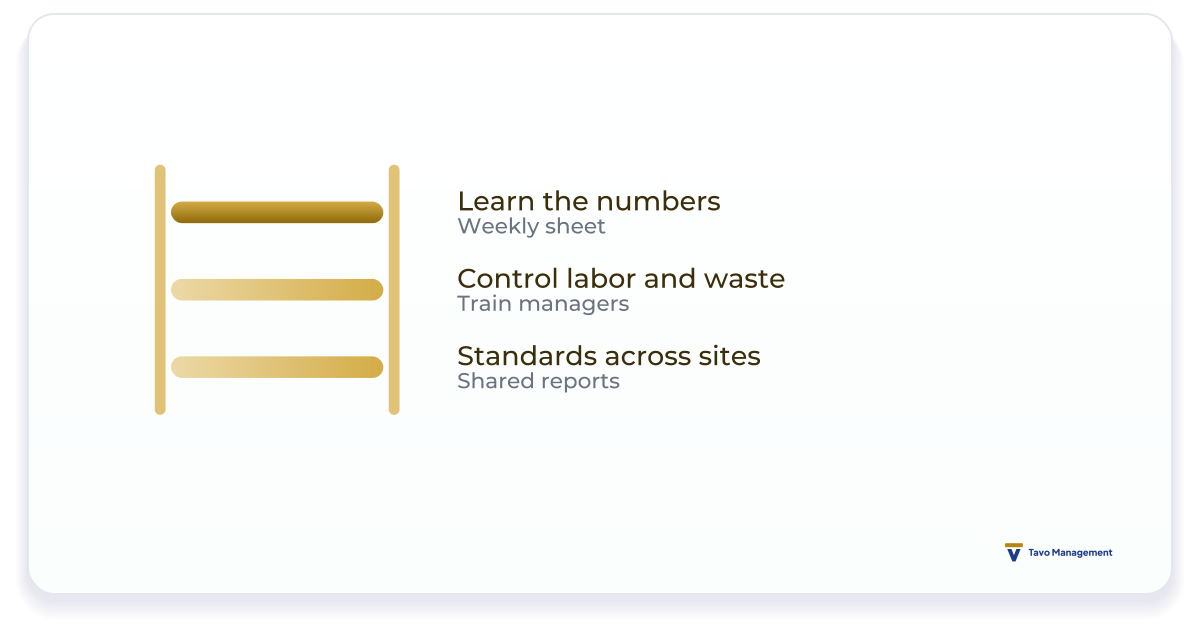
| Beginner (1 location, new) | Learn the numbers, set routines | POS, a weekly sheet | Guessing food cost |
| Established (1 to 3 locations) | Control labor and waste, train managers | Scheduling and inventory tools | Owner approves everything |
| Pro (group or franchise) | Standards across locations, shared reporting | Back-office accounting, central reports | Every location runs its own way |
Tools help at every stage, but they come after the routine. The tools I compare in my ranking of the best restaurant management software work best when a manager already knows which number they want to fix.
Hiring, Training and Keeping a Team
Restaurants lose staff faster than most industries. The Bureau of Labor Statistics put the quits rate in accommodation and food services at 3.5% in August 2026, compared with 2.1% for all private industry. That makes your first-week plan one of your most valuable documents.
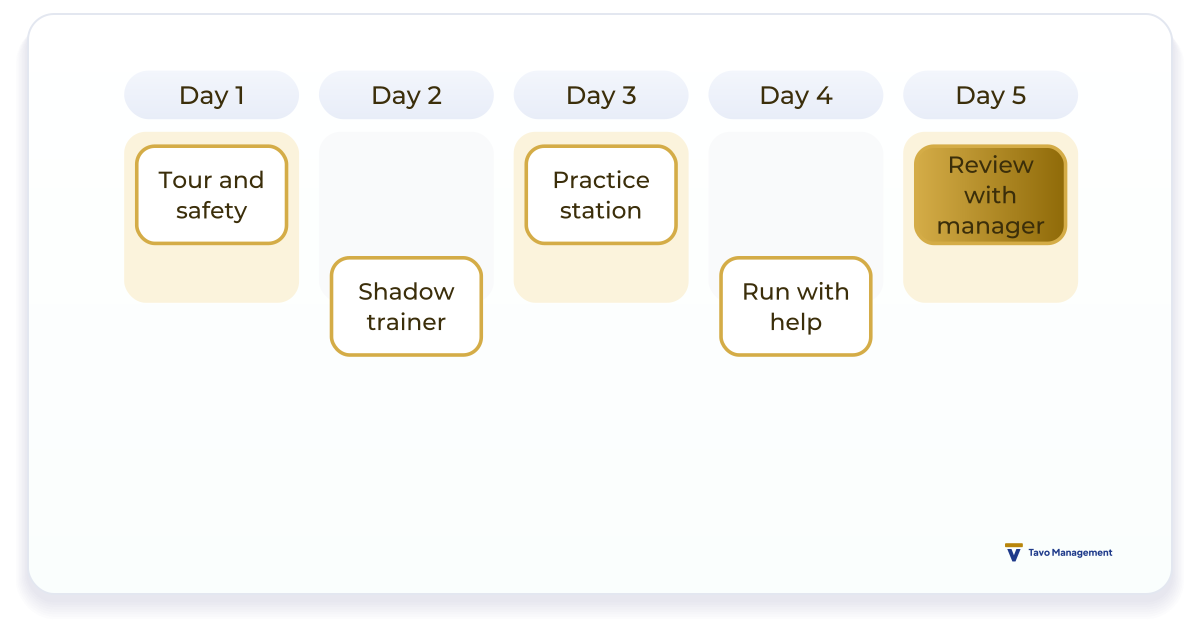
Give every role a one-page plan for the first week, a named trainer and a check-in at day 30. Publish schedules a week ahead. Write station cards and checklists so new people can follow them without asking five colleagues. In my client work, this alone reduces early turnover, because new hires feel prepared instead of lost.
Guests, Service and Reviews
Guests judge a restaurant on a handful of moments: how fast they are greeted, how long the food takes, whether the order is right and how the bill is handled. Each moment can be turned into a standard. Write five of them down, such as greeting within a minute, drinks within five and a check-back after the first bites, and make them part of every pre-shift meeting.
Reviews work as a free early warning system. Read them weekly and sort comments by theme, such as wait time, temperature or attitude. A theme that appears three times in a week is a process problem, not bad luck. Reply to reviews briefly and politely, since future guests read the replies as well.
Systems and Software
Your POS is the core system, because it records every sale and ties it to staff and time. Scheduling, inventory and accounting tools add detail on top. A single small restaurant can run on a POS and a weekly spreadsheet. A group usually needs shared reports so that every location is measured the same way.
Before you add a tool, name the number it should improve. If you cannot, wait. Software that nobody reads adds cost and another login without changing a single habit.
Food, Menu and Inventory
Your menu is your biggest lever. Each dish has a plate cost, a price and a role: some bring guests in, some carry the margin. Cost every recipe from current invoice prices, then sort dishes by sales and margin. Keep the profitable ones, rework the popular low-margin ones and cut the rest.
Inventory control means counting what you have, comparing it with what sales say you should have and acting on the gap. Start with the 10 to 15 items that make up most of your spend. A weekly count of those gives you most of the benefit for a fraction of the effort of counting everything.
Mistakes Beginners Make
The Parsa study from Ohio State, which followed more than 2,400 restaurants in Columbus between 1996 and 1999, found that about 26% failed in the first year and 59% over three years. It is an older, regional study, and the author called the common 90% failure claim a myth. It still shows how hard the early years are. The mistakes I see most often are:
- Not knowing the plate cost of the menu items.
- Scheduling from habit instead of expected sales.
- Reviewing numbers monthly instead of weekly.
- Carrying too large a menu for the kitchen.
- Leaving procedures in people's heads.
One more point on timing: do not try to fix everything in your first month. Pick one number, change one routine and give it four weeks before you judge it. New owners who change the menu, the schedule and the POS in the same month cannot tell which change helped.
A Restaurant Management Starter Checklist
Use this list as a first audit. If you can tick everything, you are ahead of most restaurants I see.
- Every recipe is costed from recent invoices.
- Prime cost is calculated every week.
- Schedules follow forecast sales by daypart.
- Top inventory items are counted weekly.
- Opening, closing and station checklists are written.
- A pre-shift meeting happens every service.
- Each manager has a scorecard and a coaching slot.
- Every area has one named owner.
Choosing Your Starting Point and When to Get Help
You can do much of this yourself. Start with the area that costs you most, set one routine and review it for a month. Get outside help when margins are thin and you cannot see why, before you open another location or when the same problems return every season. An assessment from a restaurant management consulting team saves time because it ranks the leaks for you.
Questions About Restaurant Management
What Does a Restaurant Manager Do?
A restaurant manager runs the daily operation: schedules and supervises staff, controls ordering and inventory, keeps service and food quality consistent, handles guests' concerns and reports on sales and costs. In smaller restaurants the owner often covers all of these roles.
What Skills Do I Need to Manage a Restaurant?
You need people skills, calm under pressure and comfort with numbers. The numbers part surprises many newcomers: reading a profit and loss statement, calculating prime cost and costing recipes are as important as running a good service.
How Much Money Does a Restaurant Make?
It varies widely. The National Restaurant Association reported that 42% of operators said their restaurant was not profitable in the last year, so margins are thin for many. Your own prime cost and rent decide most of the result.
What Are the Biggest Costs in Running a Restaurant?
Labor, cost of goods sold and occupancy are the biggest. Labor and goods together make up prime cost, which published benchmarks put at roughly 55 to 65% of sales. Rent, utilities, insurance and fees make up most of the rest.
Do I Need Restaurant Management Software?
You need a POS from day one. Scheduling, inventory and accounting tools become worthwhile as you grow, and a spreadsheet is enough for a single small location. My ranking of restaurant software sets the main options side by side.
How Do I Train New Restaurant Staff?
Give each new hire a one-page plan for the first week, a named trainer and a check-in after day 30. Written station cards and checklists make training shorter and more consistent.
When Should I Hire a Restaurant Management Consultant?
Consider one when your margins are thin and you cannot see why, before opening a second location or when the same problems return every season. An outside review often finds patterns that are hard to see from inside.
Sources
- Bar & Restaurant: National Restaurant Association releases 2026 State of the Restaurant Industry
- 7shifts: Restaurant prime cost guide
- U.S. Bureau of Labor Statistics: Quits rate 3.5 percent in accommodation and food services, August 2026
- Ohio State News: Restaurant failure rate much lower than commonly assumed
General information only: this is not legal, financial or tax advice. Examples and numbers reflect typical projects; check the specifics with your advisers before deciding.
Did you find this helpful?
Thank you for your feedback.
Delaney Brisco
Delaney leads the Tavo editorial team and works with our consultants to turn real client projects into practical guides on project delivery, process design and organizational change. Before joining Tavo, she spent 12 years in operations and program management roles. She has since edited more than 300 articles on management practice and reviewed PMO setups and process redesigns from over 100 client projects. She is based in Minneapolis, Minnesota.