Summary
- Work in five phases: focus, numbers, routines, people and growth, in that order.
- Cash visibility comes before growth, because growth consumes cash before it creates it.
- Routines and clear limits let your team run the business without waiting for you.
- Review every quarter and add only one new initiative at a time.
Most small business owners don't lack ideas. They lack the order in which to apply them. A strategy for a team of ten is not a smaller version of a corporate plan: it is a short list of choices about customers, cash and who does what. That is the starting point of every small business management consulting project I take on.
The playbook below runs over one quarter. It puts the phases in the order that has worked best in my client work, and it tells you what to leave alone until the basics hold.
The Five Phases at a Glance
| Phase | When | Goal | What you have at the end |
|---|---|---|---|
| 1. Focus | Weeks 1 to 2 | Choose who you serve and what you stop doing | A one-page strategy |
| 2. Numbers | Weeks 3 to 4 | See cash and sales weekly | A five-figure page and a cash forecast |
| 3. Routines | Weeks 5 to 8 | Write down the work that repeats | One-page procedures and clear roles |
| 4. People | Weeks 9 to 10 | Let the team decide inside limits | Delegation limits and a meeting rhythm |
| 5. Growth | Weeks 11 to 13 | Add customers, offers or tools without breaking the base | A quarterly review and next-quarter plan |
The weeks are a guide. A business with two employees can move faster, and one with a seasonal peak may need to pause in the middle. What matters is that you don't skip ahead: routines built on unclear priorities have to be rebuilt.
Phase 1: Focus on One Customer and One Offer
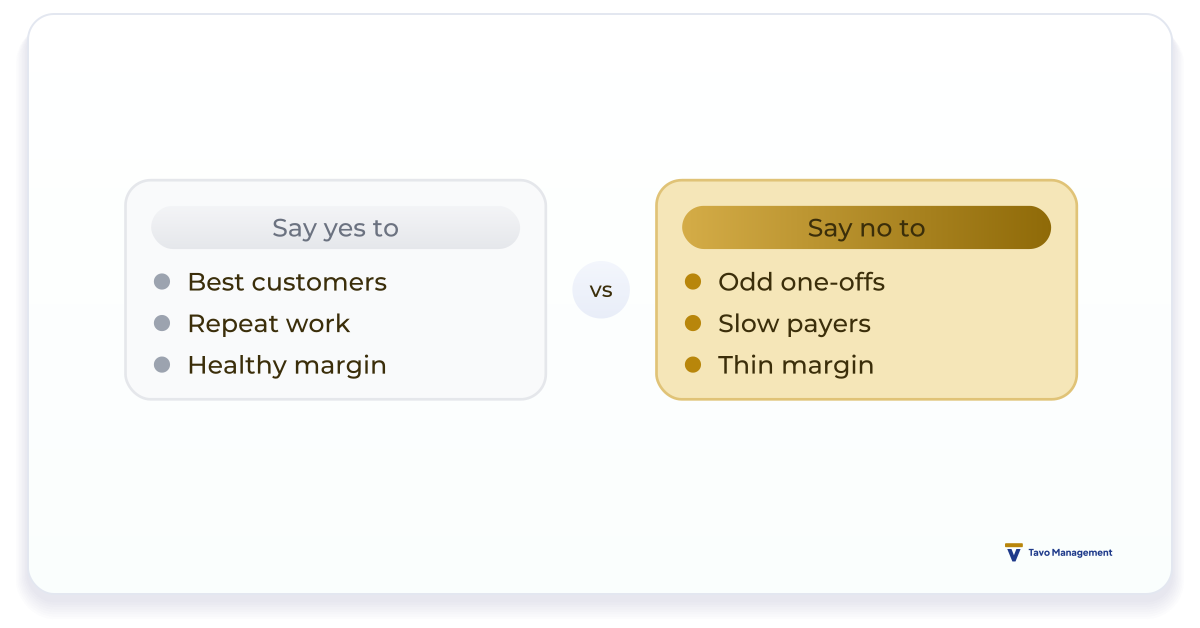
Small businesses grow into a mess by saying yes to everything. In the first two weeks, write down your ten best customers over the last year, what they bought and why they stayed. The pattern is usually clearer than you expect: one or two customer types bring most of the margin and most of the referrals.
Then decide what you will stop doing. That might be a service that eats time at a low price, a customer type that pays late or a location you visit twice a year. I have watched owners lift their margin by several points just by raising the price of work they didn't want. Put the result on one page: who you serve, what you sell, three goals for the year and what you will say no to.
Phase 2: Get Cash and Sales Into One Weekly Page
Weeks three and four are for visibility. Build a page with five figures: cash in the bank, money owed to you, sales this week against last week, open jobs and one quality measure. Update it every Monday from your accounting package.
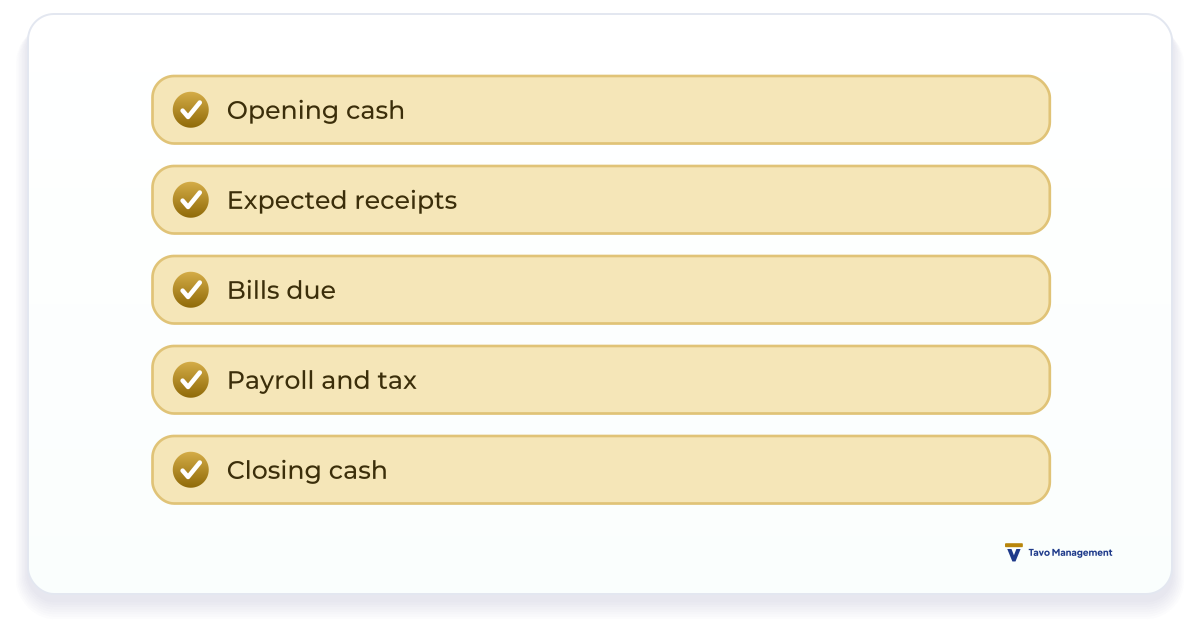
Add a thirteen-week cash forecast beside it. List the receipts and payments you expect each week, including taxes, insurance and seasonal orders. You will almost certainly find a week where cash gets tight, and it is better to see it in September than in November. When cash is tight, move invoicing to the day the work is done and call every invoice over thirty days.
Phase 3: Write Down the Work That Repeats
With priorities and numbers in place, you can tackle the routines. Pick the five jobs that cause the most rework or interruptions. Typical candidates are quoting, onboarding a customer, scheduling, invoicing and closing the day. For each one, write a single page with the steps, the owner and what done looks like.
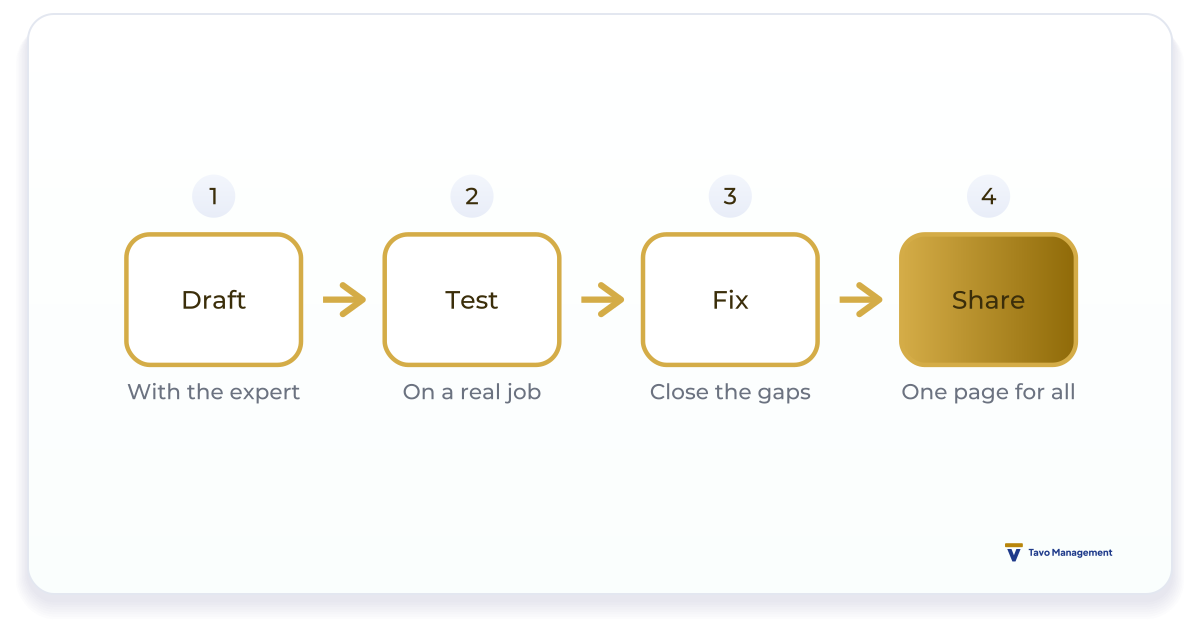
Draft the page together with the person who does the job best, then let a newer colleague test it. Where they stumble, the page is unclear. At the end of the phase, each recurring job has a name next to it, so nobody wonders whose turn it is. For a closer look at how to map a flow first, see my small business management guide.
Where software fits in this phase
This is the moment to ask whether a tool would hold your routines in place. A shared task board or a simple project tool is usually enough at this size. I compare the main products in my ranking of small business management software, including what each costs per user.
Phase 4: Let the Team Decide Inside Limits
Weeks nine and ten are about letting go. List the twenty decisions that reach you most often and sort them into three groups: decide alone, decide and tell me, ask me first. Put a spending limit on the first two. Most owners find that three out of four decisions can move down one level straight away.
Set up a fifteen-minute weekly meeting with the same three questions: what is done, what is stuck and what is next. Keep a visible action list with a name and a date beside each item. The first month feels slow because people check with you out of habit. Answer a question with "what would you do?" a few times, and the habit changes.
| Decision level | Example | Who decides |
|---|---|---|
| Decide alone | Refund under a set amount, reorder of regular stock | Team member |
| Decide and tell me | Overtime for a rush job, a discount within a range | Team lead, owner informed |
| Ask me first | New supplier, price list change, hiring | Owner |
Phase 5: Grow Without Breaking the Base
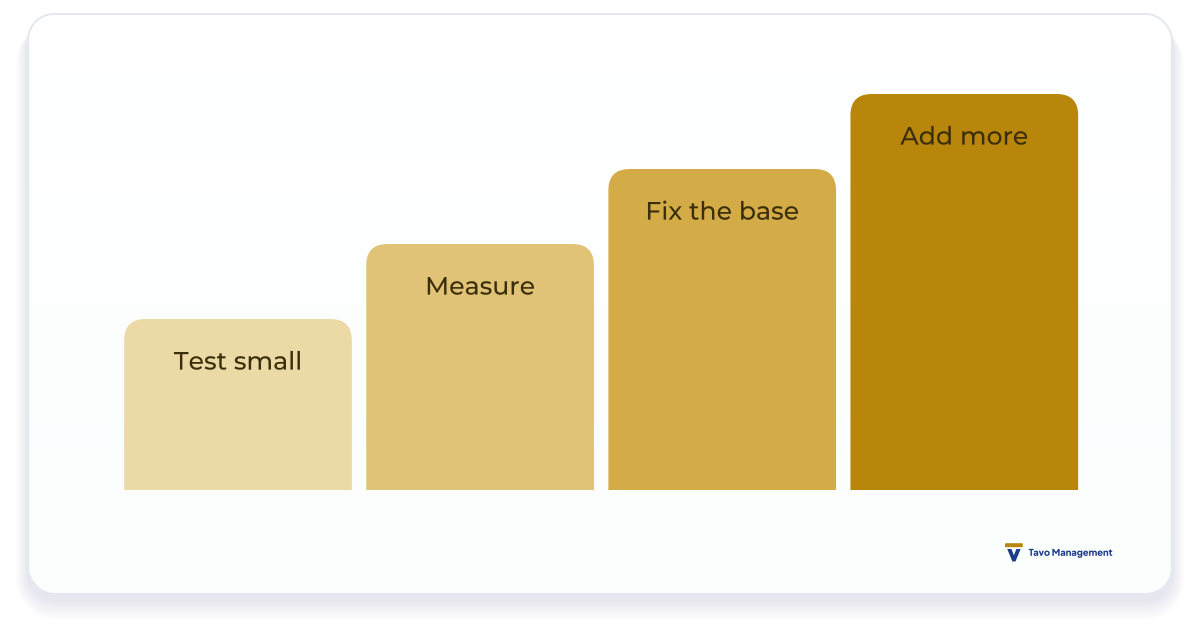
Only now do you add something new: a new offer, a second location, a bigger customer or a new hire. The rule is one initiative at a time. Each one pulls cash and attention, and your routines from phase three are what keep the current business running while you build.
Before you start, answer three questions in writing: what do I expect this to return, how much cash does it need before it pays back and who runs the current work while I am busy? If you can't answer the third, go back to phase three. You can see how the best owners sequence these moves in my small business management tips, which break each habit down to a single weekly action.
The quarterly review
At the end of the thirteen weeks, take half a day. Compare the weekly numbers with the start, list what worked and what you dropped and choose three decisions for the next quarter, plus one thing to stop. Then repeat the cycle, with a lighter touch on the phases that already hold.
Why the Order Matters
Owners often ask whether they can start with routines because that feels more concrete than a strategy page. You can, but you will probably rewrite them. A procedure for quoting a customer type you plan to drop is wasted effort, and a delegation limit set before you see your cash is a guess.
The order also protects you from the most common failure, which is growth ahead of cash. Adding customers feels like progress, yet every new order needs materials, wages and time before it pays. With the weekly numbers page and the cash forecast from phase two, you see the squeeze coming and decide with facts. Without them, the first sign of a problem is a missed payment.
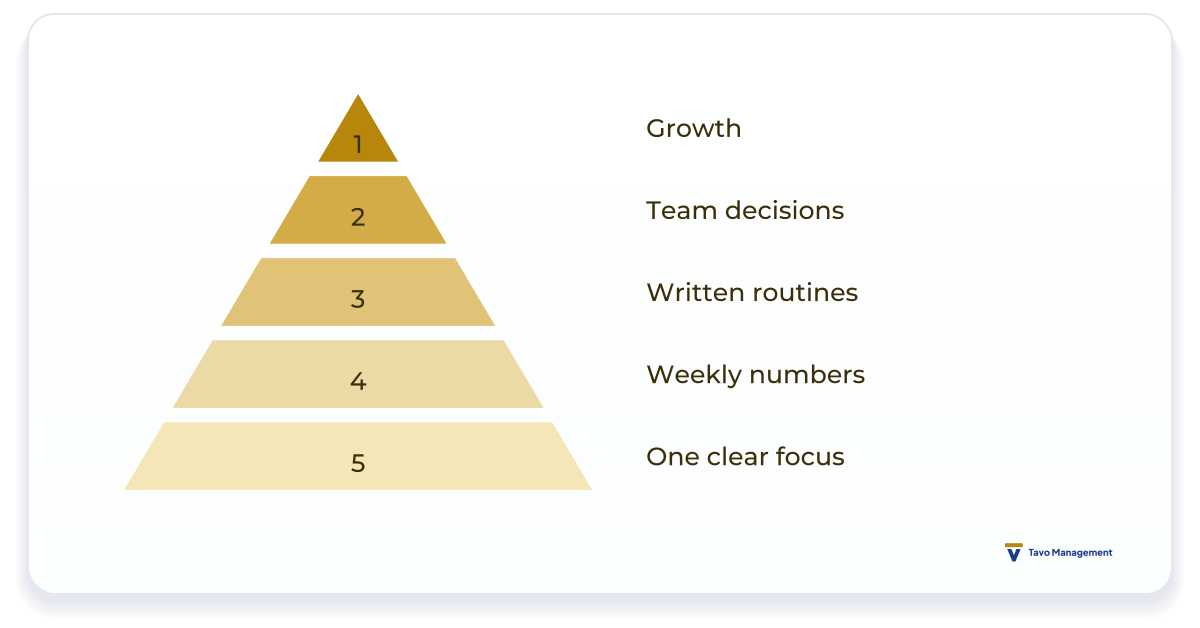
Finally, the sequence builds trust inside the team. Staff see priorities first, then numbers, then clear routines, and only afterwards a change in who decides. Each step gives them something concrete, so the shift in responsibility doesn't feel like an owner trying to step away from the work. If your team is under ten people, you can compress the first two phases into one week.
Seasonal businesses should shift the dates, not the order. A garden center, for example, can run phases one and two in winter and phase three before spring, so the routines are in place when the rush starts.
Where Strategies Usually Go Wrong
Three failures come up again and again. The first is a plan that is too large, so it dies in week three. The second is growth ahead of cash, where a good order sends the business short of money. The third is a strategy only the owner knows. Test yours by asking a team member to explain the three goals for the year. If they can't, share them again.
Estimate the Hours Your Routines Give Back
Phase three is where most of the saved time comes from. Pick one repeating task from your time log and see what a written routine or a tool could return over a year.
How Much Time Could You Save?
Move the sliders to match one repetitive task in your business.
Choosing Your Starting Point
You don't have to begin at phase one if you already have parts in place. Check where you stand:
- Can you name your best customer type and what you refuse to do? If not, begin at phase one.
- Do you know your cash position for the next thirteen weeks? If not, begin at phase two.
- Does work stall when you are away? If so, begin at phase three.
- Do you answer more than ten team questions a day? If so, begin at phase four.
If you want a second opinion on the order, the consultants I work with offer a free first review that ranks your gaps.
Questions About Small Business Management Strategies
What Is the Best Management Strategy for a Small Business?
There is no single best one, but the strategy that works for most small teams is simple: pick one customer type you serve well, write down how that work runs and protect your cash. Every other move, from hiring to software, supports those three choices.
How Long Does It Take to Put a Management Strategy in Place?
A first useful version takes about a quarter. The first month goes to focus and numbers, the second to routines and roles and the third to a first review. Larger changes, such as new locations or a new offer, take longer and should wait until the basics run on their own.
Should a Small Business Have a Written Strategy?
Yes, and one page is enough. Write who you serve, what you sell, your three goals for the year and the five numbers you will watch. A short page is read and used, while a forty-page plan is filed away and forgotten.
How Do I Choose Between Growing Sales and Fixing Operations?
Look at what breaks first when you get one more customer. If delivery slips, quality falls or you work nights, fix operations before you push sales. If you have spare capacity and steady quality, put your effort into sales.
How Do I Keep My Team Aligned with the Strategy?
Turn the strategy into three weekly priorities and share them every Monday. Link each person's work to one of the goals and review progress in a short weekly meeting. People follow what they see every week, not what is in a yearly document.
What Should I Measure to Know the Strategy Works?
Five figures cover most small businesses: cash on hand, money owed to you, sales against last week, open jobs and one quality measure. Add a goal-specific figure for the current quarter, such as repeat customers or average days to payment.
When Is It Worth Hiring a Consultant for Strategy Work?
When you can't see the problem from the inside, when you lack the time to build a plan or when several changes need to happen together. A first call shows what is possible and what can wait, so you decide with a clear picture.
General information only: this is not legal, financial or tax advice. Examples and numbers reflect typical projects; check the specifics with your advisers before deciding.
Did you find this helpful?
Thank you for your feedback.
Delaney Brisco
Delaney leads the Tavo editorial team and works with our consultants to turn real client projects into practical guides on project delivery, process design and organizational change. Before joining Tavo, she spent 12 years in operations and program management roles. She has since edited more than 300 articles on management practice and reviewed PMO setups and process redesigns from over 100 client projects. She is based in Minneapolis, Minnesota.