Summary
- Three written priorities per week and one-page procedures remove most daily interruptions.
- A five-figure weekly numbers page and a thirteen-week cash forecast show trouble early.
- Delegation works when you set the result, the spending limit and the escalation point in writing.
- Pick software after the process is clear, and review the business every quarter.
Running a small business means you are the planner, the finance team and the person who answers every question. Good management habits take that load off you without adding a layer of bureaucracy, which is the idea behind every small business management consulting project I run.
Below are eleven tips I return to with owners of teams from three to fifty people. Each one comes with what to do and what to avoid. You don't need all of them at once, so pick the two that match your biggest pain and start there.
Which Tip to Start With
The table below sorts the tips by the problem you probably feel most. If you aren't sure, begin with tip 1, because every other habit builds on knowing what matters this week.
| If this sounds like you | Start with | Time to set up |
|---|---|---|
| Everything lands on me | Tips 3, 7 and 10 | One week |
| Money arrives late | Tips 4, 5 and 6 | One afternoon |
| The team makes the same mistakes | Tips 2, 8 and 9 | Two to three weeks |
| I am growing and need people | Tips 7, 8 and 11 | One month |
11 Small Business Management Tips You Can Use Now
The tips are grouped loosely from planning to review. Each one lists a single move to make and a single trap to avoid, based on what I see in my client work.
Write Down Your Top Three Priorities Every Week
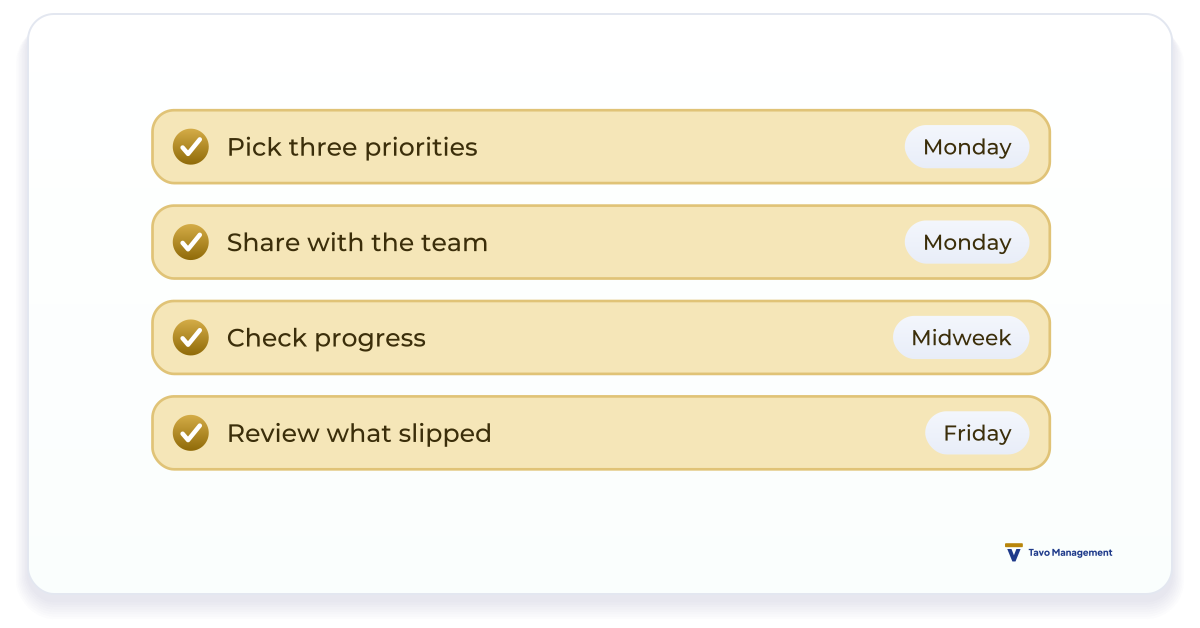
Most small business owners I work with start Monday with a list of twenty things and finish Friday having done the loudest five. A short weekly list of three priorities forces a choice. One of them should move revenue, one should remove a problem that keeps coming back, and one should build something for later.
Share the list with your team. When people know what matters this week, they stop asking you which job comes next, and they can say no to requests that don't fit. I usually see the number of daily interruptions drop within two weeks of starting this habit.
Do This
Pick three outcomes on Monday morning, post them where everyone sees them and review them on Friday.
Avoid This
A list of fifteen priorities, because nothing on it is a priority then.
Put Your Key Procedures on One Page Each
Every business has five or six jobs that go wrong when the one person who knows them is away: quoting, onboarding a customer, closing the day, invoicing, ordering stock. Write each one on a single page with the steps, the owner and what done looks like.
Keep them short enough that people actually read them. A good test is whether a new hire could follow the page on their second day. If the page needs a table of contents, split it. You can write the first draft in an hour by watching the person who does the job best.
Do This
Ask the best performer to walk you through the job, write what they do and let a colleague test the page.
Avoid This
A forty-page manual that nobody opens after the first week.
Track Where Your Own Hours Go
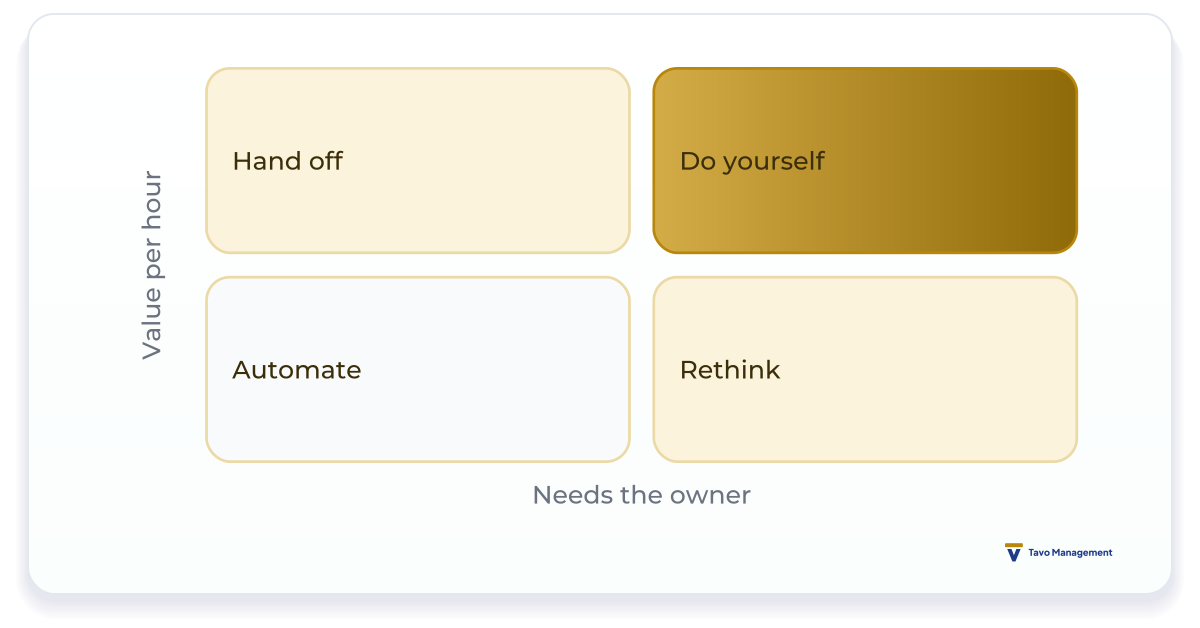
Owners tend to think they spend their time on strategy and sales. A one-week log usually shows a different picture: email, approvals, small fixes and questions from staff take most of the day. In my client work, the surprise is rarely how much time admin takes, but how much of it only the owner is doing by habit.
Keep a simple log in 30-minute blocks for five working days and sort each block into selling, delivering, managing and fixing. Then pick the one category that doesn't need you and hand it to someone with clear limits.
Do This
Log five days in half-hour blocks and move the lowest-value category to a team member.
Avoid This
Guessing where the time goes, because the guess is almost always too kind.
Build a Weekly Numbers Page With Five Figures
You don't need a dashboard with forty charts. Five figures cover most small businesses: cash in the bank, money owed to you, sales this week against last week, open jobs or orders and one quality measure such as returns or complaints. Put them on a single page that takes ten minutes to update.
The value is in the rhythm, not the tool. A spreadsheet works. What matters is that you look at the same page every Monday, so you notice a slow decline in time to act on it. Choose figures you can update from your accounting package without extra work.
Do This
Choose five figures, set a fixed day to update them and share the page with your managers.
Avoid This
A dashboard so detailed that nobody keeps it current.
Invoice on the Day the Work Is Done
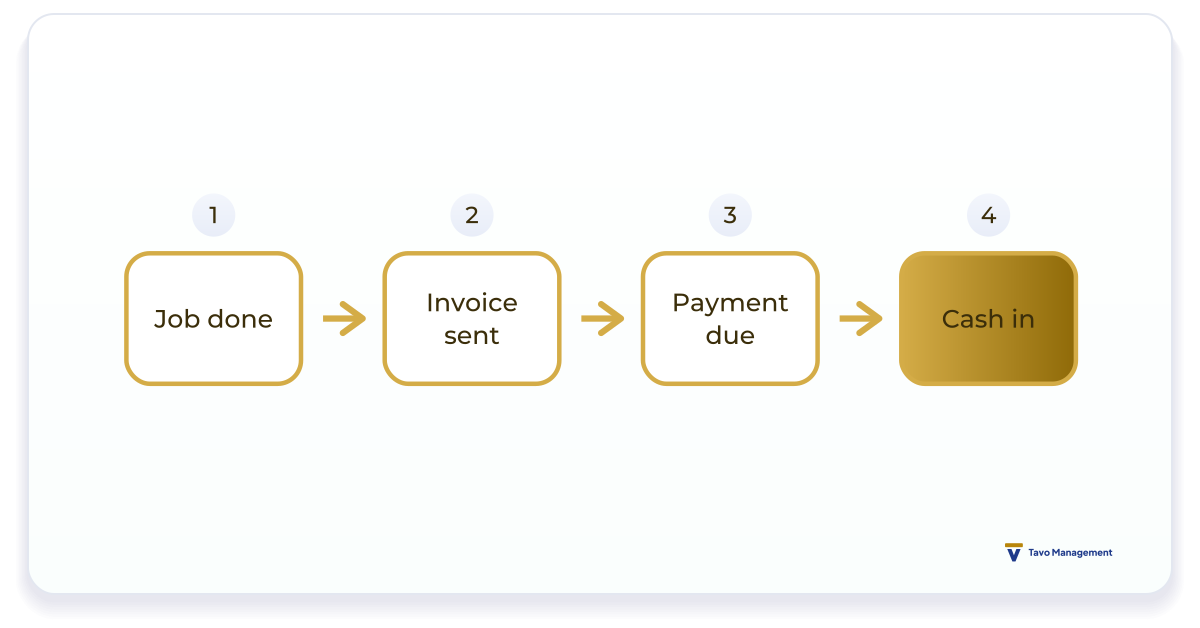
Late invoicing is one of the cheapest problems to fix and one of the most expensive to ignore. Every day between finishing a job and sending the invoice is a day your customer pays later. Set a rule: invoices go out the same day, or the next morning at the latest.
Connect it to the job itself. In a shop, the invoice follows the delivery note. In a service business, the job isn't closed until the invoice is sent. Add a reminder at day seven and day fourteen, and call anything past thirty days instead of sending a fourth email.
Do This
Make the invoice the last step of the job and set automatic reminders for overdue payments.
Avoid This
Batching invoices at month-end because there is never a good moment.
Know Your Cash Position Thirteen Weeks Ahead
Profit and cash are different things, and small businesses fail from the second. A rolling thirteen-week cash forecast lists what you expect to receive and pay each week. It takes an afternoon to build and fifteen minutes a week to keep current.
It also changes decisions. You see in March that the July tax payment and the summer inventory order land in the same week, which gives you time to talk to your supplier or your bank before it becomes urgent. Lenders also take you more seriously when you show one.
Do This
Build a weekly forecast in a spreadsheet, update it every Monday and compare it with what actually happened.
Avoid This
Relying on the current bank balance as your only signal.
Hire for Outcomes, Not for a Job Title
When you hire your first few employees, you tend to describe the role by the tasks you hate. A better brief describes the result: orders shipped the same day, a customer reply within two hours, the books closed by the fifth. Candidates can then show you how they would reach it.
Write the outcome, the three main tasks and the limits of their authority before you post the job. In interviews, ask for a real example of a time they owned a similar result. Use a short paid trial task for finalists whenever the role allows it.
Do This
Write three outcomes for the role and test each finalist on one real task.
Avoid This
A long task list copied from another company's job ad.
Delegate With Clear Limits, Not Vague Trust
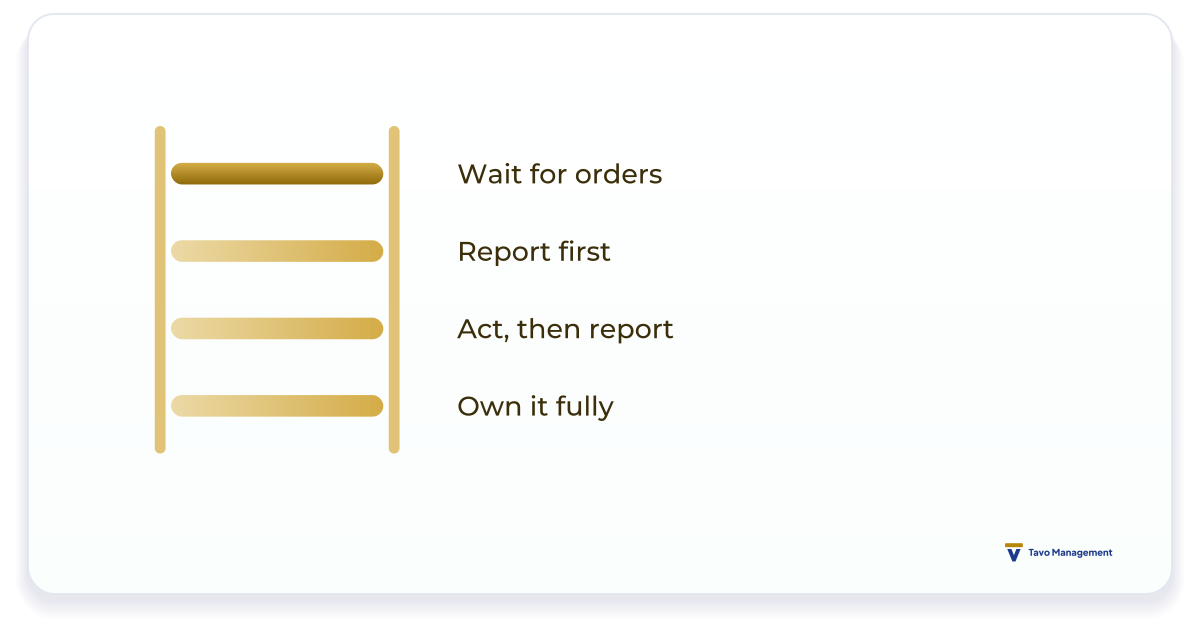
Owners often say they delegated, and then fix the result themselves. The gap is usually missing limits. Tell the person what the result should look like, what they can decide alone, the spending they can approve and when they should come to you.
Start with one level of freedom and raise it as they prove themselves. For example: first, research and recommend; then, decide and tell me; finally, decide and carry on. Review the first three decisions together so they learn how you think, and then step back.
Do This
State the result, the spending limit and the escalation point in writing before the handover.
Avoid This
Handing over a task and then redoing it at night.
Run Short, Regular Team Meetings
A fifteen-minute standing meeting each week beats an hour-long meeting each month. Use the same three questions every time: what did we finish, what is stuck and what is next. The weekly numbers page from tip 4 sits on the table.
Keep a visible list of actions with a name and a date next to each. At the next meeting, start with that list. People take commitments seriously when they know the first item next week is whether they did it.
Do This
Hold a fixed fifteen-minute meeting with three questions and a written action list.
Avoid This
Open-ended meetings without an agenda that end with no owner for any task.
Choose Software Only After the Process Is Clear
Many owners buy a tool hoping it will create order. It usually copies the mess in a more expensive form. Write down how the job should run first, then look for a tool that fits that flow. Often a shared spreadsheet is enough for a team of five.
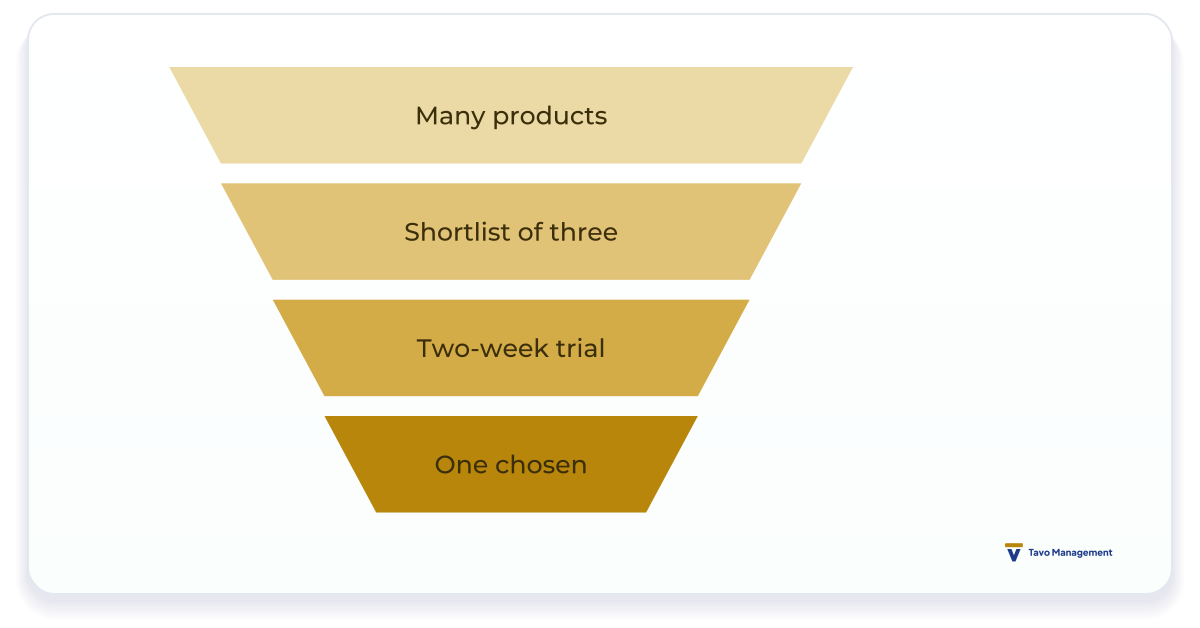
When you do shop, shortlist two or three products, run a two-week trial on one real project and ask your team what slows them down. My comparison of small business management software shows how the main options differ on price and fit.
Do This
Map the process on paper, list three must-have features and trial on live work.
Avoid This
Buying an all-in-one platform because the demo looked impressive.
Ask Your Customers One Question Every Month
You learn more from five customer conversations than from a survey of five hundred. Once a month, pick a few recent customers and ask what nearly stopped them from buying, and what they would change. Write the answers down, word for word.
Patterns show up fast. If three customers mention slow replies, you know where to put your next hour. It is also the cheapest way to find the reason people leave without telling you.
Do This
Call or message three recent customers each month and keep their exact words in one file.
Avoid This
A long survey that gets a two percent response and no follow-up.
Protect Your Time for Work Only You Can Do
Block two or three hours in your week for work that moves the business forward: pricing, a key customer, a new offer or hiring. Treat the block like an appointment with a client. Staff can reach you outside it for real emergencies, and a short list of what counts as an emergency helps.
Owners who do this report that the rest of the week gets easier, because the thinking is done. It also sets an example, and your team learns to protect their own focus time.
Do This
Book two protected blocks per week and tell the team what counts as urgent.
Avoid This
Keeping your inbox open all day and calling it responsiveness.
Review the Business Every Quarter
Once a quarter, step back for half a day. Look at the weekly numbers, the priorities you set, what you dropped and what you would not start again. Ask what changed in your market and which process broke most often.
End with three decisions for the next quarter and one thing to stop doing. Share the result with your team. A quarterly review keeps small problems from turning into a yearly surprise and gives you a natural moment to adjust the plan.
Do This
Schedule a half-day review each quarter and end with three decisions and one stop.
Avoid This
Waiting for the annual accounts to learn what went wrong in spring.
Turning Tips Into a Plan
Eleven habits are too many to start in one month. I suggest you choose two for the first month, one about your own time and one about money. Once they run without effort, add the next two. If you want the longer view of where these habits lead, my small business management strategies article ranks the bigger moves by payback.
Tool choices come up in almost every conversation, since the right software makes habits like the weekly numbers page nearly effortless. I compare the main options in my ranking of small business management software. And if you would like to see how these tips fit together from the first day, the small business management guide walks through the whole system.
Estimate What Handing Off Admin Is Worth
Pick one recurring admin task from your time log, such as chasing invoices or building a weekly report. The calculator shows roughly how many hours and how much money you get back when a routine or a tool takes it over.
How Much Time Could You Save?
Move the sliders to match one repetitive task in your business.
How to Choose the First Two Habits
Not every tip fits every business. Check your shortlist against these four points before you commit:
- The habit solves a problem you felt in the last two weeks.
- You can set it up in a day or less.
- Someone besides you can keep it running.
- You can see a result in a number, such as days to payment or interruptions per day.
If you want a second opinion on where to begin, the consultants I work with offer a free review of your current routines and your biggest time drains.
Questions About Small Business Management Tips
What Is the Most Important Management Skill for a Small Business Owner?
Choosing what to ignore. Your time and cash are limited, so the ability to pick three priorities and say no to the rest matters more than any single technique. Delegation with clear limits comes second, because it is how you turn your priorities into work that happens without you.
How Do I Manage a Small Team Without a Manager Layer?
Use short routines instead of layers: a weekly fifteen-minute meeting, one-page procedures and clear limits on what each person can decide. Name an owner for every recurring task. That gives you most of what a manager layer provides at a fraction of the cost.
How Much Should I Spend on Software for a Small Team?
Start with the free or low-cost plans of one or two tools and move up only when a limit costs you time. Many tools charge per user each month, so costs grow with your team. A short trial on live work tells you more than a feature list.
How Often Should I Look at My Numbers?
Weekly for cash, sales and open jobs, monthly for margins and customer feedback, and quarterly for the bigger picture. The habit matters more than the figures. Five numbers that you check every Monday beat fifty numbers you check once a year.
When Should I Hire My First Employee?
Hire when you turn down paying work or when your own hours are constantly spent on tasks that sit far below your pay grade. Before you do, write the outcomes you expect and check whether a contractor or better routines would solve the problem first.
How Do I Stop Being the Bottleneck in My Business?
Start by logging your hours for a week to see which decisions land on you. Then write down the rules for the five most common ones, set spending and approval limits and let your team decide inside them. Review the first few decisions together, then step back.
Do I Need a Consultant to Apply These Tips?
No, you can start on your own with most of them. A consultant helps most when you can't see the problem from the inside, when you are short of time or when several changes have to happen together. A free first call usually shows whether outside help is worth it.
General information only: this is not legal, financial or tax advice. Examples and numbers reflect typical projects; check the specifics with your advisers before deciding.
Did you find this helpful?
Thank you for your feedback.
Delaney Brisco
Delaney leads the Tavo editorial team and works with our consultants to turn real client projects into practical guides on project delivery, process design and organizational change. Before joining Tavo, she spent 12 years in operations and program management roles. She has since edited more than 300 articles on management practice and reviewed PMO setups and process redesigns from over 100 client projects. She is based in Minneapolis, Minnesota.