Summary
- Implement a PMO in six phases: diagnose, design, tools, pilot, rollout and review.
- Write the charter and record a baseline before you design anything.
- Pilot on two or three projects of different sizes, and roll out in waves.
- Choose the tool after the model, and plan the handover so your team runs the PMO.
A PMO implementation is a change project, whatever the project plan says. Templates and software are the easy part. The hard part is getting busy project managers to change how they work, and that takes a sequence that builds trust early. If you want a PMO built by people who have done it before, PMO consulting covers the whole path, and this guide shows you how the work unfolds.
I describe six phases with timelines, steps and the output you should have at the end of each. The timeline assumes a lean PMO in a mid-sized organization, so stretch it for larger or more regulated settings.
The Six Phases and What Each One Delivers
| Phase | Timing | Main output | Main risk |
|---|---|---|---|
| 1. Diagnose | Weeks 1 to 3 | Scored current state, signed charter | Skipping interviews |
| 2. Design | Weeks 3 to 6 | PMO model and templates | Designing alone |
| 3. Tools | Weeks 5 to 8 | Configured tool, one dashboard | Buying before the model |
| 4. Pilot | Weeks 7 to 14 | Tested standards | Choosing only easy projects |
| 5. Roll out | Weeks 12 to 24 | PMO live in waves | Rolling out all at once |
| 6. Review | Quarter 2 on | Measured results, handover | No baseline to compare |
Phase 1: Diagnose and Define the Purpose
Weeks 1 to 3. Start with a short diagnosis, because the first plan I see usually answers the wrong question. Interview the sponsor, six to ten project managers and a few department heads, and ask where projects slip and who decides. Score what you find with the method in my PMO assessment guide.
Then write the one-page charter: purpose, scope, exclusions, sponsor and success measures. The charter turns a vague wish for control into a testable promise.
What to Do in Weeks 1 to 3
- Interview 8 to 12 people across levels
- Collect the current list of projects and their status
- Record a baseline: on-time rate, reporting hours, active projects
- Draft and sign the charter
The output is a scored current state and a signed charter.
Phase 2: Design the Model
Weeks 3 to 6. Choose the PMO type and design the first version of governance, intake and reporting. Use the five layers in my PMO framework as a checklist, and keep every template to a page or two.
Design with your project managers in two or three short workshops. They will spot unworkable fields right away, and they will be more willing to use a model they helped shape.
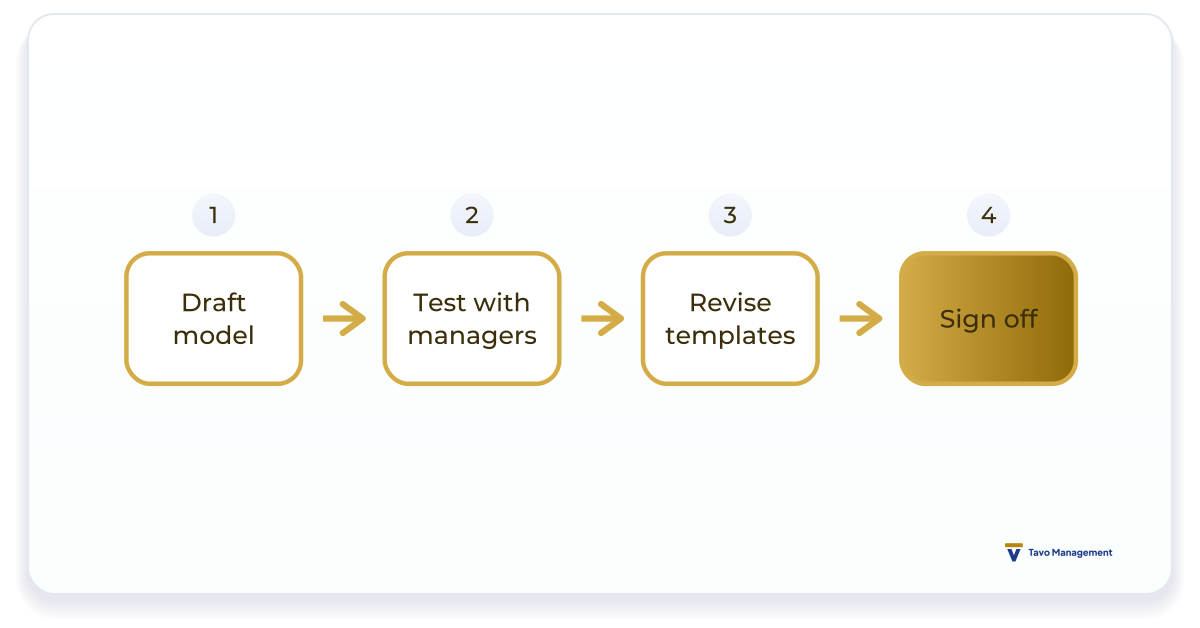
What to Do in Weeks 3 to 6
- Decide the PMO type and reporting line
- Write decision rights for ten common decisions
- Define three project tiers with thresholds
- Draft templates for brief, status and risks
The output is a documented PMO model and templates.
Phase 3: Choose and Configure Tools
Weeks 5 to 8. Tools come after the model, so you know what they must do. Many organizations can start with something they already own, and only larger portfolios need dedicated portfolio software. When you compare vendors, use the shortlist in my ranking of PMO software and test your top two with a real project.
Configure one intake form, one project template and one dashboard. Resist building every report anyone has ever asked for.
What to Do in Weeks 5 to 8
- Write five must-have requirements
- Demo two or three tools with your data
- Set up intake, template and dashboard
- Plan access rights and a named administrator
The output is a configured tool with one dashboard.
Phase 4: Pilot With Two or Three Projects
Weeks 7 to 14. Pick pilot projects of different sizes and with willing managers. Run them under the new rules for at least six weeks, with a weekly check-in where you ask what was useful and what was a waste of time.
Expect to change something every week. In my own pilots, the first status template almost always loses a field or two, and the first tier thresholds usually move.
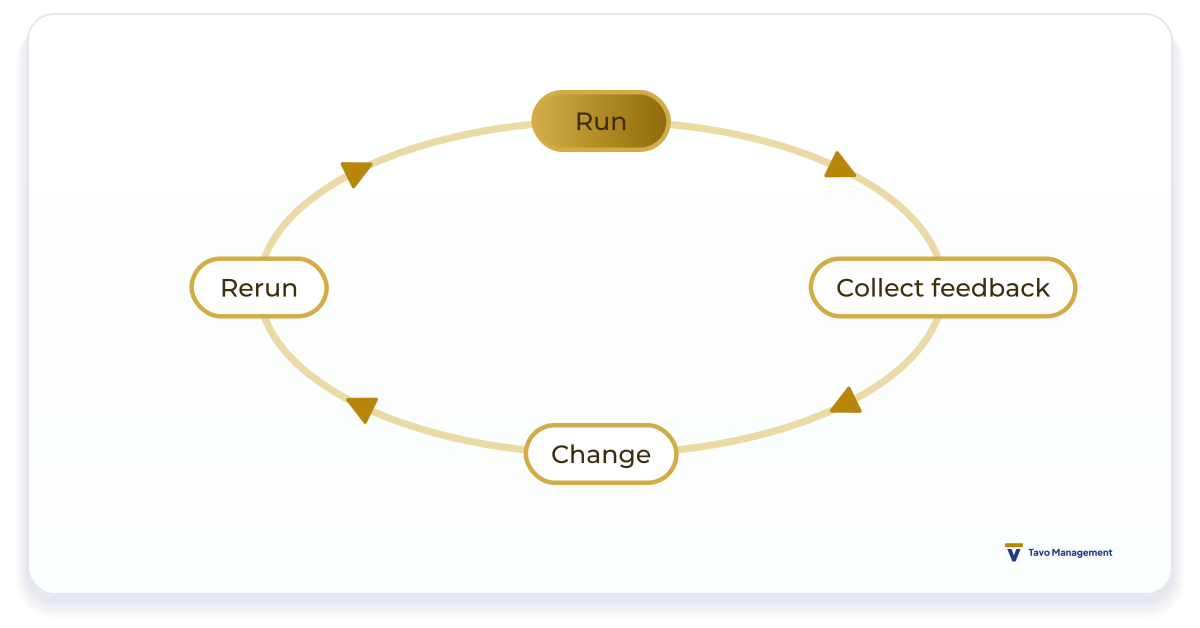
What to Do in Weeks 7 to 14
- Select pilot projects of different sizes
- Train the pilot project managers in 90 minutes
- Hold weekly feedback sessions
- Fix templates and thresholds as you learn
The output is tested standards and pilot results.
Phase 5: Go Live and Roll Out in Waves
Weeks 12 to 24. Roll out in waves of teams rather than all at once. Each wave gets training, a start date and a named PMO contact. Share pilot results early, ideally with numbers such as reporting hours saved.
Keep the PMO's first responsibility simple. For the first quarter, the portfolio list and the weekly dashboard are enough. Add resource tracking and stage gates once the basics are trusted.
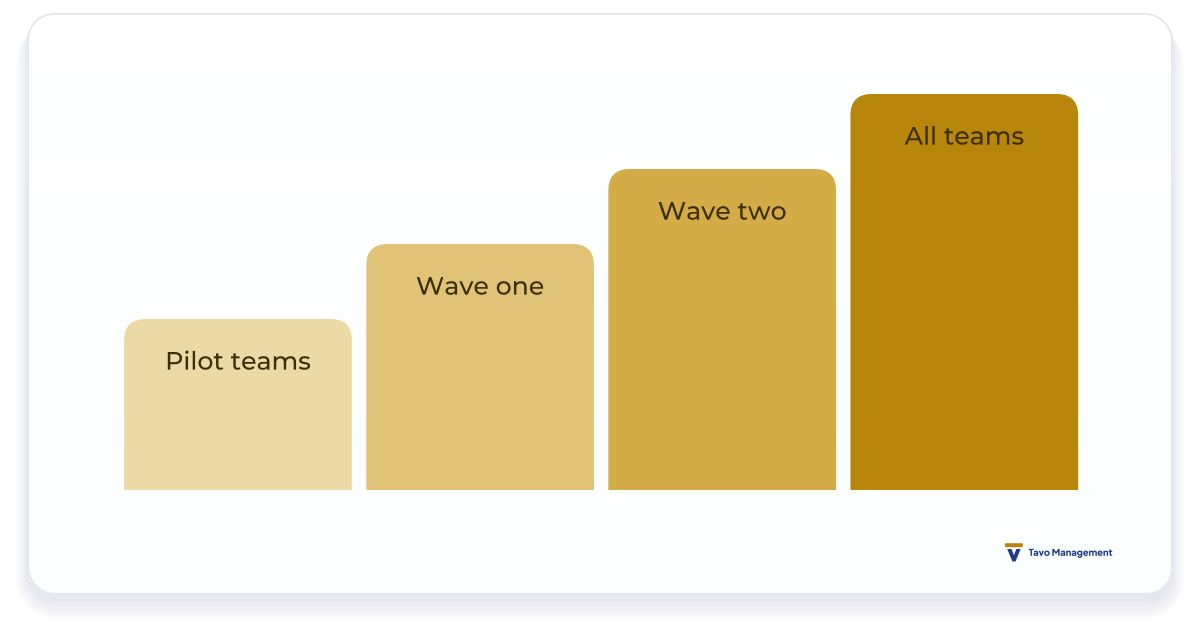
What to Do in Weeks 12 to 24
- Plan three rollout waves
- Train each wave before it starts
- Name a PMO contact for every team
- Review adoption each month
The output is a live PMO covering the planned teams.
Phase 6: Review, Measure and Hand Over
Quarter 2 and ongoing. After a quarter, compare the measures with your baseline and present the results to the sponsor, including what has not improved. Adjust the standards, retire what is unused and schedule the next quarterly review.
If outside consultants helped, plan the handover now. Your own team needs the documentation, the admin rights and the confidence to run the PMO without help.
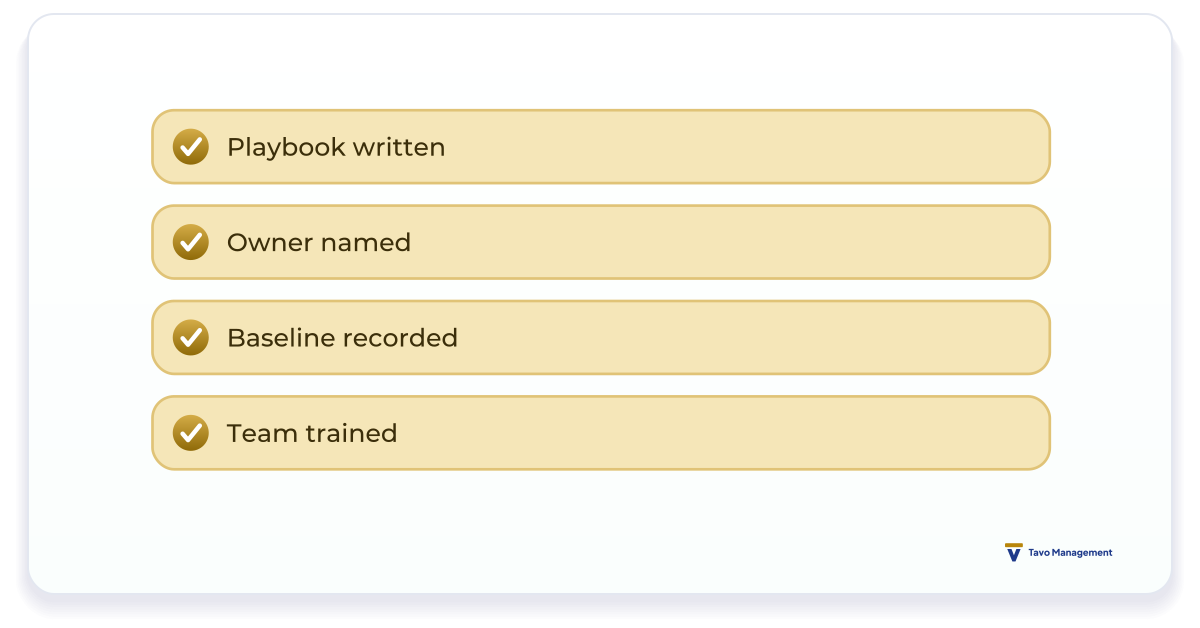
What to Do in Quarter 2 and ongoing
- Compare results with the baseline
- Retire unused templates and fields
- Document everything and hand over admin rights
- Schedule quarterly reviews
The output is measured results and a PMO your team owns.
What a PMO Implementation Costs You in Time and Money
Costs depend on size, but three items appear every time: the time of your own people, tool licenses and outside support. The table shows where I see budgets land, as ranges of effort rather than prices.
| Cost item | Lean PMO | Large PMO | Where it hides |
|---|---|---|---|
| PMO lead time | Part-time to one person | Several people | Often absorbed into someone's day job |
| Project manager time for pilots | 2 to 3 hours a week | 3 to 5 hours a week | Training and feedback sessions |
| Tool licenses | Low, often existing tools | Moderate to high | Add-ons for resources and portfolios |
| Outside support | Assessment and design | Design, pilot and rollout | Handover and training |
The Wellingtone State of Project Management 2026 found that 72% of project professionals spend half a day or more each month on reports. A well-designed PMO dashboard cuts that time, and that saving is the easiest return to document.
The Mistakes That Derail Implementations
Three failures show up again and again. The first is starting with the tool, which locks in a process nobody designed. The second is a sponsor who signs the charter and then disappears, leaving the PMO without authority when teams push back. The third is rolling out to everyone at once, so problems hit the whole organization instead of one team. Each has a simple prevention: tools last, a monthly sponsor check-in and three rollout waves. Tips for running the PMO afterward are in my list of PMO best practices.
Before you start, agree what will count as a failure. If the pilot cannot cut reporting time or if project managers still keep private trackers after three months, the plan needs to change. Naming these signals up front makes it easier to adjust without anyone feeling blamed, and it gives the sponsor a clear reason to step in early.
Handling the People Side of the Rollout
Project managers often read a new PMO as a sign that they are not trusted. Say early and plainly what the PMO is for, and what will not change. If the first message is a list of new templates, you will get compliance and resentment. If the first message is that status reporting will get shorter, you will get attention.
Name a few early supporters. Every organization has two or three project managers who are tired of rebuilding reports and will gladly try a better way. Make them part of the pilot, give them a voice in the design and let them share results with their peers. A colleague's recommendation travels further than any email from the PMO.
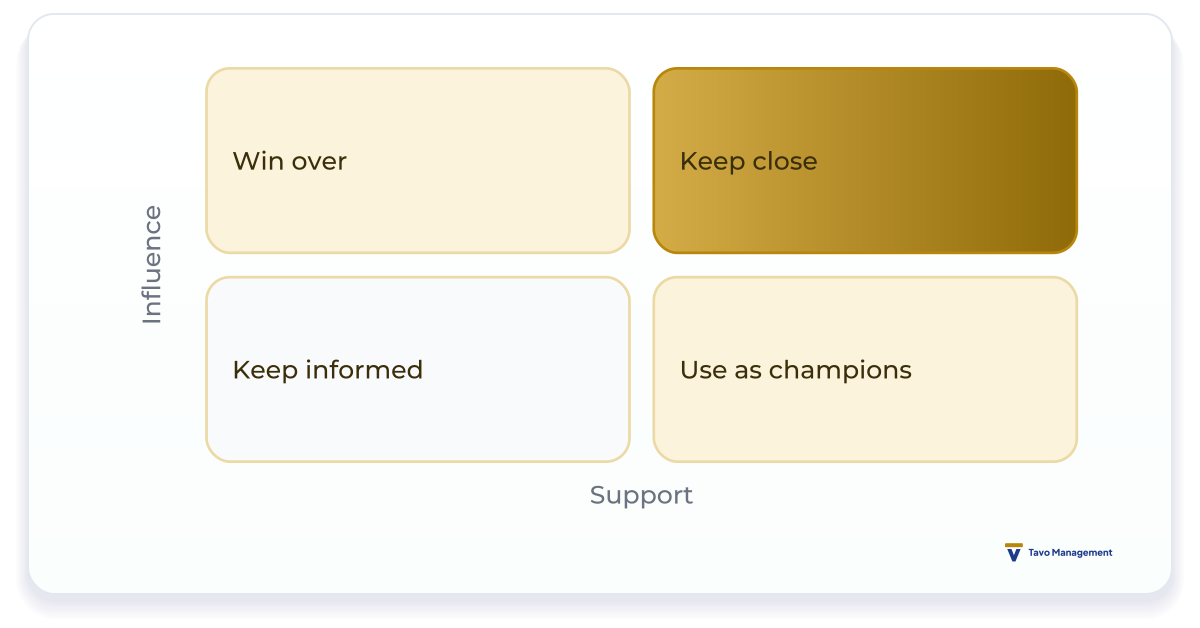
Plan for resistance from the top as well. A department head who loses control over a private project list may object quietly. Meet them one on one before the rollout, explain what they gain, such as a faster path to approval for their projects, and ask what they need from the PMO. Surprises in a steering meeting are rarely good.
Finally, schedule communication as carefully as the tasks. A short monthly note from the sponsor that names one thing the PMO fixed, one thing it is working on and one thing it needs from teams keeps the effort visible. Silence is read as failure, and a PMO that only speaks when it wants something loses goodwill quickly.
How to Choose Between Doing It Yourself and Getting Help
Do it yourself if you have an experienced PMO lead, a supportive sponsor and one or two quarters of patience. Get help if your team lacks time, if you have been through a failed PMO already or if the project spans many departments. A middle path works well: buy the assessment and design from outside and run the pilot and rollout yourself.
- A sponsor who will attend a monthly check-in.
- A named PMO lead with protected time.
- A baseline for on-time delivery and reporting hours.
- Two or three pilot projects with willing managers.
- A plan for who runs the PMO after the project ends.
Questions About PMO Implementation
How Long Does a PMO Implementation Take?
A lean PMO usually takes about three to six months from diagnosis to rollout, including a six-week pilot. Large or regulated organizations take longer. Stretching the pilot is better than rushing the rollout.
What Should I Do First When Starting a PMO?
Diagnose the current state and write a one-page charter with a signed sponsor. Record a baseline of on-time delivery and reporting hours at the same time, so you can show progress later.
Should I Buy PMO Software Before the Rollout?
Not first. Design your intake, templates and reporting, then pick the tool that supports them. Many organizations can pilot on tools they already own and only upgrade if the pilot reveals real gaps.
Who Should Lead a PMO Implementation?
A named PMO lead with protected time and a sponsor who has the authority to settle disputes. If you lack the experience internally, an outside consultant can lead the design and pilot while your lead learns the work.
How Do I Get Project Managers to Adopt the PMO?
Involve them in the design, keep templates short and show how the PMO saves them time. Early wins such as automated status reports build trust faster than any mandate.
What Does a Good PMO Pilot Look Like?
Two or three projects of different sizes, run for at least six weeks with weekly feedback. Success means the templates are used without nagging, reporting time falls and managers say what they would change.
How Do I Know the Implementation Worked?
Compare your measures with the baseline after one quarter: on-time and on-budget delivery, reporting hours and sponsor satisfaction. If the numbers are flat but teams use the PMO happily, give it a second quarter and keep measuring.
General information only: this is not legal, financial or tax advice. Examples and numbers reflect typical projects; check the specifics with your advisers before deciding.
Did you find this helpful?
Thank you for your feedback.
Delaney Brisco
Delaney leads the Tavo editorial team and works with our consultants to turn real client projects into practical guides on project delivery, process design and organizational change. Before joining Tavo, she spent 12 years in operations and program management roles. She has since edited more than 300 articles on management practice and reviewed PMO setups and process redesigns from over 100 client projects. She is based in Minneapolis, Minnesota.