Summary
- Check goals, benefits, sponsor and governance first. Without them the rest of the program stands on sand.
- Each item has a proof, such as a one-page document or a signed-off table, so you can tell done from nearly done.
- Scarce people, dependencies and risks need program-level views because no single project owns them.
- Run the checklist again at each stage gate, not only before launch.
Most programs that struggle had a gap in the first few weeks that nobody noticed. A short checklist catches those gaps while they are cheap to fix. It also gives you something concrete to review with sponsors when they ask whether you are ready.
I use these eleven points with clients before any program management consulting engagement starts. Each point has a proof you can show, so the checklist works as a decision tool and not only as a reminder.
The 11 Points and What Done Looks Like
| Check | Ready when you have |
|---|---|
| 1. The Business Goal Is Written in One Sentence | Both sponsors repeat the goal in their own words and agree. |
| 2. Benefits Have a Baseline, a Target and an Owner | A benefits table with current value, target, date and a named owner. |
| 3. The Sponsor Has Time and Authority | A sponsor who has blocked calendar time for the steering rhythm. |
| 4. Every Project Is Mapped to the Goal | A one-page map from each project to the benefit it serves. |
| 5. Dependencies and Key Dates Are Drawn | One page with arrows, owners and dates, reviewed by every project lead. |
| 6. Governance and Decision Rights Are Agreed | A one-page governance note signed off by the sponsor. |
| 7. Budget Covers the Whole Program, With a Reserve | A single budget view with reserve rules, matched to finance records. |
| 8. Scarce People Are Booked at Program Level | A role-by-month table with no one planned above capacity. |
| 9. Risks Have Owners and the Top Ten Are Rated | A risk register of ten to fifteen live entries with owners. |
| 10. Stakeholders and Affected Teams Know What Is Coming | A communication plan with audiences, messages and dates. |
| 11. Reporting and Handover Are Planned Up Front | A report template, a metric list and a named handover owner. |
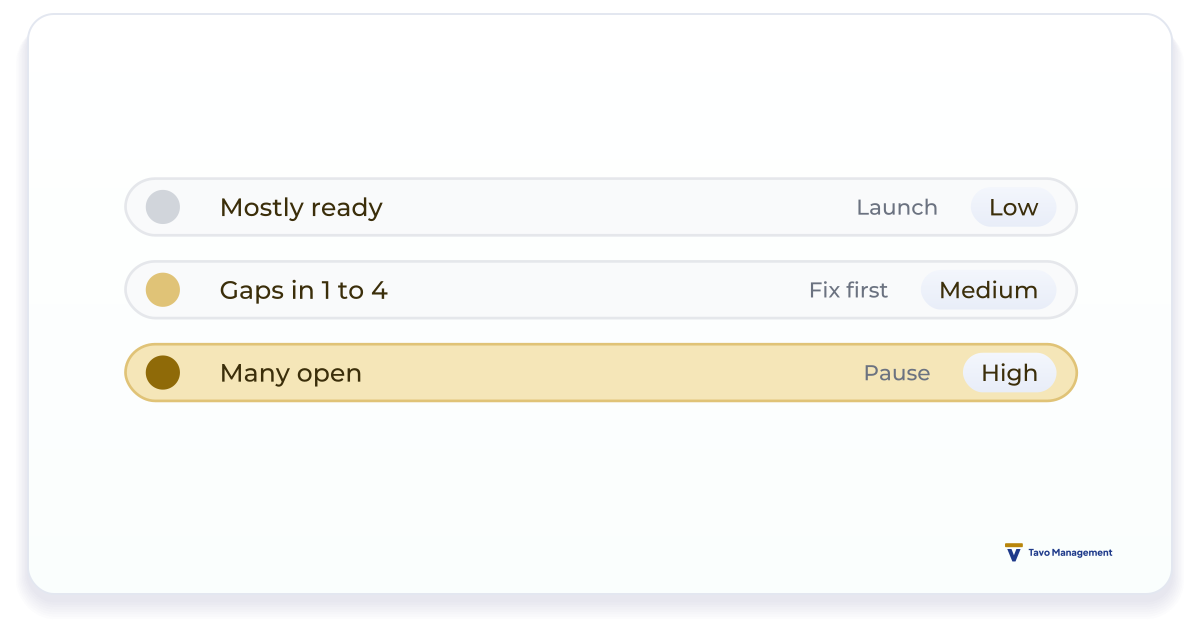
Count your honest answers. Items one to four decide whether the program should start at all. Items five to eight decide whether the plan can work. The last three decide whether the result will last.
11 Checks Before You Launch a Program
Work through the points in order. For each one, I explain why it matters and what proof to expect. The program management best practices go deeper on how to keep each area healthy once the program is running.
The Business Goal Is Written in One Sentence
If you cannot state in one sentence what the program changes, nobody else can either. Write it as a result, such as “reduce time to onboard a new client from 30 days to 15.” Read it aloud to two sponsors. If they describe it differently, you are not ready to start.
Ready when you have: Both sponsors repeat the goal in their own words and agree.
Benefits Have a Baseline, a Target and an Owner
A benefit without a baseline cannot be proven. Measure today's value now, before the program changes anything, and agree who in the business will confirm the result later. That owner should run the area where the benefit appears, not the program team.
Ready when you have: A benefits table with current value, target, date and a named owner.
The Sponsor Has Time and Authority
Sponsors who are too busy are the most common reason programs stall. Your sponsor needs the authority to move budget and settle disputes between departments, and the hours to attend steering meetings. If the answer is “when I can,” fix that first.
Ready when you have: A sponsor who has blocked calendar time for the steering rhythm.
Every Project Is Mapped to the Goal
List each project and write one line on how it supports the benefit. Projects that cannot be explained are candidates to stop or move out of the program. This is the moment when scope gets honest, and it frees budget for projects that matter.
Ready when you have: A one-page map from each project to the benefit it serves.
Dependencies and Key Dates Are Drawn
Show where one project must finish before another can start, and where two projects need the same date or system. Mark the fixed dates, such as regulatory deadlines or contract expiries. Plan backward from them.
Ready when you have: One page with arrows, owners and dates, reviewed by every project lead.
Governance and Decision Rights Are Agreed
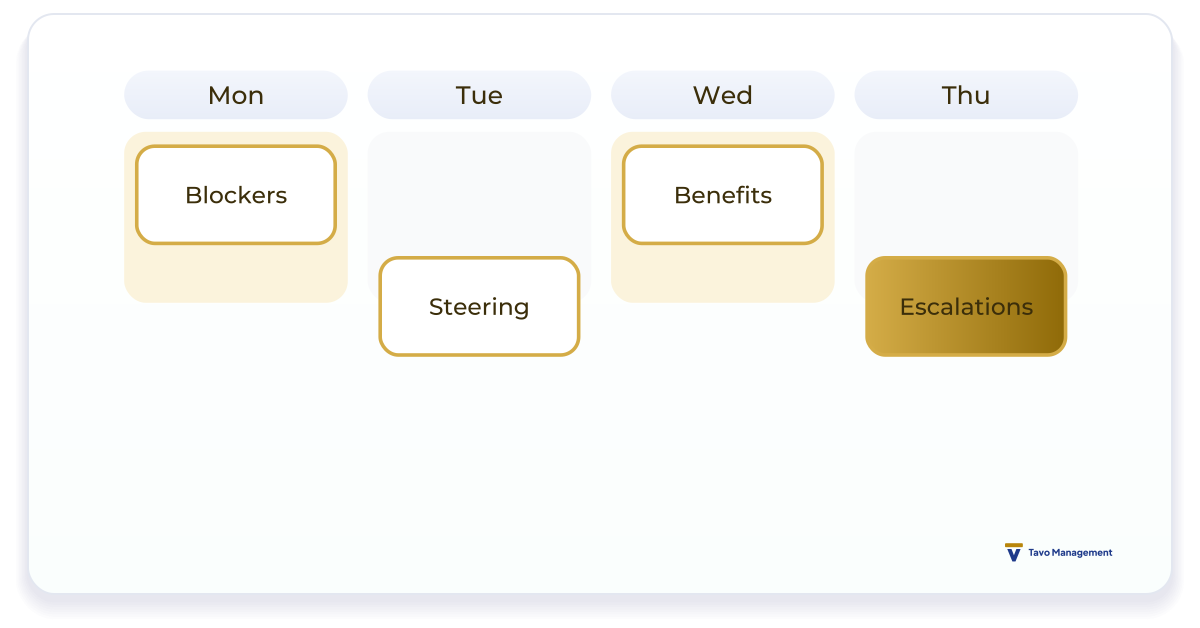
Decide who sits on the steering group, how often it meets and what it can decide. Write down the escalation path for blocked work. Without this, every conflict becomes a negotiation among peers who have no authority over each other.
Ready when you have: A one-page governance note signed off by the sponsor.
Budget Covers the Whole Program, With a Reserve
Compile the budget across all projects, including run costs after go-live and the cost of change work such as training. Add a reserve and say who can release it. A budget that only covers delivery hides the cost of the transition.
Ready when you have: A single budget view with reserve rules, matched to finance records.
Scarce People Are Booked at Program Level
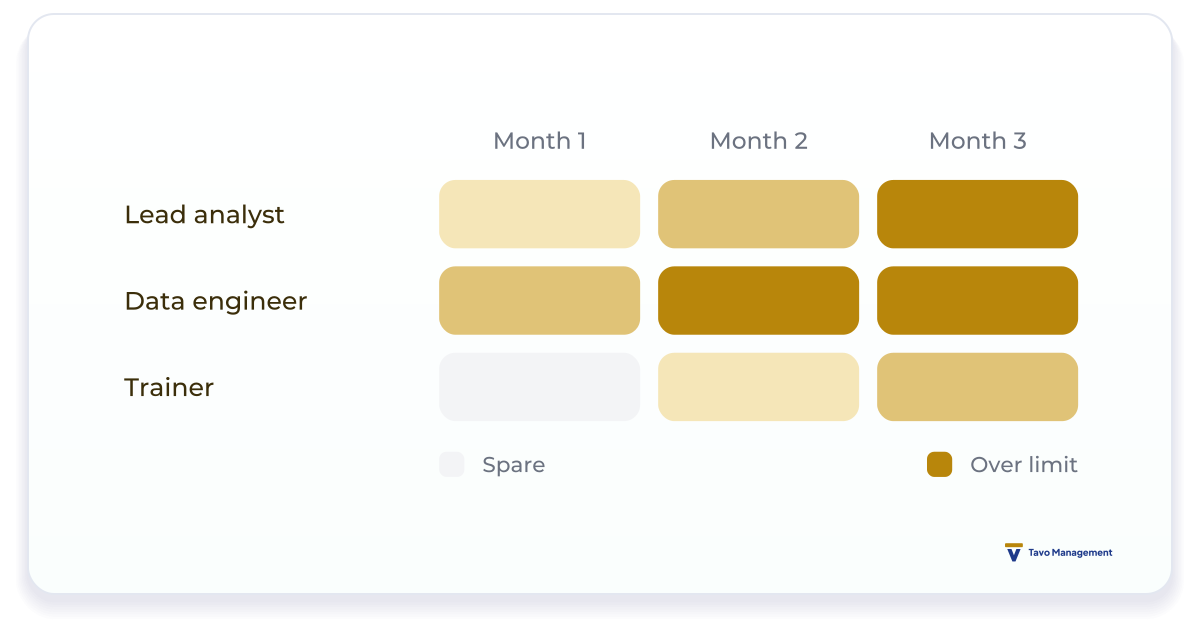
Identify the five roles everyone wants, then total their demand by month. If one specialist is planned at 150 percent, the plan is already broken. Settle it now by hiring, delaying work or cutting scope.
Ready when you have: A role-by-month table with no one planned above capacity.
Risks Have Owners and the Top Ten Are Rated
Capture program-level risks, rate them on one scale and give each a named owner and a next action. Include the dull ones: supplier failure, a key person leaving, a policy change. Review the list at every steering meeting.
Ready when you have: A risk register of ten to fifteen live entries with owners.
Stakeholders and Affected Teams Know What Is Coming
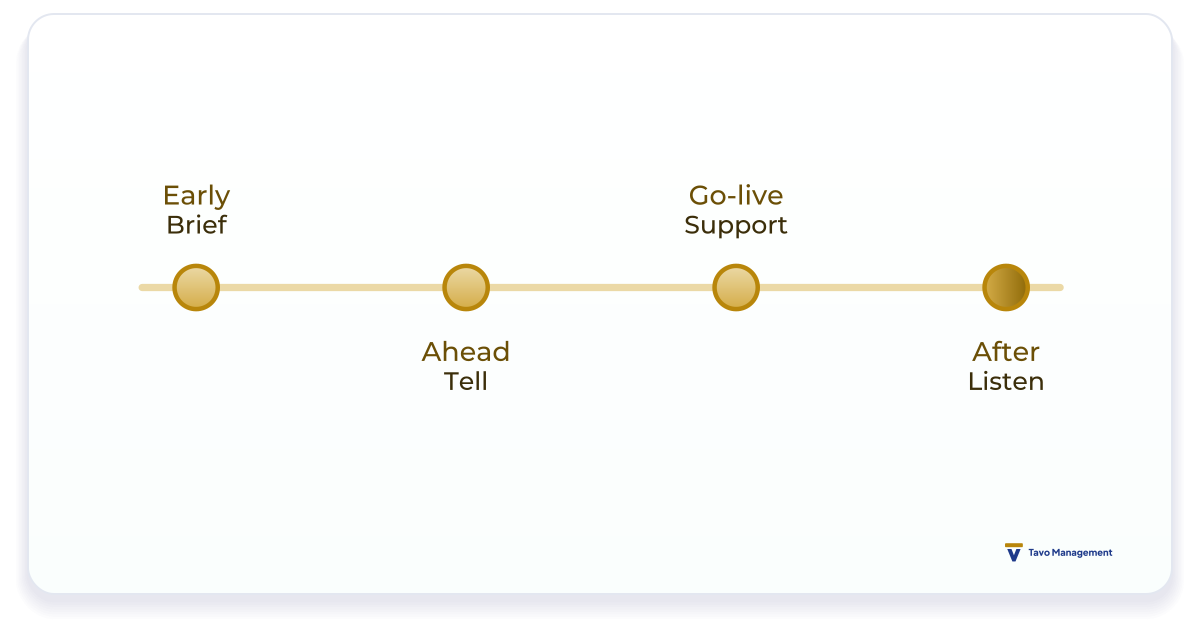
The people whose work will change need to hear about it early, in plain terms, from a leader they trust. Map who is affected, how, and when they will be told. This is the least glamorous item on the list and often the most decisive. My program management framework puts this step in the first phase for that reason.
Ready when you have: A communication plan with audiences, messages and dates.
Reporting and Handover Are Planned Up Front
Agree the status format, the benefit metrics and the reporting rhythm before work starts. Name who will own the result after the program closes, and what they will need to learn. If the handover owner hears about the program at closure, the benefit is at risk.
Ready when you have: A report template, a metric list and a named handover owner.
How to Read Your Result
Give each point green, amber or red. Green means the proof exists. Amber means work is under way with a date. Red means nothing exists yet. Then follow a simple rule: no red in points one to four before launch, no more than two reds in total and a date for every amber.
If you are running a program that has already started, the same scoring still works. Many of my clients find three or four reds in a program that is already six months old. That is common. Treat it as a repair list, and use a few real program management examples to see how others sequenced the fixes. Once the basics are in place, add numbers using the program management KPIs.
Who Should Sign Off Each Point
A checklist without owners becomes a wish list. Assign each group of points to someone with the authority to confirm it, and record the date.
| Points | Sign-off by | Typical evidence |
|---|---|---|
| 1 to 3: goal, benefits, sponsor | Sponsor and benefit owners | Signed charter and benefits table |
| 4 to 6: project map, dependencies, governance | Program manager and steering group | Map, roadmap and governance note |
| 7 to 8: budget and people | Finance lead and resource owners | Budget view and role table |
| 9 to 11: risks, communication, reporting and handover | Program manager and operational owner | Risk register, comms plan, report template |
Schedule one review meeting of about an hour per group. Disagreements usually surface within the first ten minutes, which is the point of meeting. If a sponsor cannot attend, the sign-off is not valid, and that is a warning sign for point three.
Mistakes I See When Teams Use This Checklist
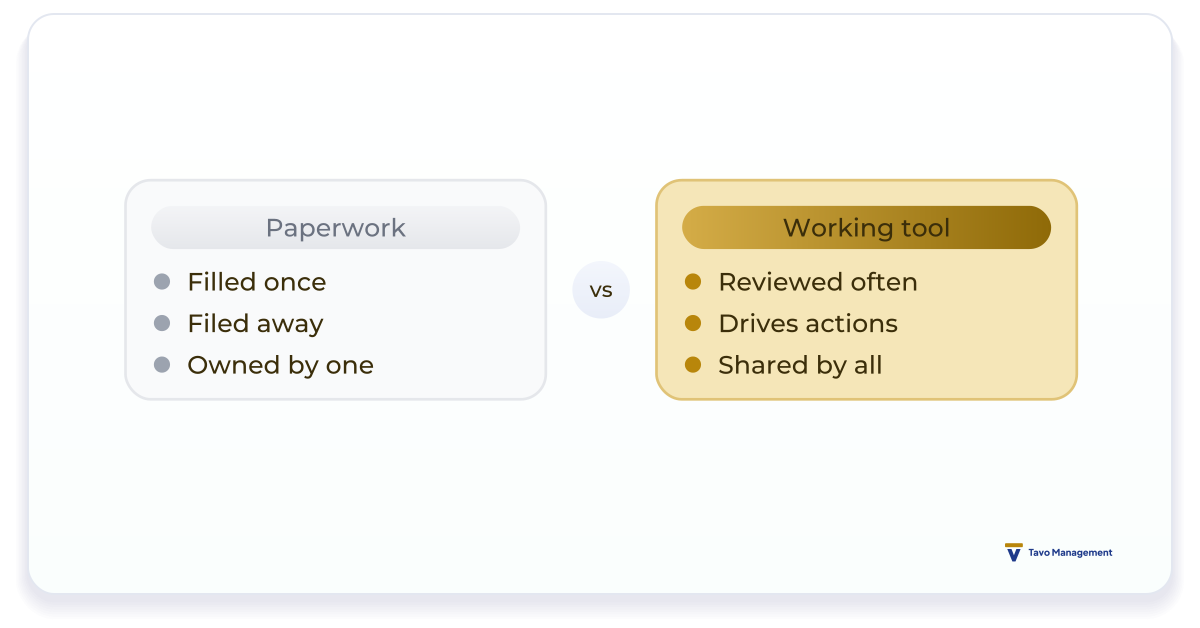
Teams tend to tick boxes based on intent rather than proof. “We plan to define benefits” is amber at best. Demand the document. Others run the checklist once and file it. Programs change, and a green item can turn red after a reorganization or a budget cut, so rerun it at each gate.
A third mistake is treating the checklist as the program manager's private tool. Share the result with the sponsor, including the reds. Sponsors rarely mind bad news that arrives with a plan, and they hate surprises that arrive at a milestone review.
How to Choose What to Fix First
If you end up with several reds, you need an order. Use these rules:
- Fix anything that needs a decision from the sponsor, because it blocks everything else.
- Fix benefit and baseline gaps before the first milestone, since baselines cannot be recreated later.
- Fix resource and dependency gaps next, because these cause the first missed dates.
- Fix communication and handover gaps in parallel, as they take the longest to repair.
If the list looks long, choose tooling from the best program management software only after the answers are written down. A tool should hold decisions you already made.
Questions About the Program Management Checklist
When Should I Use This Checklist?
Use it before launch, at the first steering meeting, and again at each stage gate. A checklist run once at the start loses value as the program changes. If a point turns red mid-program, treat it as a decision for the steering group.
What If I Can Only Complete Eight of the Eleven Points?
Check which three are missing. A missing handover plan or reporting format can wait a few weeks. A missing goal, sponsor or benefit owner cannot. Start with the first four items, and set dates for the rest.
Does a Small Program Need All Eleven Points?
The questions stay the same, but the answers can be short. A small program can cover all eleven on two pages. Skipping an item entirely tends to cost more later than writing a short answer today.
Who Should Complete the Checklist?
The program manager drafts it, and the sponsor confirms the answers that need authority, such as goals, budget and governance. Reviewing it together in a one-hour session often surfaces disagreements that would otherwise appear months later.
How Is This Different from a Project Checklist?
A project checklist covers scope, schedule and tasks. This one covers benefits, governance, shared resources and handover, which only matter once several projects must work together. You will still need project-level checklists inside each project.
What Should I Do When a Point Cannot Be Completed?
Write down why, who can decide and by when. Some items depend on decisions outside the program, such as budget approval. Mark them as open risks rather than ignoring them, and report them at the next steering meeting.
Can Software Run the Checklist for Me?
A tool can store the checklist and remind owners, and my <a href="/program-management-software/">program management software</a> ranking shows which platforms handle it well. The conversations behind the answers still have to happen between people.
General information only: this is not legal, financial or tax advice. Examples and numbers reflect typical projects; check the specifics with your advisers before deciding.
Did you find this helpful?
Thank you for your feedback.
Delaney Brisco
Delaney leads the Tavo editorial team and works with our consultants to turn real client projects into practical guides on project delivery, process design and organizational change. Before joining Tavo, she spent 12 years in operations and program management roles. She has since edited more than 300 articles on management practice and reviewed PMO setups and process redesigns from over 100 client projects. She is based in Minneapolis, Minnesota.