Summary
- Accurate stock counts and written reorder rules fix more retail problems than any new campaign.
- Staff hours should follow sales per hour, and schedules should be published two weeks ahead.
- Markdowns work best as a written ladder, and returns and shrink belong on the weekly page.
- Pilot every change in two stores before you roll it out to the rest.
Retail rewards routine. The stores I see earning a steady margin are rarely the ones with the cleverest idea. They count stock on a schedule, order by rule and give each shift the same checklist. A good retail management consulting project spends most of its time on exactly these basics.
Below are nine practices I put in front of almost every retailer first. Each one comes with a do and an avoid line, so you can check your own stores in a few minutes.
The Nine Practices at a Glance
Use the table to find the area that hurts most, then jump to the matching practice. The order is roughly the order in which I would tackle them.
| Practice | Area | First step |
|---|---|---|
| 1. Count What You Sell Before You Count What You Own | Inventory | Count the top 50 sellers every week and record the cause of every variance. |
| 2. Set Reorder Rules for Your Top Sellers First | Inventory | Write a reorder point and an order quantity for each top seller, and check them every quarter. |
| 3. Schedule Staff to Match Store Traffic | Labor | Match hours to sales per hour, and publish schedules at least two weeks ahead. |
| 4. Write One-Page Routines for Opening, Receiving and Closing | Operations | Write routines at the level of a new hire, and test them with a new hire. |
| 5. Plan Markdowns Before the Season Starts | Pricing | Use a written markdown ladder per category and review the rate monthly. |
| 6. Make Returns and Shrink Visible Every Week | Loss control | Log a reason code for every return and review the top five products each week. |
| 7. Give Store Managers a Single Weekly Scorecard | Reporting | Limit the scorecard to six numbers and review it in the same slot every week. |
| 8. Pilot Every Change in Two Stores Before Rolling It Out | Change | Run a four-week pilot with a comparison group and document what you adjusted. |
| 9. Connect Your Channels to One Stock View | Omnichannel | Name one system of record for stock and write cross-channel return rules before launch. |
Nine Practices That Keep Stores Profitable
I describe each practice in two short paragraphs, then give you the do and avoid pair. If you want the bigger picture on where these sit in a plan, my retail management strategy guide ranks them by payoff.
Count What You Sell Before You Count What You Own
Most retail trouble starts with a stock number that is wrong. When the system says four and the shelf holds none, the shopper leaves, the replenishment rule stays quiet and nobody notices until the weekly report. Auburn University's RFID Lab puts the average store's inventory record accuracy at about 65%, a figure I find easy to believe from the stockrooms I have walked.
Start with cycle counts instead of one big annual count. Count your fastest sellers weekly, the middle group monthly and the slow tail quarterly. Each count that finds a gap should also find the reason, whether it is a receiving error, a mis-scan at the till or theft, because the fix lives in the reason and not in the number.
Do this: Count the top 50 sellers every week and record the cause of every variance.
Avoid this: A single annual count that resets the books and hides where the errors began.
Set Reorder Rules for Your Top Sellers First
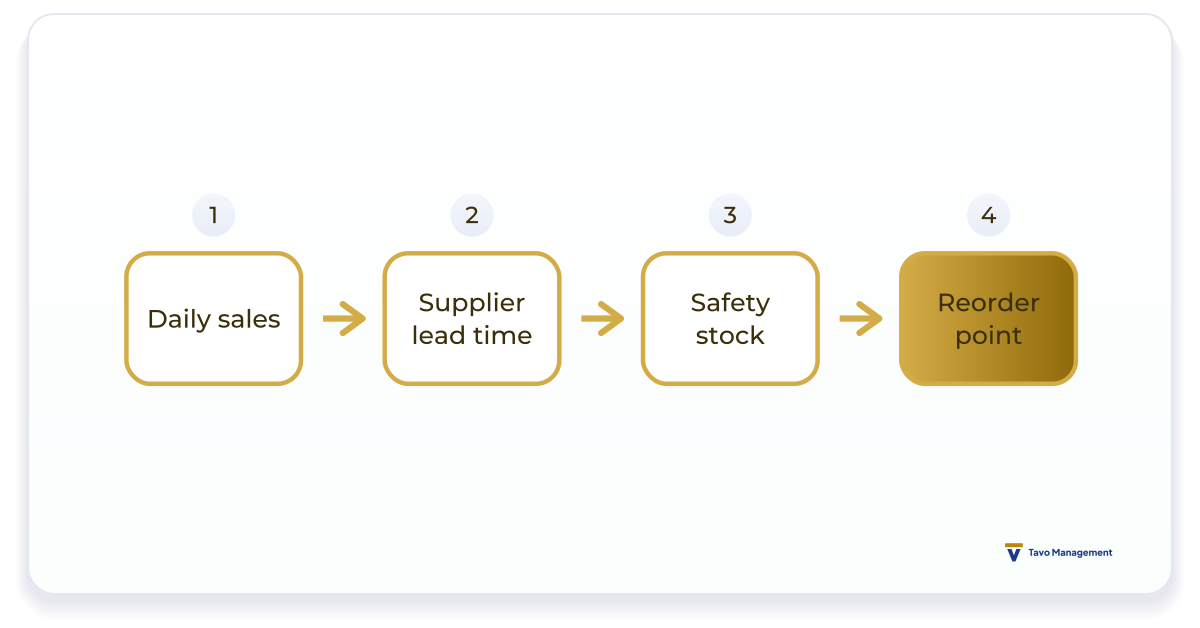
Ordering by feel works until the day the buyer is on leave. A reorder point is the stock level at which you place an order, and it equals the sales you expect during the supplier's lead time plus a small safety cushion. Give every product in your top 20% by revenue one, and you cover most of the sales that matter with a few hours of work.
Review the rules each season, because lead times and demand shift. In my client work, stockouts on the top group fell by roughly a quarter within two months of introducing written reorder points, mostly because orders stopped depending on who happened to be at the desk.
Do this: Write a reorder point and an order quantity for each top seller, and check them every quarter.
Avoid this: Copying last year's order and hoping demand repeats.
Schedule Staff to Match Store Traffic
Labor is the largest cost you can still move. Pull sales per hour for the last eight weeks and lay the staff hours next to it. Most stores find the same pattern: the opening hours are overstaffed, a late-afternoon peak is short and the closing shift has two people doing the work of one.
Build the schedule from the busiest hours outward and give each shift a role card that says who covers the floor, the till and the stockroom. Publish the schedule two weeks ahead. Employees who can plan their life stay longer, and turnover is a cost hiding inside almost every store.
Do this: Match hours to sales per hour, and publish schedules at least two weeks ahead.
Avoid this: Copying last month's roster and adding overtime when the queue grows.
Write One-Page Routines for Opening, Receiving and Closing
If a routine lives in one manager's head, it leaves when that manager does. A one-page checklist for opening, receiving a delivery, handling a return and closing the till turns good habits into the default. The page needs steps, an owner for each step and a clear definition of done.
Keep them short and keep them on the wall of the stockroom. A checklist of twelve lines gets used, and a binder of forty pages does not. Ask the newest employee to follow one without help. Every place they get stuck is a line you need to rewrite.
Do this: Write routines at the level of a new hire, and test them with a new hire.
Avoid this: A policy binder that nobody has opened since it was printed.
Plan Markdowns Before the Season Starts
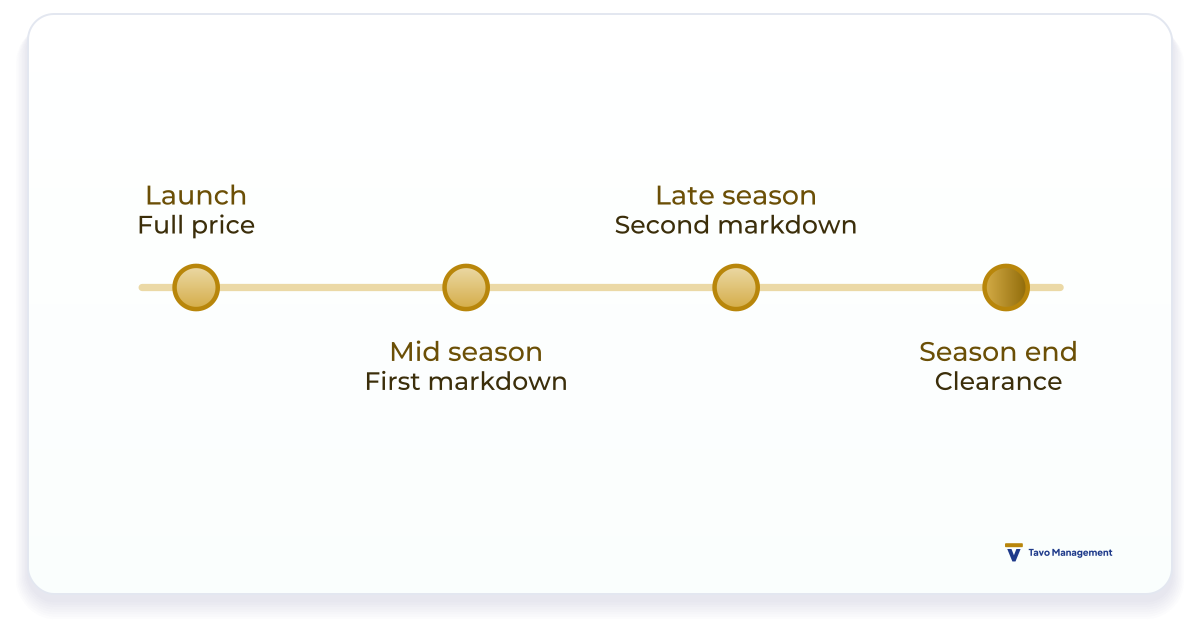
Markdowns are cheapest when they are scheduled. Set a rule for each product group, for example 20% off after eight weeks, 40% after twelve and a clearance decision at sixteen. A fixed ladder removes the argument and clears space for fresh stock while the product still has some value.
Track the markdown rate as a share of sales every month. When it climbs, the problem usually sits upstream in the buying, not in the pricing. I look at the products that reached the second markdown step and ask what the buy looked like three months earlier.
Do this: Use a written markdown ladder per category and review the rate monthly.
Avoid this: Waiting for the end of the season and discounting everything at once.
Make Returns and Shrink Visible Every Week
Returns and theft are easy to ignore because they sit in different reports. The National Retail Federation expects returns of about $849.9 billion in 2025, or 15.8% of annual sales, and says 9% of those returns are fraudulent. Your own numbers will differ, yet the point holds: returns are a large, measurable cost.
Put return rate, return reasons and shrink on the same weekly page as sales. Look for patterns by product, by store and by employee. A product with a 30% return rate has a description, size or quality problem, and the fix is usually cheaper than the refunds.
Do this: Log a reason code for every return and review the top five products each week.
Avoid this: Accepting every return without a reason and finding the loss in the annual accounts.
Give Store Managers a Single Weekly Scorecard
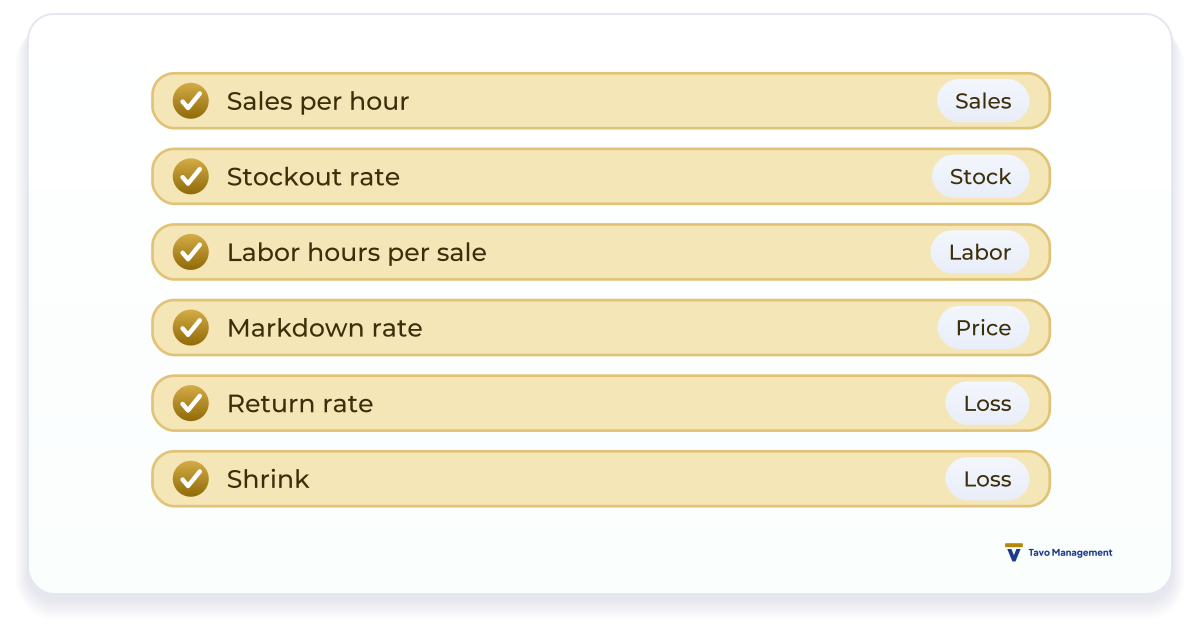
A manager with fifteen reports reads none of them. Choose six numbers that decide the store's profit: sales against plan, conversion or transactions, average basket, labor hours per sale, stockouts on top sellers and shrink. Show them on one page, with last week and the same week last year beside them.
Hold a short weekly review with each manager and ask the same three questions: what moved, why and what will you change. The rhythm matters more than the layout. Managers start to look at their own numbers before you do, and that is the point of the exercise.
Do this: Limit the scorecard to six numbers and review it in the same slot every week.
Avoid this: A forty-column report that arrives on Thursday for the week before.
Pilot Every Change in Two Stores Before Rolling It Out
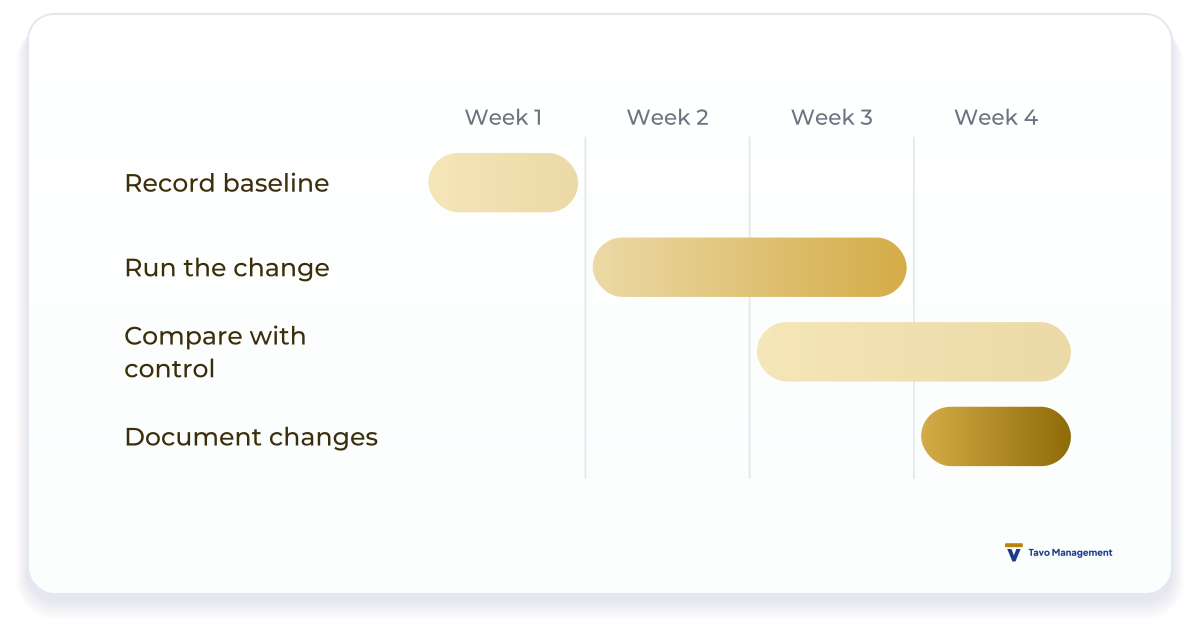
A change that works in the flagship can fail in a small store with half the staff. Pick one strong store and one ordinary store, run the new routine for four weeks and compare the numbers with two similar stores that stay as they were. You learn what breaks while the cost of breaking it is small.
Write down what you changed in the pilot, because the first version is never the final one. When a pilot succeeds, the managers of those two stores make the best trainers for the rest, since their colleagues believe what they say about daily life on the floor.
Do this: Run a four-week pilot with a comparison group and document what you adjusted.
Avoid this: Announcing a new process for all stores on Monday and fixing it in public.
Connect Your Channels to One Stock View
If you sell online and in stores, a shopper expects to see the same stock in both. Separate counts lead to oversells online and to empty promises at the counter. Start by deciding which system holds the truth for each product and let the others read from it, so the data moves one way.
Rules for buy online and pick up in store, ship from store and returns across channels need to be written before launch, not after the first complaint. Decide where returned stock goes and how quickly it becomes sellable again, because a return sitting in a back room is a lost sale.
Do this: Name one system of record for stock and write cross-channel return rules before launch.
Avoid this: Keeping online stock in a spreadsheet that someone updates by hand at lunch.
What to Fix First if You Cannot Do Everything
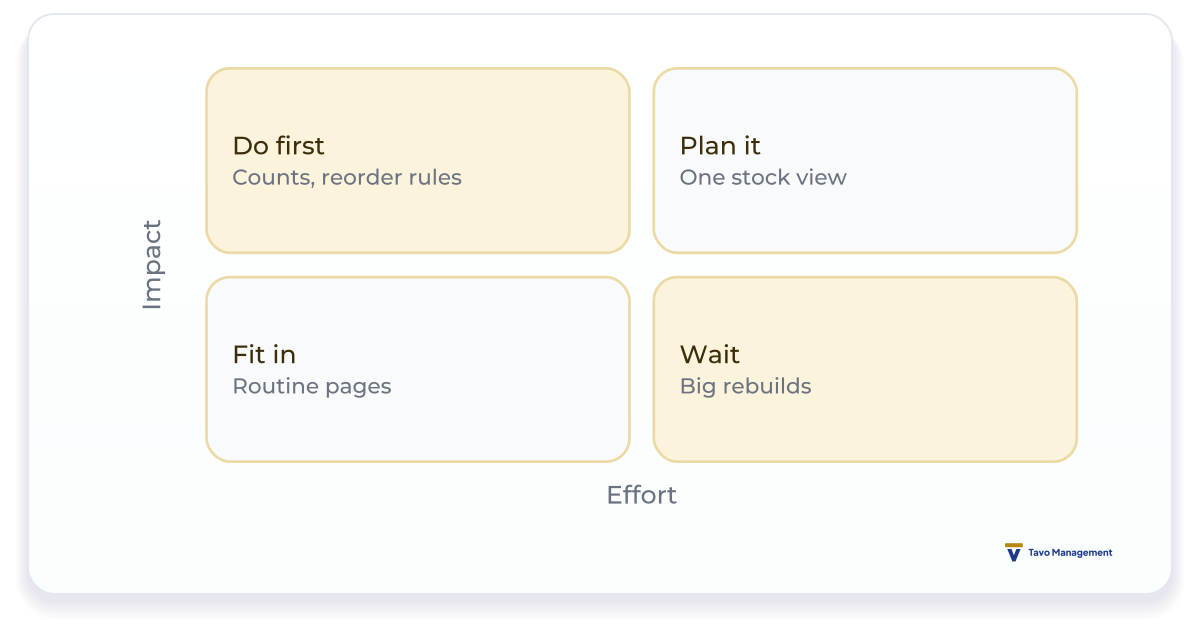
You will not tackle nine things at once, and you should not try. Pick by where the money leaks. If shelves run empty, start with practices one and two. If payroll is high and service is poor, start with practices three and four. If margin is thin despite good sales, look at markdowns and returns.
The practices also depend on each other. A reorder rule built on a wrong stock count only automates the mistake, so the count comes first. In the examples I collected in retail management examples, the stores that improved fastest began with counting and scheduling, because those two make every later change easier to measure.
Where Software Fits In
Point-of-sale, inventory and scheduling tools make these practices easier to keep, and they cost less than most owners expect. They do not replace the decisions. I suggest you write the rule on paper first, then configure it. My ranking of retail management software compares the main options on price and fit.
For newer owners who want the wider picture before picking practices, the retail management guide explains how the pieces connect, from buying to the till.
How to Choose Which Practices to Start With
Score each practice on three questions. How much money does the problem cost you each month? How long would the fix take? How many stores does it touch? Multiply the answers into a rough priority and start with the top two.
- You can measure the problem with data you already have.
- One person can own the fix and report on it weekly.
- The change fits into a four-week pilot in two stores.
- The result shows up in margin, labor hours or stockouts.
If you lack the time to run this assessment yourself, a short call with a consultant usually settles the order in an hour.
Questions About Retail Management Best Practices
What Are the Most Important Retail Management Best Practices?
Accurate inventory, written reorder rules, staffing that follows traffic and one-page routines carry most of the value. They are dull, and they work because they repeat in every store every day. In my experience, a retailer that gets these four right earns more than one that spends the same effort on a new campaign.
How Often Should a Retailer Count Inventory?
Count by value instead of by calendar. Your top sellers deserve a weekly count, mid-range products a monthly one and slow products a quarterly one. A full count once a year still makes sense for the accounts, but it should confirm what the cycle counts already told you.
How Do I Reduce Labor Cost Without Hurting Service?
Compare staff hours to sales per hour for several weeks and move hours from quiet periods to peaks. Cutting hours across the board is the mistake I see most often, because the peak hours are where a short-staffed store loses sales. Role cards for each shift also help, since people know who covers the floor.
What Should a Store Manager Scorecard Include?
Six numbers are enough: sales against plan, transactions, average basket, labor hours per sale, stockouts on top sellers and shrink. Add a comparison with the same week last year. More columns tend to mean fewer readers, so resist the urge to add one for every department.
How Can I Tell If a Retail Change Is Working?
Record a baseline before you start, run a pilot in two stores and compare them with similar stores that stay as they are. Judge the result after four to six weeks, not after four days. If the numbers move in the pilot stores only, you have evidence, and if everything moves everywhere, something else is going on.
When Does a Retailer Need Outside Help?
Usually when growth outruns the owner's attention, for example when you open a third store or start selling online. An outside view shortens the path, because it finds the few fixes worth making first. The consultants I work with start with a free call and a written summary, so you see the plan before you commit.
Does Retail Management Software Fix These Problems on Its Own?
No. Software enforces rules, and you still have to decide the rules. Many stores I visit own a capable system and use ten percent of it. Fix the routine first, then pick the tool that supports it.
Sources
- NRF and Happy Returns: consumers expected to return nearly $850 billion in merchandise in 2025
- CYBRA: how accurate is the average retailer's inventory (citing the Auburn University RFID Lab)
General information only: this is not legal, financial or tax advice. Examples and numbers reflect typical projects; check the specifics with your advisers before deciding.
Did you find this helpful?
Thank you for your feedback.
Delaney Brisco
Delaney leads the Tavo editorial team and works with our consultants to turn real client projects into practical guides on project delivery, process design and organizational change. Before joining Tavo, she spent 12 years in operations and program management roles. She has since edited more than 300 articles on management practice and reviewed PMO setups and process redesigns from over 100 client projects. She is based in Minneapolis, Minnesota.