Summary
- A retail strategy fits on a few pages and gives every priority an owner, a metric and a date.
- Fix stock accuracy and cash first, then labor, pricing, store routines and channels, in that order.
- Pilot in two stores, measure against a baseline and roll out only what the numbers support.
- Review the scorecard weekly and the plan quarterly, because demand and suppliers keep moving.
Most retail strategies I read are long and unused. They talk about vision and customer experience, then leave the store manager with no idea what to do on Monday. The version below is shorter and sequenced, and it comes from the plans I build in retail management consulting projects.
The playbook has seven phases over roughly four to five months. Timelines move with the size of your chain, so treat the weeks as a starting point.
The Seven Phases at a Glance
| Phase | Timing | What you have at the end |
|---|---|---|
| 1. Baseline | Weeks 1 to 2 | Twelve months of sales, stock, labor and returns data in one sheet |
| 2. Stock and cash | Weeks 3 to 6 | Cycle counts running, reorder rules for top sellers, slow stock list |
| 3. Labor | Weeks 5 to 8 | Schedules built from sales per hour, role cards for each shift |
| 4. Price and promotion | Weeks 7 to 10 | Markdown ladder per category, promotion calendar with margin targets |
| 5. Store routines | Weeks 9 to 14 | One-page procedures, manager scorecard, pilot in two stores |
| 6. Channels | Weeks 12 to 18 | One stock view across store and online, written return rules |
| 7. Scale and review | Week 16 onward | Rollout to all stores and a quarterly review of every priority |
Three Priorities Behind the Plan
Retail strategy comes down to three questions. Do you have the right product in the right place? Do you have the right people at the right hours? Do you know the answer to both from a number and not from a feeling? The phases follow that order.
Inventory distortion, meaning the cost of out-of-stocks plus overstocks, was estimated by IHL Group at $1.77 trillion globally in 2023, about 7.2% of retail sales. Your share of that sits in your stockroom and your lost sales, which is why the plan starts there.
1. Baseline: Know Where You Stand
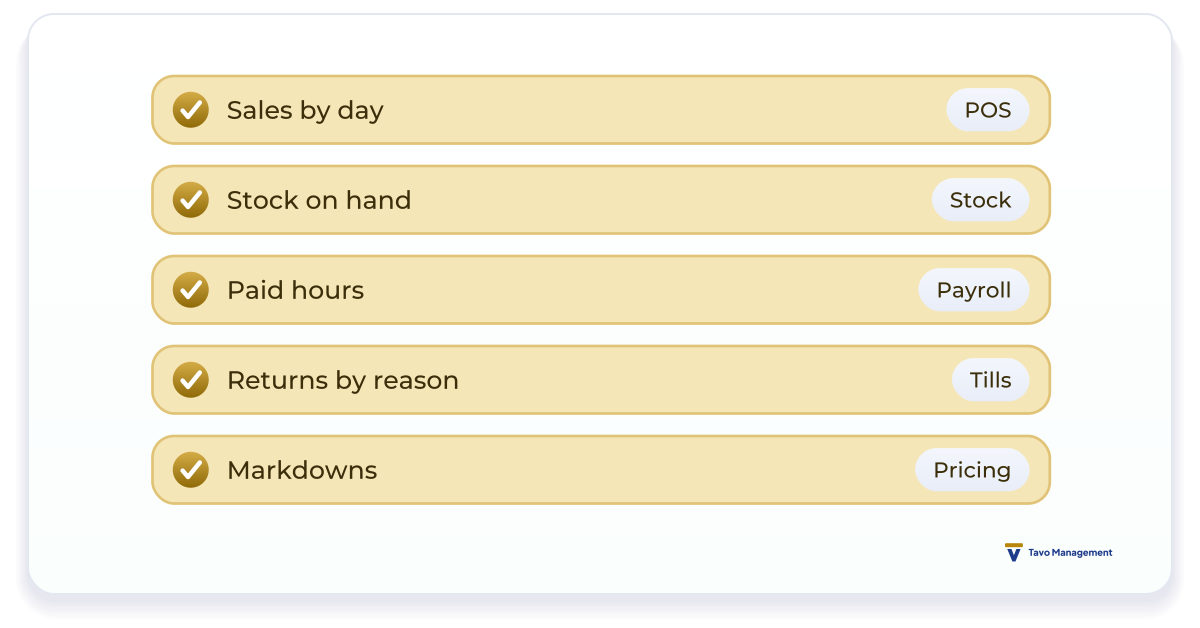
Collect twelve months of sales by store, product and week, plus stock levels, labor hours, markdowns and returns. Put them in one sheet, even if it is ugly. The aim is a shared set of numbers that the owner, the buyers and the managers all accept.
Expect delays. Two data sources will disagree, and a manager will insist that the report is wrong. Settle each argument by walking to the shelf. Within two weeks you should know your stockout rate on the top 50 products, your markdown rate and your labor hours per thousand dollars of sales.
2. Stock and Cash: Fix the Flow of Product
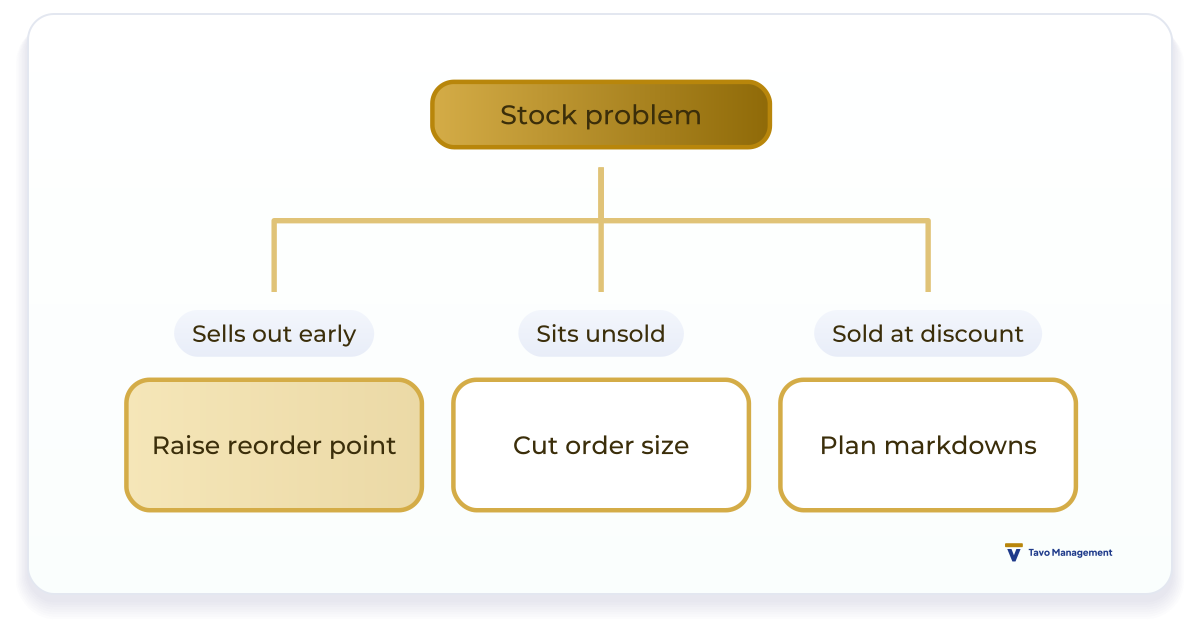
Start cycle counts on the top sellers, write reorder points and flag every product that has not sold in 90 days. The slow list is cash you can still recover, usually through a markdown or a return to the supplier.
This is also the moment to decide how much stock you are willing to hold. A simple rule is to set a target of weeks of cover per category, and to review it each month. My retail management best practices list covers the counting and ordering routines in more detail.
3. Labor: Match Hours to Customers
Chart sales per hour for each store and place staff hours beside them. Move hours from the quiet periods to the peaks, then build the next schedule from the peak outward. Publish it two weeks ahead and write a role card for every shift.
Expect some friction, because long-serving employees like their usual shifts. Offer a trial of four weeks and compare conversion and queue times. The data usually settles the argument.
4. Price and Promotion: Protect the Margin
Set a markdown ladder for each category and a margin floor for each promotion. Check last year's promotions against that floor, because several will turn out to have sold well and earned nothing.
A promotion calendar also forces the buying team and the stores to talk before a campaign starts. Missing stock on a promoted item is the cheapest mistake to prevent and one of the most common.
5. Store Routines: Make Good Habits the Default
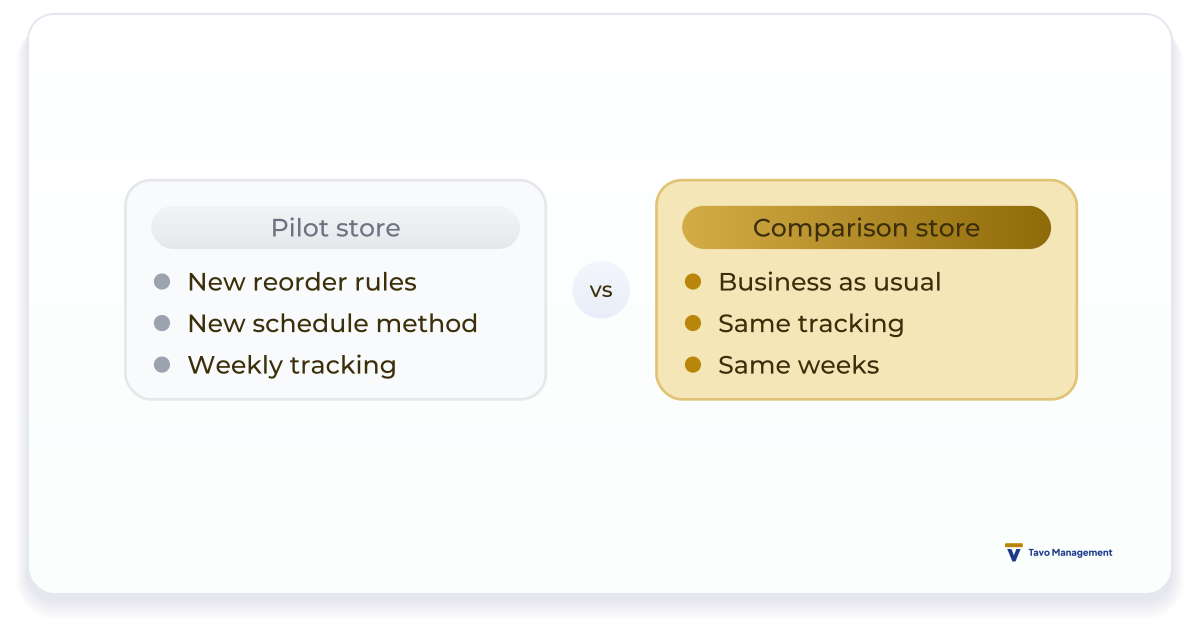
Write one-page routines for opening, receiving, returns and closing, and build the six-number weekly scorecard. Pilot both in two stores for four weeks, with two similar stores as a comparison group.
The pilot teaches you more than any workshop. Managers will tell you which step takes too long and which checklist line nobody reads. Fix those, then train the other stores in short sessions led by the pilot managers.
6. Channels: One View of Stock
If you also sell online, choose one system as the source of truth for stock and let the others read from it. Write the rules for pickup, ship from store and returns before you launch them. Stock that is sold twice costs you twice, once in the refund and once in the customer.
Software helps here, and the choice is easier once the rules exist. My ranking of retail management software shows which tools handle multi-channel stock well, with prices.
7. Scale and Review: Keep the Plan Alive
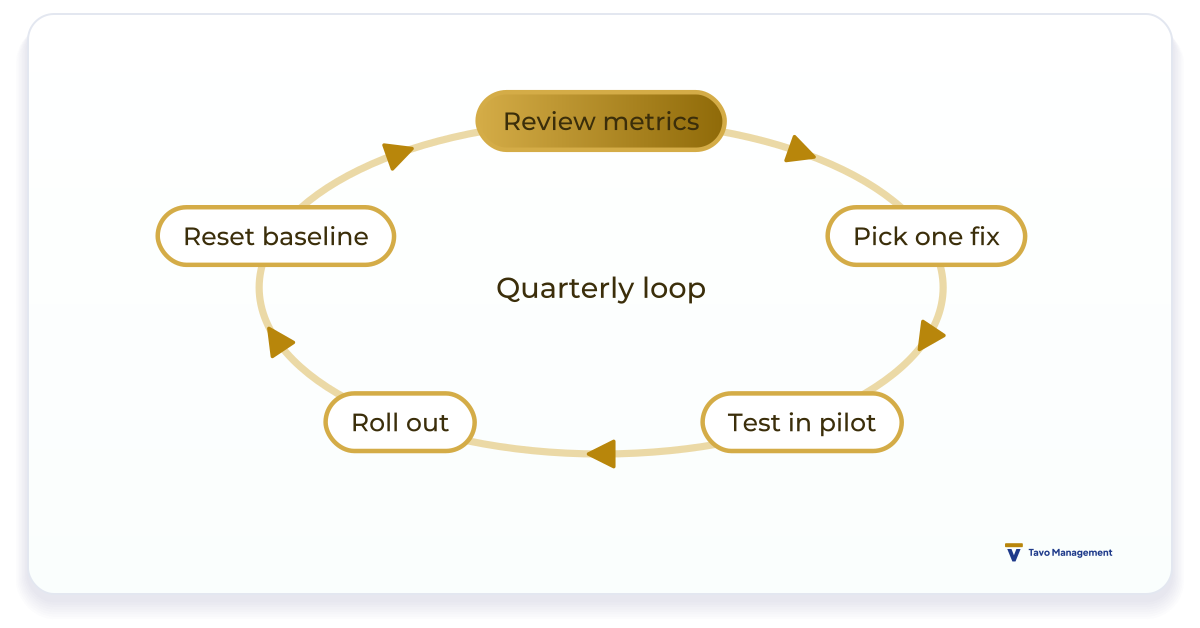
Roll out only what the pilot proved. Add a monthly review of each priority with its owner and a quarterly review of the whole plan. Remove a priority when its number stops improving, and add a new one only when a slot opens.
Plans fail at this stage because the owner gets busy, and the first quarter after rollout is when habits either settle or slip back. Ask each store manager to name one thing that got easier and one thing that got harder, and act on the second answer first. Put the reviews in the calendar for the full year now. For a broader explanation of how the pieces connect, the retail management guide is the right companion.
What a Stock Fix Is Worth: A Back-of-the-Envelope Calculation
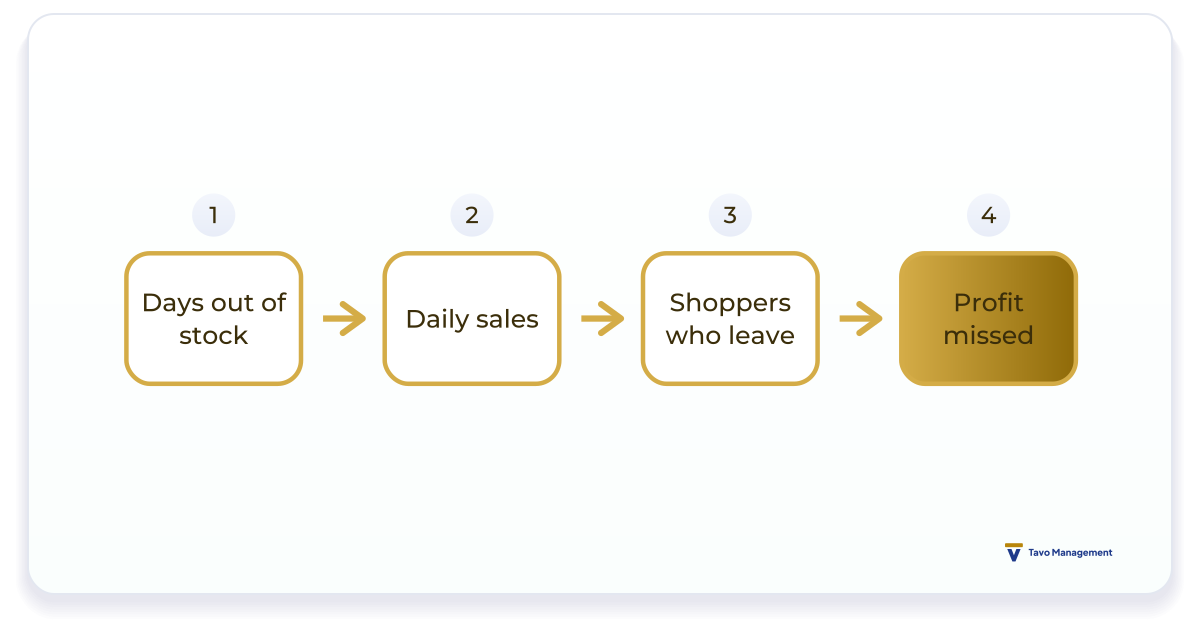
Before you commit time to phase 2, estimate what it could return. The formula is short: lost sales from stockouts equal daily sales of the product, times the days it was out of stock, times the share of shoppers who leave without buying a substitute. Multiply by your gross margin to get the profit you missed.
Take a product that sells $400 a day and runs out for 12 days a year. If 60% of shoppers walk away, you lose $2,880 in sales, which is $1,152 of gross profit at a 40% margin. Now apply that to your top 50 products. Even if the average product loses only half as much, the total is large enough to pay for a reorder system many times over.
| Input | Example value | Where to find it |
|---|---|---|
| Daily sales of the product | $400 | Point-of-sale report |
| Days out of stock per year | 12 | Stock history or manager log |
| Shoppers who leave | 60% | Your own estimate, tested by asking at the till |
| Gross margin | 40% | Accounts |
| Profit missed | $1,152 | Calculated |
The numbers here are illustrative, so replace them with yours. The share of shoppers who leave is the least certain input. Ask your staff what customers do when an item is missing, and run the calculation with a low and a high value to see the range.
The Numbers to Track Through All Seven Phases
| Metric | How to calculate it | Review |
|---|---|---|
| Stockout rate on top sellers | Days out of stock divided by days open, for your top 50 products | Weekly |
| Markdown rate | Markdown value divided by net sales | Monthly |
| Labor hours per sale | Paid hours divided by number of transactions | Weekly |
| Return rate | Returned value divided by net sales | Monthly |
| Inventory turns | Cost of goods sold divided by average inventory at cost | Quarterly |
Set the target for each from your own baseline. A realistic first goal is a measurable improvement in two of the five within a quarter, not all five at once.
How to Pick Priorities for Your Own Plan
Not every phase deserves the same weight in your business. A shop with 200 products and two stores needs less on channels than a chain with an online shop. Rank phases by what they would add to your margin and by how hard they are to execute. A short list of questions helps:
- Which number would hurt most if it got ten percent worse?
- Which phase can you finish within a quarter?
- Who owns each phase, and do they have time for it?
- What would you stop doing to make room?
Looking at real cases helps you rank. The projects in retail management examples show what each phase looks like in practice, with results.
Questions About Retail Management Strategy
What Is a Retail Management Strategy?
It is a written plan for how your stores will make money over the next one to three years. It covers which customers you serve, how you buy and price, how you staff and which numbers you track. A useful strategy fits on a few pages and names an owner and a date for every priority.
How Long Should a Retail Strategy Cover?
Plan in two layers. A one-year plan with monthly checkpoints keeps your teams focused, and a three-year view sets direction on things that take time, such as new locations or a system change. I rewrite the one-year layer every autumn, before the peak season, and touch the three-year layer once a year.
Which Priority Should a Small Retailer Tackle First?
Stock accuracy and reorder rules, because they affect sales and cash at the same time. If those already work, look at labor scheduling next. Most small retailers I meet lose more money to empty shelves and slow stock than to anything a marketing plan could fix.
How Do I Set Realistic Targets for a Retail Plan?
Use your own baseline from the last twelve months and aim for modest, specific gains, such as fewer stockouts on your top 50 products or a lower markdown rate. Compare with the same period last year to remove seasonal effects. Targets copied from a conference slide rarely fit your stores.
How Often Should I Review the Strategy?
Look at the scorecard weekly, review each priority monthly and revisit the plan itself every quarter. Changes in demand, supplier lead times or competitor openings can make a priority obsolete in a few months, so a plan that is never reviewed turns into a document of good intentions.
Do I Need a Different Strategy for Each Store?
Keep one strategy and let the details vary. The priorities, scorecard and routines stay the same, while targets and stock ranges reflect each store's size and customers. Chains that let every location write its own plan lose the ability to compare stores and to learn from each other.
When Should I Bring in a Consultant to Build the Plan?
When you are about to grow, change systems or fix a margin problem you cannot explain. An outside review is cheapest before you commit capital. The consultants I work with begin with a free discovery call and a written summary, so you can judge the approach before you spend anything.
Sources
General information only: this is not legal, financial or tax advice. Examples and numbers reflect typical projects; check the specifics with your advisers before deciding.
Did you find this helpful?
Thank you for your feedback.
Delaney Brisco
Delaney leads the Tavo editorial team and works with our consultants to turn real client projects into practical guides on project delivery, process design and organizational change. Before joining Tavo, she spent 12 years in operations and program management roles. She has since edited more than 300 articles on management practice and reviewed PMO setups and process redesigns from over 100 client projects. She is based in Minneapolis, Minnesota.