Summary
- Retail management is the job of running buying, stock, staff, pricing and reporting so each store earns a profit.
- Five areas carry most of the result: inventory, labor, pricing, store routines and reporting.
- A handful of numbers, such as margin, stockouts and labor hours per sale, tell you how a store is doing.
- Write routines down and measure them weekly, then add software to enforce them.
Retail management is the work of turning a range of products into profit through stores, staff and systems. Owners learn it by doing, usually the hard way, and the lessons repeat across businesses. If you want a partner for it, retail management consulting is one route.
This guide explains how the parts fit together, what to measure and where beginners lose money. It starts with the basics and ends with a checklist you can use this week.
What Retail Management Covers
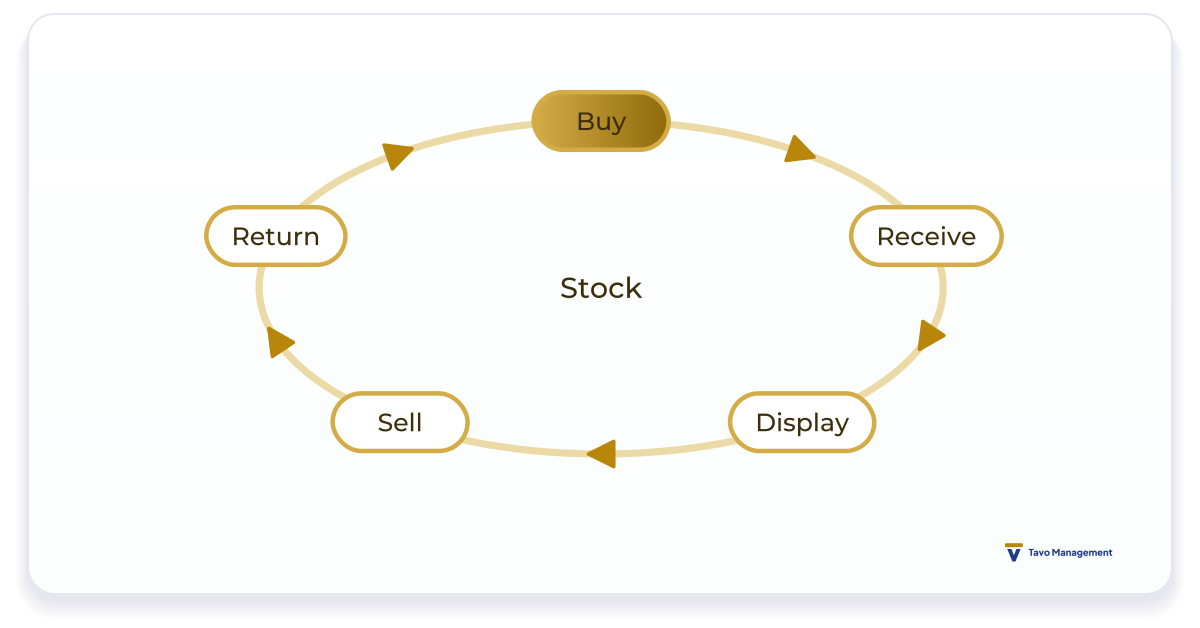
Think of a retail business as a loop. You buy product, receive and store it, put it on display, sell it, handle returns and use the results to buy better next time. Management means making each step reliable and measuring it, so the loop earns more than it costs.
The work splits into five areas. Inventory is the product and the cash tied up in it. Labor is the people and the hours. Pricing covers margin, promotions and markdowns. Store routines are the daily procedures. Reporting is the information that tells you whether the rest works.
| Area | Main question | Key number |
|---|---|---|
| Inventory | Do you have the right product in the right place? | Stockout rate, inventory turns |
| Labor | Are the right people working at the right hours? | Labor hours per sale |
| Pricing | Do you earn enough on each sale? | Gross margin, markdown rate |
| Store routines | Does every store do the basics the same way? | Checklist completion, audit scores |
| Reporting | Do you see problems before they cost you? | Weekly scorecard delivered on time |
Inventory: The Product and the Cash Behind It
Inventory is usually the largest asset on a retailer's balance sheet and the largest source of surprises. The two failure modes are empty shelves and full stockrooms. IHL Group estimated that out-of-stocks and overstocks together cost retailers $1.77 trillion globally in 2023, equal to 7.2% of retail sales.
Accuracy matters just as much as quantity. Auburn University's RFID Lab puts the average store's inventory record accuracy at about 65%, so the system often says you have stock that you do not. Cycle counts, written reorder rules and careful receiving close most of the gap. My retail management best practices list shows how to set each one up.
Labor: Hours That Follow Your Customers
Payroll is often the largest controllable cost. The goal is simple to state and hard to do: have enough people when customers arrive and fewer when they do not. Start from sales per hour, put your staff hours next to it and move hours toward the peaks.
Retail turnover makes training a permanent job. Role cards, short checklists and a clear first week help new hires reach full speed sooner. Schedules published two weeks ahead also lower turnover, since people can plan their lives around them.
Pricing and Margin: Where Profit Is Made
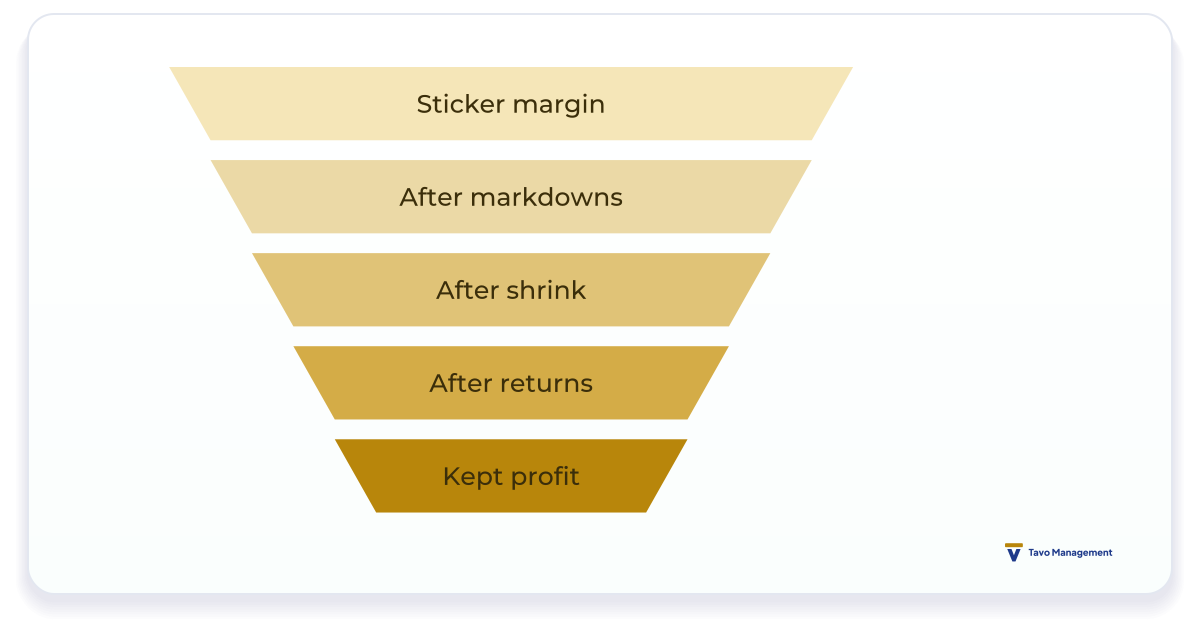
Your margin is set in three places: the price you pay, the price you charge and the discounts you give. Many owners watch the first two and ignore the third. A markdown ladder, which sets discounts by product age, brings the third under control.
Returns belong here too. The National Retail Federation expects returns of about $849.9 billion in 2025, or 15.8% of annual sales, so a return policy is a pricing decision. Track the reasons, and fix the products that come back most.
Store Routines and Customer Service
A store that works the same way every day is easier to run and easier to grow. Opening, receiving, returns and closing deserve a one-page checklist each. Add a daily walk of the store by the manager, with a short list of things to look for: empty facings, wrong prices, blocked aisles and queues.
Customer service lives in these routines. A shopper who finds the product, gets a quick answer and pays without a queue returns. Train for those three moments, and measure them with a simple weekly mystery visit or a short feedback card.
What a Well-Run Store Day Looks Like
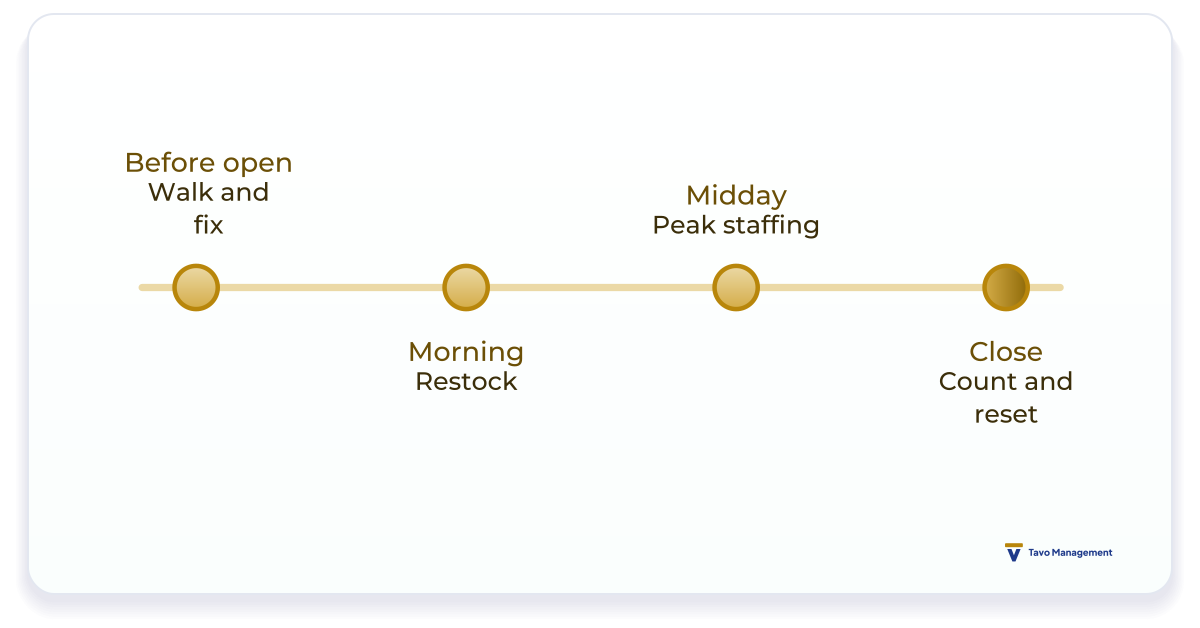
Numbers make more sense once you picture the day behind them. A well-run store opens on time with the displays set, the till counted and the delivery from the night before already checked in. The manager walks the floor before the doors open and fixes empty facings, wrong tickets and blocked aisles while it is still quiet.
During the day, staff follow the role card for their shift, so the floor, the till and the stockroom each have an owner. Returns get a reason code. Anything unusual, such as a product that keeps running out, goes into a short log. At close, the manager checks the day's sales against plan, counts the till and completes the closing checklist, which takes ten minutes instead of forty because the day was tidy.
Once a week, the manager sends the scorecard and takes part in a short review. Over months, this rhythm matters more than any single campaign, because it catches small drifts before they grow. Owners who see their stores this way stop asking what went wrong last week and start asking what to change this week.
The Numbers Every Retail Manager Should Read
You do not need a hundred metrics. These eight cover most decisions, and each has a simple formula.
| Metric | Formula | What it tells you |
|---|---|---|
| Gross margin | (Sales minus cost of goods) divided by sales | How much each sale earns before costs |
| Sales per square foot | Net sales divided by selling space | How well the space works |
| Average basket | Net sales divided by transactions | Spend per visit |
| Conversion rate | Transactions divided by visitors | Share of visitors who buy |
| Inventory turns | Cost of goods sold divided by average inventory | How fast stock converts to cash |
| Stockout rate | Days out of stock divided by days open | Sales lost to empty shelves |
| Labor hours per sale | Paid hours divided by transactions | Staffing efficiency |
| Shrink rate | Lost inventory value divided by sales | Theft, damage and error losses |
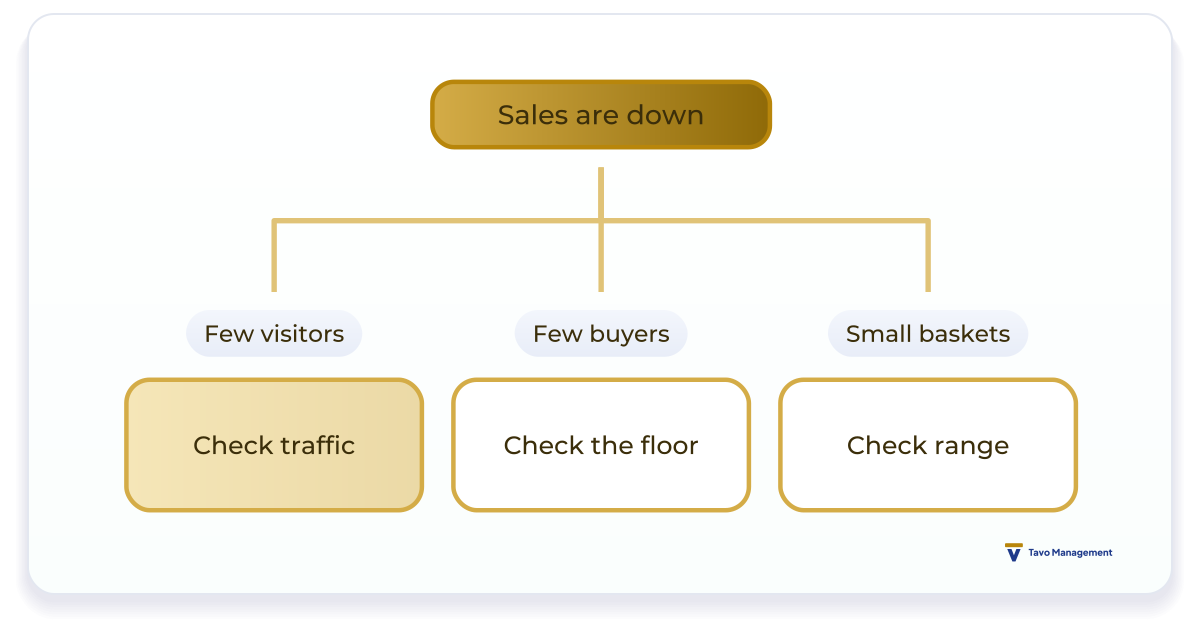
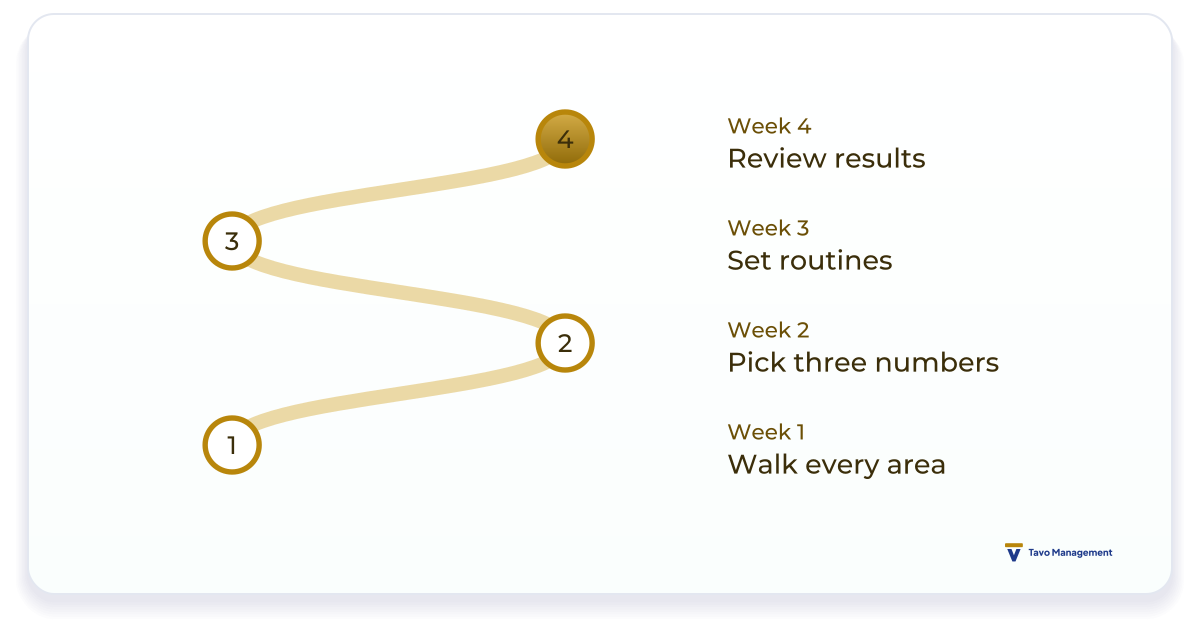
Pick the three that match your biggest worry and put them on a weekly page. How to turn them into a plan is covered in my retail management strategy playbook.
How Management Differs by Store Type
The five areas stay the same, but their weight changes. A grocery store lives on shelf life and waste, a fashion store on seasonal buying and markdowns and a hardware store on range depth and availability. Knowing your type tells you where to look first.
| Store type | Biggest lever | Common trap |
|---|---|---|
| Grocery and convenience | Waste and ordering rhythm | Overordering fresh products |
| Fashion and apparel | Seasonal buying and markdowns | Deep discounts at season end |
| Hardware and home | Range depth and availability | Slow stock hiding in the back |
| Specialty and gifts | Gross margin and curation | Buying what the owner likes |
| Omnichannel retail | One view of stock | Online oversells |
Five Mistakes That Cost Beginners Money
The first is trusting the stock number on screen without checking the shelf. Second comes buying by taste, not by sales data. Third is scheduling staff from habit. The fourth mistake is discounting everything at once, and the fifth is rolling out a new process to all stores before testing it in two.
All five are fixable with routines you can set up in a month. I see the same pattern in almost every first assessment, and the retail management examples collection shows how real stores fixed each one.
A fair question from owners is how long all this takes. In my client work, a single store usually has counts, reorder rules and a scorecard running within six weeks, and a chain of ten stores needs about four months because every routine is piloted first. The slowest part is rarely the system. It is finding the hour each week when the manager looks at the numbers, so book that hour first and protect it.
Systems and Software
A point-of-sale system with inventory and reporting is the minimum for a serious retailer. Add scheduling and purchasing tools as you grow. Compare options on price per location, integration with your online shop and how well reports match the metrics above. The retail management software ranking has current prices and ratings.
How to Start: A Checklist for Your First 30 Days
- Pull twelve months of sales, stock and labor data into one sheet.
- Start weekly counts on your top 50 products.
- Write reorder points for the same 50 products.
- Chart sales per hour and compare it to staff hours.
- Write one-page opening and closing checklists.
- Create a six-number weekly scorecard and review it with each manager.
- Pick one change and pilot it in two stores.
If this feels like a lot, begin with the first three items. They take little time and improve everything that comes after.
Questions About Retail Management
What Does Retail Management Involve?
It covers everything that happens between buying a product and a customer leaving with it: sourcing and ordering, receiving, stock control, pricing, store layout, staffing, customer service, returns and reporting. The job is to make those steps profitable and repeatable across every store you run.
What Skills Does a Retail Manager Need?
Reading numbers comes first, because sales, stock and labor reports drive daily decisions. Scheduling, coaching and calm handling of customers follow. In my experience, the managers who do best are the ones who walk the floor every day and check the data every week, and do both on a rhythm.
How Is Retail Management Different from Merchandising?
Merchandising decides what to sell, where to place it and at what price. Retail management is the wider job of running the operation that sells it, including people, stock, systems and money. Merchandising is one part of retail management, and in a small shop the same person often does both.
What Is the Most Important Retail KPI?
No single number tells the whole story, but gross margin return on inventory comes close, since it links profit to the stock you hold. Pair it with sales per square foot, labor hours per sale and stockout rate on your top sellers, and you can see most of what matters.
Do I Need Retail Management Software?
Once you have more than a handful of products or more than one location, yes. A point-of-sale system with inventory and reporting prevents most manual errors. Choose it for the rules you need to enforce, after you have written the rules down.
How Much Does a Retail Management Degree or Course Cost?
Prices vary widely by school and country, and I would check the current figures with the provider. For most owners, a short course plus a year of hands-on practice teaches more than a long program. Courses from industry associations are a sensible starting point.
How Can a Consultant Help My Retail Business?
A consultant reviews your numbers and stores, ranks the problems by value and helps you fix the first few. The consultants I work with begin with a free discovery call and a written summary, so you can judge the approach before you commit.
Sources
- Retail TouchPoints: IHL study on inventory distortion costing retailers $1.77 trillion in 2023
- CYBRA: how accurate is the average retailer's inventory (citing the Auburn University RFID Lab)
- NRF and Happy Returns: consumers expected to return nearly $850 billion in merchandise in 2025
General information only: this is not legal, financial or tax advice. Examples and numbers reflect typical projects; check the specifics with your advisers before deciding.
Did you find this helpful?
Thank you for your feedback.
Delaney Brisco
Delaney leads the Tavo editorial team and works with our consultants to turn real client projects into practical guides on project delivery, process design and organizational change. Before joining Tavo, she spent 12 years in operations and program management roles. She has since edited more than 300 articles on management practice and reviewed PMO setups and process redesigns from over 100 client projects. She is based in Minneapolis, Minnesota.