Summary
- Most avoidable revenue loss starts at the front end, so check eligibility and collect at the time of service.
- Capture every charge and send clean claims, because rework costs more than prevention.
- Work denials by cause, and assign each top cause an owner and a fix.
- Report five numbers monthly and review them with named owners.
Most revenue cycle problems I get called about are not clever. A patient's coverage lapsed, a charge never reached billing or the same denial has been appealed forty times without anyone asking why it keeps happening. The fixes are habits, and good revenue cycle management consulting mostly consists of installing them.
Below are nine practices I apply on nearly every project. Each one has a short explanation, then what to do and what to avoid. The table gives you the whole set in one view, and you can read the details in any order.
The Nine Practices at a Glance
| Practice | Problem it prevents | First step |
|---|---|---|
| 1. Verify Eligibility Before Every Visit | Eligibility errors | Check twice, before and after booking |
| 2. Collect What You Can at the Time of Service | Patient balances | Collect at the time of service |
| 3. Capture Every Charge | Missed revenue | Reconcile encounters and charges daily |
| 4. Send Clean Claims the First Time | Rework on claims | Scrub and track clean claim rate |
| 5. Work Denials by Cause, Not Claim by Claim | Repeat denials | Group by cause, assign owners |
| 6. Follow Up on Accounts Receivable by Value and Age | Expired claims | Sort follow-up by value and age |
| 7. Train Staff on the Whole Cycle | Handoff mistakes | Train each role on the whole cycle |
| 8. Use Automation Where the Rules Are Clear | Manual busywork | Automate rule-based tasks |
| 9. Report on Five Numbers and Review Them on a Schedule | Drift | Report five numbers monthly |
The 9 Revenue Cycle Management Best Practices, With Do's and Don'ts
If your numbers are already weak, start with practice 1 and practice 5, because they reduce the most rework. If you are building a new team, take them in order.
1. Verify Eligibility Before Every Visit
Coverage changes more often than patients remember. A plan ends in January, an employer switches carriers or a deductible resets, and the first sign is a denied claim weeks later. Check eligibility when you book the visit and again one or two days before it, and record the plan type, copay and deductible status in the chart.
A short example from a multi-provider group I reviewed: the same three payers caused most of their front-end denials, and in each case the coverage had lapsed between booking and visit. A second check two days out removed most of those at almost no cost.
- Do this: Run the second check automatically and give the front desk an exception list.
- Avoid this: Check eligibility only on the first visit, or only after a claim is denied.
2. Collect What You Can at the Time of Service
A balance is easiest to collect while the patient is in front of you. Quote the expected copay and any known deductible at check-in, take the payment and explain it in a sentence. Balances that move to statements get paid more slowly and cost more to chase.
Estimates matter here. Patients accept a number more readily when it arrives before the visit with a clear note that it is an estimate. Staff need a short script and the authority to offer a payment plan on the spot.
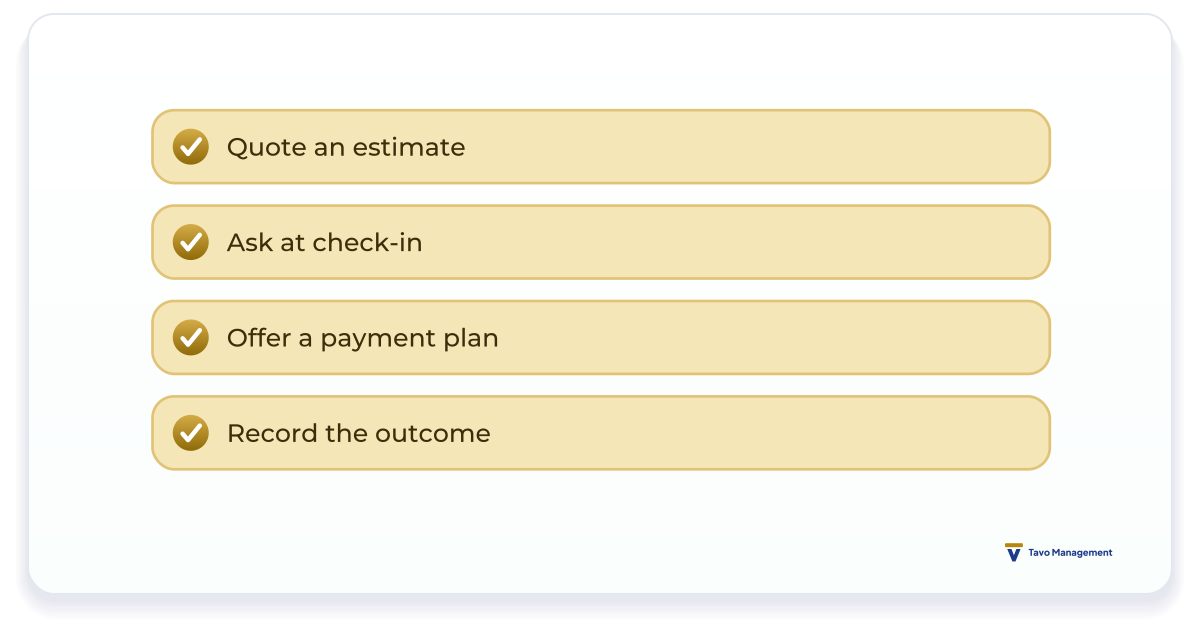
- Do this: Give staff a one-sentence script and a simple payment-plan option.
- Avoid this: Hand patients a surprise bill after the claim has been paid by the insurer.
3. Capture Every Charge
Missed charges are silent leaks. A procedure is done, a supply is used or a visit runs longer, and nothing reaches billing. Compare the schedule and the clinical notes with the charges posted each day, and fix the gaps while the visit is fresh.
A simple daily reconciliation does most of the work: count encounters, count charge entries and investigate the difference. Providers should see a short monthly list of their own missing charges, with no blame attached.
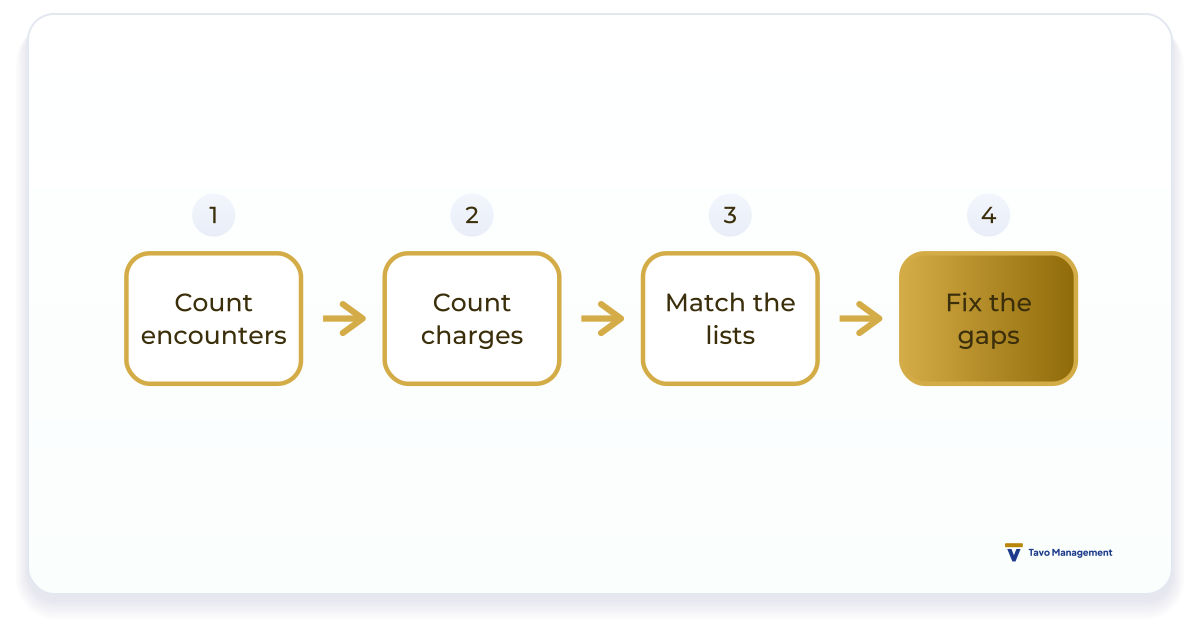
- Do this: Reconcile encounters against charges daily and share a monthly gap list with providers.
- Avoid this: Wait for month-end to discover that a day of visits was never charged.
4. Send Clean Claims the First Time
Every rejected or denied claim costs staff time and delays cash. Use a claim scrubber, keep payer-specific edits current and track the reasons claims fail before submission. A claim that is right the first time is the cheapest one you will ever handle.
Track first-pass clean claim rate by payer. When one payer drags the average down, the cause is usually a single rule you can write an edit for. My guide to revenue cycle management metrics explains how to calculate it.
- Do this: Review the top five scrubber failure reasons every month and update your edits.
- Avoid this: Turn off edits because they create work, without asking why they fire.
5. Work Denials by Cause, Not Claim by Claim
Appeals recover revenue once. Fixing the cause keeps recovering it. Tag every denial with a reason, group them monthly and give the biggest cause an owner and a fix. A denial from missing authorization belongs to the front end, and a denial from a code mismatch belongs to coding.
Experian Health's 2025 survey found that 41 percent of providers say more than 10 percent of their claims are denied, up from 38 percent in 2024. A rising baseline makes cause-based work more important, since appeals alone cannot keep up.
- Do this: Give each top denial cause a named owner and review them together monthly.
- Avoid this: Appeal everything equally, regardless of value, cause or filing deadline.
6. Follow Up on Accounts Receivable by Value and Age
Aging reports only help when somebody works them in a sensible order. Sort open claims by dollar value and by how close they are to a payer's filing or appeal limit, and set a daily target for each biller. Claims that sit untouched are the ones that expire.
Check the oldest bucket first, because those claims have the fewest options left. Then work high-value claims in the 30 to 60 day range before they age further.
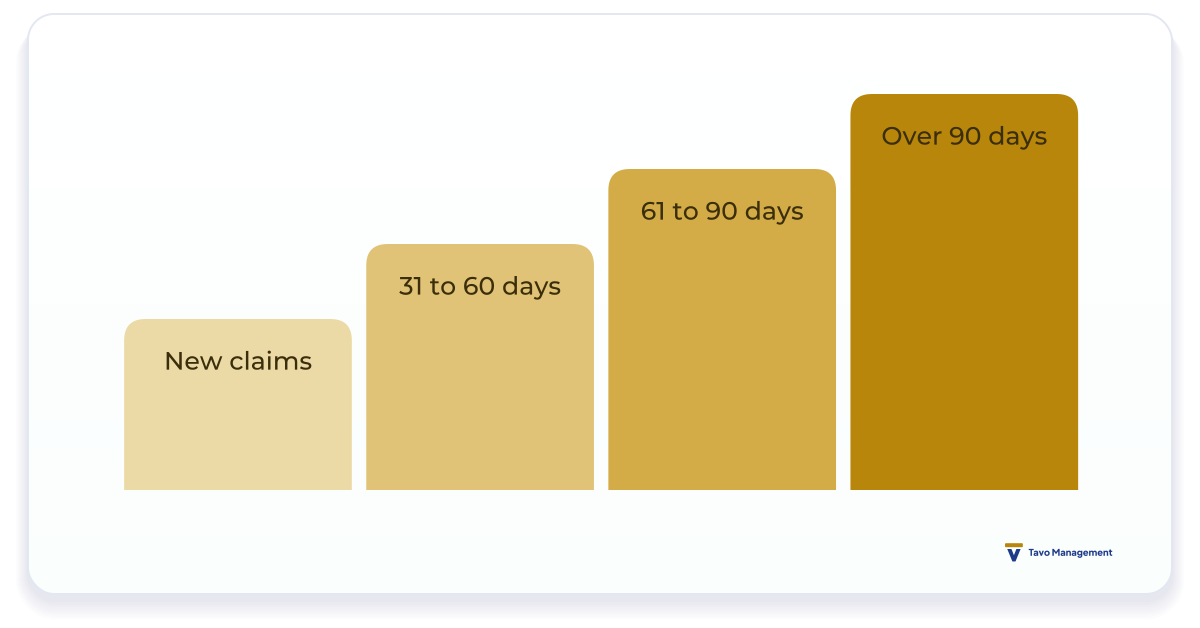
- Do this: Set daily follow-up targets and escalate claims approaching payer deadlines.
- Avoid this: Work accounts alphabetically or in whatever order they appear on the screen.
7. Train Staff on the Whole Cycle
Front desk, coders, billers and providers each see one piece of the cycle. Teach each group what happens downstream of their work. A registrar who has watched a denial come back for a missing subscriber ID checks that field more carefully.
Short sessions work best: 20 minutes, one topic, one real example, repeated each quarter. Put the key points on a one-page guide that sits where the work happens.
- Do this: Use real denied claims as training examples, with identifying details removed.
- Avoid this: Run a long annual training that nobody remembers by February.
8. Use Automation Where the Rules Are Clear
Eligibility checks, claim status checks and payment posting are repetitive and rule-based. Automate them and let your billers work the exceptions. My guide to revenue cycle management automation shows the order I usually follow.
Check what your current software already does before buying anything. Many teams own features they never turned on, and the revenue cycle management software comparison shows what each vendor includes.
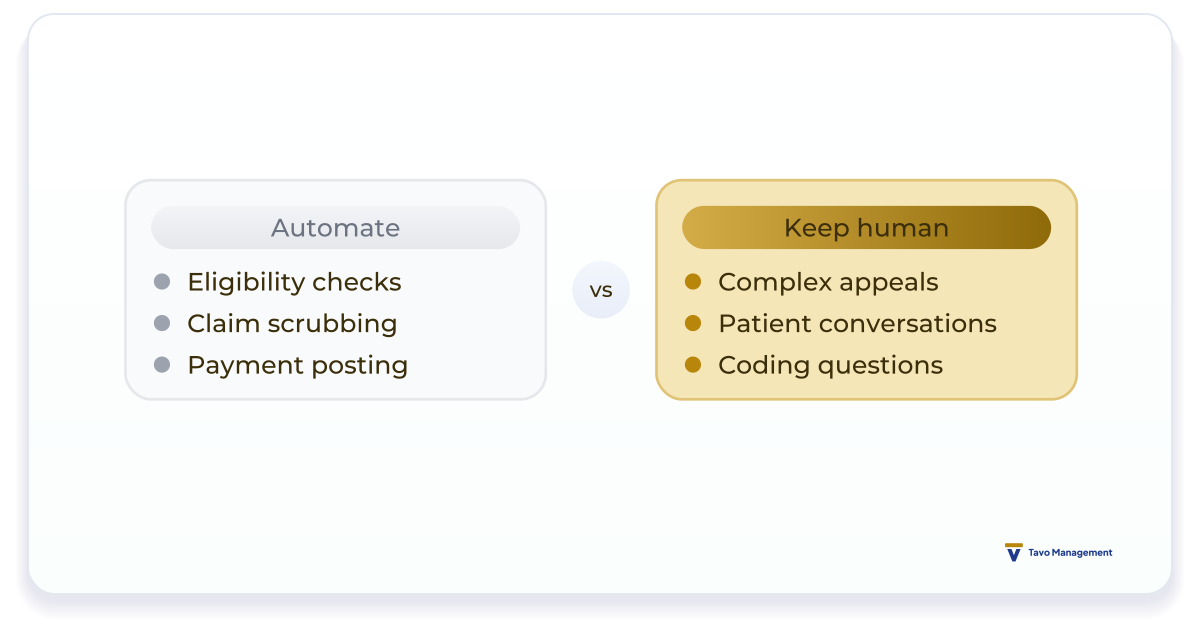
- Do this: Measure minutes per task before and after you automate.
- Avoid this: Buy a new tool before you have used the one you already pay for.
9. Report on Five Numbers and Review Them on a Schedule
Pick days in accounts receivable, first-pass clean claim rate, initial denial rate, net collection rate and cost to collect, and report them the same way every month, by payer and location. Write each definition down once. Numbers nobody trusts get ignored.
Leadership reads the summary, billers read the detail. Hold a monthly 30-minute review where each off-target number gets an owner and a next step. Many teams find that the review itself, more than any tool, is what keeps results from slipping.
- Do this: Define each metric in writing and review the scorecard monthly with named owners.
- Avoid this: Add twenty more charts when the five basic numbers are not yet reliable.
Which Practices to Start With
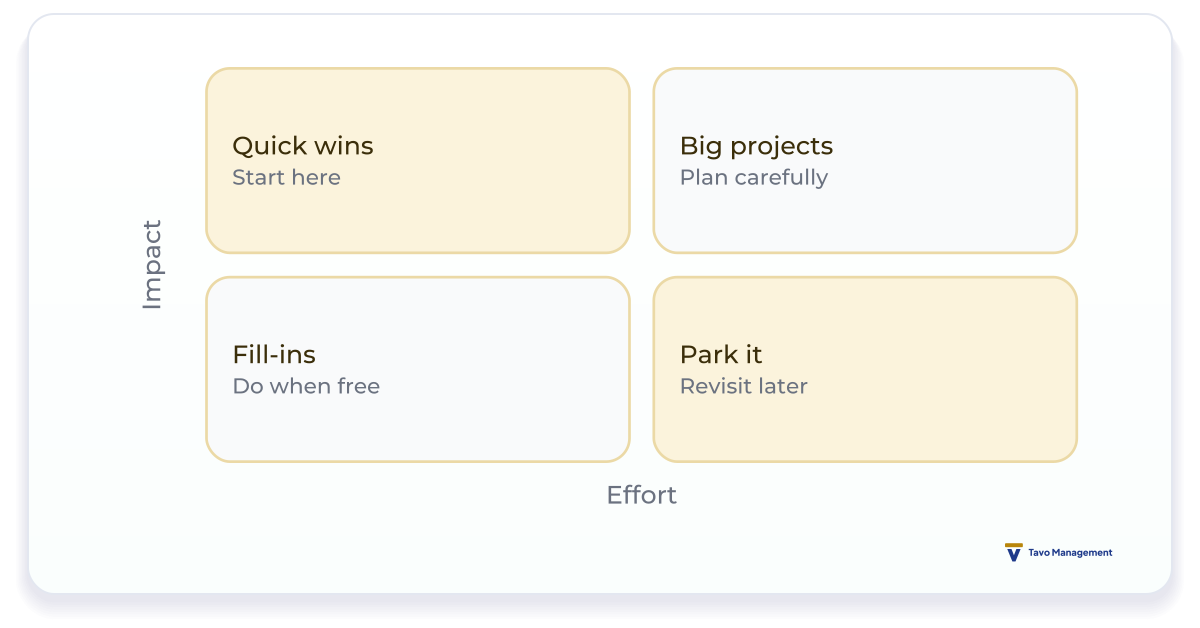
Do not try to launch all nine in a month. Pick three that match your biggest leak, run them for a quarter and compare the scorecard. A practice with high denial rates should start with eligibility, clean claims and cause-based denial work. A practice with slow payment but few denials should start with follow-up and patient collections.
Expect a dip in speed at the beginning, because new checks add steps before they remove rework. In most teams I work with, the benefit shows up after four to eight weeks, once staff stop seeing the checklist as extra and the exception queues shrink.
How to Choose Between Doing It Yourself and Getting Help
You can install most of these habits with your own team. Get help when your numbers stay flat after the basics, when staff turnover keeps resetting your progress or when you add locations faster than you can train people. Tools matter less than ownership, but they can speed things up, and my ranking of revenue cycle management software shows what is on offer. If capacity is the real constraint, read my view on revenue cycle management outsourcing. And expect friction along the way, as the common revenue cycle management challenges show.
- Your first-pass clean claim rate and denial rate have not moved in two quarters.
- Nobody owns denials, or the owner has no time to fix causes.
- You cannot explain why days in accounts receivable changed last month.
- Your best biller or coder is about to leave and nothing is written down.
Questions About Revenue Cycle Management Best Practices
What Are the Most Important Revenue Cycle Management Best Practices?
Four habits give the biggest return: verify eligibility before every visit, capture every charge, send clean claims and work denials by cause. Reporting and staff training hold the others together. If you can only start with one, start with the front end, because errors made at registration cost the most to fix later.
How Often Should I Review Revenue Cycle Reports?
Review a short scorecard weekly and a deeper breakdown monthly. Weekly checks catch a payer change or a staffing gap while it is still small. The monthly review looks at trends by payer, location and denial cause, and decides what to fix next.
What Is a Good First-Pass Clean Claim Rate?
Many teams aim for the mid-nineties or higher, but the right target depends on your specialty and payer mix. Track your own rate for a few months, find the top three reasons claims fail and set a target that improves on your starting point. See my guide to revenue cycle management metrics for the formula.
Should I Work Denials by Dollar Value or by Age?
Use both. Sort by value so large claims get attention first, and set an age limit for each payer's filing and appeal window so nothing expires. Timely filing and appeal deadlines differ by payer and contract, so confirm yours in writing.
How Do I Get Front Desk Staff to Follow a Checklist?
Keep it to one page, put it inside the workflow rather than in a binder and show the staff the denials their step caused. A monthly note that says which errors came from registration and what they cost works better than a lecture.
Do Small Practices Need All Nine Practices?
Not at once. A small practice can cover the core with a one-page registration checklist, weekly aging reviews and one person who owns denials. Add the rest as volume grows. Applying three practices well beats applying nine loosely.
When Does Outside Help Make Sense?
Bring it in when your numbers stay flat after you have tried the basics, when you lose a key biller or when you add locations faster than you can train people. An audit shows whether you need better process, better software or more capacity.
Sources
General information only: this is not legal, financial or tax advice. Examples and numbers reflect typical projects; check the specifics with your advisers before deciding.
Did you find this helpful?
Thank you for your feedback.
Delaney Brisco
Delaney leads the Tavo editorial team and works with our consultants to turn real client projects into practical guides on project delivery, process design and organizational change. Before joining Tavo, she spent 12 years in operations and program management roles. She has since edited more than 300 articles on management practice and reviewed PMO setups and process redesigns from over 100 client projects. She is based in Minneapolis, Minnesota.