Summary
- Many revenue cycle challenges start at registration, so fix data capture and eligibility checks first.
- Denials are rising, so group them by cause and fix the biggest cause at its source.
- Unclear ownership, unwritten rules and unreliable reports slow every other fix.
- Start with one or two challenges, measure the result and move on to the next.
When a practice owner tells me the revenue cycle is broken, it is rarely one thing. Denials are up, a good biller left and the monthly report does not match the bank account. The challenges feed each other, which is why revenue cycle management consulting starts with a map of what is going wrong where.
Below are the ten challenges I see most, each with the fix I would try first. The table shows where each one starts, so you can match them to the part of your operation you recognize.
The 10 Challenges at a Glance
| Challenge | Where it starts |
|---|---|
| 1. Registration and Eligibility Errors | Front desk |
| 2. Rising Denial Rates | Front desk and coding |
| 3. Prior Authorization Delays | Front end |
| 4. Coding and Documentation Gaps | Coding and providers |
| 5. Slow Accounts Receivable Follow-Up | Back end |
| 6. Patient Balances and Collections | Patient billing |
| 7. Staff Turnover and Skill Gaps | Staffing |
| 8. Outdated Technology and Too Many Systems | Systems and data |
| 9. Payer Rule Changes and Contract Complexity | Payers and contracts |
| 10. Reporting You Cannot Trust | Reporting |
10 Revenue Cycle Management Challenges and How to Solve Them
Each challenge has a short explanation, a numbered fix and a note on tools. I use plain steps so you can start this week.
Registration and Eligibility Errors
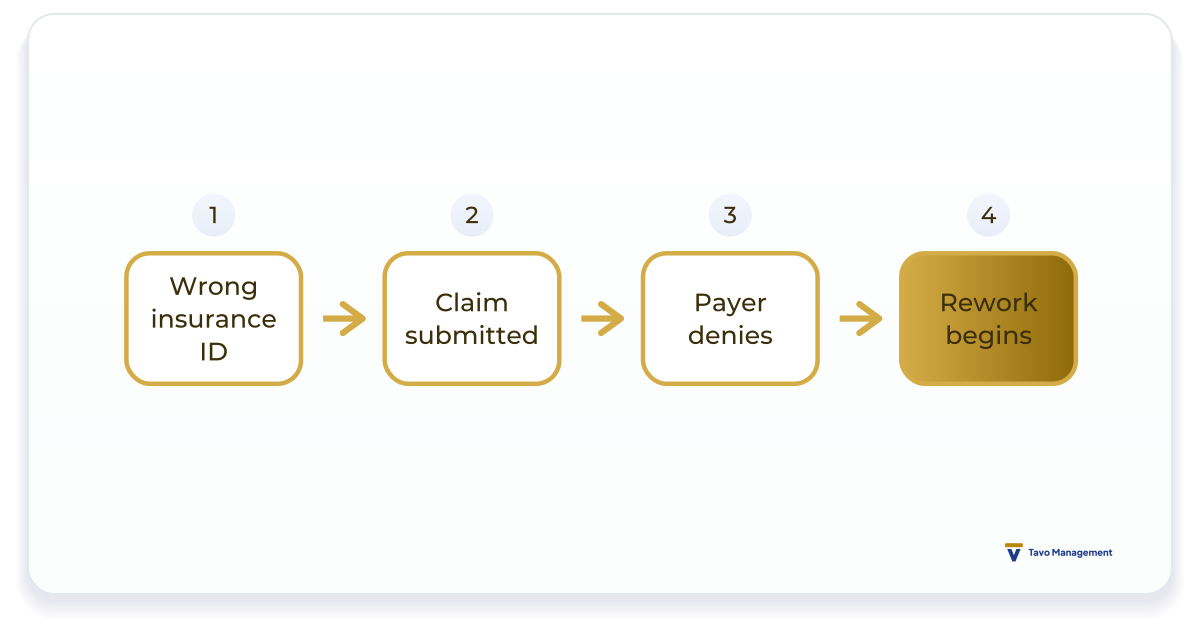
Errors made at the front desk are the cheapest to prevent and the most expensive to fix. A misspelled name, a wrong subscriber ID or lapsed coverage sends a claim down a path that ends in a denial weeks later. Experian Health's 2025 survey found that 26 percent of providers say at least one in ten denials traces back to intake.
The cure is checking at the door. Verify coverage before the visit, use a short checklist for the fields payers reject most and show the front desk the denials their step caused. People fix habits they can see.
How to Fix Registration and Eligibility Errors
- Pull the last quarter's denials and tag each with its root cause.
- List the three registration fields behind most front-end denials.
- Turn those into a one-page checklist inside the registration screen.
- Run eligibility checks automatically at booking and two days before the visit.
- Share a monthly count of front-end errors with the team.
Tools Worth Using with Intake
Most practice management systems include real-time eligibility. Many teams never switch on the second check before the visit, so start there before you buy anything.
Rising Denial Rates
Denials keep climbing for many providers. Experian Health's survey reports 41 percent of providers saying more than 10 percent of their claims are denied, up from 38 percent in 2024 and 30 percent in 2022. Each denial costs staff time, and some are never recovered.
Appeals alone cannot keep pace with that trend. Group denials by cause, payer and code, and fix the largest group at its source. Your denial work should shrink the pile and not only work through it.
How to Fix Rising Denial Rates
- Tag every denial with a standard reason code.
- Group by cause, payer and dollar value each month.
- Name an owner for the top three causes.
- Write the fix, such as an edit, a checklist step or a payer rule note.
- Track the denial rate by cause to see which fixes worked.
Tools for Denial Work
A claims platform with denial analytics saves hours of spreadsheet work. My ranking of revenue cycle management software compares the options.
Prior Authorization Delays
Authorization rules differ by payer, service and plan, and they change. A missing authorization turns a routine visit into an unpaid claim, and chasing approvals eats clinical and administrative time.
Treat authorization as a tracked process and not a phone call. Know which services need it for each payer, start requests as soon as the order exists and set reminders for open requests. Escalate to a clinician early when a peer review is needed.
How to Fix Prior Authorization Delays
- List the services that need authorization for your top five payers.
- Build a trigger so scheduling flags those services automatically.
- Start requests as soon as an order exists.
- Track open requests with a due date and an owner.
- Review denied authorizations monthly for patterns.
What Helps with Authorizations
Some clearinghouses and EHRs include authorization tracking. A shared tracker with due dates works well if your volume is small.
Coding and Documentation Gaps
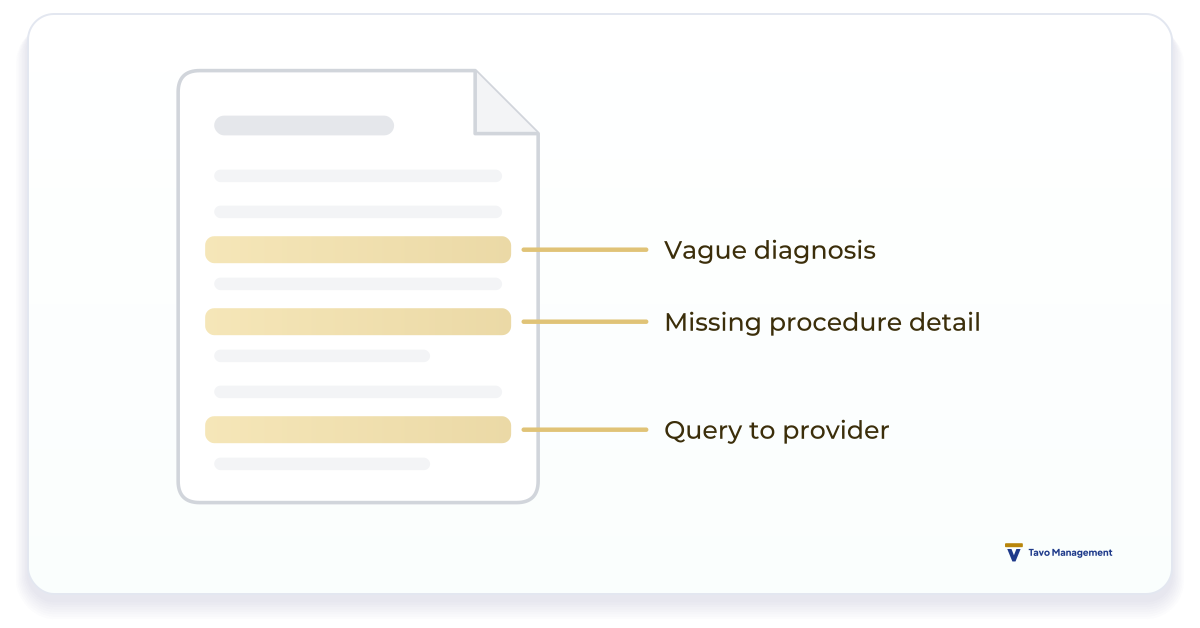
A code must match the documentation, and both must match the payer's policy. Gaps lead to denials, underpayment or audit risk. Coders and providers often work apart, so questions go unanswered and claims are held or sent with weak support.
Give coders a simple way to ask providers questions and give providers feedback in plain language. Short monthly reviews of common gaps do more than a long annual training. A coder who sees the same missing detail ten times should be able to fix it at the source.
How to Fix Coding and Documentation Gaps
- Sample 20 charts per provider each quarter for code and documentation match.
- Share the top three gaps with each provider in plain language.
- Create a query route that coders can use the same day.
- Update templates so required details are prompted.
- Check that code changes follow current payer policy.
Tools for Coding Quality
Encoder and computer-assisted coding tools can flag likely gaps. Treat their suggestions as prompts for a coder to review, not final decisions.
Slow Accounts Receivable Follow-Up
Claims that sit untouched are the ones that expire. When billers work whatever is on screen, old high-value claims are neglected. Aging reports exist, yet few teams use them to set the day's priorities.
Sort follow-up by value and by distance from the payer's deadline, and give each biller a daily target. Escalate claims that run past contract terms. Track the share of receivables over 90 days, because it shows where follow-up fails. My list of revenue cycle management metrics explains how to calculate it.
How to Fix Slow Accounts Receivable Follow-Up
- Export open claims with value, payer and days since submission.
- Mark claims approaching filing or appeal limits.
- Assign the oldest high-value claims first.
- Set a daily follow-up target per biller.
- Review the over-90 share every week.
Tools for Follow-Up
Work queues inside your billing system can do this when set up well. Status automation reduces the time spent checking portals.
Patient Balances and Collections
Deductibles are higher, and patient balances take a bigger share of revenue. Statements that arrive weeks after the visit are easy to ignore, and staff are uncomfortable asking for money. Experian's survey found half of providers are very or extremely concerned about patients' ability to pay.
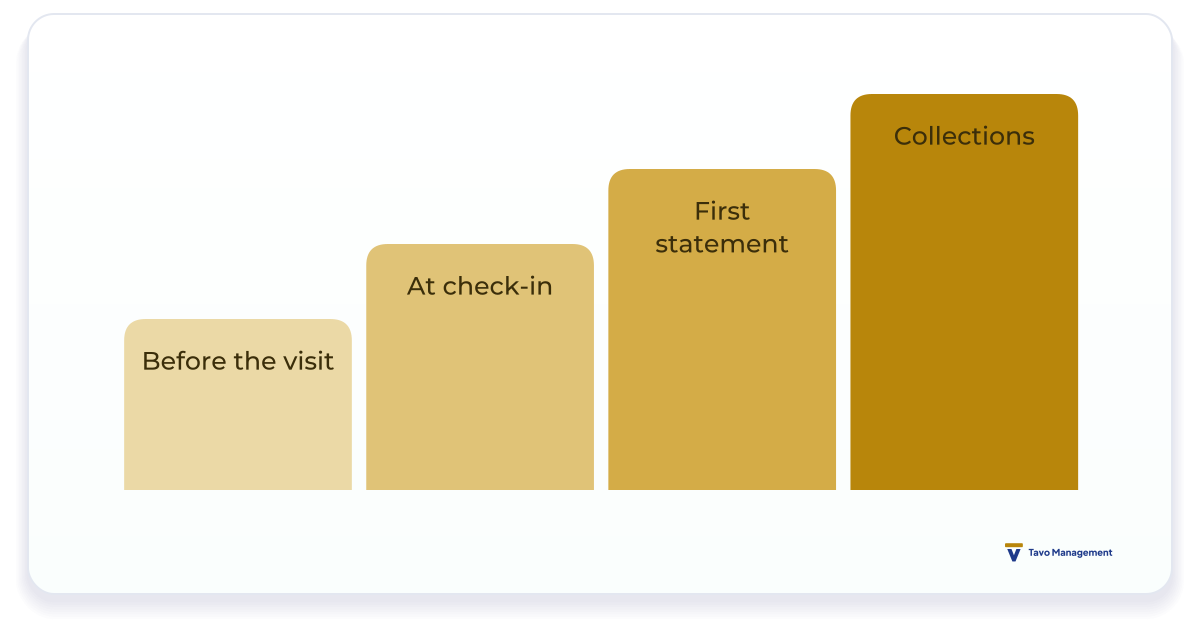
Quote estimates before the visit, collect at check-in and send clear statements with a payment link. Offer a payment plan early, before a balance goes to collections. Give staff a short script so the conversation feels routine and not awkward.
How to Fix Patient Balances and Collections
- Calculate estimates from verified benefits before the visit.
- Send the estimate with a plain-language note.
- Collect at check-in and record the outcome.
- Send text or email statements with a payment link.
- Offer a plan when a balance passes a set amount.
Tools for Patient Payments
Patient payment platforms handle texts, links and plans. Check that they connect to your billing system so payments post automatically.
Staff Turnover and Skill Gaps
Billing and coding jobs are hard to fill and easy to lose. When an experienced biller leaves, knowledge walks out with them, and the remaining team inherits half-finished work and unwritten rules.
Document the workflows that matter, cross-train at least two people on each critical task and keep a simple onboarding plan. If hiring stays hard, consider a partner for part of the work, as I explain in my guide to revenue cycle management outsourcing.
How to Fix Staff Turnover and Skill Gaps
- List the ten tasks only one person knows how to do.
- Write a one-page procedure for each.
- Cross-train a second person on every critical task.
- Create a 30-day onboarding checklist for new hires.
- Review the procedures twice a year.
Tools for Knowledge Capture
A shared wiki and short screen recordings are enough. Fancy systems matter less than keeping the pages current.
Outdated Technology and Too Many Systems
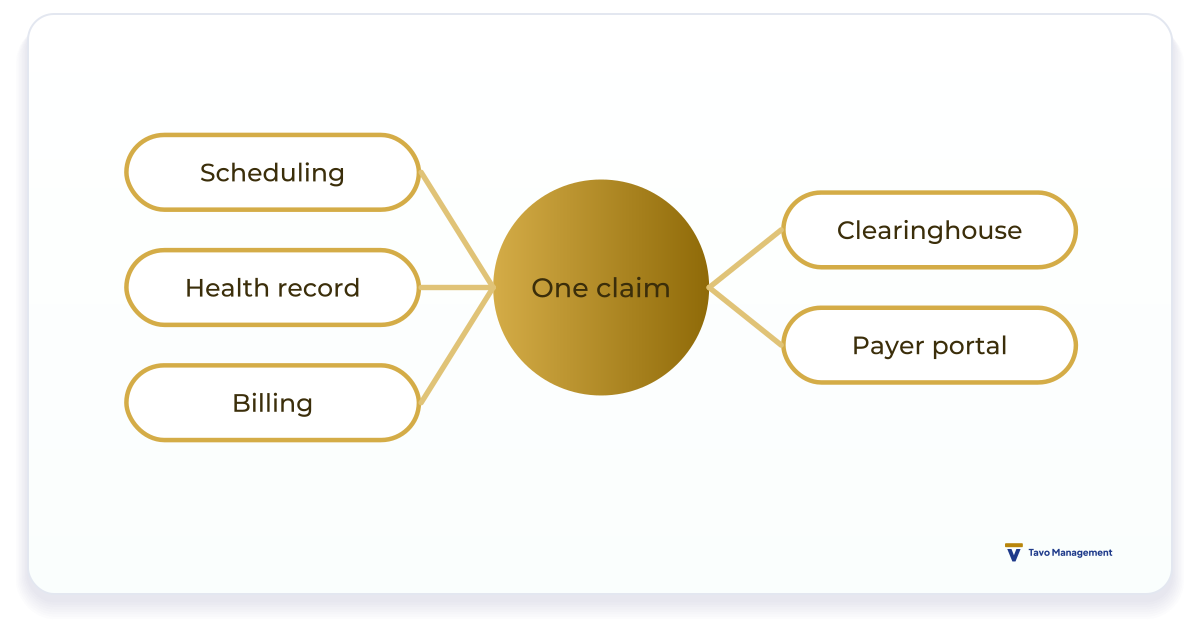
Nearly 80 percent of providers in Experian's survey rely on multiple solutions to collect claim submission data, and only 56 percent say their current technology is sufficient for revenue cycle demands. Stacked tools create gaps where data is retyped and errors creep in.
Before you add anything, map the systems your data passes through. Switch on features you already own and retire tools that duplicate each other. When you do replace something, buy against a written list of needs. My piece on revenue cycle management automation shows what to automate first.
How to Fix Outdated Technology and Too Many Systems
- Draw the path of a claim from scheduling to payment.
- Mark every point where data is retyped.
- Check which features you already pay for but do not use.
- Write a needs list ranked by impact.
- Compare vendors against that list with your own claims.
Tools to Compare
Use a structured comparison, such as the one in my ranking of revenue cycle management software, and ask each vendor to process your own sample.
Payer Rule Changes and Contract Complexity
Payers change policies, edits and forms often, and contracts differ in rates, timelines and rules. A team that learns about a change from a denial is already behind.
Assign one person to track payer updates, log each change with a date and update your claim edits when a change is confirmed. Check each contract for filing and appeal limits and keep them where billers can find them. Compare payments with contract rates to spot underpayments.
How to Fix Payer Rule Changes and Contract Complexity
- Name an owner for payer bulletins.
- Subscribe to the updates for your top payers.
- Keep a change log with dates and actions.
- Store filing and appeal limits per payer in one table.
- Sample payments against contract rates each quarter.
Tools for Payer Tracking
A shared spreadsheet works for a handful of payers. Larger groups use contract management features in their billing platform.
Reporting You Cannot Trust
Numbers that differ between reports are worse than no numbers. A manager quotes one denial rate, finance quotes another and the meeting turns into an argument about definitions. Decisions get delayed, and fixes are never measured.
Write down each metric's definition, choose one data source and test it by calculating a sample by hand. Show a one-page scorecard to everyone, by payer and location. My guide to revenue cycle management best practices includes the monthly review that keeps it alive.
How to Fix Reporting You Cannot Trust
- List the five metrics leadership uses.
- Write one definition for each and get sign-off.
- Recalculate a sample by hand to check the report.
- Fix data issues at the source system.
- Publish a one-page scorecard each month.
Tools for Reporting
Your billing system's reports cover most needs. A spreadsheet or a BI tool can combine sources once definitions are agreed.
Which Challenge to Tackle First
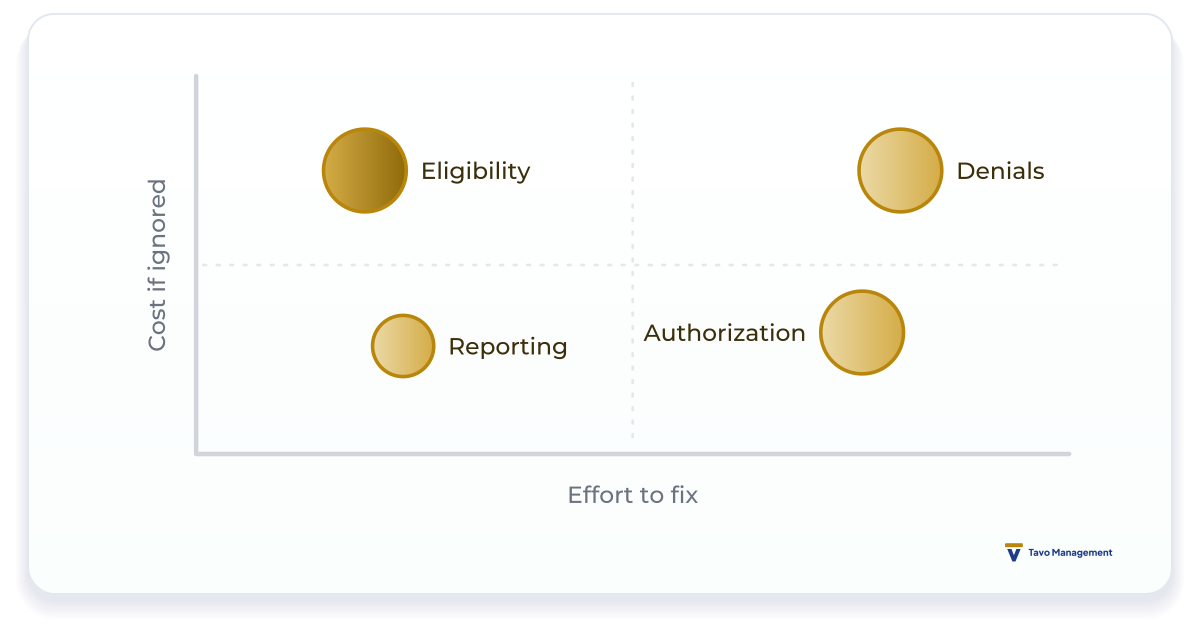
Look at your scorecard and pick the one that costs you the most. If denials drive the loss, start with registration errors and denial causes. If cash is slow with few denials, start with follow-up and patient collections. If numbers do not agree, start with reporting, since you cannot fix what you cannot measure.
Resist doing everything together. Two fixes at a time is enough for most teams, and the result of each is visible in the next month's numbers.
How to Choose Between Fixing It Yourself and Getting Help
You can fix many of these with your own team. Get help when the same challenge keeps returning, when nobody has time to own the fix or when you cannot tell which challenge is costing you the most. A review gives you a ranked list within a few weeks. Other routes are tools, compared in my ranking of revenue cycle management software, or a partner, as described in revenue cycle management outsourcing. To measure progress, use the revenue cycle management metrics I describe and apply the revenue cycle management best practices as your standard.
- You can name the top three causes of your denials.
- Each stage of the cycle has one named owner.
- Your reports agree with your bank deposits.
- Your key procedures are written down and a second person can follow them.
Questions About Revenue Cycle Management Challenges
What Is the Biggest Challenge in Revenue Cycle Management?
Denials are the most visible one. Experian Health's 2025 survey found that 41 percent of providers say more than 10 percent of claims are denied. Underneath, the cause is usually at the front end: wrong or incomplete registration and coverage data. Fix that first, and several other challenges shrink with it.
Why Do So Many Claims Get Denied?
The common causes are inaccurate or incomplete patient data, coverage that is not active, missing prior authorization, coding mismatches and late filing. Experian's survey ranks inaccurate and incomplete data as the leading issue, and intake errors as the third most common cause of denials.
How Do I Handle Staff Turnover in Billing?
Write down your workflows, use checklists and cross-train people so no single person holds all the knowledge. Automate routine tasks so new staff have less to learn, and keep a short onboarding plan. Documentation protects you more than any retention bonus.
Is a Patient Payment Problem a Billing Problem?
Partly. Patients carry larger balances, and clear estimates, payment links and plans make a difference. Experian's survey found half of providers are very or extremely concerned about patients' ability to pay. Process helps, but it cannot fix affordability alone.
When Should I Replace My Billing System?
Replace it when the system cannot produce the reports you need, cannot support the payer rules you work with or forces large manual steps that competitors have automated. Do not replace it to fix a process problem. An audit shows which one you have.
How Do I Prepare for Payer Rule Changes?
Assign one person to track payer bulletins, keep a log of changes with dates and update your claim edits as soon as a change is confirmed. Check each contract for the details, and ask your clearinghouse or vendor how they notify customers.
Where Should a Small Practice Start?
Start with the front end: eligibility checks, a one-page registration checklist and point-of-service collection. Then set up a weekly aging review and track denial causes. Those four habits address most of the challenges on this list at low cost.
Sources
General information only: this is not legal, financial or tax advice. Examples and numbers reflect typical projects; check the specifics with your advisers before deciding.
Did you find this helpful?
Thank you for your feedback.
Delaney Brisco
Delaney leads the Tavo editorial team and works with our consultants to turn real client projects into practical guides on project delivery, process design and organizational change. Before joining Tavo, she spent 12 years in operations and program management roles. She has since edited more than 300 articles on management practice and reviewed PMO setups and process redesigns from over 100 client projects. She is based in Minneapolis, Minnesota.