Summary
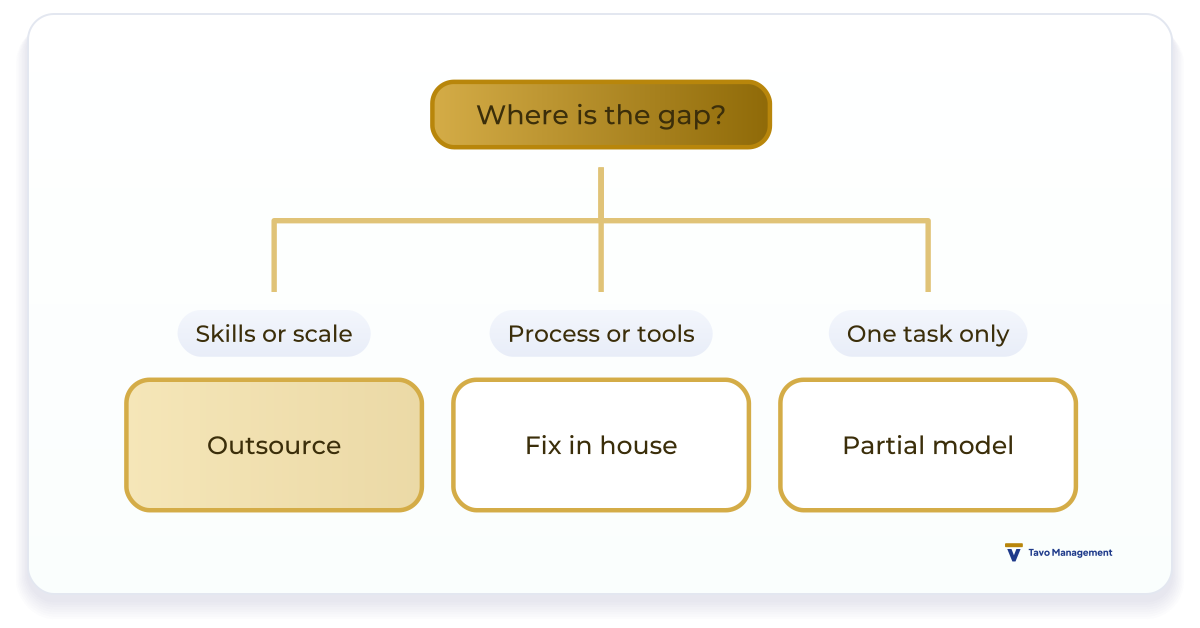
- Outsource when you lack capacity or skills, and keep it in house when your own process is the competitive edge.
- Compare cost to collect, not the headline percentage, because setup and extras change the real price.
- Splitting the work, for example outsourcing denials only, is often safer than handing over everything.
- Keep control through a shared scorecard, a named account lead and ownership of payer contracts.
The call usually comes after a biller leaves. Claims stack up, aging grows and the owner asks whether it would be easier to hand the whole thing to someone else. Sometimes it is. Sometimes outsourcing swaps one set of problems for a more expensive set. Good revenue cycle management consulting helps you tell which case you are in before you sign.
This guide covers when outsourcing makes sense, the four models I see most, how to compare costs fairly, the risks and what the first months look like.
In-House vs Outsourced at a Glance
| Factor | In-house team | Outsourced partner |
|---|---|---|
| Control | Full control of process and priorities | Shared, set by contract and reporting |
| Cost pattern | Salaries, benefits, software and management time | Often a percentage of collections, per claim or per staff member |
| Capacity | Limited by hiring and turnover | Scales with volume, within the contract |
| Expertise | Depends on who you hire and keep | Depth across payers and specialties |
| Patient experience | Same team that knows your patients | Depends on how the partner handles calls |
| Risk | Key person dependency | Vendor lock-in and data access |
When Outsourcing Makes Sense
I suggest you seriously consider an outside partner when two or more of these are true:
- You cannot hire or keep billers and coders at the pay you can afford.
- Your accounts receivable keeps aging while your team works the newest claims.
- Volume swings with seasons or new locations, and fixed staff either sit idle or drown.
- You have a specialty with complex coding that you cannot cover in house.
- Leadership wants to focus on patients and growth and has no appetite for billing management.
The reasons that should not push you to outsource are vague ones. If you are frustrated and have not looked at your own numbers, a partner will inherit the same unclear process and charge you for it.
When an In-House Team Is the Better Choice
Keep the work in house when your process is stable, your numbers are healthy and your staff are engaged. Small practices with low claim volume often get better results from one capable biller than from a vendor that treats them as a small account. Practices with unusual patient populations, such as concierge or cash-pay models, also tend to need close contact between billing and clinical teams.
Four Ways to Split the Work
Outsourcing is not all or nothing. These are the splits I see most often.
| Model | What the partner does | What you keep | Good fit |
|---|---|---|---|
| Full outsourcing | Registration support, coding, billing, denials, follow-up and often patient statements | Payer contracts and oversight | Groups that want to exit billing management |
| Back-end billing and follow-up | Claims, posting, denials and accounts receivable | Registration, charge capture and patient calls | Practices with a strong front desk and a thin billing team |
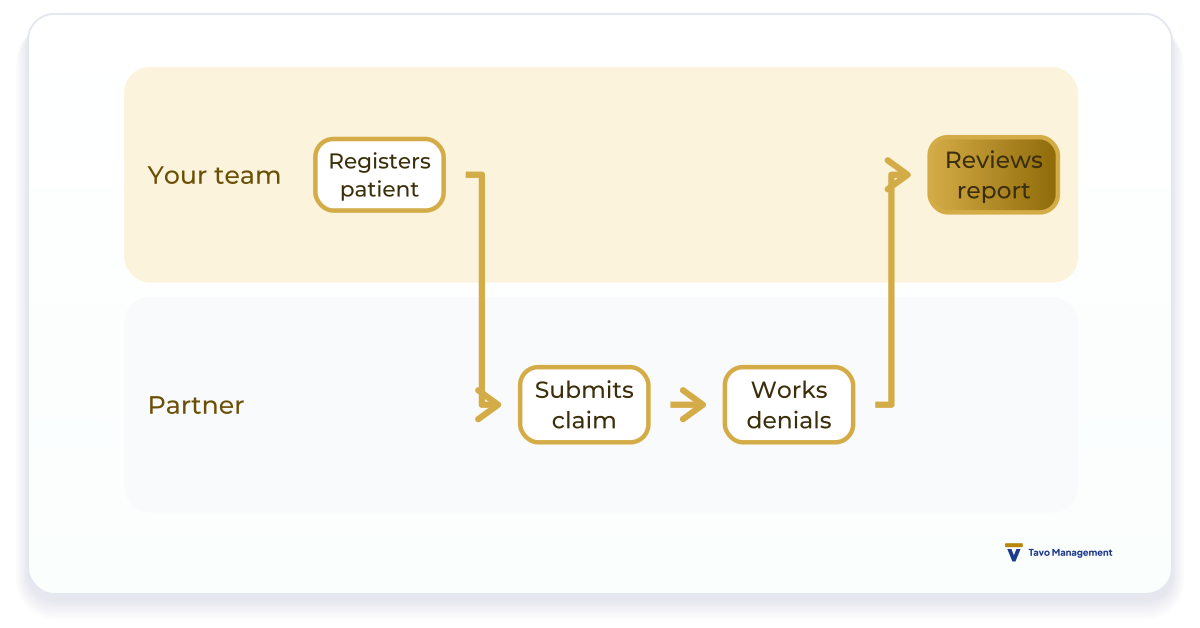
| Denials and old receivables only | Appeals and cleanup of aged claims | Daily billing | Teams with a backlog and a stable day-to-day process |
| Coding only | Chart review and code assignment | Everything else | Specialty practices with coder shortages |
Starting with the narrowest model that fixes your problem lowers your risk. You can always widen it once the partner has earned trust.
The Risks and How to Reduce Them
Loss of Visibility
When someone else does the work, you can lose sight of why numbers move. Require monthly reporting in your own metric definitions, and compare it with what you see in your bank deposits. My guide to revenue cycle management metrics lists the numbers worth requiring.
Lock-In to One Vendor
Some contracts tie your data, your payer enrollments and your software to the vendor. Ask what you own, how data is returned and what notice and exit terms apply before you sign, and keep ownership of payer contracts and credentialing yourself.
Patient Experience and Privacy
Patients call about balances, and the way those calls go reflects on you. Ask to hear sample calls. Privacy needs a business associate agreement, a clear answer on where staff are located and access limits for everyone who touches your data.
What the First Months Look Like
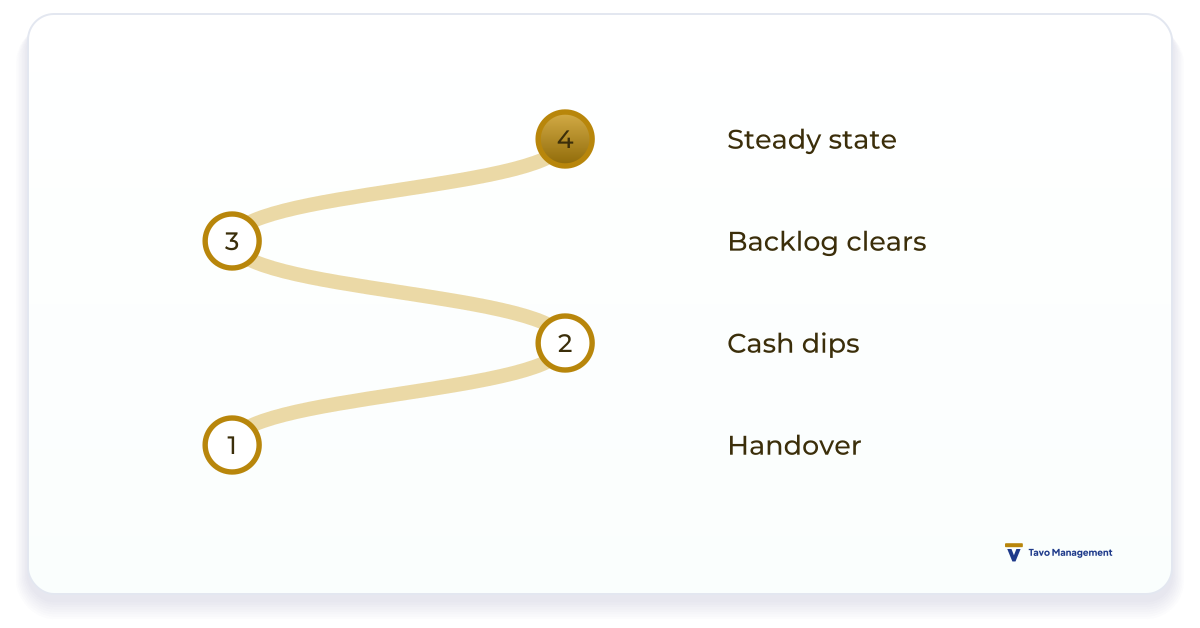
| Phase | Typical length | What happens | Your check |
|---|---|---|---|
| Setup | 2 to 4 weeks | Contract, access, payer enrollment and system connections | Confirm the data-access and BAA terms |
| Parallel run | 4 to 8 weeks | Partner and your team work the same claims | Compare clean claim rate and posting accuracy |
| Cutover | 1 to 2 weeks | Partner becomes the owner of the agreed work | Watch daily claim volume and cash deposits |
| Stabilize | Next quarter | Rules tuned, first scorecard reviewed | Compare cost to collect with your baseline |
Expect a dip in cash flow during the first one or two months, because claims in transition can slip. Plan for it, and make sure someone owns the old receivables from day one. The most common surprise I see is a mismatch in how the two sides define a clean claim.
How to Compare the Real Costs
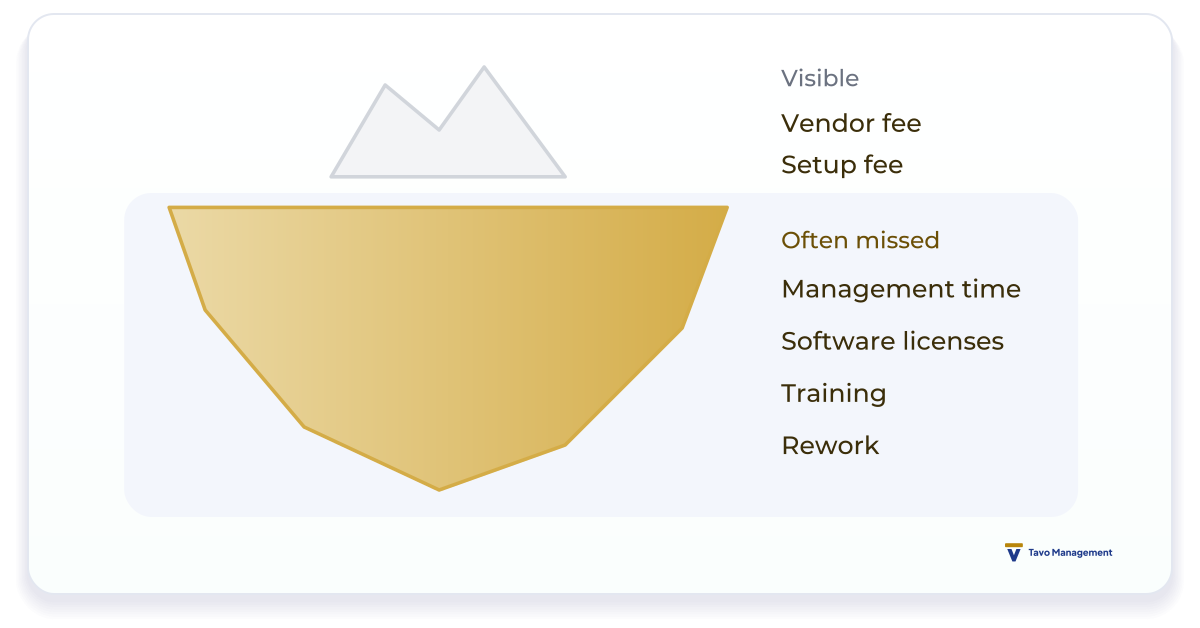
A headline percentage is not a price. Convert every offer, including your own team, into cost to collect: total annual cost divided by total cash collected.
- Add salaries, benefits, software, clearinghouse fees and management time for your in-house option.
- Add setup fees, software fees, statement fees and any charge for old receivables for the vendor.
- Ask the vendor to project collections on a sample of your own claims, not on their average client.
- Compare at your current volume and at a higher volume, because the answer often changes.
Also account for what you gain. If a partner brings collections up by a few points, that can outweigh the fee. If it does not, you are paying for capacity you could have created with automation. My article on revenue cycle management automation shows how much of the work software can already take over.
What to Put in the Contract
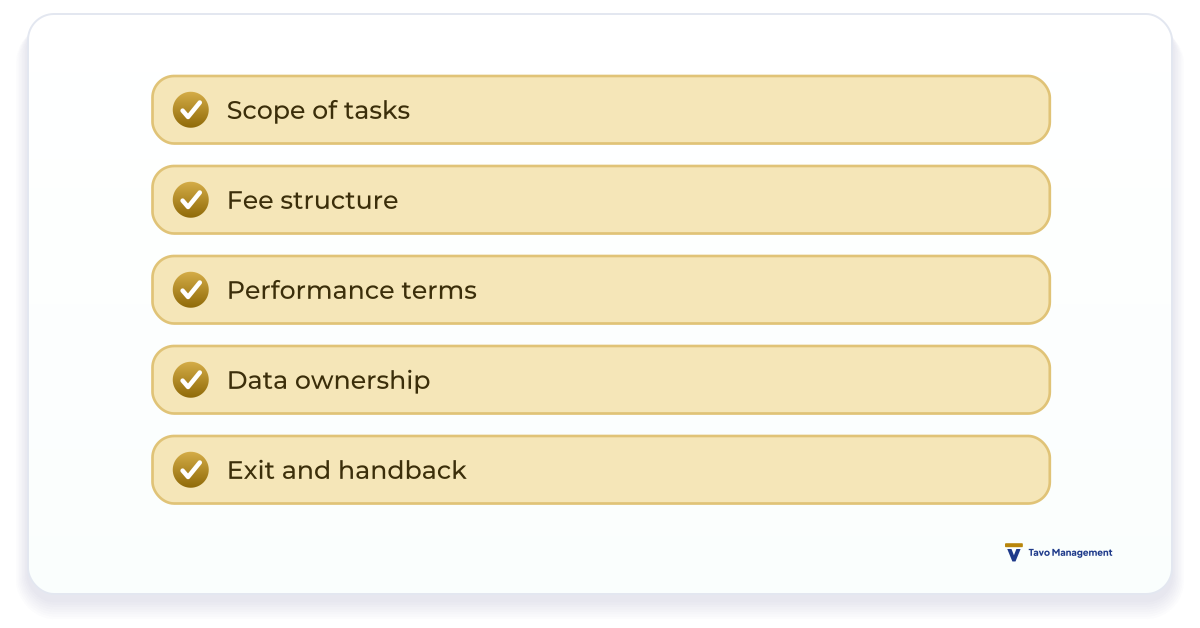
The contract decides how the relationship behaves when something goes wrong, so read it before the sales promises. I look for five things, and I would ask a lawyer to review the final text.
First, scope. List exactly which tasks the partner does, which payers and locations are covered and who handles old receivables. Vague scope is where most disputes begin. Second, reporting. Name the metrics, the definitions, the delivery date each month and the meeting where results are reviewed.
Third, performance terms. Some contracts include targets, such as a minimum clean claim rate or a maximum days in accounts receivable, with a remedy when they are missed. Targets only work if both sides agree how each number is measured, so link them to the written definitions.
Fourth, data and access. Confirm that you keep ownership of your patient and billing data, that you keep admin access to your systems and that the partner must return data in a usable format at the end. Fifth, exit. Check the notice period, any minimum term, fees for leaving early and what support you get during the handover. A good partner is comfortable with a fair exit clause, because they expect to keep your business through results.
Managing a Partner After the Contract Is Signed
Outsourcing does not remove management, it changes it. Name someone on your side who owns the relationship, even if it is only a few hours a week. That person reviews the monthly scorecard, spot-checks a sample of claims and raises problems in writing.
Hold a monthly review with the partner's account lead, and use the same agenda each time: the five core numbers, the top denial causes, aging over 90 days and any payer changes. Ask what the partner will do about each cause, not only what happened. Once a quarter, compare the partner's report with your bank deposits and a small sample of accounts you check yourself.
Keep your own front end strong. A partner cannot fix a claim that arrives with the wrong subscriber ID, so registration and eligibility remain your job in most models. Share denial feedback with your front desk, and give the partner clear contacts for clinical questions, because slow answers from your providers delay claims as much as slow work by the vendor.
How to Choose a Partner and What to Ask
Shortlist three vendors and ask each to work on a sample of your claims. Look beyond the sales deck and compare the following:
- References from practices of your size and specialty, and permission to call them.
- A named account lead and the real staff ratio for your account.
- Reporting in your definitions, with denial causes by payer.
- A business associate agreement, a clear data location answer and subcontractor rules.
- Exit terms, notice periods and what happens to your data when you leave.
If you would rather keep the work and give your team better tools, compare options in my ranking of revenue cycle management software. Strengthen your own process first with the revenue cycle management best practices, so a partner has something solid to build on. And expect the usual revenue cycle management challenges, including data handoffs and payer rule changes.
Questions About Outsourcing Revenue Cycle Management
What Does Revenue Cycle Management Outsourcing Include?
It can cover the whole cycle or parts of it: eligibility and authorization, coding, claim submission, payment posting, denial work, accounts receivable follow-up and patient billing. Many practices outsource only the back end, such as billing and follow-up, and keep registration and patient conversations in house.
How Much Does Outsourced Revenue Cycle Management Cost?
Pricing models vary. A percentage of collections is common, per-claim and per-staff-member models exist and some vendors bundle software with services. One 2026 Pabau comparison reports AdvancedMD billing services at 4 to 8 percent of collections. Always compare on total cost to collect, including any setup, software or extra fees.
Is It Safe to Outsource Billing with Patient Data?
It can be, if the partner signs a business associate agreement, limits access to the minimum needed, logs activity and tells you where data is stored and who can see it. Ask about offshore access, subcontractors and how data is returned or deleted if you leave.
What Should I Ask a Billing Partner Before Signing?
Ask for references in your specialty, the staff ratio on your account, how denials are reported, who owns payer rule updates, what the contract says about notice and exit, and how they treat accounts that are already in accounts receivable when you start.
Will I Lose Control of My Revenue Cycle?
Only if you do not set up reporting and reviews first. Require a monthly scorecard with the same definitions you use internally, hold a regular review with a named account lead and keep ownership of payer contracts and credentialing. Control comes from visibility.
How Long Does It Take to Transition to an Outsourced Partner?
Plan for a couple of months. Access, payer enrollment, system setup, data transfer and a period of parallel work all take time, and old accounts receivable need a clear owner. A phased start, with one location or one payer first, reduces risk.
Can I Outsource Part of the Work Only?
Yes, and it is often the smartest start. Common splits are outsourcing denial work and old receivables, or outsourcing coding, while keeping registration and patient billing in house. A consultant can help you choose a split that fits your volume.
Sources
General information only: this is not legal, financial or tax advice. Examples and numbers reflect typical projects; check the specifics with your advisers before deciding.
Did you find this helpful?
Thank you for your feedback.
Delaney Brisco
Delaney leads the Tavo editorial team and works with our consultants to turn real client projects into practical guides on project delivery, process design and organizational change. Before joining Tavo, she spent 12 years in operations and program management roles. She has since edited more than 300 articles on management practice and reviewed PMO setups and process redesigns from over 100 client projects. She is based in Minneapolis, Minnesota.