Summary
- A framework gives your data work a lasting structure: areas, roles, rules, measures and a change process.
- DAMA-DMBOK lists 11 knowledge areas, but most mid-sized companies can staff about five.
- Roles need calendar time: owners a few hours a month, stewards a few hours a week.
- Decide tools last, after purpose, scope, roles and standards are written down.
A data management framework is the structure that holds your data work together: the areas you cover, the roles that run them and the rules that connect them. Without one, teams solve the same problem in different ways and nothing adds up. With one, a new data set or a new system slots into a place that already exists.
This guide explains what a framework contains, compares the common models and gives you a blueprint you can adapt. If you want a partner to tailor it to your business, data management consulting is built for that.
What a Data Management Framework Contains
Every working framework answers five questions. What areas of data work do we cover? Who decides in each area? Which rules apply? How do we measure it? What happens when something breaks? The answers can fit on a few pages, and the shape matters more than the length.
It helps to separate the framework from the strategy. The data management strategy says what you want and why. The framework gives the structure that delivers it, and it stays stable while the strategy changes year to year.
The Core Areas Most Frameworks Share
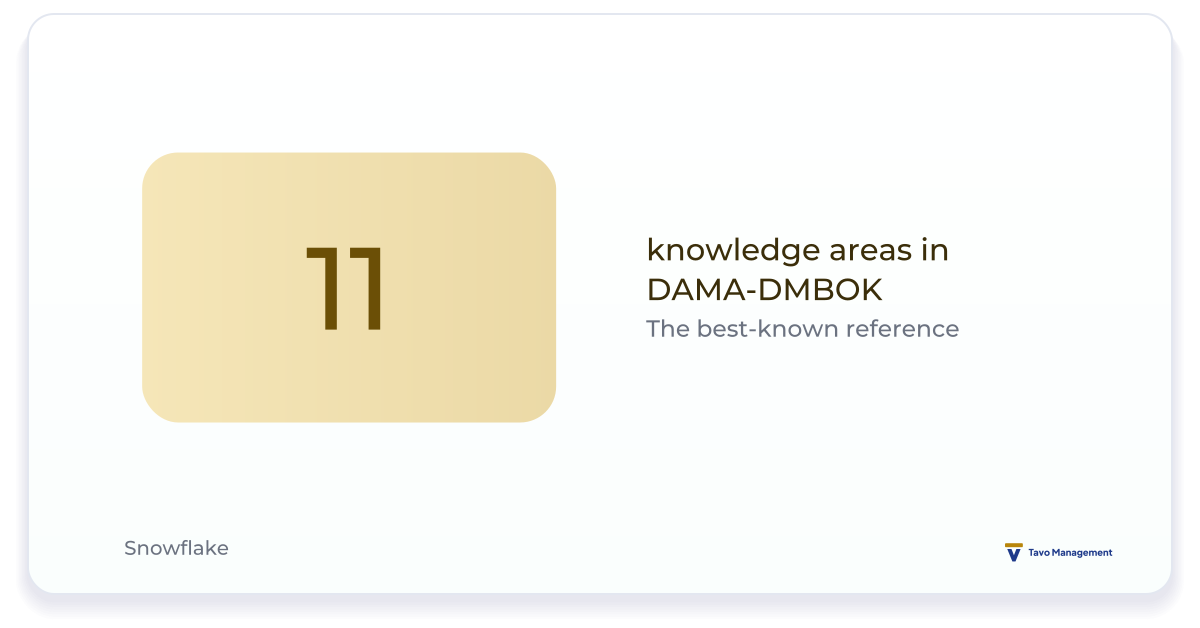
The best-known reference is the DAMA-DMBOK, which describes 11 knowledge areas: data governance, data architecture, data modeling and design, data storage and operations, data security, data integration and interoperability, document and content management, reference and master data, data warehousing and business intelligence, metadata and data quality, as listed in Snowflake’s overview of DAMA-DMBOK. A newer edition is in development, so check DAMA’s site for the current version.
Eleven areas is too many for a company without a data office. In my work, I group them into five that a business can actually staff: governance, quality, master and reference data, integration and security with retention. Architecture, modeling and warehousing belong to IT and are drawn in when a project needs them.
Choosing Between Common Models
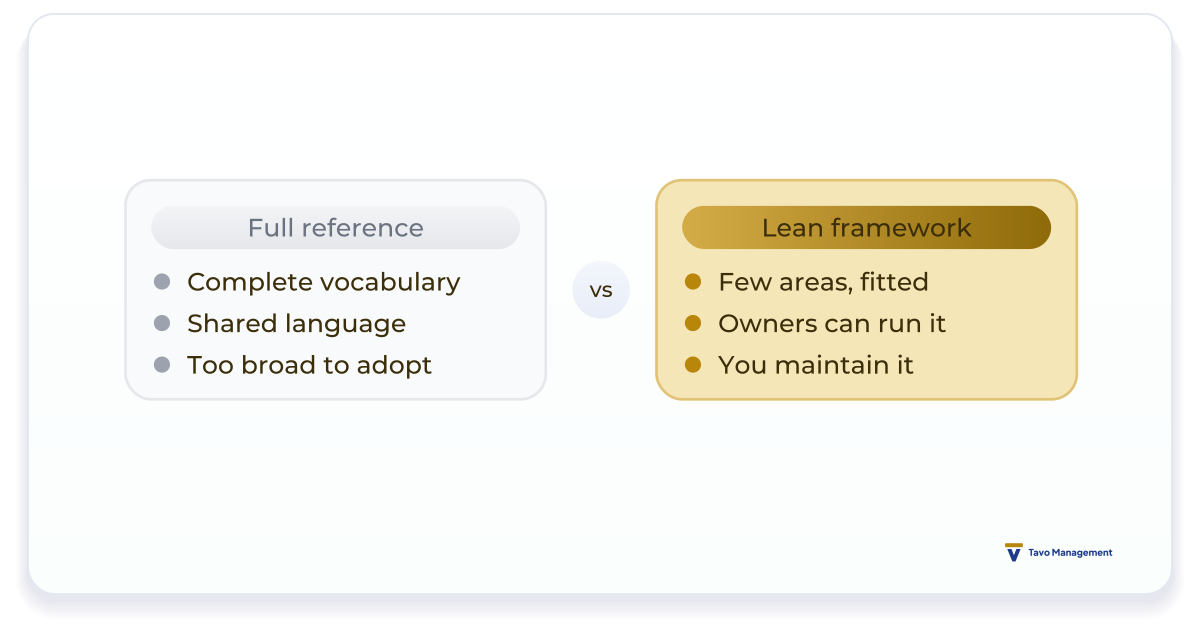
You do not have to pick one model and follow it to the letter. Most companies borrow from a standard and write a leaner version of their own. The table compares the options I meet most often.
| Model | Strength | Limit | Fits |
|---|---|---|---|
| DAMA-DMBOK | Complete vocabulary of 11 knowledge areas | Too broad to adopt whole | Teams that need a shared language |
| DCAM (EDM Council) | Capability scoring and maturity assessment | Heavy for small organizations | Financial firms and regulated groups |
| Lean in-house framework | Five areas, fitted to your business | You must maintain it yourself | Most mid-sized companies |
| Tool-led structure | Comes with the platform | Mirrors the vendor’s view, not your needs | Teams already committed to one platform |
Roles That Make the Framework Run
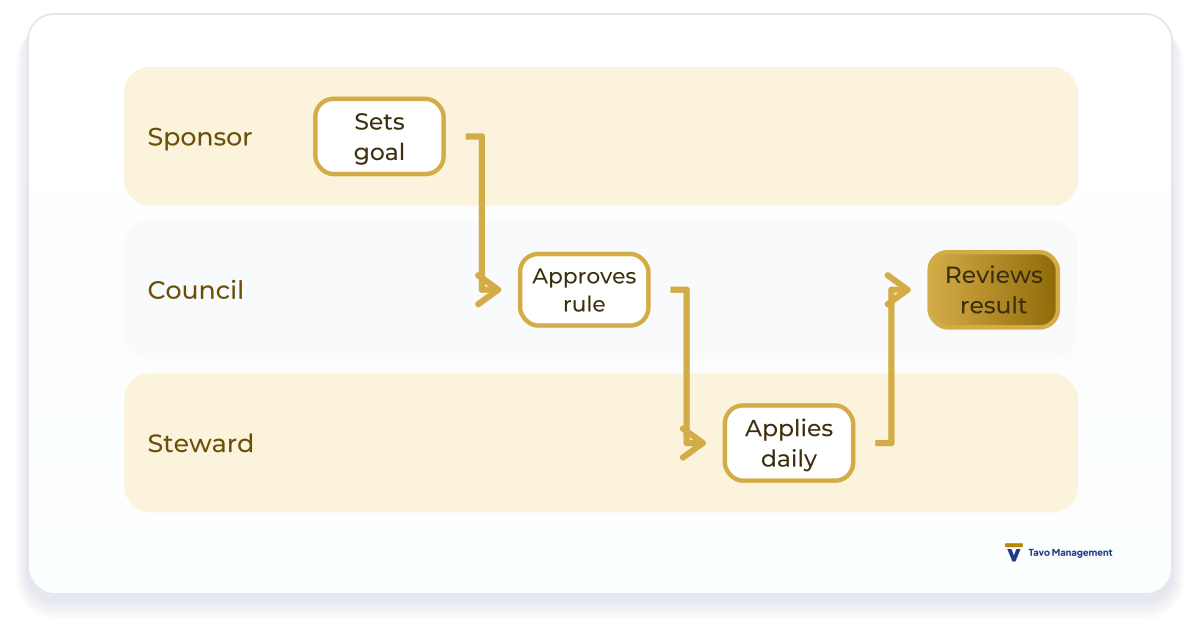
A framework without roles is a poster. Four roles are enough to start. A sponsor at leadership level who removes blockers. A data council of department owners who meet monthly and settle cross-team questions. Data owners, one per data set, who decide meaning and quality. Stewards, who do the daily work.
Keep the council small, five to seven people, and give it real authority over definitions and priorities. If every decision goes back to a steering committee that meets quarterly, your framework will always be a quarter behind your problems.
Rules and Standards to Write Down
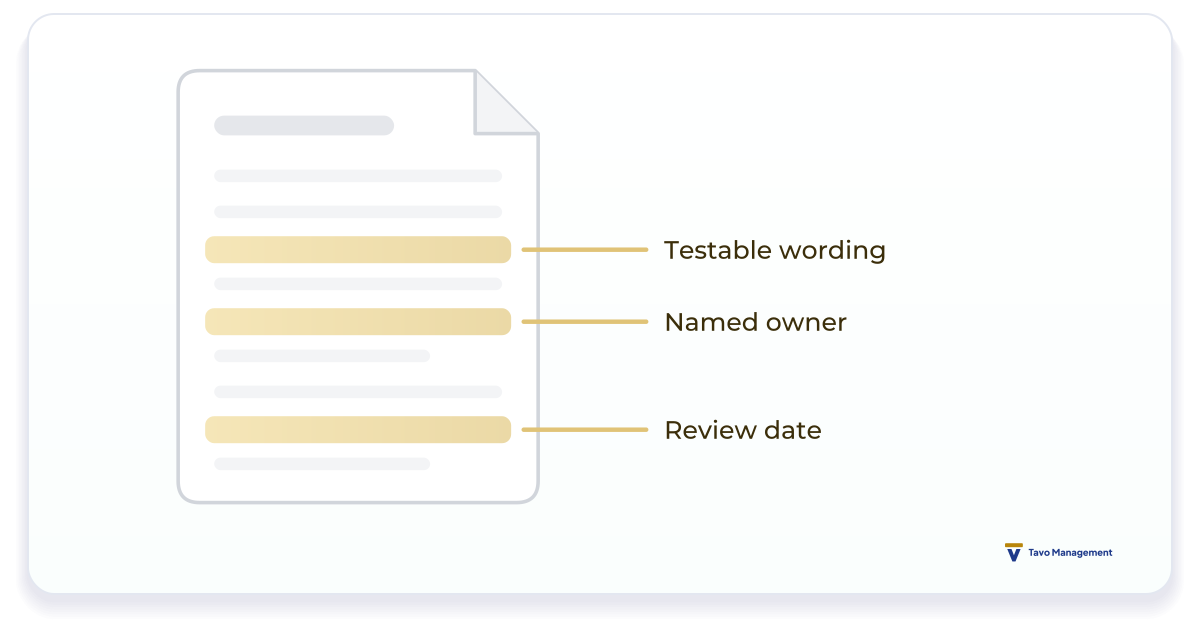
Frameworks need a small rulebook. Start with naming and formatting standards, a data quality standard with thresholds, an access standard that links roles to data classes, a retention table and a change process. Each rule gets an owner and a review date.
Write rules as tests that someone can check. “Customer emails must be valid” is vague. “98% of active customers have a syntactically valid email, measured monthly” can be tested, reported and fixed. The same rules feed your data management best practices, so keep the two documents consistent.
A Blueprint You Can Adapt
This is the structure I hand to clients as a starting point, trimmed to the pieces most mid-sized businesses need. Fill in the right-hand column in your own words and the framework is drafted.
| Layer | What goes in it | Your version |
|---|---|---|
| Purpose | Three to five decisions the framework must improve | Write them here |
| Scope | Data sets in and out, such as customers, products, suppliers, projects | List them |
| Roles | Sponsor, council, owners, stewards, with named people | Add names |
| Standards | Definitions, quality thresholds, access classes, retention | Attach the rulebook |
| Processes | Change requests, issue handling, onboarding of new data | Draw each on one page |
| Measures | Error rate, duplicates, time to report, share of data sets with owners | Set baselines |
| Tools | Only the systems that enforce the rules above | Decide last |
Notice that tools are last. If you are ready to compare options, my ranking of data management software shows which tools suit which layer.
How the Framework Changes by Industry
The structure stays the same, while the emphasis shifts. In healthcare, access control and retention take priority, because patient records are sensitive and subject to strict rules that your advisor must confirm. In financial services, definitions and lineage matter most, since reports must be explained to auditors. In retail and hospitality, master data for products, prices and guests drives daily accuracy.
In manufacturing, the item and supplier masters come first, because wrong part data stops lines and inflates stock. In project-based businesses, the focus is status definitions and one source for budgets and timelines. Decide your top two areas before you write the standards, and write the other three more lightly.
Mistakes That Make Frameworks Fail
I see the same five mistakes repeatedly. The document is written by IT alone and the business never reads it. It copies a standard in full and drowns in areas nobody can staff. Roles are named without time to do them. Rules are written but never measured. And the framework is treated as finished instead of reviewed every year.
Avoid them by drafting with the owners in the room, keeping five areas at first, putting hours in job objectives, attaching a metric to each rule and booking an annual review before you publish the first version.
One more point on scope. A framework should describe how decisions get made, not list every field in every system. If your draft contains field-level detail, move it to a data dictionary and keep the framework itself readable in one sitting. That separation lets the framework stay stable while the dictionary changes weekly as systems evolve.
Checklist: Is Your Framework Ready to Use?
- Every critical data set has a named owner and a steward
- Five to ten shared terms are defined in one place
- Quality thresholds exist for the three data sets that matter most
- One system of record is named for each of them
- A change process exists and takes less than a week for routine requests
- A monthly report goes to the council and shows the trend
If you can tick four of six, you are ready to run. Tick the rest during the first quarter and not before, because waiting for a perfect framework is the most common way to never start.
What the First Quarter Looks Like
In month one, you draft the blueprint with the owners and agree the five areas in scope. In month two, you write the definitions and quality thresholds for the three data sets that matter most and name the systems of record. In month three, you run the first monthly council, publish the first quality report and fix the top three issues it shows.
By the end of the quarter, you should have a framework of a few pages, a rulebook of one or two pages per data set, and a baseline report. That is enough to start expanding. If it feels thin, it is probably right: the framework should grow with use, and every addition should answer a real problem someone has met.
Keep one record of decisions with the date, the reason and the owner who made them. Six months later, when someone asks why the framework defines a term a certain way or why one system became the master, the answer should be a short note rather than a debate from memory. This habit also makes it much easier to onboard new owners and to explain your setup to auditors or to a new leadership team.
Making the Framework Scale
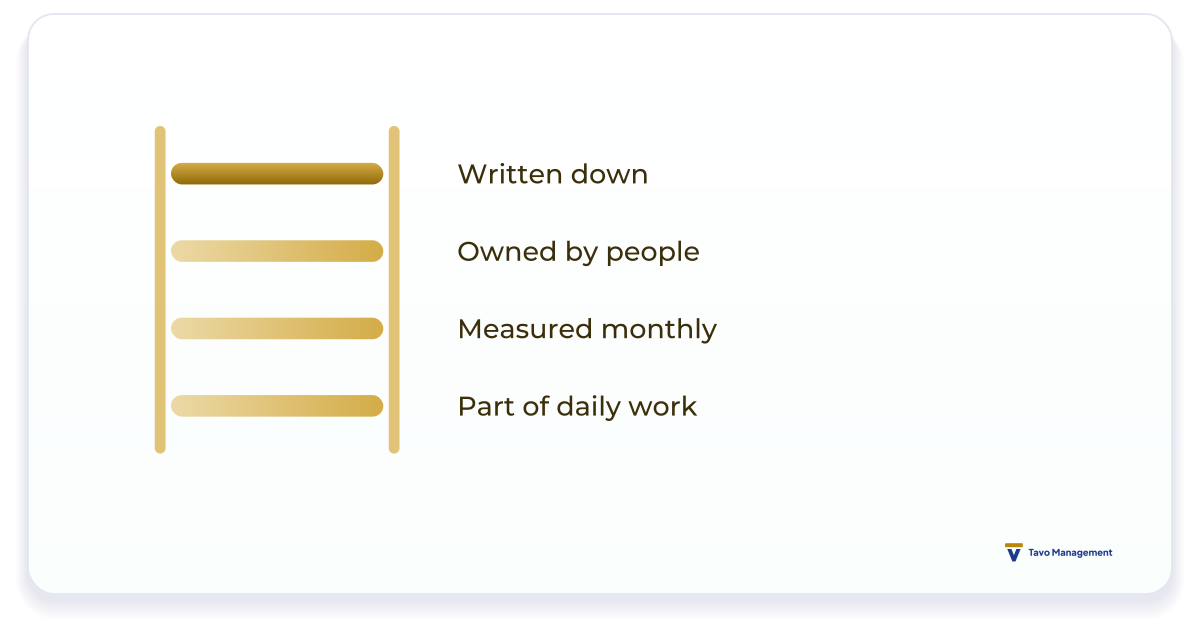
A framework that scales adds data sets without adding bureaucracy. The trick is a standard onboarding template: for each new data set, ask for the owner, the steward, the system of record, the quality checks and the retention class. If a team can fill it in within a day, the framework will grow with the business. If it takes three weeks, people will skip it.
Review the framework once a year and prune. Rules that nobody checks, roles that nobody fills and reports that nobody opens should go. When you plan the sequence of work, the data management roadmap shows how to phase it, and these data management examples show how other organizations applied the same structure.
How to Choose Your Starting Model
Use DMBOK as vocabulary, DCAM if you are in a regulated sector and need maturity scores, and the lean blueprint for everything else. If you already have a platform, check that its structure matches yours rather than adopting the vendor’s version blindly.
Sources
The list of 11 knowledge areas comes from Snowflake’s overview of DAMA-DMBOK. Check DAMA International’s own site for the current edition. The blueprint and role sizes reflect my own client experience.
Questions About Building a Data Management Framework
What Is a Data Management Framework?
It is the structure that organizes your data work: the areas you cover, the roles that run them, the rules that apply and the measures that show progress. It gives every new data set or system a place to fit, so teams stop solving the same problem in different ways.
What Are the Main Components of a Data Management Framework?
Purpose, scope, roles, standards, processes, measures and tools. Most frameworks also describe areas such as governance, quality, master data, integration and security. The best ones are short enough that a new manager can read them in one sitting.
Should I Use DAMA-DMBOK?
Use it as a shared vocabulary and checklist, not as a template to adopt in full. It describes 11 knowledge areas, which is more than most mid-sized companies can staff. Pick the areas that match your problems and write a leaner version of your own.
How Is a Framework Different from a Strategy?
The strategy states goals and priorities for a period. The framework is the structure that stays in place to deliver them: roles, rules, processes and measures. You revise the strategy often and the framework rarely.
How Long Does It Take to Build a Framework?
For a mid-sized business I plan four to eight weeks to draft and agree it, using workshops with owners. The first version should be good enough to run. You improve it with real use during the first two quarters.
Who Should Be on the Data Council?
Five to seven people: a sponsor, the owners of your most critical data sets and a data lead from IT. Include someone from finance and one from operations or sales. The council needs authority over definitions and priorities, or it becomes a talking group.
Do I Need Software to Run a Framework?
Not to start. Documents, a shared register and settings in your existing systems are enough for the first year. Software helps when you need to automate checks, track lineage or manage a catalog across many systems.
General information only: this is not legal, financial or tax advice. Examples and numbers reflect typical projects; check the specifics with your advisers before deciding.
Did you find this helpful?
Thank you for your feedback.
Delaney Brisco
Delaney leads the Tavo editorial team and works with our consultants to turn real client projects into practical guides on project delivery, process design and organizational change. Before joining Tavo, she spent 12 years in operations and program management roles. She has since edited more than 300 articles on management practice and reviewed PMO setups and process redesigns from over 100 client projects. She is based in Minneapolis, Minnesota.