Summary
- Run the roadmap in five phases over about twelve months, each with one deliverable and one gate.
- Measure a baseline in the first four weeks, because it is the number leaders quote later.
- Phases 2 and 4 slip most often, usually because nobody made a decision, not because of technology.
- Buy software after the pilot, when you know which rules you want to automate.
A data management roadmap turns a good intention into a calendar. It says what happens in which order, who does it and what you should see at the end of each phase. The version below runs about 12 months for a mid-sized company and is built so that every phase pays for the next.
You can run it alone, or with data management consulting support for the workshops and the setup. Either way, copy the structure and replace my examples with your own data sets.
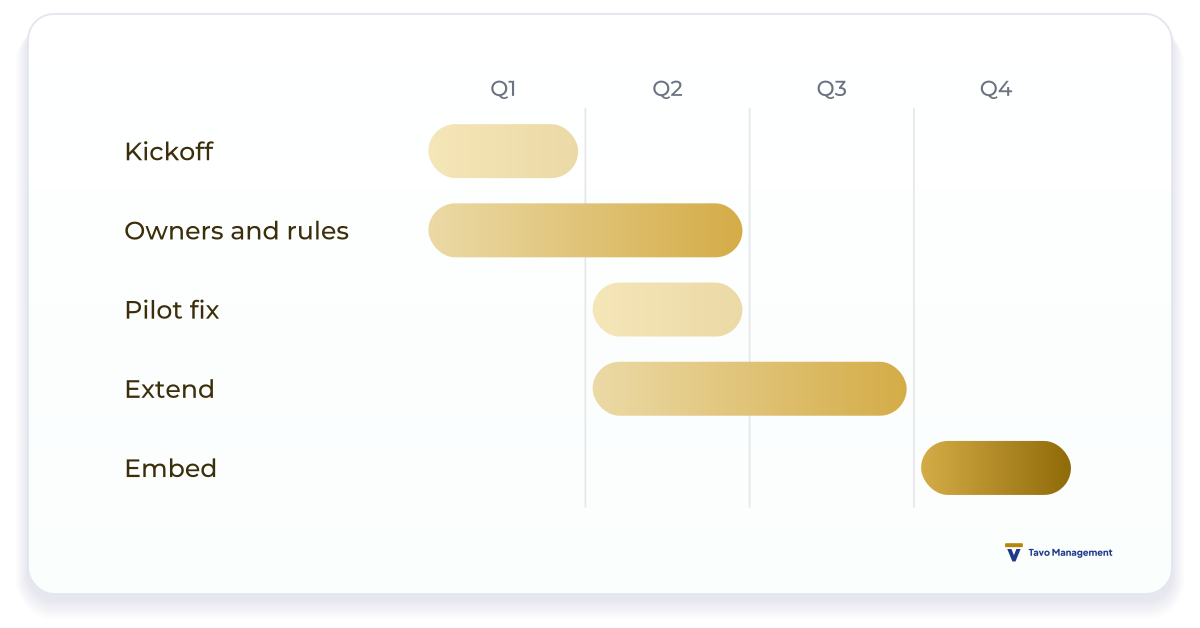
The Roadmap in One Table
Five phases, each with a clear deliverable and a gate. The timing is a planning range from my projects. Companies with many systems or strong disagreement between departments take longer, and small teams can compress it.
| Phase | Timing | Main deliverable | Sign-off gate |
|---|---|---|---|
| 1. Kickoff and baseline | Weeks 1 to 4 | Decisions list, data inventory, baseline numbers | Sponsor signs off the scope |
| 2. Owners and rules | Weeks 5 to 10 | Named owners, definitions, quality thresholds | Owners accept their roles |
| 3. Pilot fix | Weeks 11 to 22 | One data set cleaned, checks live at entry | Target error rate reached |
| 4. Extend | Months 6 to 9 | Three to five more data sets, system of record named | Monthly report is trusted |
| 5. Embed and review | Months 10 to 12 | Routines, training, tooling decision | Program runs without outside help |
Phase 1: Kickoff and Baseline (Weeks 1 to 4)
Hold a kickoff with your sponsor and the heads of finance, operations and sales. Ask which decisions suffer from bad data and what that costs. Then build a plain inventory of data sets, systems and current owners. If you need the thinking behind this, the data management strategy guide covers it step by step.
End the phase with baseline numbers: duplicate rate, error counts, hours of rework and days to produce the monthly report. Do not skip this. In every project I have run, the baseline was the thing leaders quoted six months later.
Phase 2: Owners and Rules (Weeks 5 to 10)
Name one owner and one steward for each of the three to five data sets in scope. Run short workshops to agree definitions, such as what counts as an active customer, and write quality thresholds. Use the roles and structure in the data management framework as your template.
Expect friction here, and plan for it. Two departments will disagree over a term, and the sponsor must settle it within a week. Phases slip most often at this point, and the cause is usually a decision that nobody wanted to make.
Phase 3: Pilot Fix (Weeks 11 to 22)
Choose the data set with the most visible pain and fix it end to end. Clean the existing records, add entry checks, name the system of record and publish the quality number weekly. A pilot of about 12 weeks is long enough to show a trend and short enough to keep attention.
Build the habits from the list of data management best practices during the pilot: required fields, duplicate warnings and a monthly review. Then tell the story. A one-page summary with the before and after numbers gives you the support for phase 4.
Phase 4: Extend to More Data Sets (Months 6 to 9)
Repeat the pilot routine for the next three to five data sets. Use a template: owner, steward, system of record, three or four checks and retention class. Each repeat is faster than the last, because the definitions and meeting rhythm already exist.
This is the phase where tools start to matter. When checks and catalogs outgrow spreadsheets, compare platforms with a short list. My ranking of data management software helps you build that list, and the data management examples show what mature setups look like in different sectors.
Phase 5: Embed and Review (Months 10 to 12)
Turn the program into routine. Train new owners, put the monthly data review into calendars and add data onboarding to the standard project checklist. Then decide on tooling with real needs in hand, not with a vendor demo as your starting point.
Finish with a review against the baseline from phase 1. Report the change in error rates, hours saved and report time, and set targets for the next year. A program that cannot show those numbers will be cut at the next budget round.
What Slows a Roadmap Down
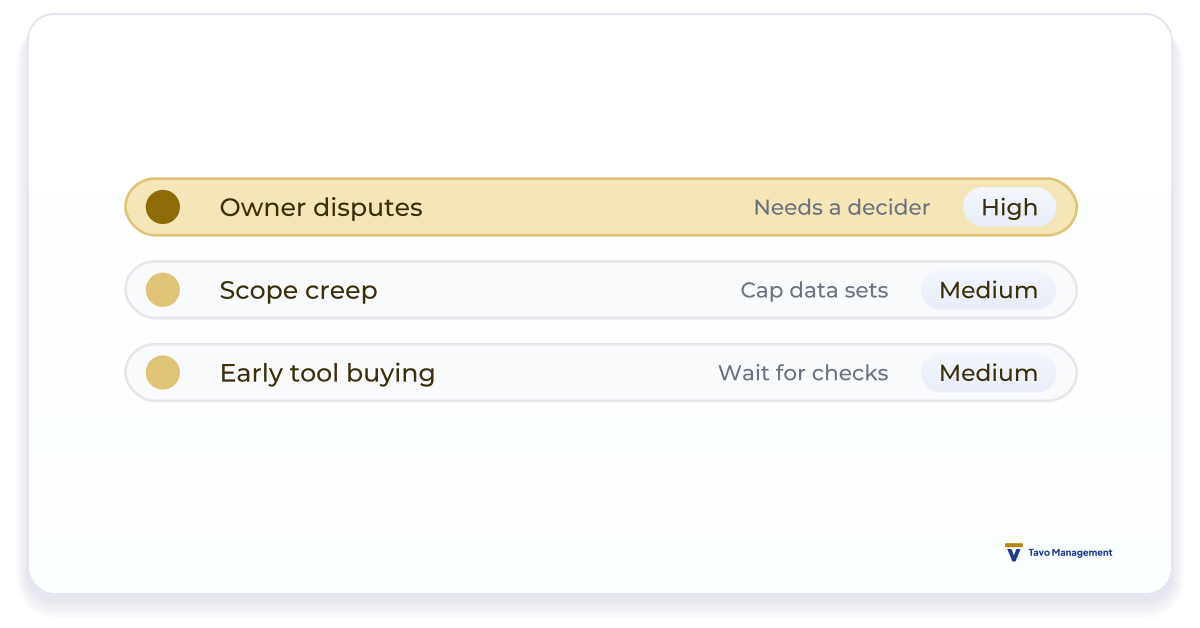
Three things cause most delays. The first is no sponsor with authority, so decisions drift. The second is scope creep: a pilot that grows from one data set to six. The third is treating the roadmap as an IT project, so business owners never accept their roles. Guard against all three with a monthly sponsor check-in and a written scope.
Allow buffer. In my experience, phases 2 and 4 run late by two to four weeks about half the time, mostly because of scheduling and disagreements, rarely because of technology.
What the Roadmap Costs and Where It Pays Back
The main cost is people’s time, followed by outside help and tools. In the first six months, software is often zero, because the work relies on settings in systems you already own. The payback shows up in hours: fewer corrections, shorter reports and less time spent on disputes about numbers.
Estimate it before you start. Count the hours per week your team spends fixing records and reconciling reports, multiply by an hourly cost and by 52. Then assume the roadmap removes a third to a half of it by month 12. Treat that as a planning figure, check it against your baseline and adjust. The point is to have a number that justifies the sponsor’s time.
Stay honest in the business case. Savings that depend on headcount cuts are rarely credible, and teams resist them. Savings from fewer errors, faster reporting and avoided rework are easier to defend and easier to measure each month.
The Meeting Rhythm That Keeps It Moving
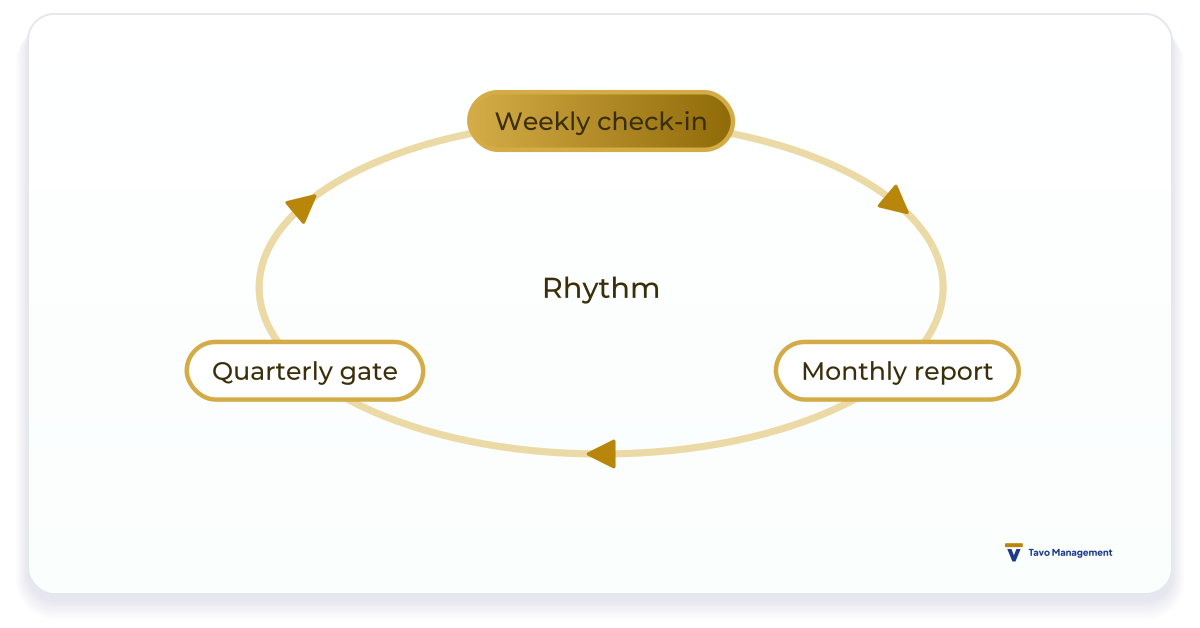
A roadmap needs a small, steady rhythm. Hold a weekly 20-minute check-in for the project lead and stewards during phases 1 to 3, a monthly data council for owners and a quarterly review with the sponsor. Each meeting has one page: the numbers, the top three issues and the decisions needed.
Keep minutes short and publish them. When someone asks months later why a definition was set, the answer should take a minute to find. That record also helps new owners get up to speed quickly, which matters when people change roles during a twelve-month program.
A Roadmap in Practice: One Delay and What It Taught
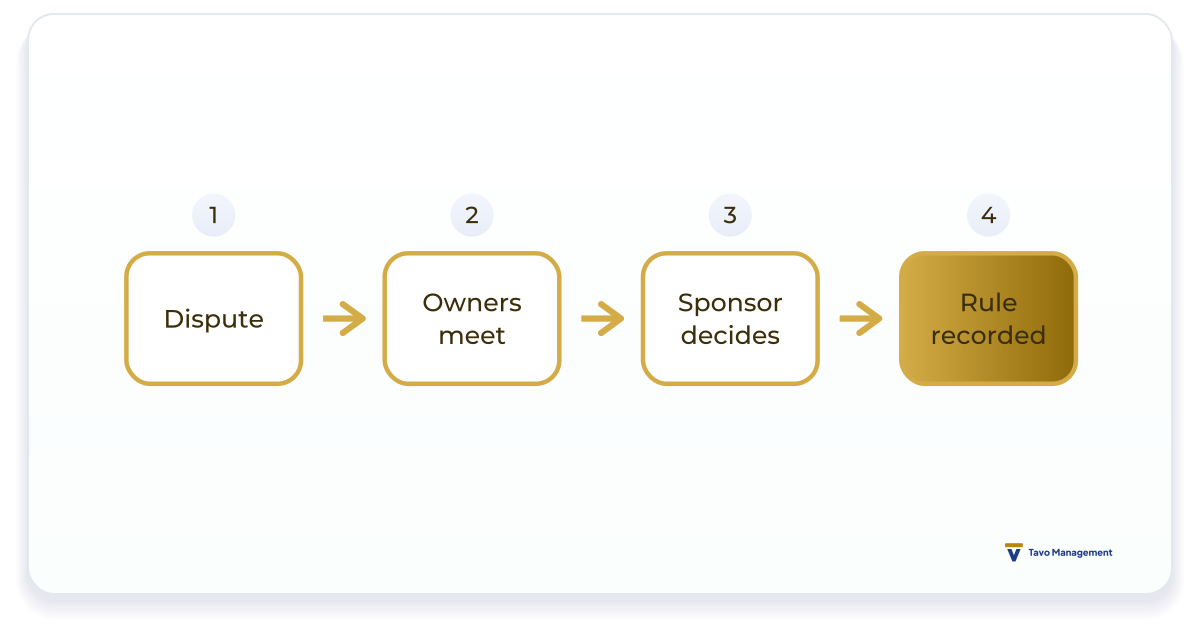
In one mid-sized services client, phase 2 was meant to take six weeks and took ten. Finance and sales could not agree on when a customer becomes a customer, and each had a reason. The sponsor finally decided in a short meeting: the definition follows the first signed contract, and sales keeps a separate term for prospects. The rework was small, and the monthly report was trusted from then on.
The lesson I took from it is to put dispute resolution into the roadmap itself. Give the sponsor a fixed slot every two weeks for open decisions, and list the undecided questions on the project page with a due date. Unresolved questions are the main source of delay, and making them visible is cheaper than any scheduling tool.
A second lesson concerned the pilot. The team had planned to start with the product master, but a quick look at the baseline showed that supplier records caused far more rework. Switching the pilot to suppliers cost a week and delivered a better result. Always let the baseline numbers choose the pilot, not the first idea in the room.
When Tooling Enters the Roadmap
Tools appear in phase 4 and are decided in phase 5, which surprises people who expect to start with a platform. By then you know which data sets matter, who owns them and which checks you want automated, so a vendor demo can be judged against a written list. Ask each vendor to run your own messy data in a short trial, and compare results, not slides.
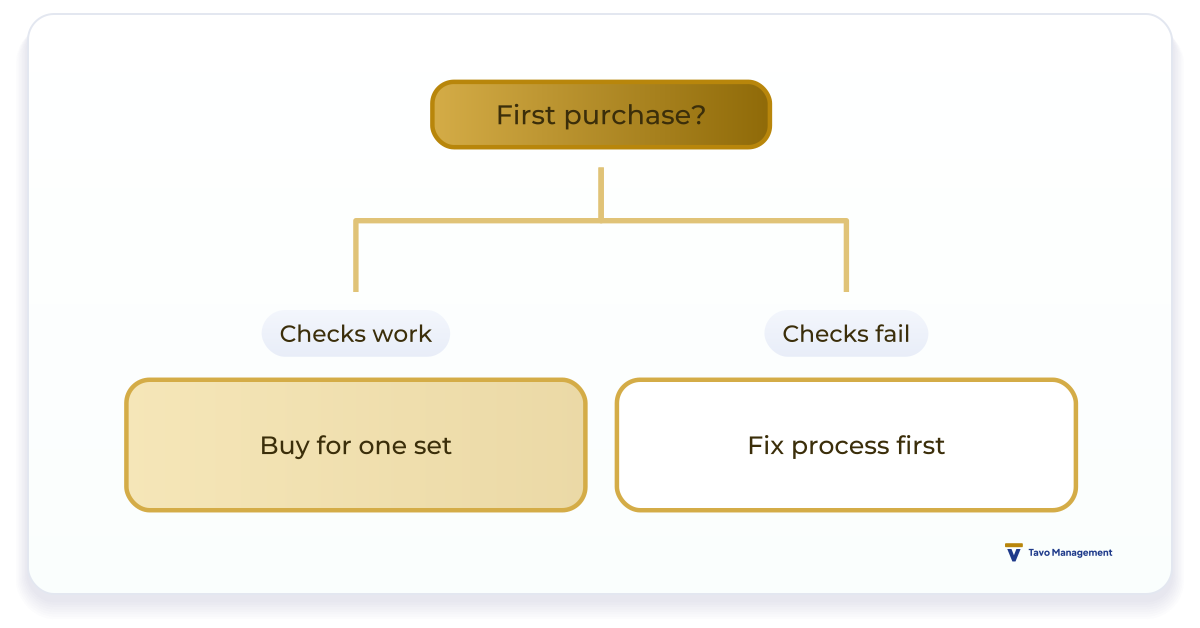
Keep the first purchase small and tied to one data set. If it works, extend it. If it does not, the cost of changing course stays low, and your roadmap continues unchanged because it never depended on the product.
Who You Need and How Much Time
Plan for a sponsor at one to two hours a month, a project lead at roughly two days a week during phases 1 to 3, owners at two to four hours a month and stewards at a few hours a week. These are my planning figures for a mid-sized company, so scale them to your size. If nobody can spare the time, scope the roadmap smaller rather than letting it stall.
- A named sponsor with authority to settle definitions
- A project lead with protected time
- Owners who agreed to their role in writing
- A baseline measured before the first change
- A monthly review in everyone’s calendar
Choosing Your Starting Point the Roadmap
If you have never measured your data, start with phase 1 and take the baseline seriously. If owners exist but definitions clash, jump into phase 2. If you already ran a cleanup that faded, go straight to phase 3 with entry checks and the monthly review, because those were missing the first time.
Sources
Role and area terminology follows the DAMA-DMBOK as summarized in Snowflake’s overview of DAMA-DMBOK. Timings and time commitments are my own planning ranges from client work and will differ in your organization.
Questions About Building a Data Management Roadmap
What Is a Data Management Roadmap?
It is a time-ordered plan that shows which data work happens in which phase, who does it and what you should see at the end. A good one has five or six phases, clear deliverables and a gate to pass before moving on.
How Long Should a Data Management Roadmap Be?
About 12 months for a mid-sized company, with a first result inside three months. Longer plans lose attention. If your roadmap spans several years, break it into annual roadmaps with their own targets.
What Should Be in the First 90 Days?
Kickoff, a data inventory, baseline numbers, named owners and the first agreed definitions. By day 90 you should have chosen a pilot data set and set a quality target. Technology decisions can wait.
Who Should Sponsor the Roadmap?
A leader who can settle disputes between departments, often the COO or CFO. The sponsor does not need to know data, but must attend monthly check-ins and decide quickly when owners disagree.
How Do I Choose the Pilot Data Set?
Pick the one that causes the most visible, measurable pain and has a willing owner. Customers, products and suppliers are common choices. Avoid starting with the hardest or most political data set.
When Should I Buy Software?
After the pilot, when you know which rules and checks you want to automate. Buying earlier tends to produce a tool that mirrors the vendor’s view instead of your needs. Compare two or three options with a short trial on your own data.
How Do I Keep the Roadmap from Stalling?
Keep scope small, hold a monthly sponsor check-in, escalate definition disputes within a week and report progress with the same baseline numbers every month. Delays almost always come from unmade decisions, so make them visible.
General information only: this is not legal, financial or tax advice. Examples and numbers reflect typical projects; check the specifics with your advisers before deciding.
Did you find this helpful?
Thank you for your feedback.
Delaney Brisco
Delaney leads the Tavo editorial team and works with our consultants to turn real client projects into practical guides on project delivery, process design and organizational change. Before joining Tavo, she spent 12 years in operations and program management roles. She has since edited more than 300 articles on management practice and reviewed PMO setups and process redesigns from over 100 client projects. She is based in Minneapolis, Minnesota.